BRP now equips its vehicles with tires from XPS, an internal division of the company. Our columnist Stéphane Miville spoke with Sébastien Fortier from BRP to learn more about the XPS tire line.
SM: “Sébastien, how are you?”
SF: “I’m doing very well, thank you!”
SM: “BRP recently started designing cleaning products and different types of oil, and now you have your own tires?”
SF: “Yes, it’s brand new. We started developing our own tires a few years ago. Over the years, engineers and others realized that we could have much better control over the dynamics and handling of the vehicle by designing the tires ourselves. So now, instead of taking a tire from manufacturer XYZ, we could develop the type of lug we wanted, the internal construction, and the dynamic behavior of the tire. This contributes to the overall performance of the vehicle.
SM: “So now we also assign tires for different types of vehicles and for various conditions?”
SF: “Exactly. As a manufacturer, this is one of the most important criteria. Tire manufacturers, i.e., those in the aftermarket sector, must develop their products according to standard industry rules. This is what we call TRA calibration tables. But when you’re a manufacturer, you have many other rules to follow. Braking rules, anti-rollover rules, etc. So, by creating our own tires, we have much better control over all the other standards that we have to comply with as an OEM.
SM: “Oh, that’s interesting because it also provides additional peace of mind for the consumer?”
SF: “Absolutely. Let me give you an example. Today, we have X3s and Maverick Rs, which are vehicles that go 130, 140, 150 km/h. Most aftermarket tires have a maximum speed rating of 130 km/h. Take the time to look at the tires you see at certain dealerships and other places. You’ll see the speed rating written on the top. You will often see the standard speed rating, M, which is 130 km/h. Technically, this is not a tire that can be used on a Maverick R or an X3. Especially not on an X3 Max, which can carry four passengers and a full cargo load.
SM: “It’s much heavier, much more imposing, and has a lot of power. So when you put all that together, you can better understand the need for the right tire. You’ve brought us the latest addition to the range. We can agree that many people who take a quick look at it will say it’s a mud tire, right?”
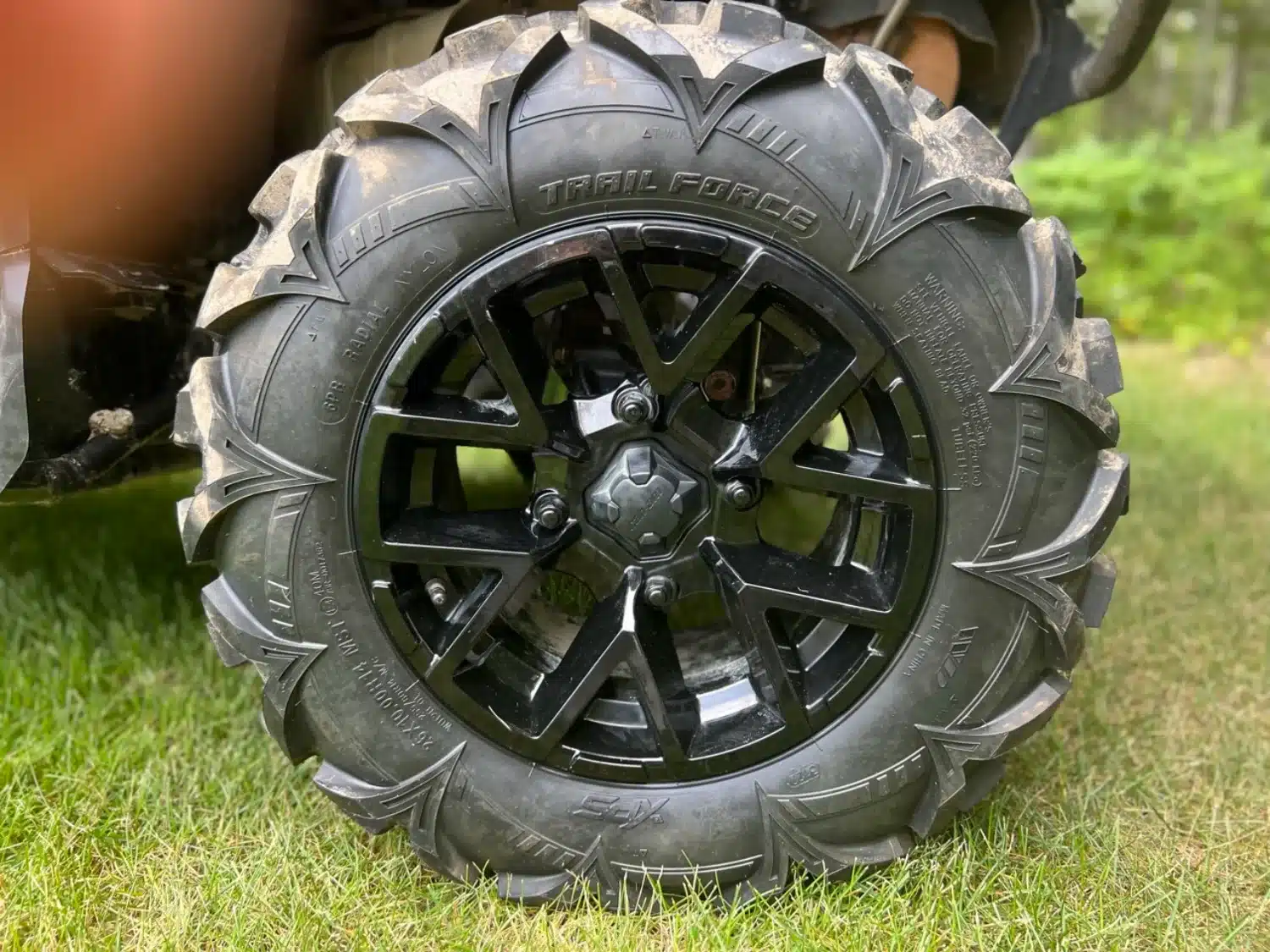
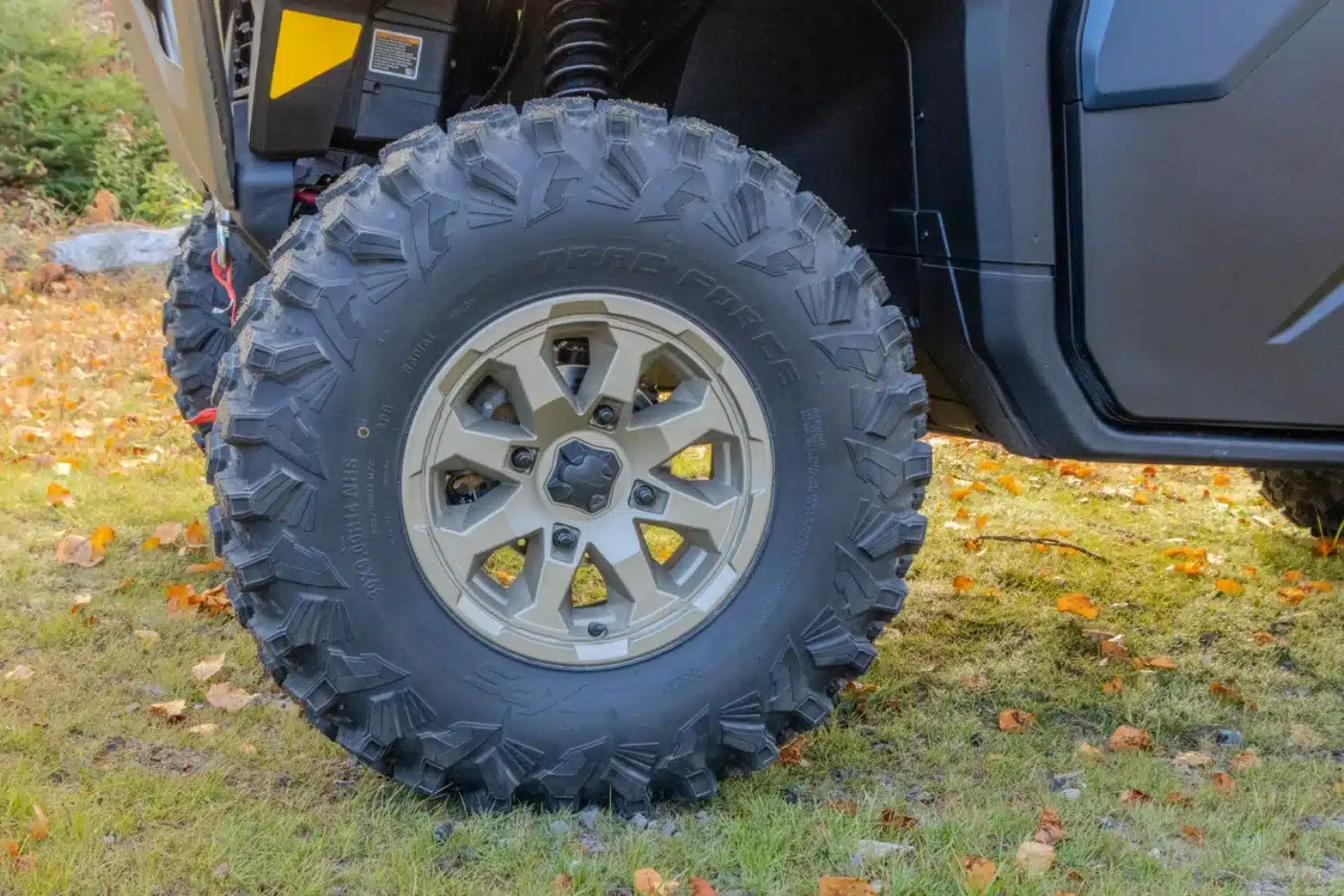
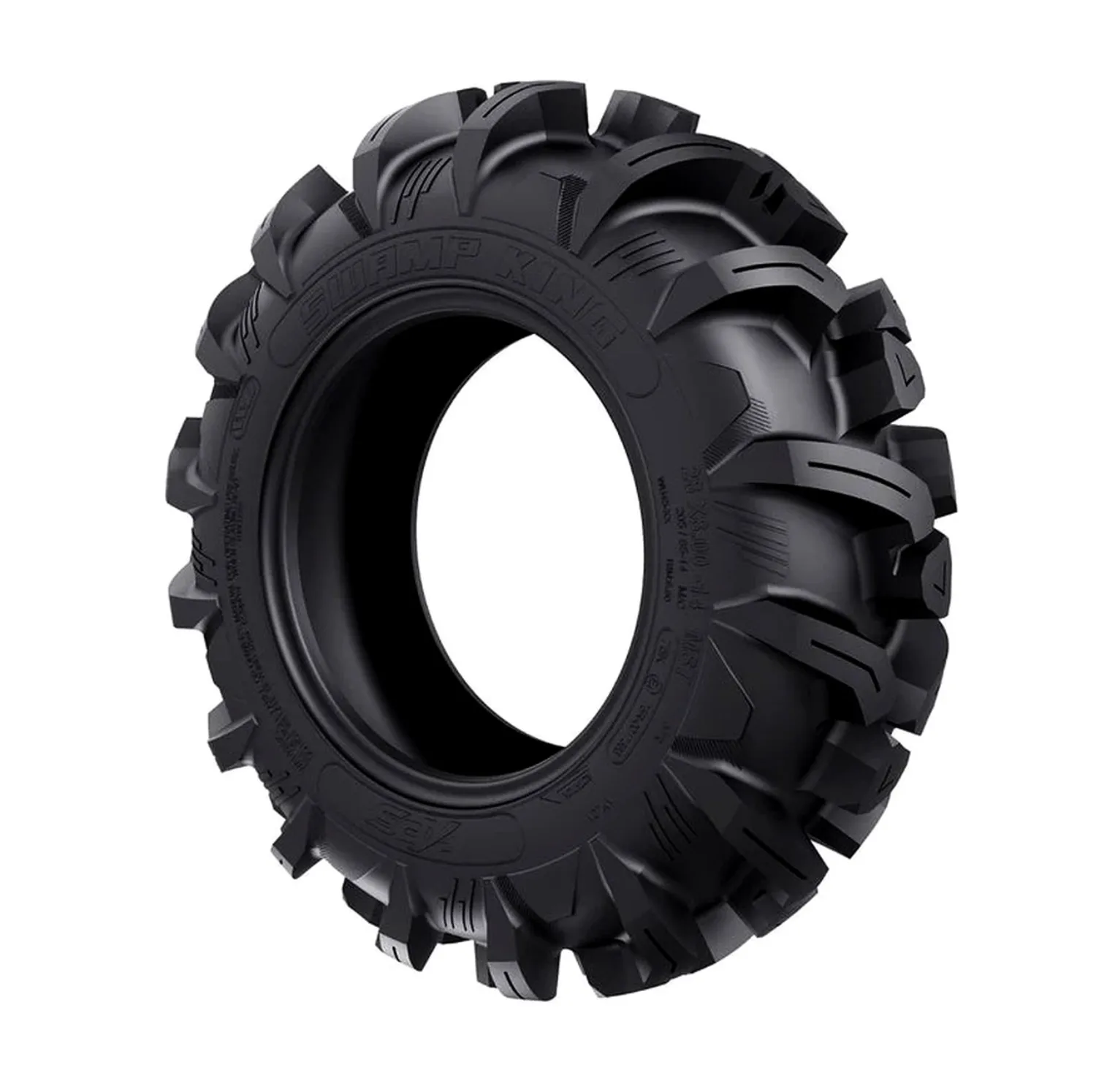
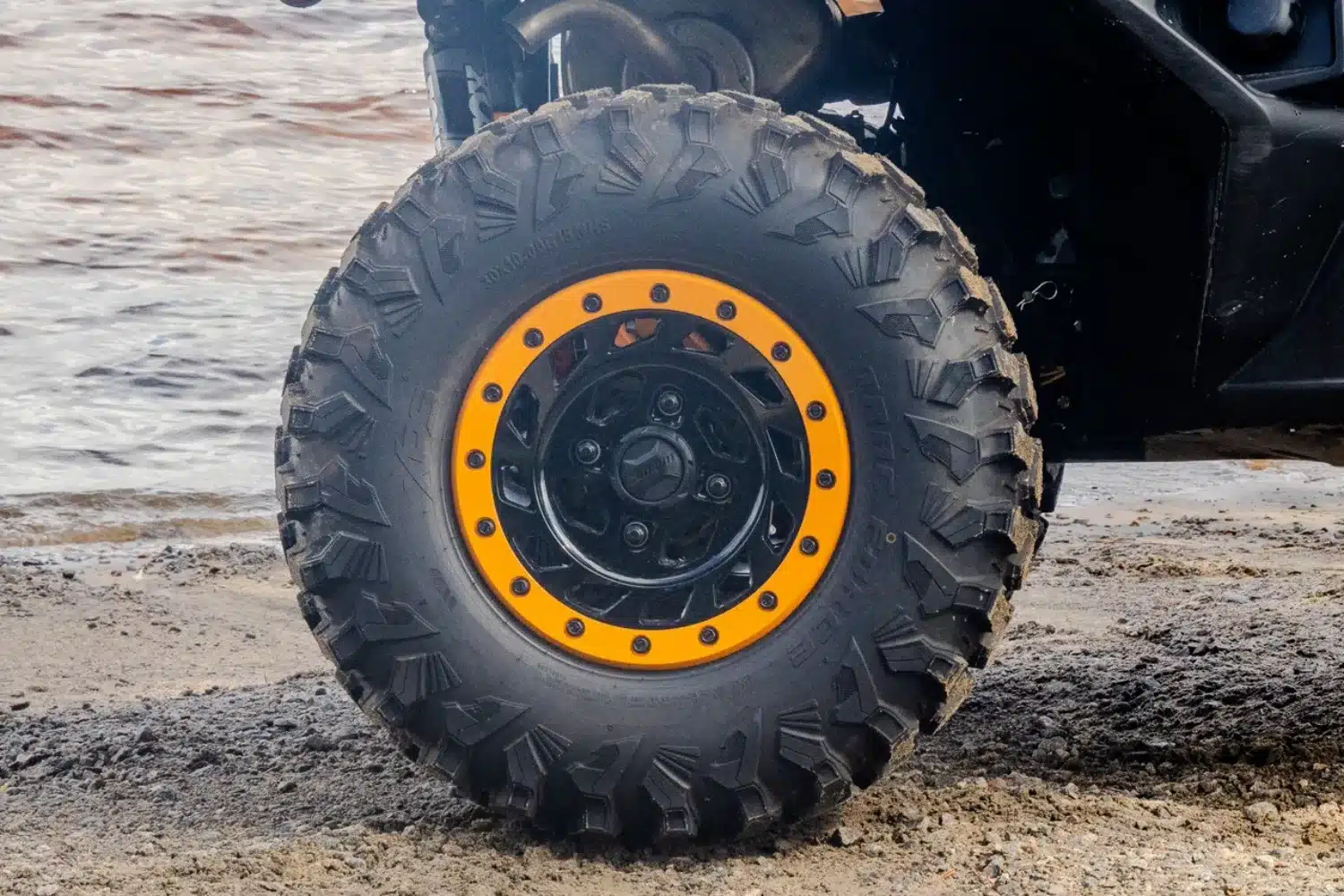
SF: “Yes, indeed, it’s the new Swamp King. It’s a derivative of the Swamp Force, which is the best-selling tire, mainly in Quebec. It’s an excellent tire for all types of use. It’s very popular with hunters. It’s a tire that offers a lot of traction while ensuring good comfort when used on gravel roads and trails at low speeds, especially between high-speed hunting areas. This tire offers a lot of protection against punctures because there is less space between the lugs. We’ve created a King version to give more traction for those who like to go a little deeper into the mud. So we’ve spaced the lugs a little further apart and increased the size of some of them. This is the King version of the new Swamp Force.
SM: “Another interesting point, because we’ve been talking a little off-topic here, but ideally, the manufacturer recommends the original tire to go with your vehicle. Why is that?”
SF: “Well, exactly, because when a tire is developed, OK, it is developed for a specific vehicle according to speed, load, and load capacity. So, we often hear about the number of plies. We also hear about load codes, speed codes, and pressures. These air pressures are determined based on the load and the speed at which the vehicle can travel.
That’s why we always recommend the original tire, because it’s the tire that we’ve tested and developed, and we’re sure it can meet all the demands that the vehicle will impose, whether in terms of load, speed, comfort, or dynamics. “
SM: ”Sébastien, once again, thank you very much. Your explanations give us more insight into why XPS tires are used at BRP!“
SF: ”You’re welcome!”