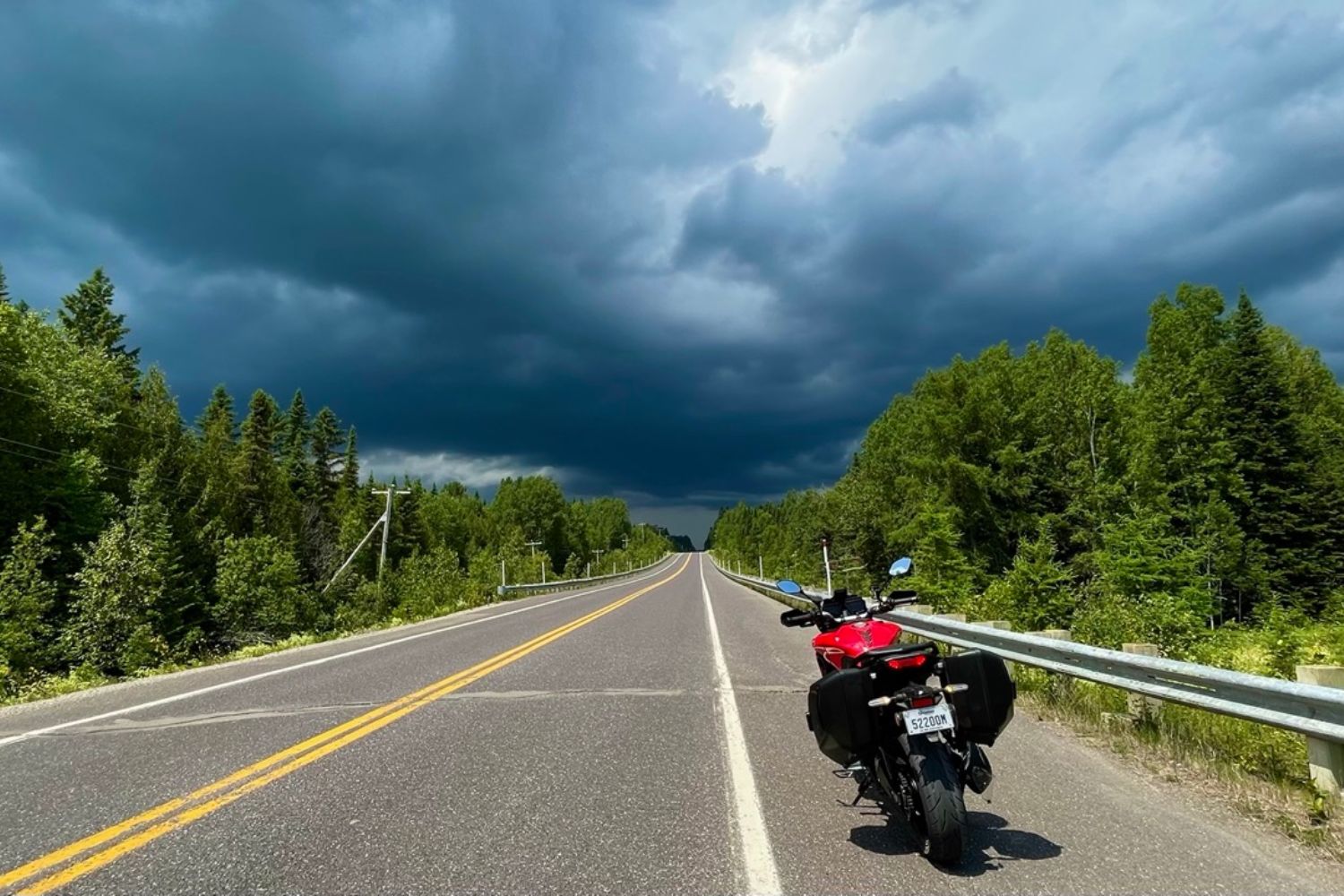
In Quebec, if we decided to only ride when the sun is shining and the clouds are perfectly aligned with our mood, the motorcycle season would probably last… two weekends. Between surprise showers, summer storms, and those days when the weather looks like atmospheric pea soup, we have to accept one reality: sooner or later, every motorcyclist will end up riding in the rain.
Some see it as a challenge, others as inevitable. But for many, it’s simply a skill to master. Because, contrary to what many people think, riding in the rain isn’t necessarily dangerous… as long as you adapt your riding, your equipment, and, above all, your attitude.
Because when you’re on a motorcycle, rain isn’t the enemy. It’s more like a slightly wet teacher reminding us of the basics of driving.
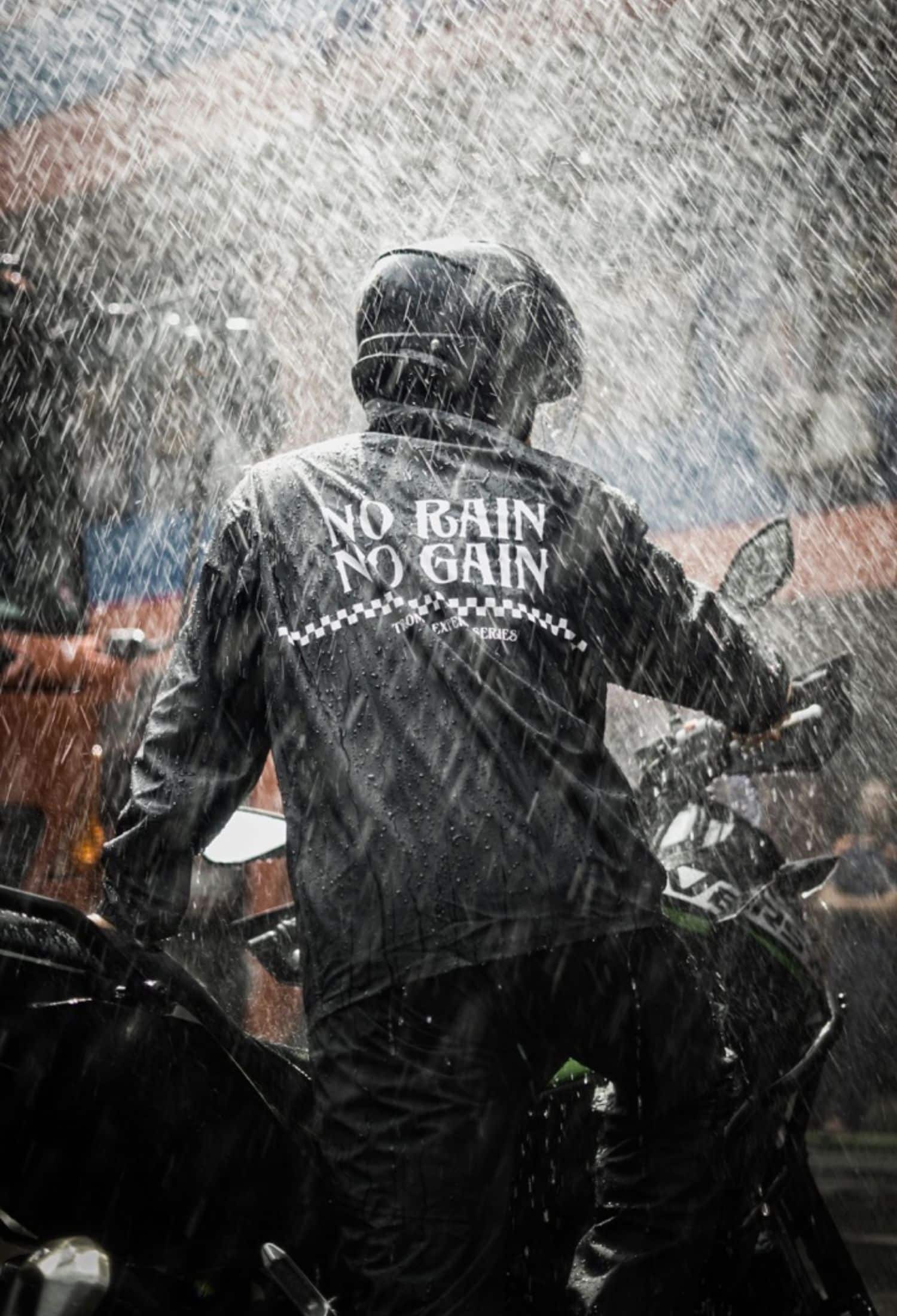
The first rule: slow down… without panicking
Rain changes two essential things on the road: traction and visibility. As soon as the first drops begin to fall, the asphalt gradually becomes more slippery. And during the first few minutes of a downpour, the situation is often worse.
Why? Because the water mixes with the oil, fuel, and dust residues that have accumulated on the road surface. The result is a surface that can become as treacherous as a kitchen floor after a frying contest.
The solution is simple: slow down.
No need to turn your motorcycle into a motorized snail, but reducing your speed gives you more time to react and reduces the risk of losing traction. Smooth, gradual riding is your best ally.
Avoid sudden acceleration, violent braking, and abrupt changes in direction. In the rain, your motorcycle prefers a gentle touch.
A bit like a tango dancer… but with a helmet.
Tires: your only friends on the asphalt
We say it often, but it’s even more true in the rain: tires are the only point of contact between the motorcycle and the road.
Worn tires become particularly dangerous when the road is wet. The grooves serve to evacuate water and maintain grip. If they are too shallow, water accumulates and increases the risk of hydroplaning.
Before setting off on a ride, take a few seconds to check the condition of your tires.
Proper pressure, reasonable wear, and no suspicious cracks: these are the basics. Tires in good condition can make a huge difference when a rainstorm decides to join your ride.
Let’s be honest: it’s much more enjoyable to ride in the rain than to slide around in it.
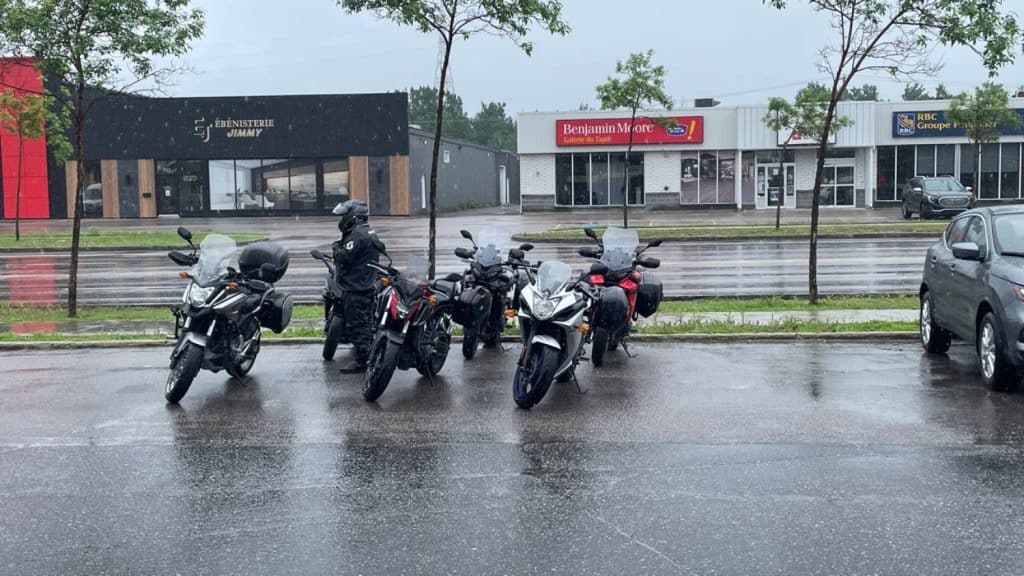
Brake with finesse
In the rain, braking distance increases. It’s a simple rule of physics: less grip means more distance to stop.
The key is to use the brakes gradually.
Applying the brakes gently at first, then gradually increasing the pressure allows the tire to maintain its grip. Modern motorcycles equipped with ABS obviously offer additional safety, but this is no substitute for proper braking technique.
It is also recommended that you increase the distance between you and the vehicle in front of you. This extra space can prevent a lot of scares.
Incidentally, it also prevents you from getting splashed by the truck in front of you.
Which, let’s be honest, is a significant advantage.
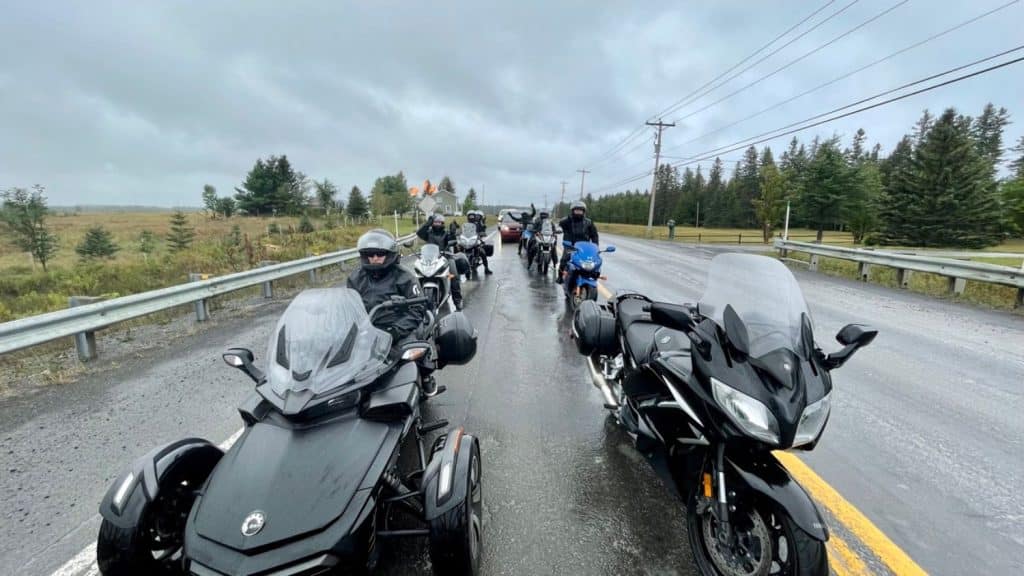
Beware of urban hazards
In the rain, certain elements of the road become particularly slippery.
Among the usual suspects are:
- white lines,
- manhole covers,
- railroad tracks,
- metal surfaces,
- road markings,
- bridges with wooden planks,
- new and oily asphalt.
These surfaces can become as slippery as an impromptu ice rink. The best thing to do is to drive over them as straight as possible, without accelerating or braking suddenly.
Intersections also deserve special attention. Vehicles that stop and start there often leave oil marks. When it rains, these areas can become very slippery.
In short: if the surface is shiny… be careful.
See and be seen
Rain significantly reduces visibility for both motorcyclists and car drivers.
Turning on all lights, even auxiliary lights, is essential. Many modern motorcycles activate their lights automatically, but it is still important to check.
Brightly colored or reflective gear can also improve your visibility. Between a black motorcycle, a black jacket, and a gray sky, car drivers may have a hard time seeing you.
And even if you’re convinced you’re perfectly visible, it’s always better to ride as if no one has noticed you.
It’s a philosophy that works very well… even when the sun is shining.
Equipment: stay dry to stay focused
Riding in the rain without the right equipment can quickly turn a beautiful ride into a survival experience.
A good waterproof suit makes all the difference. Not only does it keep you dry, but it also helps you retain body heat. Water and wind can cause the temperature to drop quite quickly.
Waterproof gloves are also very useful. Cold, wet hands lose precision and sensitivity.
If you’ve ever tried to open a zipper with numb fingers, you know exactly what I’m talking about.
A good helmet with an anti-fog visor is also a major asset. Some motorcyclists use an anti-fog system or a hydrophobic coating to improve visibility.
Because seeing the road… is generally a great idea.
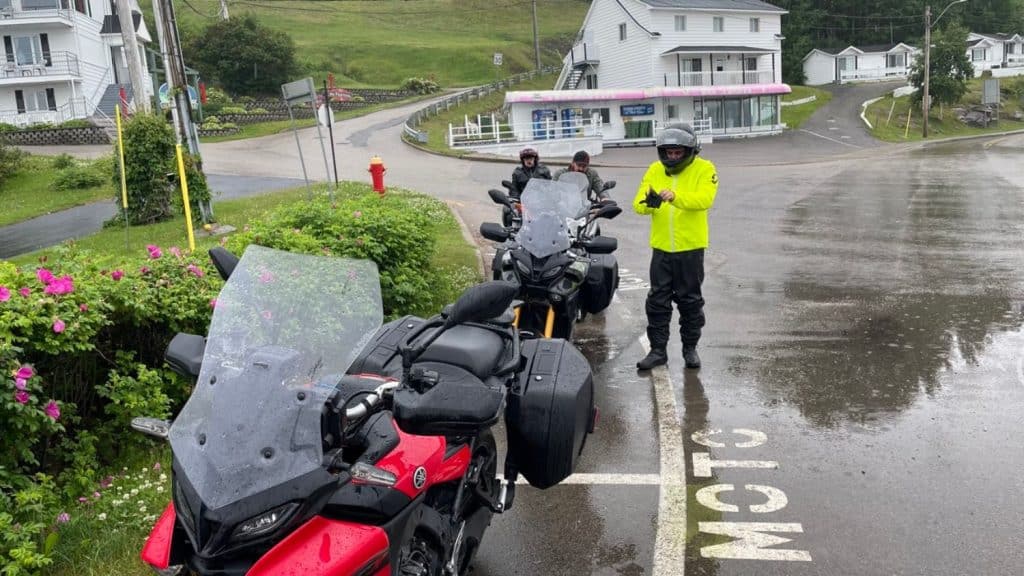
Reading the road
Driving in the rain requires a little more anticipation.
Looking further ahead allows you to identify potentially slippery areas, puddles, or unpredictable driver behavior.
Puddles can hide potholes or other surprises. Whenever possible, it’s best to avoid them.
And if you see a driver zigzagging as if looking for the exit of a maze… keep your distance.
Rain sometimes makes drivers a little more nervous.
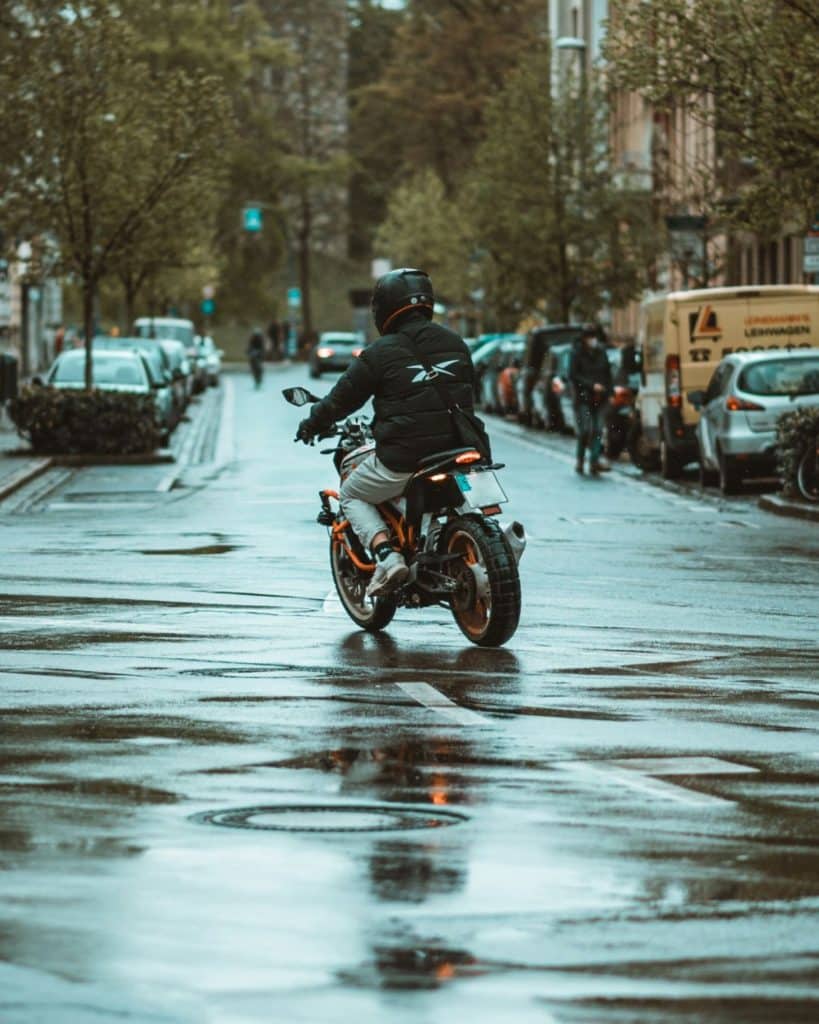
Maintain the right attitude
Beyond technique and equipment, riding in the rain is also a matter of mindset.
A relaxed and attentive motorcyclist reacts much better to the unexpected than a stressed rider. Rain simply requires a little more concentration and patience.
But it can also offer a different experience. The roads are often quieter, the landscapes take on a special hue, and the air becomes fresher.
Let’s face it: there’s a certain pride in coming home after a ride in the rain.
It’s a bit like an invisible medal that only motorcyclists understand.
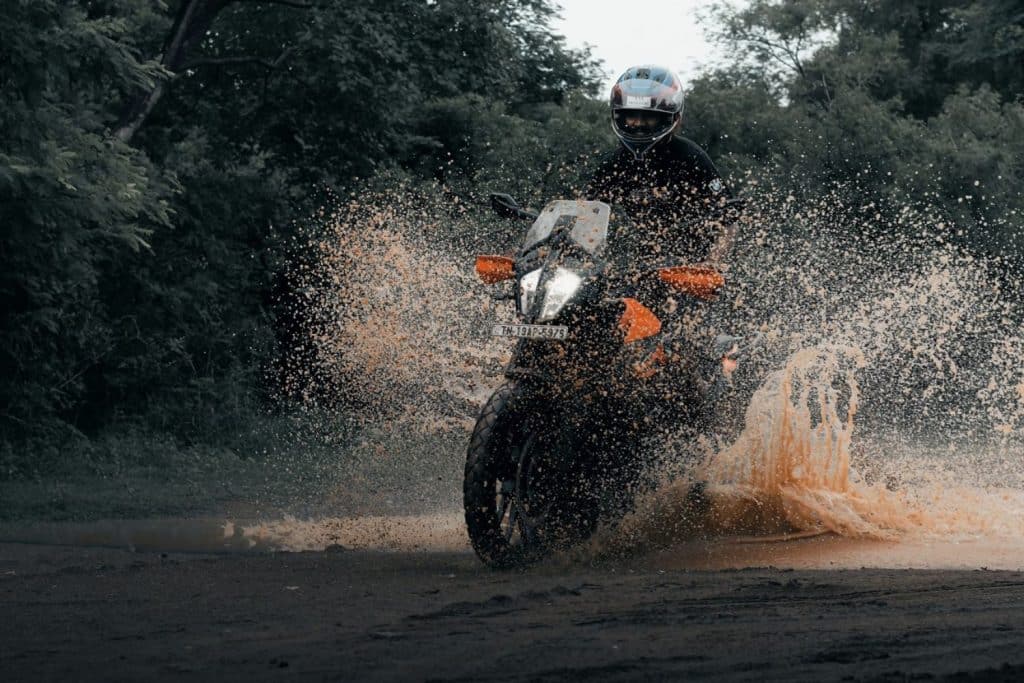
In conclusion
Rain is an integral part of the motorcycling experience in Quebec. Avoiding it completely would be almost as difficult as finding free parking in downtown Montreal.
But with the right riding technique, proper equipment, and a good dose of judgment, it’s entirely possible to ride safely.
After all, a motorcycle is made for riding… not just for waiting for the sun. And if the rain ever gets too heavy? There’s always the strategic option of hot coffee at a small roadside snack bar. Which, between us, is also part of the charm of motorcycling.