We all know someone who’s had an incident on the trail. For some, it was minor, but for others, the consequences were more serious. In short, no one is immune to an unfortunate incident while riding. An incident doesn’t necessarily mean a rollover or a large-scale rescue operation. It could be a cut, a scrape, a wasp sting in the helmet, a burn from the muffler, or a burn resulting from mishandling the butane stove.
No one wants these accidents on the trail, but advance planning is still necessary to handle them. Indeed, when the equipment is available and you know what to do, the rescuer’s stress level is already reduced by a notch. So let’s look at the items you can prepare right now.
Plan for an effective method of communication
When a serious accident occurs, it may be necessary to call for help to evacuate the injured. This is essential because it is absolutely inadvisable to leave an injured person unattended to physically go and fetch help.
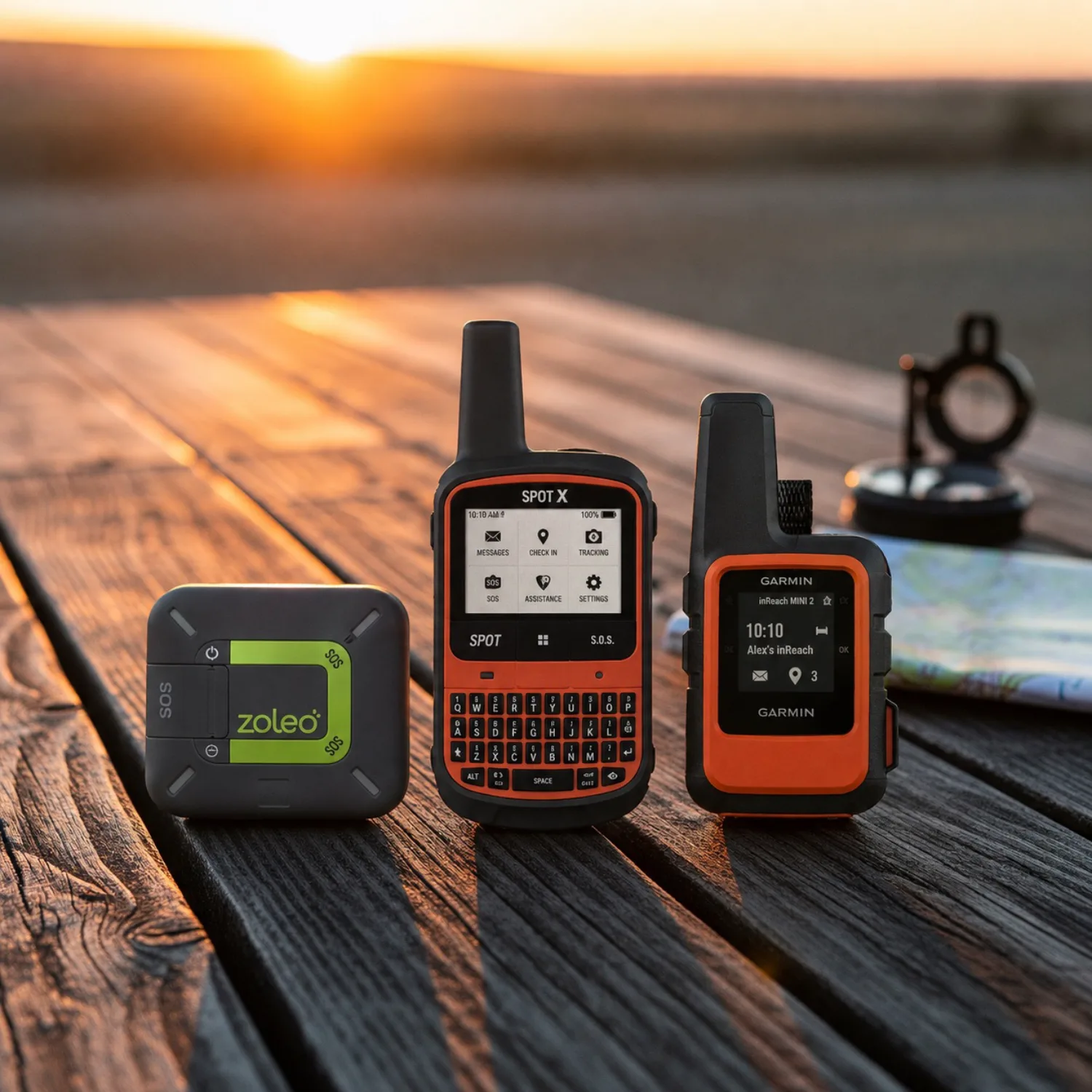
When we think of calling for help, we always turn to our cell phones, but network coverage is unreliable and is likely to be absent in remote areas. To address this and ensure emergency communication anywhere in the world, there are devices that use satellite networks to send an SOS and transmit your location. Examples include Spot devices, Zoleo devices paired with your cell phone, or Garmin’s InReach technology. Some simply transmit a pre-recorded message and your location, while others allow for real-time communication with a contact. It’s up to you to decide what makes you feel safest.
Since technology is constantly evolving, many phones also have the ability to communicate with emergency services via satellite. Check with your service provider.
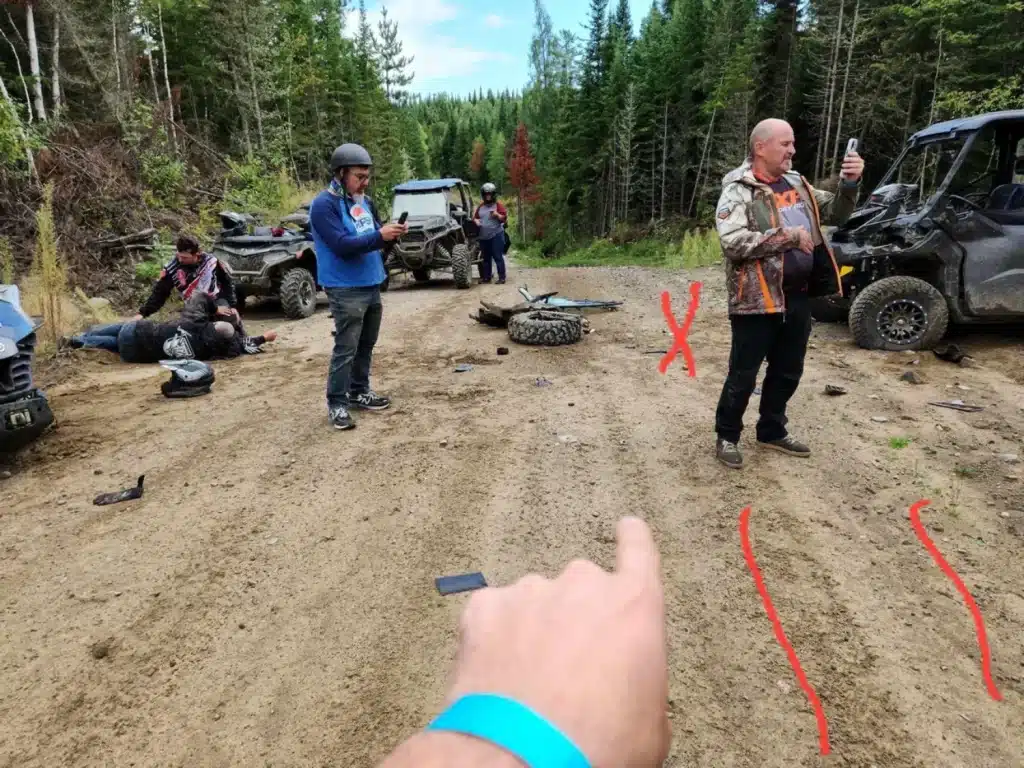
It is important to understand that an emergency satellite call is not like a normal call. The phone will transmit, along with your GPS location, an emergency request that will be sent to emergency services or the coordination center responsible for your region. You will be able to explain the situation and the victim’s condition to them. However, communication will remain slow and will be limited to the emergency itself.
Finally, you’ll be glad to have your portable power bank on hand when your cell phone’s battery level becomes critically low.
The First Aid Kit
Although many incidents aren’t serious, it’s highly recommended to keep a first aid kit tailored for ATV riding in your trunk. If only to provide comfort to the injured person, reassure everyone, and preserve the relaxed spirit of the day while minimizing the risk of the injury worsening.
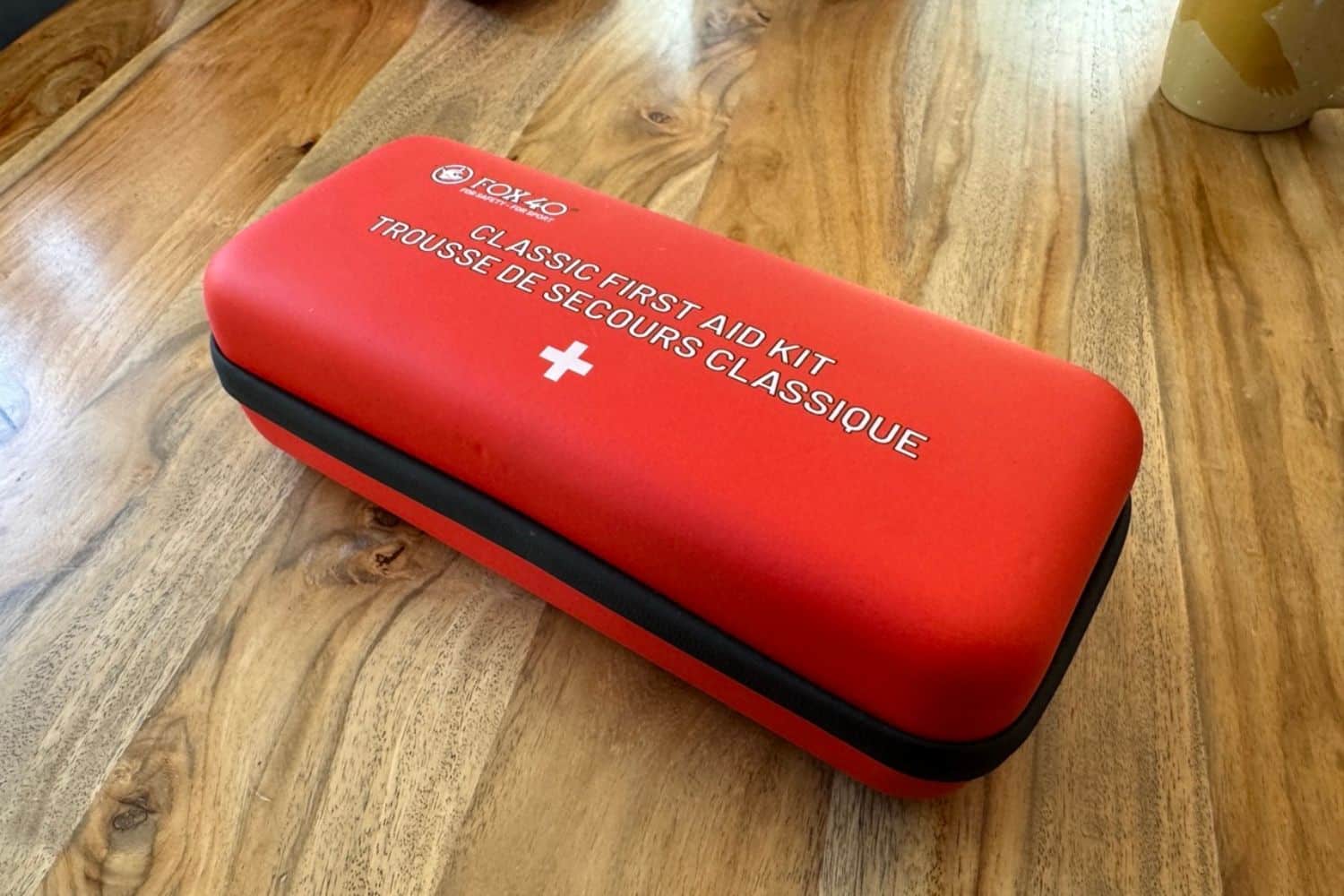
A good kit must be waterproof or water-resistant, easily visible (red/orange) soit can be spotted quickly. Also, if you can see and locate the contents without having to dump everything on the ground to find the scissors, that’s a huge plus. Finally, it should be large enough to allow for adding a few items that may prove useful in the future.
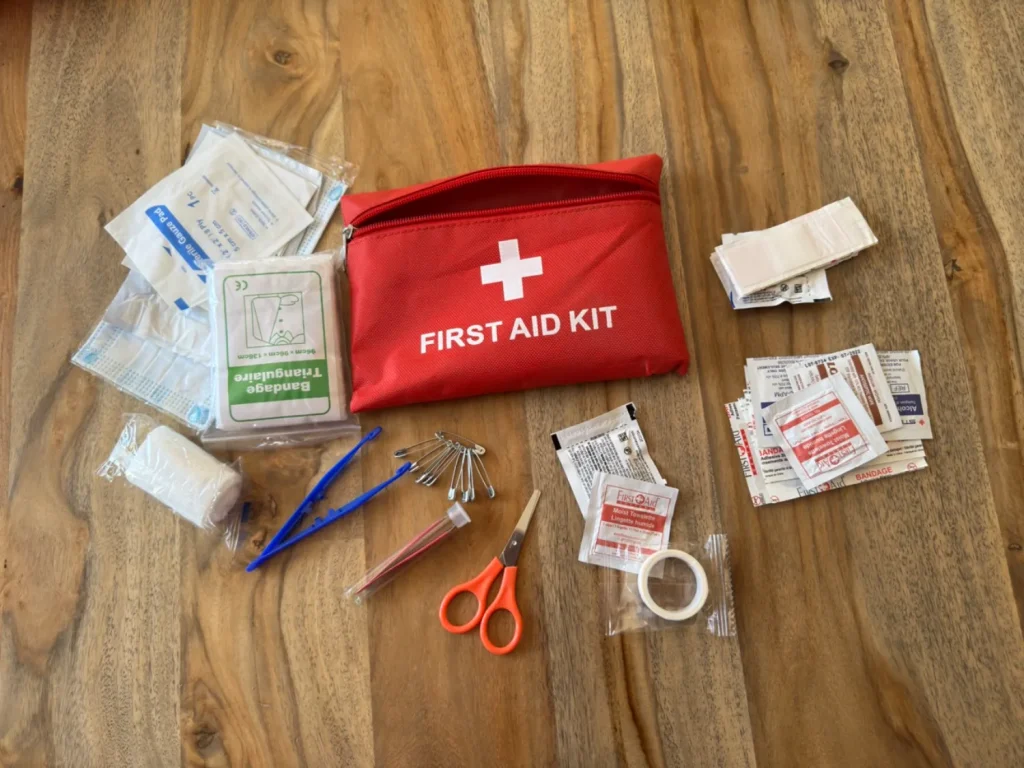
The supplies this kit should contain should look something like this:
- sterile latex or nitrile gloves, to prevent a latex allergy
- sterile adhesive bandages in various sizes
- sterile gauze rolls and pads
- elastic fabric strips
- adhesive fabric tape
- antibiotic ointment
- ointment to relieve insect bites
- antiseptic wipes
- alcohol swabs
- hydrogen peroxide
- 1 pair of tweezers (for splinters or hair removal)
- 1 par of scissors
- safety pins
- 1 aluminum emergency blanket
The aluminum emergency blanket will be extremely useful for helping an injured person in shock retain body heat while waiting for help. You’ll also be glad to have it to cover them if it rains.
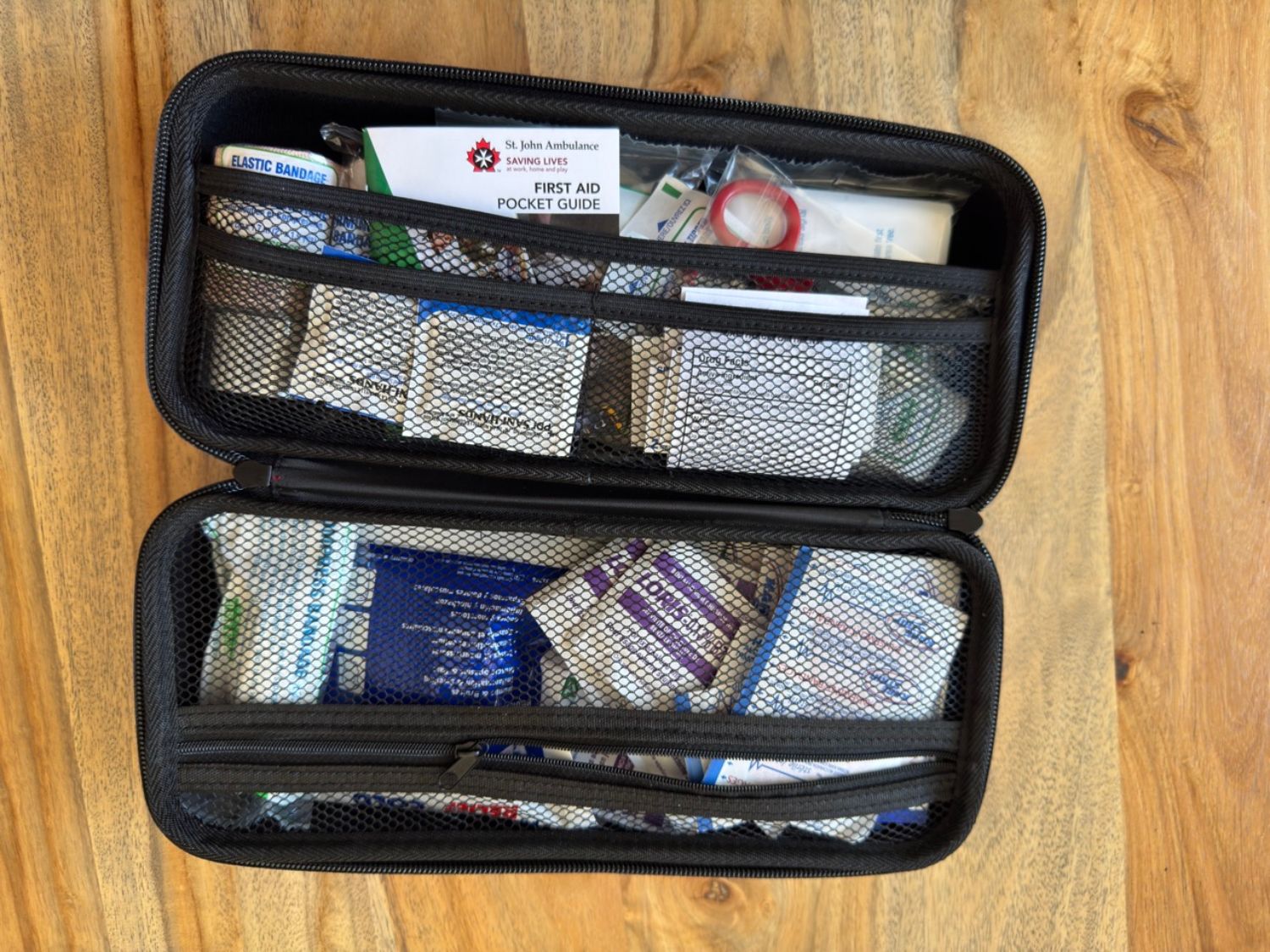
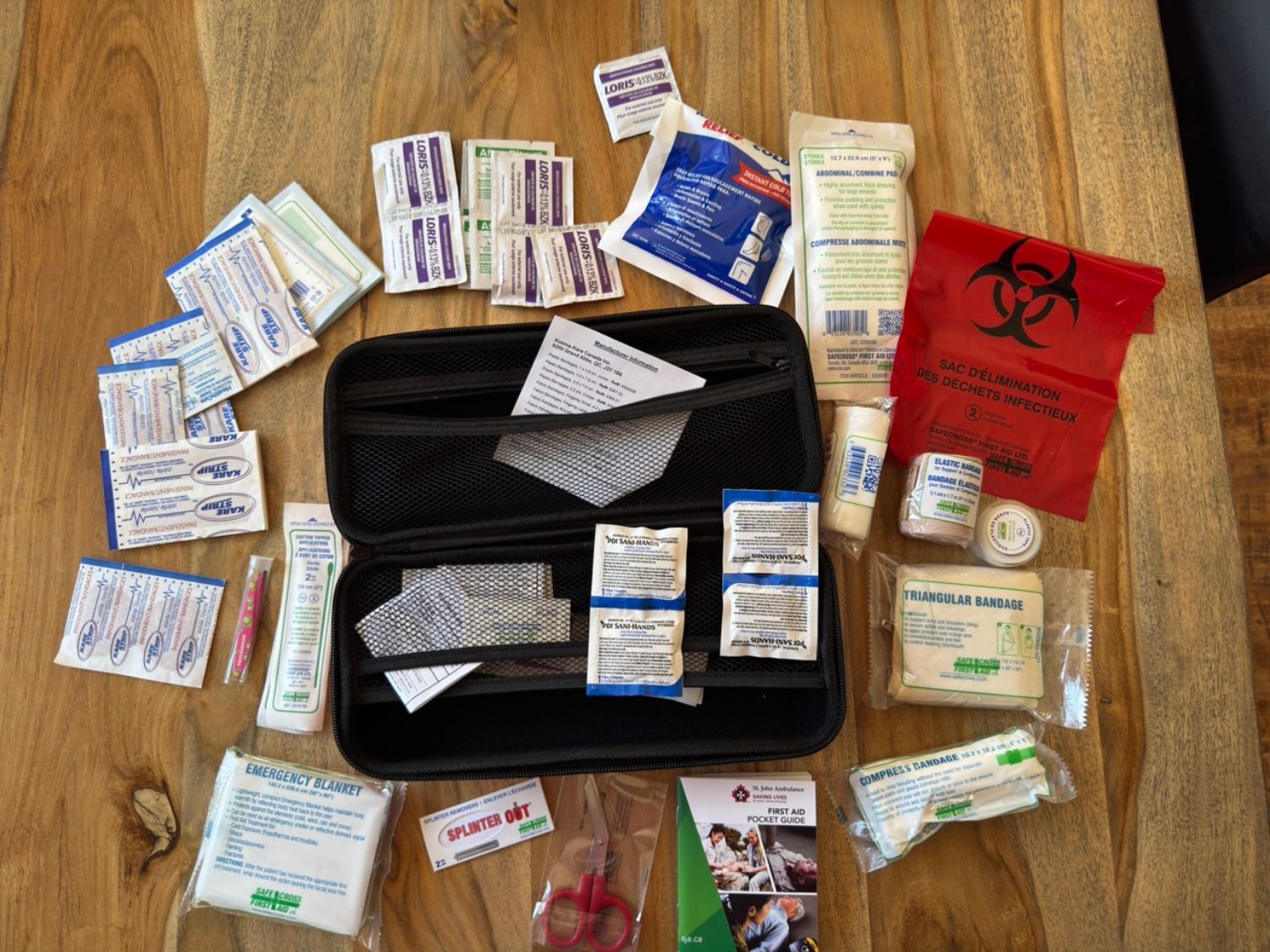
The contents should be reviewed regularly to replenish any missing items, replace expired first-aid supplies, or replace damaged items.
CPR training is an excellent investment in saving lives
Cardiopulmonary resuscitation (CPR) training is much more than just learning a technique. It is a practical tool that enables you to respond quickly in a critical situation, often within the first few minutes when every second can affect a victim’s chances of survival. You will be able to respond correctly at the right time and make a difference.
Being trained not only helps you develop essential reflexes but also allows you to remain calm and have the confidence needed to act effectively before emergency services arrive. Even as emergency equipment and communication technologies evolve rapidly, the presence of someone capable of performing the right actions on-site at the right time remains irreplaceable. Investing a few hours to take a CPR course as a family is truly worth it. In the event of a cardiac arrest, stroke, or medical emergency, every family member—even a child who knows the right steps—can make a difference and help save the life of a parent or loved one.
Rock St-Pierre