Stéphane Miville, Raven Media (SM) – We are fortunate to have Sébastien Fortier here with us today, who is the XPS Product Manager at BRP. Hey, listen, a few years ago, we all agreed that XPS was oil.
Sébastien Fortier, BRP (SF)- It was oil, indeed. In fact, the history of XPS goes back 30 years. Last year. It was a two-stroke engine oil that was developed for personal watercraft at the time. It made its way to Ski-Doo. After a few years, other products were added. So XPS became a trademark owned by BRP. Cleaning products, like oil, are an integral part of the vehicle. So when we develop an oil, it’s the same as when an engineer comes on board. He develops a piston, a crankshaft, or any other part of the vehicle. We give it as much importance as we would give to any other part. So, the oils are developed with our own proprietary chemistry, chemistry that is unique to BRP.
SM- We often hear people say, “Oh, Castrol makes the oil, or Irving, or some other company.” That’s not entirely true. We agree that oil extraction is one thing, but all the components you put in it, you own that.
SF- We do own the chemistry, yes. We work with partners who specialize in this. Together with them, we develop the criteria we need. We establish the criteria we need. Then, the chemistry that is developed ultimately belongs to us. Because it was developed specifically for BRP vehicles. Hence the complexity of having one oil for personal watercraft, ATVs, and snowmobiles.
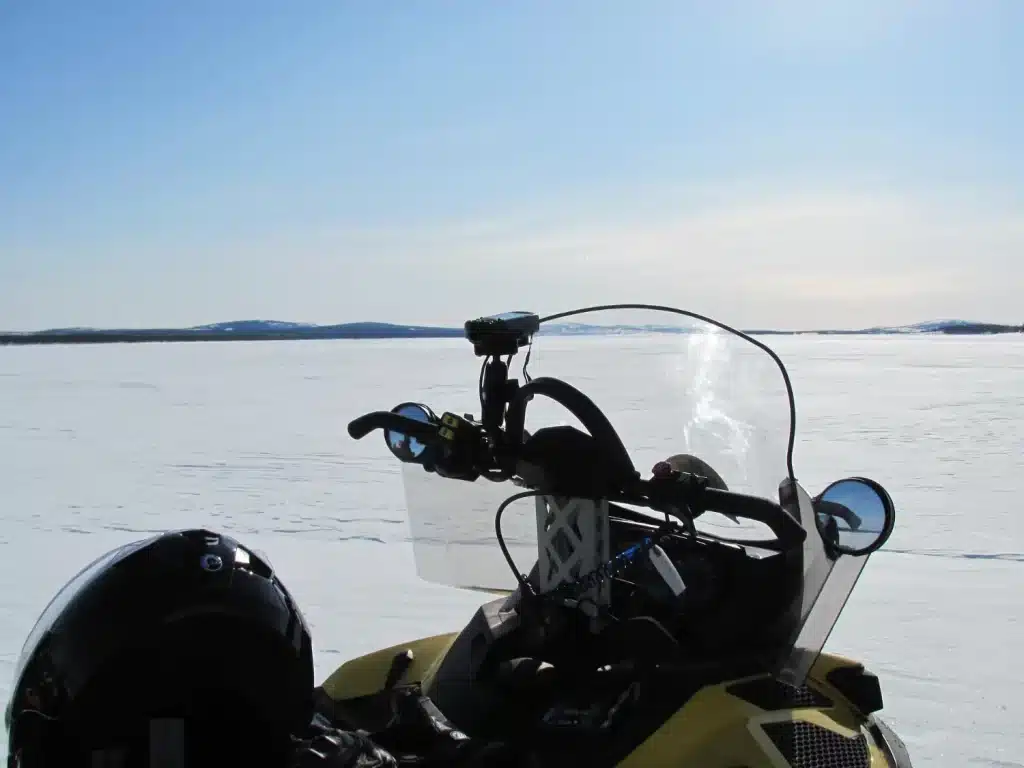
SM- We agree that oil used at temperatures as low as minus thirty degrees, as is the case for snowmobiles, presents particular challenges. On the other hand, in personal watercraft, temperatures are probably less extreme, which means fewer design challenges. Because the temperature will be milder.
SF- Exactly. You have the effect of temperature. In personal watercraft, we’re talking about salt water. That’s not really an issue with snowmobiles, or at least not to the same extent. In the case of ATVs or quads, we’re talking about dust or contaminated water, particularly in the front differentials and transmission. So that’s why it’s important to have the right oil for each application.
SM- Listen, we have several products at BRP. There’s a huge challenge behind all this for you guys. Because it’s all well and good to say, “I’m making an oil,” but if you have to have four or five completely different formulas, then the oil is going to be expensive.
SF- Exactly, that’s the complexity of our work. We want to try to develop an oil that will work in as many vehicles as possible. That’s the most complicated part of it. Developing one oil specifically for personal watercraft, another for ATVs, one for snowmobiles, and one for the Spyder is much easier. Because each of these engines, each of these uses has its own particularities, it’s much easier to do them individually. However, for our dealers and our customers who have more than one vehicle, we try to reduce the number of oils as much as possible. For example, let’s take personal watercraft. Earlier, we talked about salt water, the booster clutch, and the supercharger. With ATVs, we talked about dust, etc. So, these are all vehicles with specific characteristics. So when we develop oil, these are things we have to make sure we incorporate into the development process. To limit the number of types of oil, not the amount in the engine. This makes it easier for the customer. It’s also much easier for the dealer to do this.
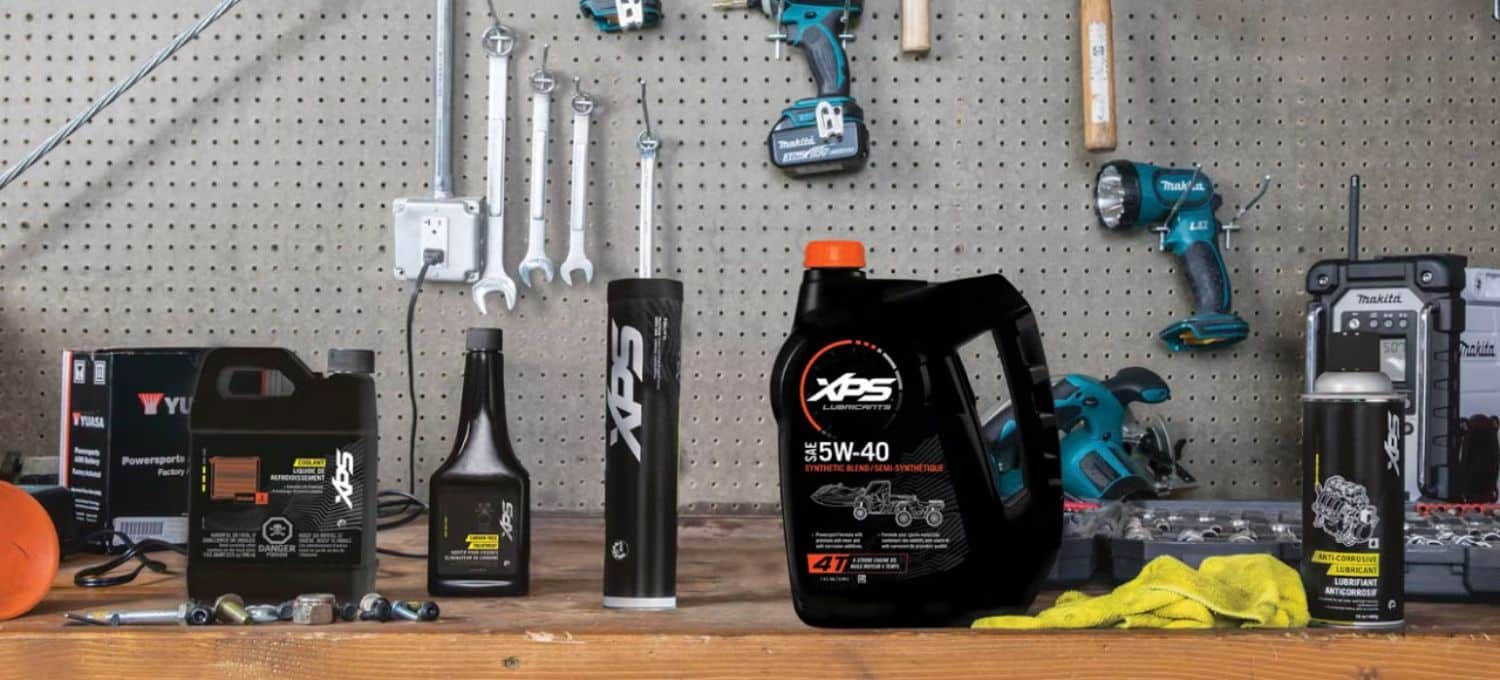
SM- Are there any challenges with viscosity? If we’re talking about snowmobile oil, which is constantly working in much lower temperatures, versus a personal watercraft or ATV,
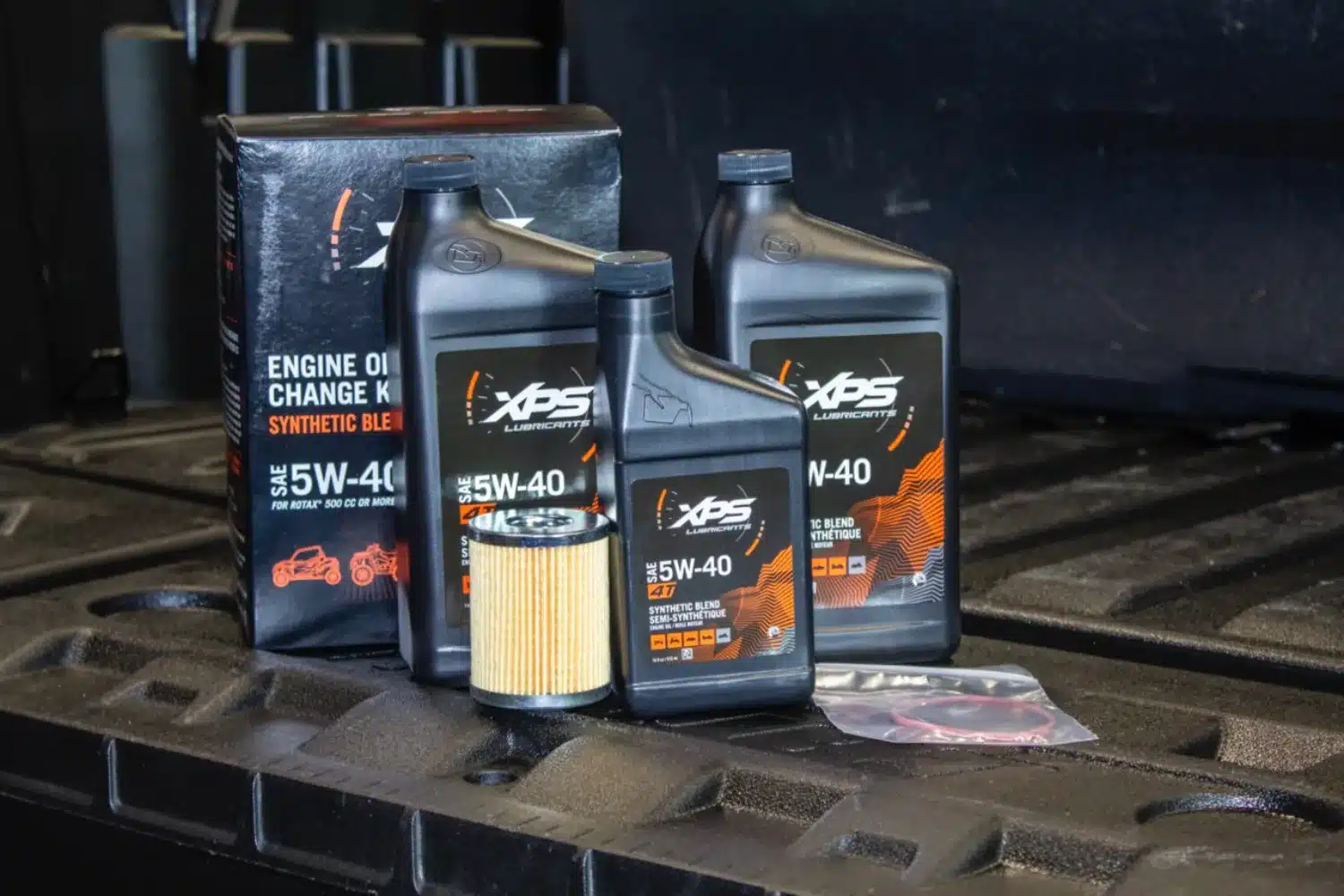
SF- Yes, indeed, most BRP all-season vehicles will use 5W40 synthetic oil. This is a new version of oil that we have just released, the evolution version, as we call it. This one covers temperatures down to about minus 35°. For snowmobiles, we have a 0W40 version, which is also used in ATVs, for people who use them in winter, which will bring us to around minus 45° pour point. And we also have a 0W20, which will be for people in the far north of Quebec, Alaska, the Yukon, and the Northwest Territories. It will flow out of the bottle down to minus 65°.
SM- So we are able to cater to all climates depending on the use.
SF- Exactly. But in general, at BRP, whether you have a personal watercraft, a Spyder, or an ATV, 5W40 is the recommended product. It’s the oil we use in the factory.
SM- Interesting. Now, I’m going to ask you the killer question that we hear very often about oil: why should I use XPS, which is made by BRP?
SF- What you need to understand is that on day one, when a new engine is designed, even on a piece of paper and before it has been developed, it is already planned that XPS oil will be used inside it. This engine is developed from day one with the oil. So, if there are adjustments to be made, either to the engine or the oil, etc., this is done during development. Here, you have 600, 800, and 1000 engines, and it’s the same process for all of them. The number of hours we accumulate in development, oil and engine combined, no oil or aftermarket company can afford to do that for a BRP vehicle. Imagine, they would have to do it for Polaris, they would have to do it for Honda, they would have to do it for everyone. So, the oil is really designed simultaneously with the engine. That way, we can ensure the performance of both the vehicle and the oil at the same time.
SM- If you’re wondering whether it’s better to use XPS oil, I think you now have the answer.