Or how to avoid buying someone else’s neglect—someone who loved gravel roads a little too much.
Buying a used motorcycle is a bit like adopting a dog from an animal shelter.
Sometimes you walk away with a loyal companion who’ll stick with you for years, rain or shine, all the way to the Gaspé Peninsula, Vermont, or a remote forest road in northern Quebec.
And sometimes… you end up with a mechanical nightmare that’s already survived three major crashes, two shady “tape-and-glue” repairs, and maintenance that amounts to nothing more than: “I washed it in the spring.”
Welcome to the wonderful world of used motorcycles.
When it comes to road bikes and adventure bikes (ADV), vigilance is even more important when making a purchase. These machines are designed to travel, carry weight, withstand harsh weather, and—in the case of ADV bikes—explore roads that sometimes resemble stages of the Dakar Rally.
In short, they work hard.
So before you pull out your wallet, take a few minutes to look at the bike with a critical eye. You don’t need to be a MotoGP mechanic, but a little method can save you from buying a mechanical project that will turn your summer into a crash course in bike repair.
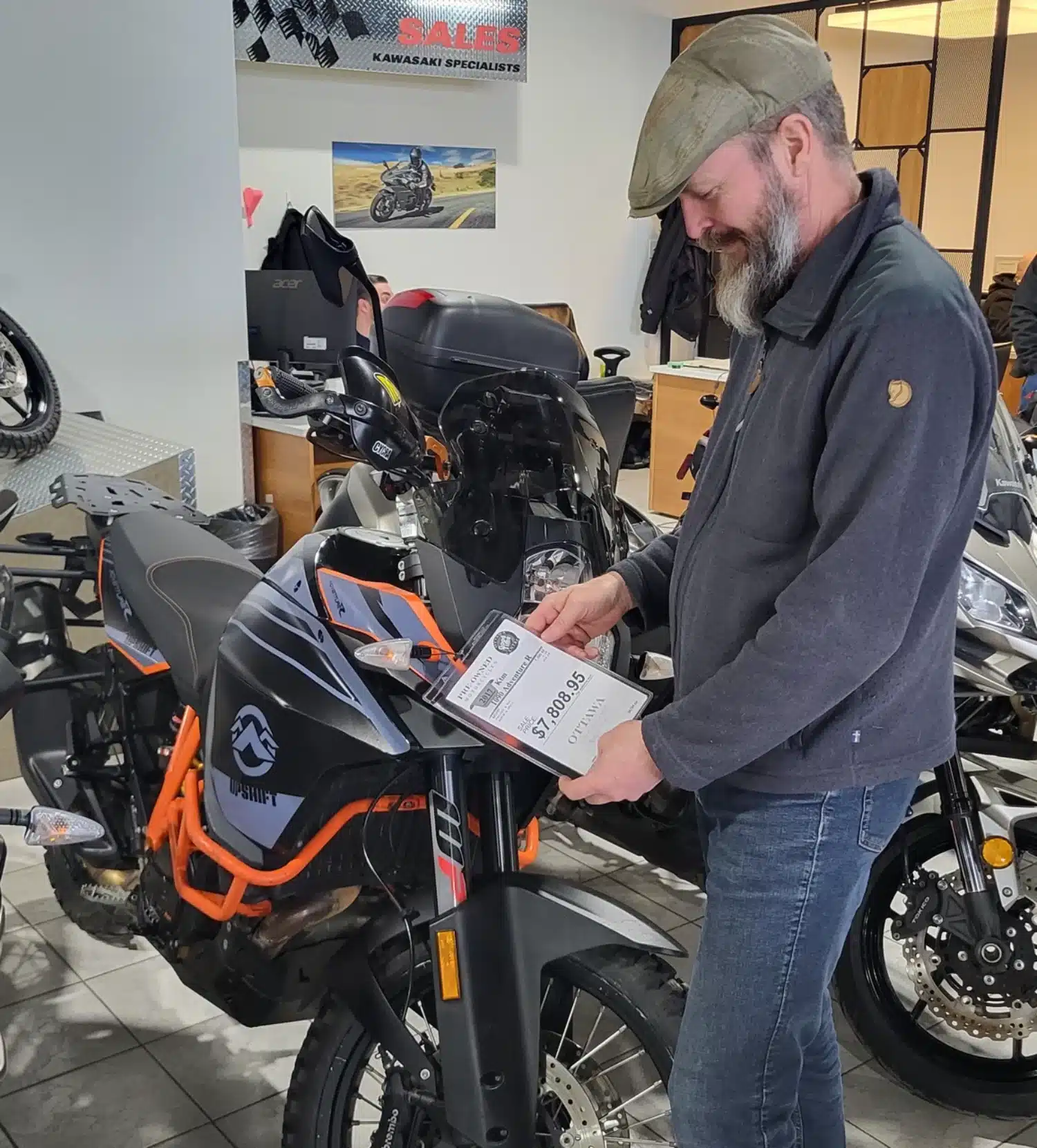
First impression: the bike is already telling you something
Before you even touch anything, take a few seconds to look at the bike as a whole.
Yes, really look.
A motorcycle often tells its story at first glance.
On a street bike, check the alignment of the fairing panels. If the plastic parts look misaligned, if some screws are different from the others, if a fastener is missing entirely, or if the panels are new on only one side, there’s a good chance the bike has already tasted the asphalt.
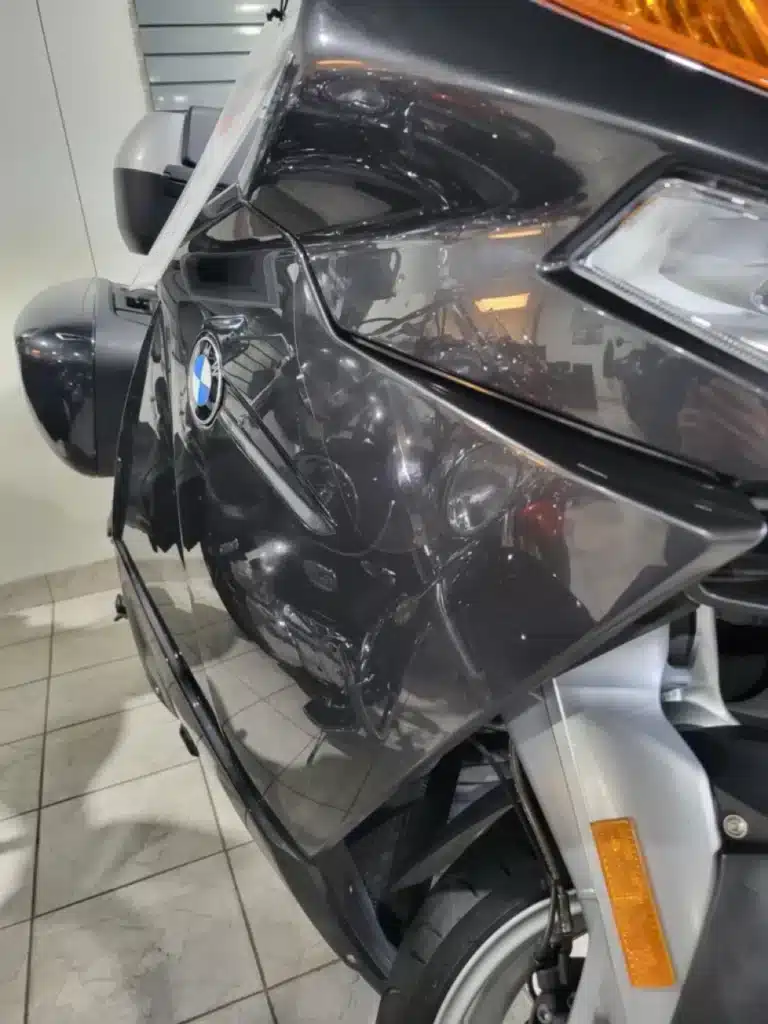
On an adventure bike, it’s a little different. These machines often lead a more… eventful life. Scratches on the crash bars, the hand guards, or the engine skid plate aren’t necessarily a big issue. On the contrary, an adventure bike that’s never seen dirt is almost suspicious.
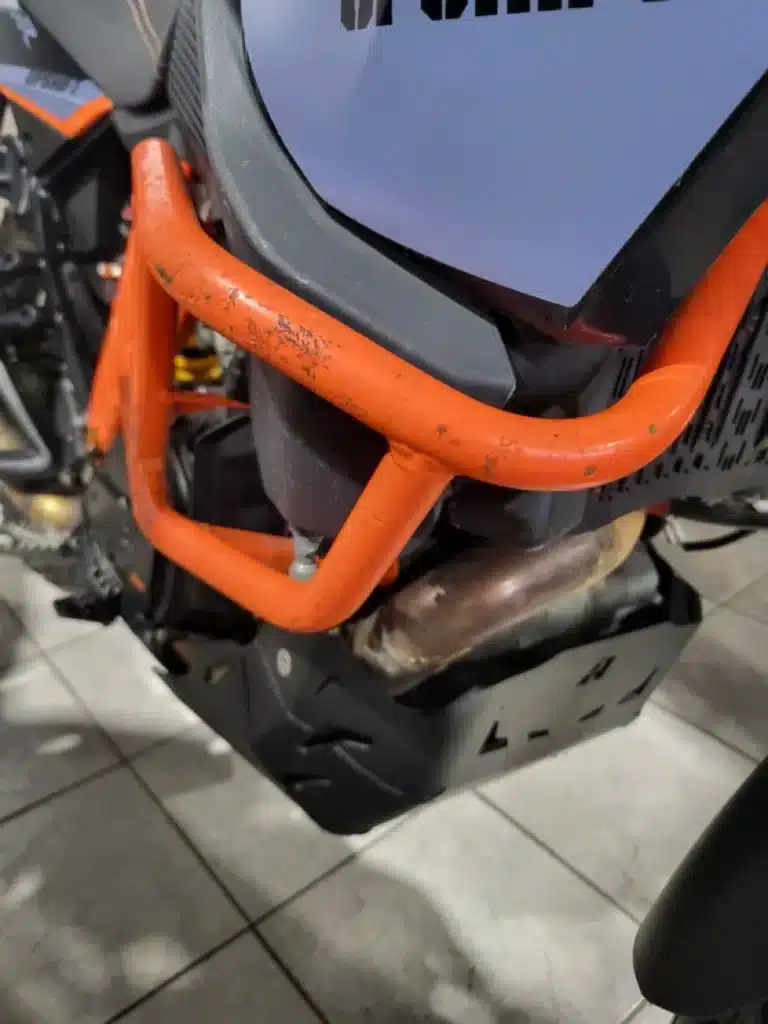
But there’s a difference between a few traces of adventure and an adventure bike that looks like it was used as an enduro bike during the Erzberg race.
Also look at the typical spots where a crash occurs:
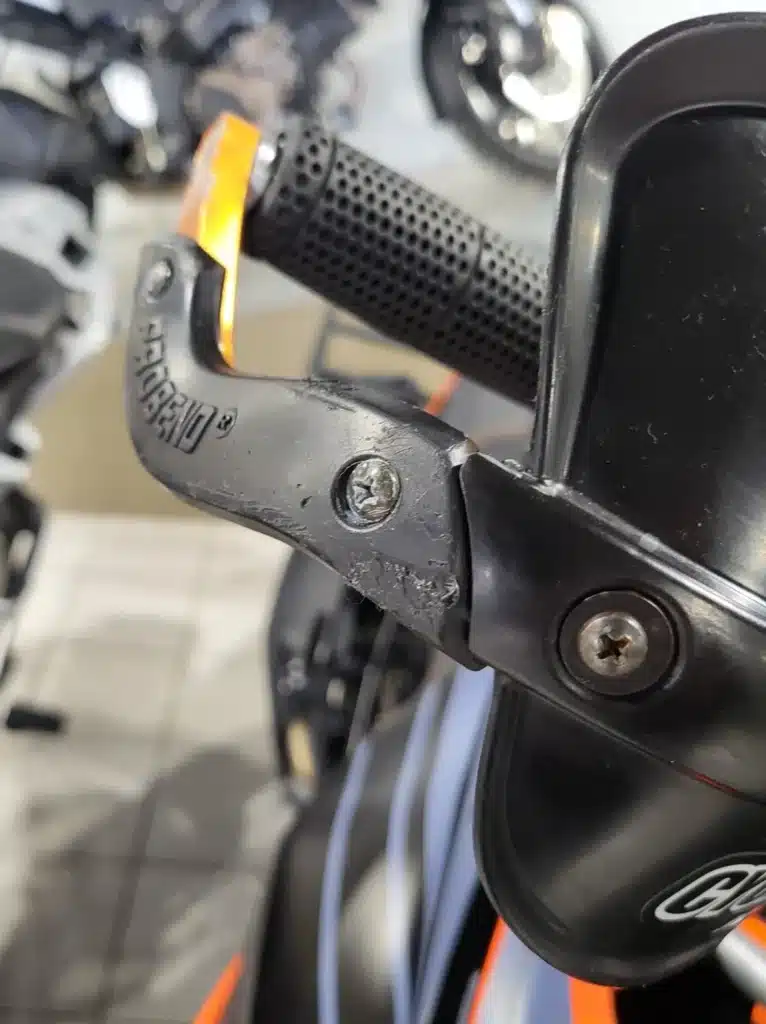
- handlebar ends (very, but VERY worn)
- levers (missing the tip)
- footpegs (one bent compared to the other)
- muffler (scratched, dented, oddly aligned)
- luggage racks (warped, misaligned, new welds)
These parts almost always hit the ground during a slide.
If everything is brand new except for one side… You may have just found the spot where the bike met the ground.
The Frame: The Motorcycle’s Spine
The engine can be repaired. The tires can be changed. The brakes can be replaced.
But a bent frame is a different story.
On a street bike as well as an adventure bike, the frame is the structure that holds everything together. If it has suffered a serious impact, the bike’s geometry may be compromised.
Start by checking the welds. They should be uniform and even, and if there’s any sign of rust, take a closer look for gaps near the weld—this is a sign of a frame break. If you see different weld beads, newer ones, or ones that have clearly been redone, there may have been a repair.
Next, inspect certain critical areas:
- the steering column
- the engine mounting points
- the shock absorber mounts
- the footrest mounting plates
On adventure bikes, these areas take a lot of stress, especially if the bike is carrying luggage and a passenger on roads that look like a mix of gravel and faded asphalt.
A good tip is to look at the bike from the rear. Both wheels must be perfectly aligned. If the front wheel appears misaligned with the rear wheel, something is wrong.
And if the bike looks like it was designed by Picasso… Let’s just say it might not be the ideal machine for cruising at 110 km/h on the highway.
Tires: The Only Point of Contact with the Road
Tires are often the most honest indicator of a motorcycle’s condition. They don’t lie.
First, check the tread wear. A tire that’s very flat in the center indicates a lot of highway riding. That’s not necessarily bad, but it suggests a certain “Iron Butt Tour”-style of riding on every trip. I don’t blame them—it’s so much fun, and that’s what they’re made for! Anyway, I digress…
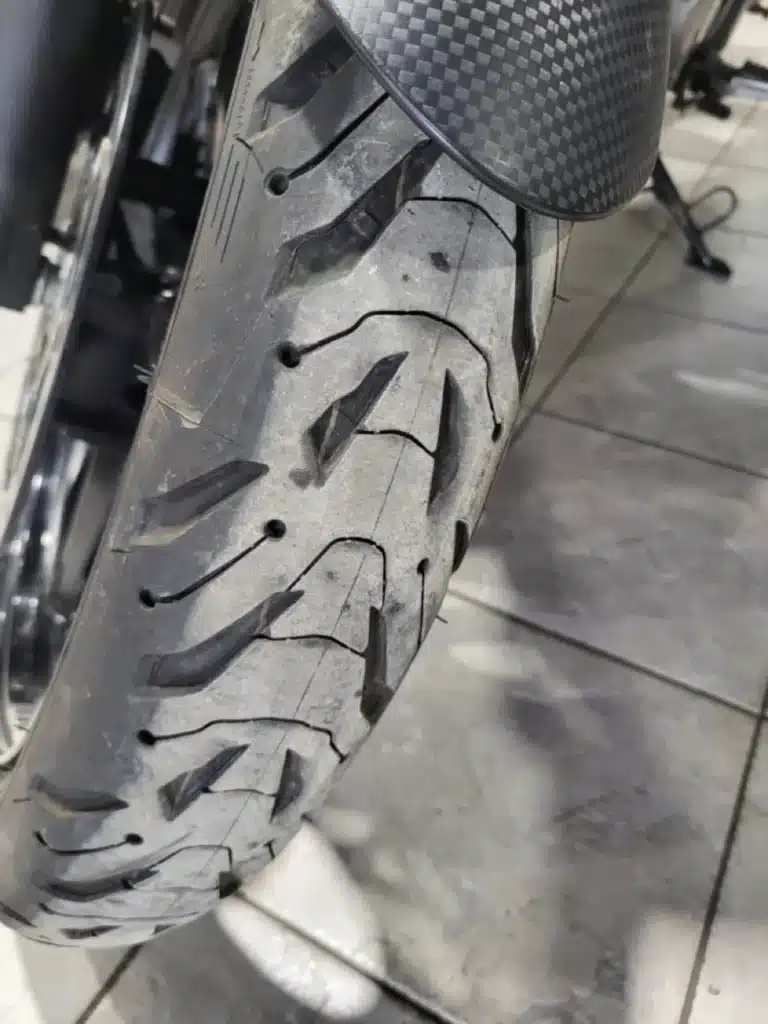
On adventure bikes, also check the tire edges. A tire worn only in the center often means the bike has covered more highway miles than forest trails. At least, this one shouldn’t have fallen over often. A bonus!
Next, check the DOT code on the sidewall of the tire. The last four digits indicate the date of manufacture.
For example: 2319 means the 23rd week of 2019.
Even if a tire still looks good, after five or six years the rubber hardens and loses a lot of grip.
An old but “still good-looking” tire can become as slippery as a bar of soap on a wet floor.
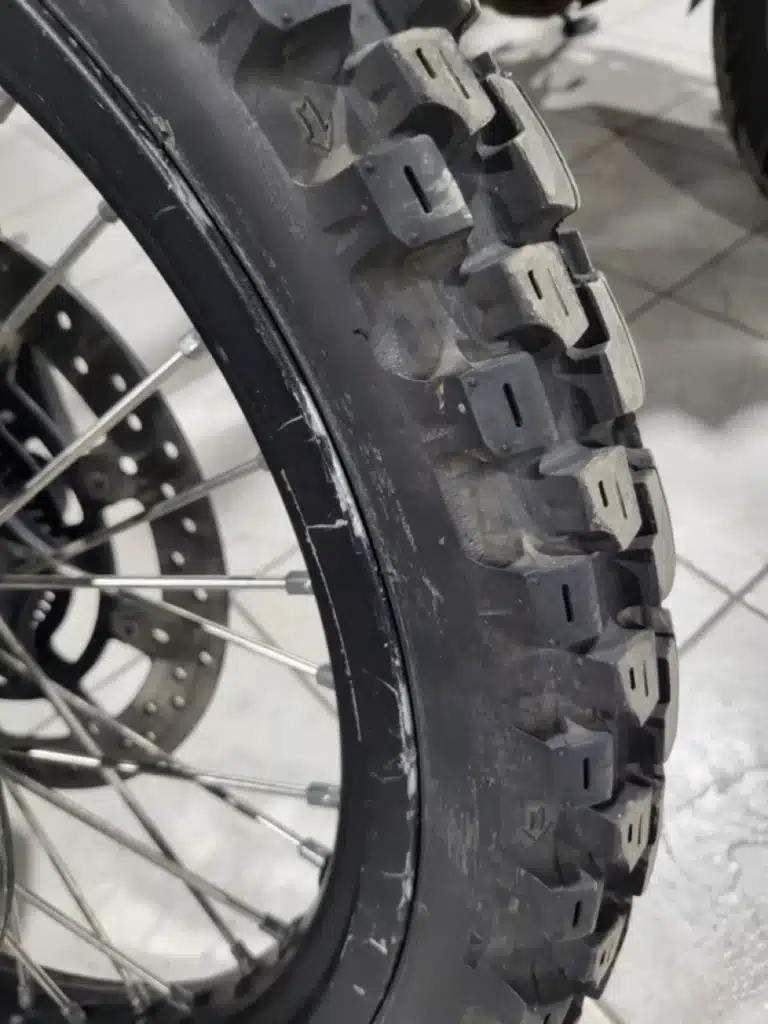
On motorcycles equipped with spoked wheels, also take a few seconds to check the spokes. They must be taut and in good condition. A warped wheel can cause vibrations and poor stability. So play the xylophone on the spokes, listen to the music, and if the “tune” sounds out of tune, spin the wheels in the open air and see if they’re warped like an old Offenbach vinyl record—this is a sign of impact or lack of maintenance. If they aren’t warped, the xylophone could be tuned by a professional.
Brakes: Your Lifeline
A good braking system must be powerful, progressive, and consistent.
First, check the brake pads. If the friction material has almost disappeared and you can mostly see the metal backing, they’re ready for retirement.
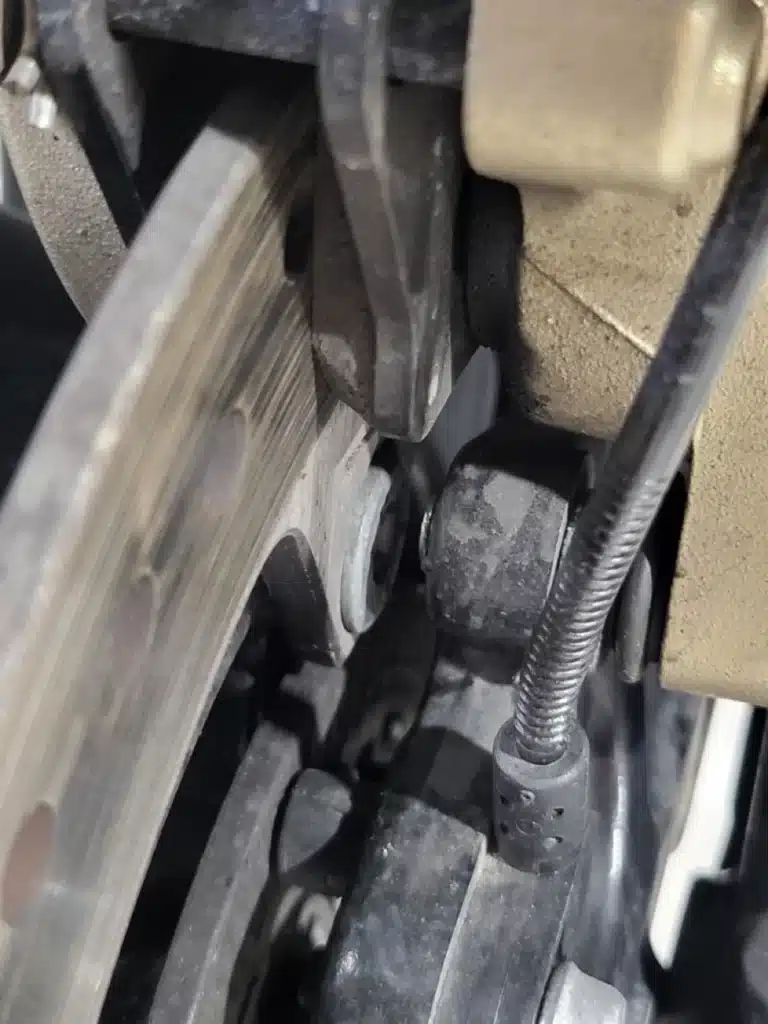
Next, inspect the discs. Deep grooves, a bluish discoloration, or a pronounced rim often indicate advanced wear. And earlier, when you spun the wheels, did they stop suddenly and/or in a pulsating manner? If so, the discs may be warped.
Then there’s the feel of the lever.
When you squeeze the front brake, the lever should feel firm and progressive. If it feels spongy, there might be air in the system or brake fluid that dates back to the days when phones still had a rotary dial.
In any case, brakes aren’t something you want to improvise with.
Suspension: What Sets a Stable Bike Apart from a Rodeo
Suspension is often overlooked by buyers… until they actually ride it.
On the front fork, check the oil seals. If you see oil around the fork legs, there’s a leak. Also run your finger along the tubes: they should be smooth, with no scratches or corrosion.
Even a small spot of rust can quickly destroy a seal.
At the rear, check the shock absorber. If it’s greasy or covered in oil, that’s a bad sign.
Next, sit on the motorcycle and test the suspension. It should compress and then slowly return to its original position.
If it bounces several times, the shock absorber is worn out.
On an adventure motorcycle, the suspension works particularly hard. Between luggage, gravel roads, and potholes deep enough to serve as fishing ponds, it deserves special attention.
Don’t neglect this inspection on a street bike. A faulty suspension can lead to unexpected wobbling in corners and handlebar wobble at high speeds.
The drivetrain: chain, belt, or shaft drive
Depending on the bike, the final drive can take different forms.
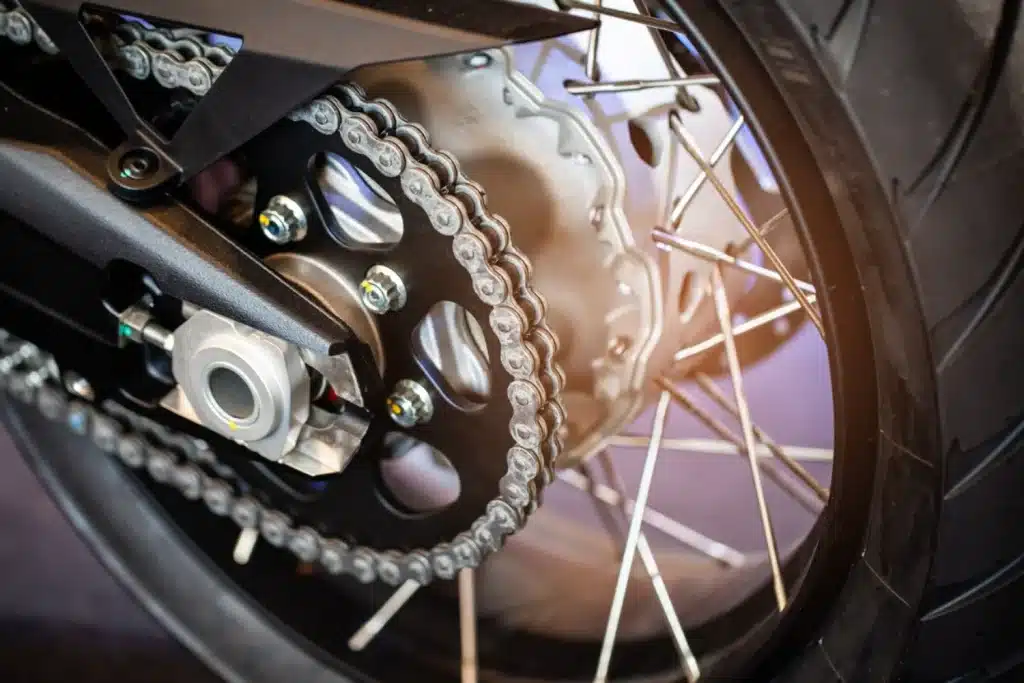
Bikes equipped with a chain require a quick inspection:
- proper tension, no rust, and no sharp metallic noise
- no restriction of movement in the links (a new chain may exhibit this symptom, but movement is smooth across all links)
- front sprocket and rear sprocket teeth in good condition
Very sharp teeth resembling those of a shark indicate a worn-out chain and sprocket assembly.
Some street bikes and many adventure bikes use a cardan shaft instead. Check for oil leaks or abnormal play. Lift the bike onto the center stand, engage the transmission, and check for radial play by rotating the wheel forward and backward. ⅛ inch or more is suspect and should be checked by a professional. Axial play is much more critical. Move the wheel side-to-side, and if there is play accompanied by a clicking noise, walk away, or, again, have it checked by a professional.
A well-maintained driveshaft can last a very long time.
A neglected driveshaft can lead to a rather costly repair bill.
Electrical System: Where DIY Projects Come to Light
Modern motorcycles are packed with electronics.
ABS, traction control, engine modes, digital instrument panels.
Test everything you can:
- headlights
- turn signals
- brake lights
- instrument panel
- heated grips
- cruise control
On some adventure bikes, there are also off-road modes, electronic suspension, and all sorts of features worthy of an airliner.
If the dashboard lights up like a Christmas tree, that’s not a good sign.
And if you see a lot of electrical tape in the wiring harness or if there are wires that are poorly or not at all secured, snaking around haphazardly… Let’s just say someone might have been playing technician without the proper training.
The Engine: Listen Carefully
The engine is obviously the most important part.
Insist on a cold start. An engine that’s already warm can hide several problems.
When starting, listen carefully.
A slight mechanical noise is normal.
A symphony of rattling and clattering is much less so.
Also check the exhaust smoke:
- Blue smoke: oil consumption
- persistent white smoke even when warm: possible head gasket issue
- black smoke: too rich a mixture
Idling should be steady, and the engine should rev up without hesitation.
Check for any fluid leaks—gasoline, oil, and coolant.
Adventure Accessories
ADV motorcycles are often equipped with accessories:
- crash bars
- panniers
- skid plate
- auxiliary lights
- GPS
It’s not the presence of these accessories that matters, but the quality of their installation.
A poorly secured pannier mount can crack the lower frame. An unprotected wire can cause a short circuit.
In short, adventure is great. Improvised wiring, not so much.
The Test Ride: The Moment of Truth
If the seller refuses a test ride… That’s already an important piece of information.
During the test ride, pay attention to several things.
- Acceleration should be smooth.
- Gears should engage easily.
- The clutch shouldn’t slip.
- The motorcycle should brake straight, without pulling to one side.
- At low speeds, the steering shouldn’t have any dead spots.
- At high speeds, there shouldn’t be any abnormal vibrations in the handlebars or footrests.
A healthy motorcycle often feels simple and natural.
When everything is right, you can tell. If not, have an experienced rider test it out.
Private sellers and dealerships: the final indicator
A good private seller knows the history of their motorcycle, can show maintenance receipts, and openly discusses repairs or minor accidents.
If they respond “that’s normal” to everything… That’s less reassuring.
And if someone insists on being paid in cash in a dark parking lot at 10 p.m.… Let’s just say it might be time to head home.
A good seller should have access to information about the motorcycle, such as proof of maintenance, repairs if provided by the previous owner, and manufacturer recalls. If they don’t have this information, you can ask them to put you in touch with the previous owner.
Laws in Quebec
At a dealership, you are protected by the Consumer Protection Act. The legal warranty is governed by the Civil Code of Quebec. You are protected against hidden defects, and the dealership has an obligation to provide information. Be wary of a “final sale with no warranties.”
When buying from a private seller, only the Quebec Civil Code can provide protection. There is still a warranty against hidden defects, but the legal process takes longer.
For more details, visit the website of the Quebec Consumer Protection Office.
Conclusion
Buying a used motorcycle is a mix of mechanical logic, observation, instinct, and sometimes a roll of the dice.
You don’t need to be a mechanic to avoid unpleasant surprises. But the more you know what to look for, the more you reduce the risks.
Take your time.
Inspect the motorcycle methodically.
Ask questions.
And above all, trust your instincts.
If in doubt, call in a professional for a thorough inspection.
Because ultimately, you want a motorcycle for traveling, exploring, and racking up miles.
Not a mechanical project worthy of a restoration documentary series on the Historia channel.
And believe me… There are already enough of them on the market to fuel several seasons.
Happy shopping!