Finding yourself in the middle of the woods with a broken-down ATV is never pleasant, and in some extreme situations, it can even be dangerous. That’s why preventive maintenance is your best insurance against unpleasant surprises.
Of course, you check your oil, tire pressure, and brake condition—that’s basic. But there are a handful of checkpoints that are often overlooked, yet are vital to ensuring the safety, performance, and longevity of your trusty machine.
In this article, we’ll focus on five often-forgotten checks: universal joint boots, bearings and bushings, wiring harnesses, lubrication, and air filters. Make them part of your routine, and you’ll be able to ride with peace of mind.
1 – Cardan joint boots: discreet but essential protection
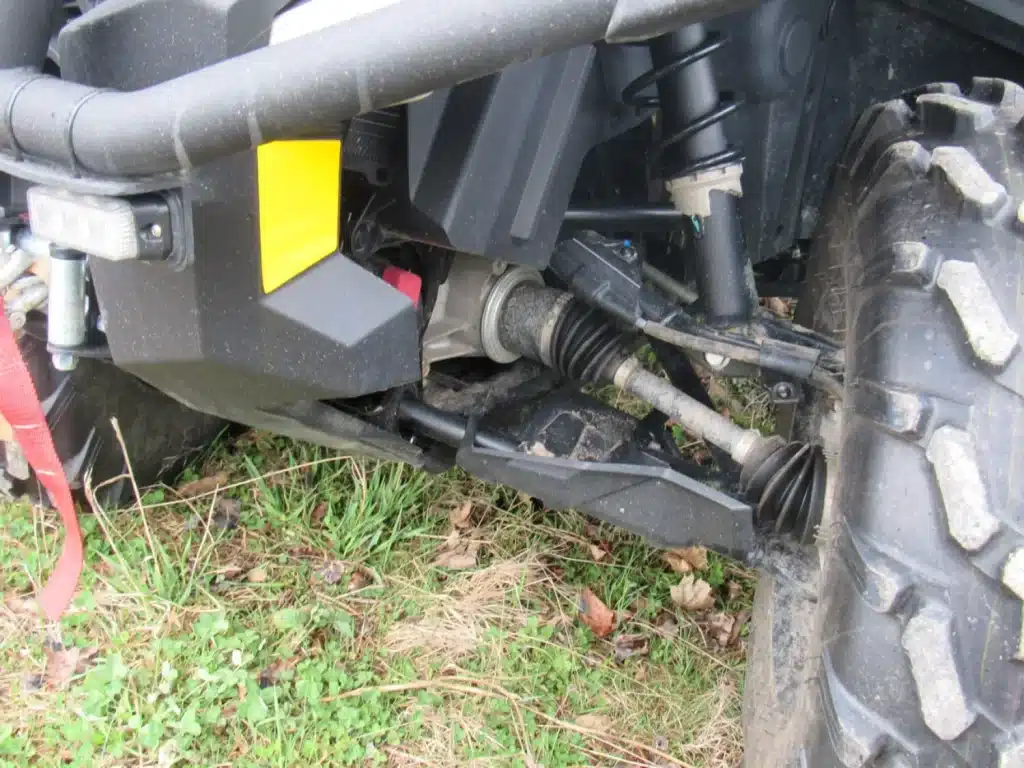
Cardan joint boots are protective coverings, usually made of rubber, located behind each wheel. They play a vital role: they protect the transmission cardan shafts, which are filled with a special grease to ensure proper functioning.
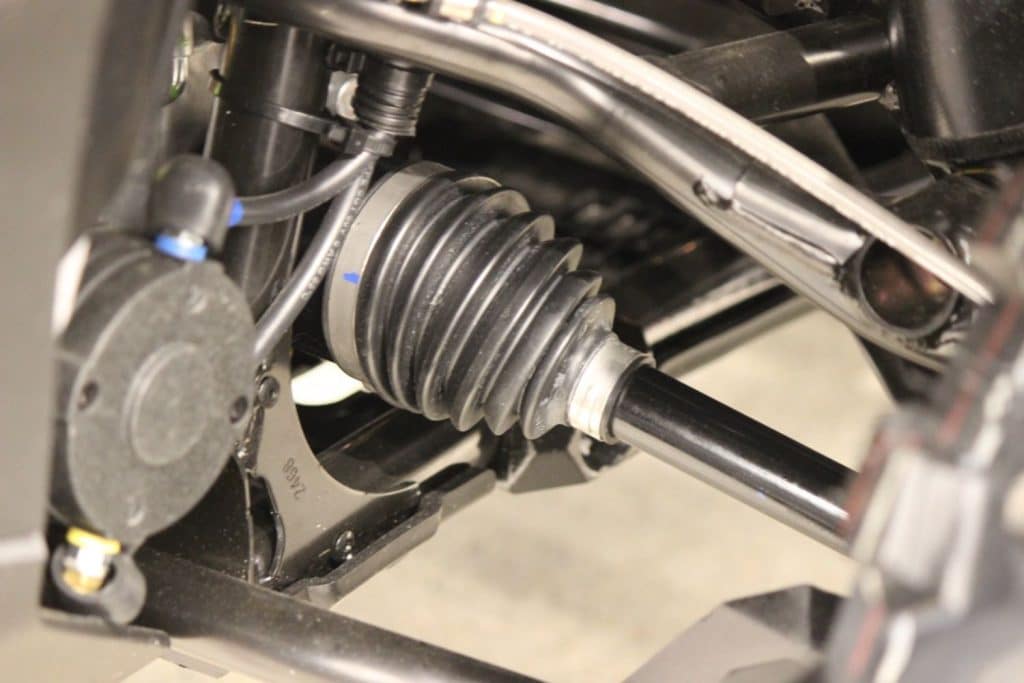
This check is essential because if a bellows is damaged or split, there are several risks. First, it will allow the protective grease to leak out. Then, water, mud, and sand will get inside. Once contaminated, the joint will continue to deteriorate. Foreign objects will get in and, slowly but surely, destroy your universal joint. It’s a silent process that leads to failure.
Look for the following signs:
- Cracks, splits, or cuts in the rubber. This is the first warning sign!
- Grease marks on or around the boot, indicating that a leak is occurring.
- Loose or missing clamps, often accompanied by grease dripping.
Replacing just a boot is significantly less expensive than having to replace an entire CV joint.
2 – Bearings and bushings: invisible allies
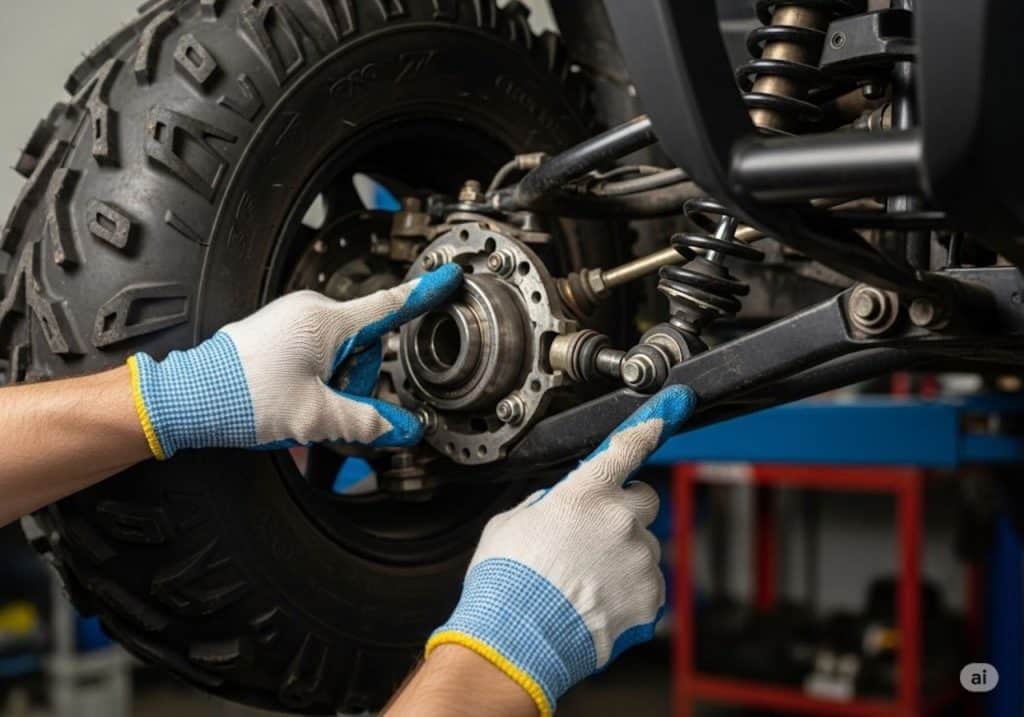
For optimal road holding and quick response to controls, the condition of the wheel bearings and suspension arm bushings is absolutely fundamental. They are what connect all the moving parts.
Silent wear
These components are subject to a lot of shocks, vibrations, water infiltration, and dirt. A defective wheel bearing starts by creating play in its housing, which can eventually deform it. In the worst case, it can break and lock up a wheel. Similarly, play in the suspension arms makes steering vague, unstable, and dangerous. Change the bearing quickly! The more damaged it is, the more difficult it will be to remove.
To detect play, lift the ATV to free the wheels. Firmly grasp each wheel and move it sideways: the slightest play indicates worn bearings. With the wheel still raised, also check the suspension arms, tie rods, and ball joints for any suspicious movement.
3 – Inspecting the wiring harness: the weak point
The off-road environment is unforgiving for a ATV’s electrical system. Constant vibrations, water, mud, salt (when crossing roads in winter), and branches are all serious threats to your wiring harness.
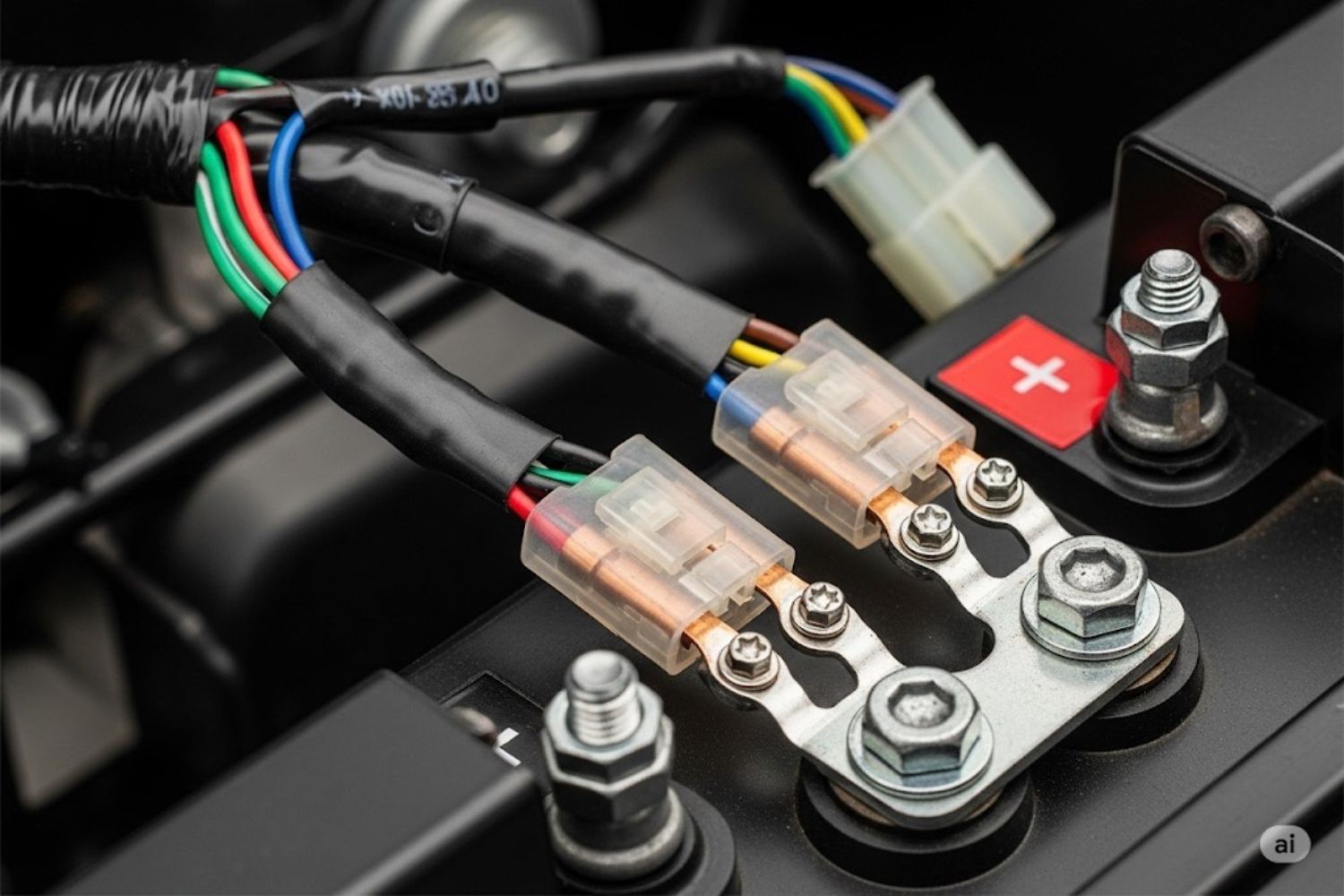
The off-road environment is unforgiving for a quad’s electrical system.
A damaged wiring harness opens the door to numerous problems:
- Short circuits or blown fuses that can immobilize you or cause lighting failures.
- Corrosion attacks battery terminals or connections. Current flow decreases, affecting starting, battery charging, and the proper functioning of all your accessories.
Start by doing a thorough visual inspection of all wiring. Focus especially on details and small defects. This is meticulous work.
- Exposed areas and friction points are weak spots. Wires close to the chassis or next to moving parts are the most vulnerable.
- Use a multimeter to test the continuity and resistance of the wires, as well as the battery voltage (with the engine on and off).
- No wires should be stripped, cut, or pinched.
- Check that the protective sheaths are in good condition.
- Make sure that all connections are clean, tight, and free of white or green powder (evidence of corrosion). Connectors will be better protected with a layer of silicone or dielectric grease.
4 – Lubrication: economical and preventive
Lubrication is economical and easy to perform; we are referring here to operations that do not require disassembly. Note that some sport quads have a chain final drive, which must be cleaned and lubricated regularly. Other ATVs do not have visible grease fittings.
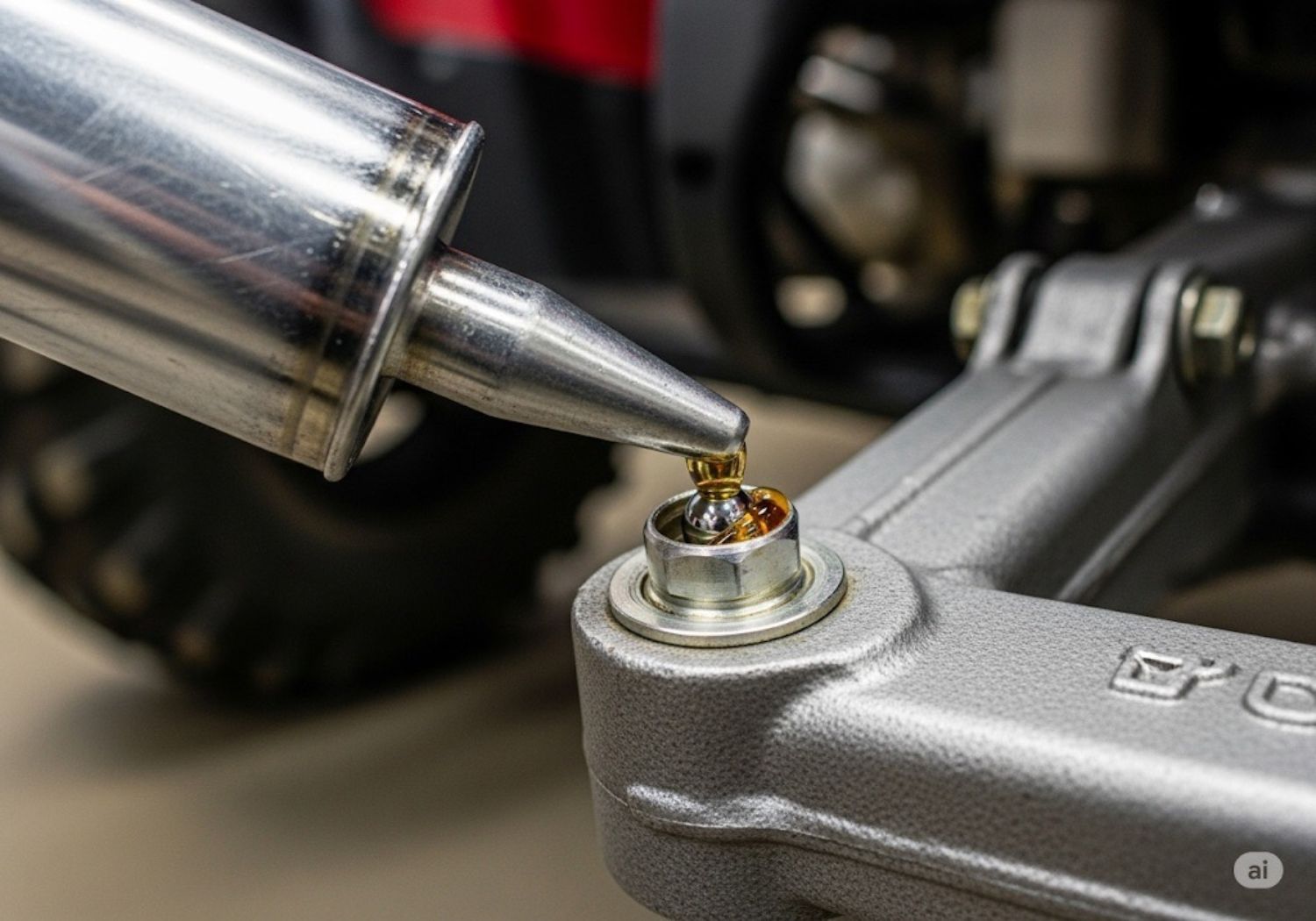
Location of grease fittings
On ATVs, many articulation points are equipped with small grease fittings (sometimes called zerk fittings). The exact location may vary depending on the model, but they are usually found on the steering and suspension ball joints, suspension arm pivots (triangles), or drive shafts. They are easily recognizable.
The right type of grease
- Don’t use just any product! For the chassis and suspension, it is best to use a lithium/calcium grease or a synthetic polymer grease specially designed for off-road use.
- Many professionals recommend a grease enriched with molybdenum disulfide for universal joints. It offers additional protection against high pressures and wear if you ever forget to lubricate.
- Lubricate regularly! Ideally, this should be done after each major cleaning or every 2 or 3 demanding rides.
- The idea is to pump in new grease to flush out the old grease contaminated with water and mud. Continue injecting until the new grease overflows slightly: this is a sign that the seal is perfect.
5 – The air filter: the engine’s lungs
The air filter allows air to enter your engine. In muddy, dusty, or sandy environments, it gets dirty rapidly. A dirty filter suffocates your engine.
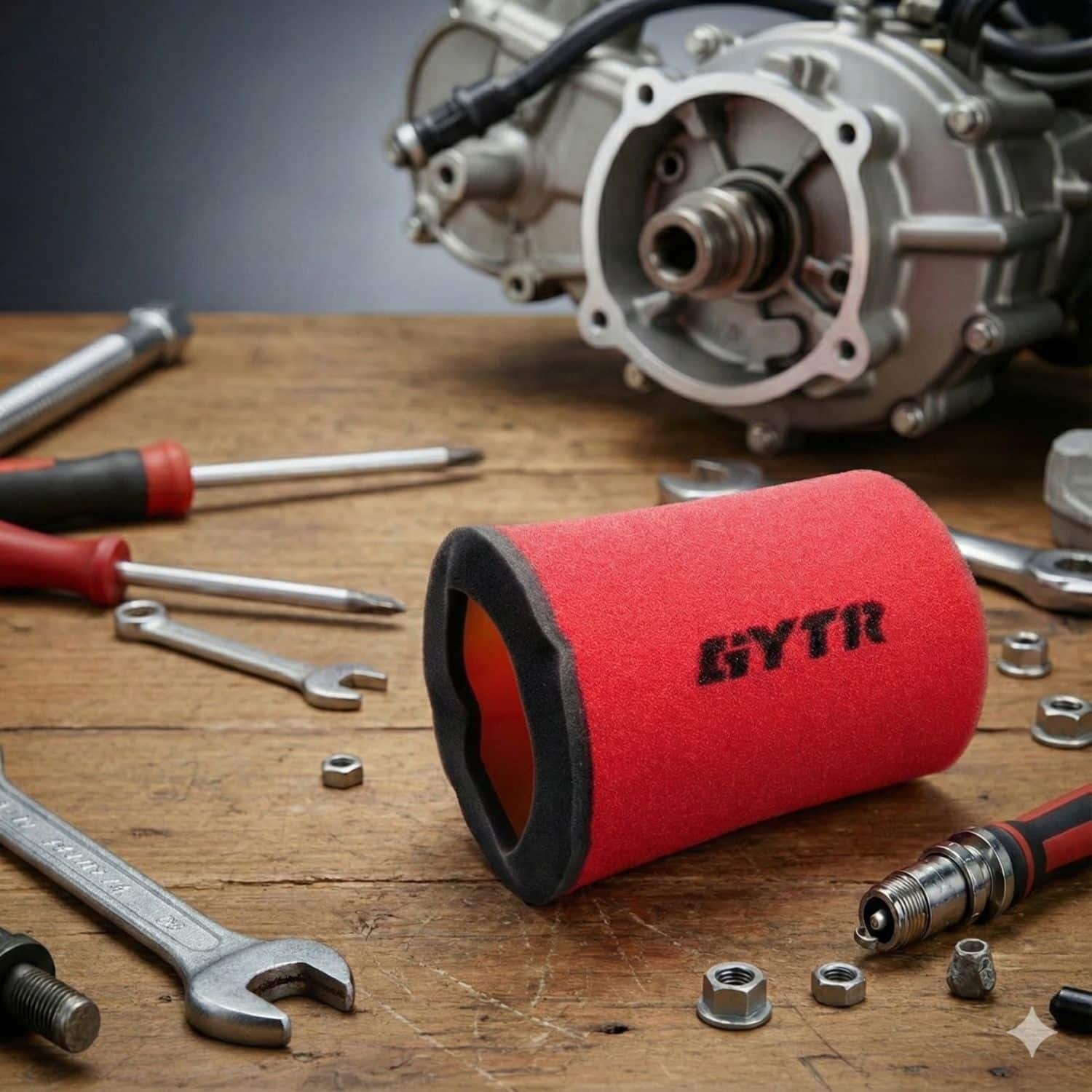
The impact of a forgotten filter
- Loss of power: a clogged filter means less air entering the engine. The air/fuel mixture is no longer balanced, which affects performance.
- Engine wear: if the filter is torn or poorly oiled, dirt can enter the cylinders directly. There is a risk of premature engine wear and reduced compression. You will also notice excessive engine oil consumption and blue smoke from the exhaust.
Different types of filters
Overall, there are several types of air filters: paper filters, cotton filters (such as K&N), and foam filters.
Paper filters: these are often installed as original equipment and are single-use. They should not be reused. Cleaning them with an air gun can create small cracks that allow impurities to enter. You can tell when they are worn out because they no longer let light through.
- Cotton filters (K&N type): these are mainly used to improve performance on modified engines. They allow more air to pass through, but must be oiled regularly.
- Foam filters (UNI or GYTR type): these are the best alternative. They are similar in price to the original filters and are reusable. Maintenance is easy: it can be cleaned with soap and then oiled.
Conclusion
Regular maintenance of these simple details (bellows, bearings, electrical system, lubrication, and air filter) can prevent breakdowns and costly repairs. By taking care of your vehicle yourself, you will be better able to detect details that could become serious problems.