The temperature has dropped, the first snowfalls have blanketed the ground, and the trails are frozen solid. But before you can enjoy the snow-covered trails, some careful maintenance is required. Some snowmobilers, eager to experience the joys of powder snow, overlook a few simple but important mechanical checks. Take a look at these relatively simple but essential checks, or make sure your favorite mechanic hasn’t overlooked them.
To avoid ruining your season, here are five relatively simple mechanical checks that are often overlooked by snowmobilers and will prevent many inconveniences during your rides.
1. Lubricating the frame
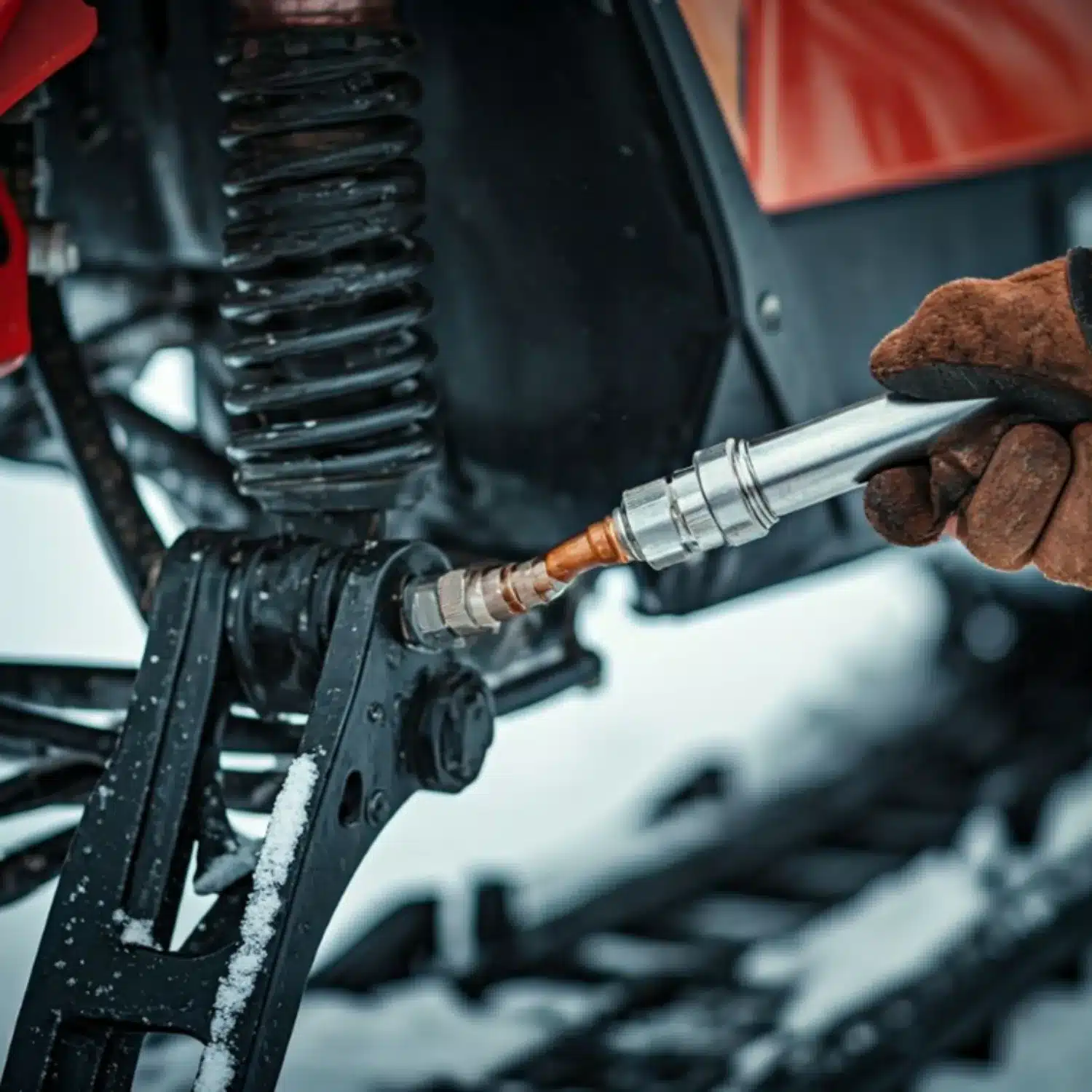
Lubricating the snowmobile frame is essential for durability and overall performance. The job involves lubricating the joints, bearings, and pivots with synthetic grease that is resistant to low temperatures to protect the system from wear and corrosion. You will need a grease gun and an axle puller.
- Suspension pivots: treat all points, including ball joints. Excess grease that escapes effectively drives out moisture. Exposed metal parts should be sprayed with an aerosol lubricant to protect them from moisture and salt.
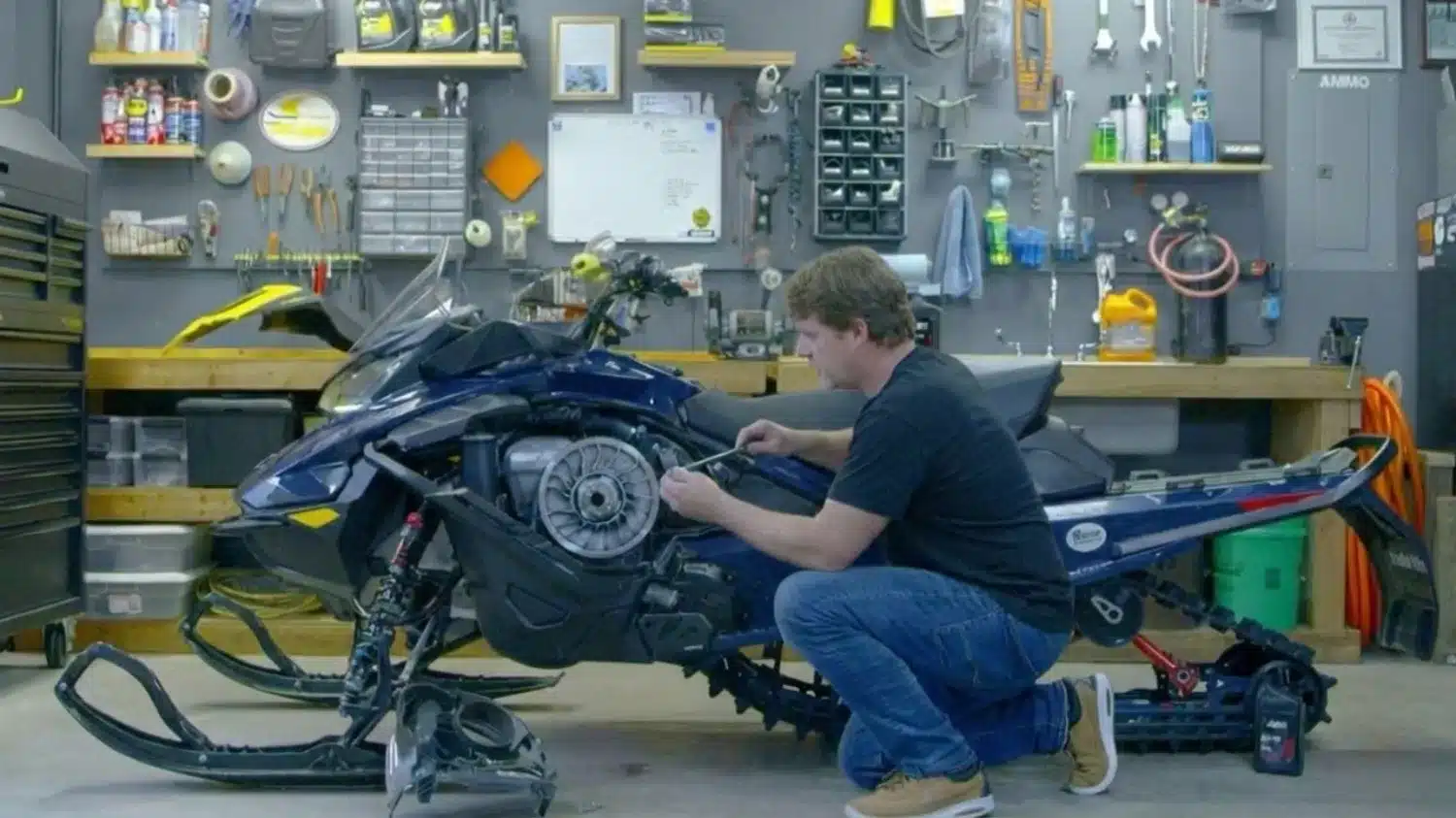
- Lubricating pulley rollers: after removing the guards and belt, use an expansion tool to spread the faces of the secondary pulley apart. Unscrew the roller axle with a Torx screwdriver, then drive it out of its housing with a suitable screw or extractor tool. Inspect the condition of the needle bearing and its cage. Lubricate with the grease injector. To reinstall, align the axle and slide it into place.
2. Inspection and track tension
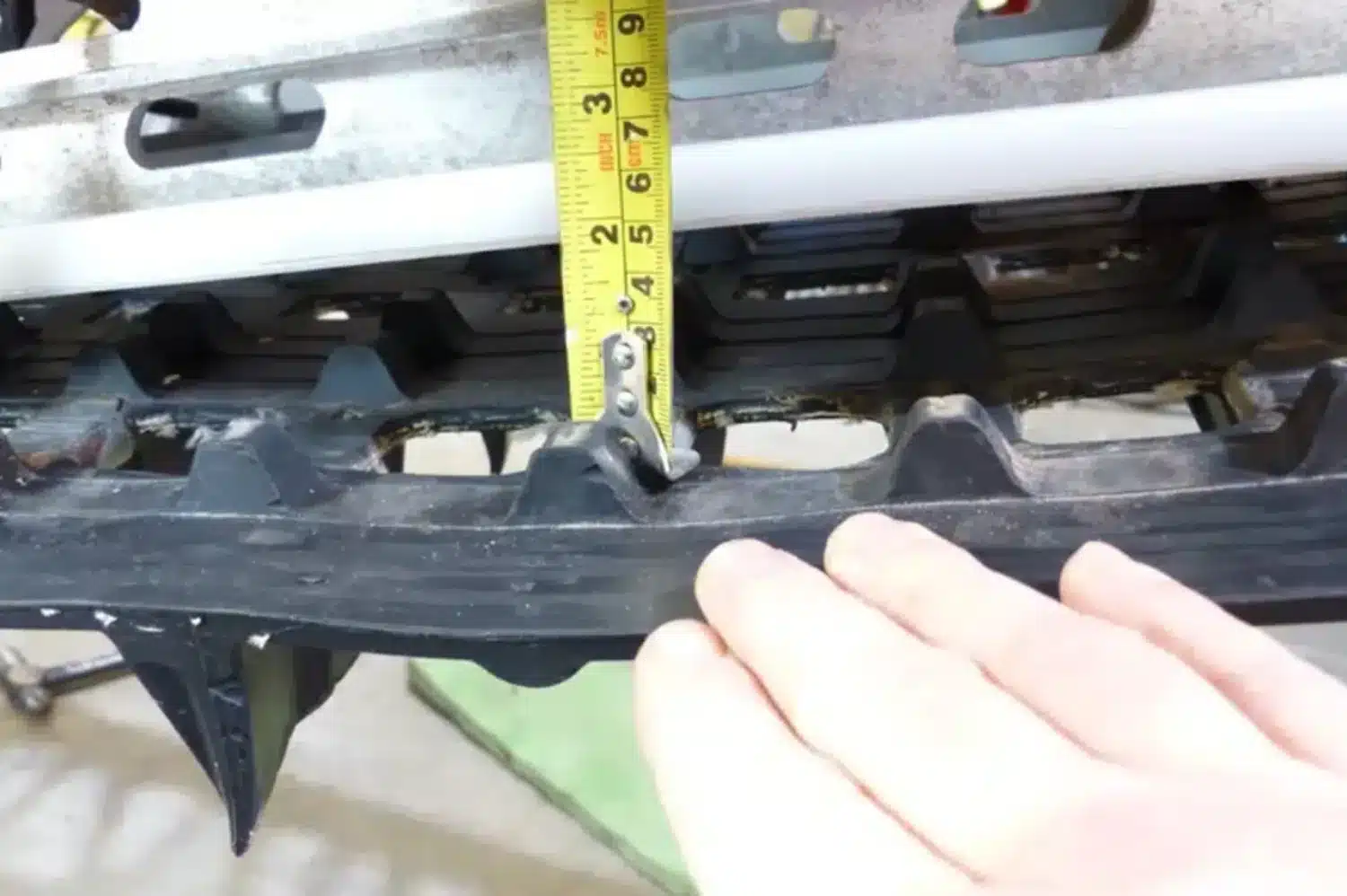
A poorly adjusted track is a common cause of breakdowns on the trails.
If the track is too tight, it puts excessive pressure on the suspension bearings, which increases friction, fuel consumption, and heat.
If it is too loose, it can damage the skids, drive wheels, or even derail.
Inspect the condition of the cleats and guides. Check the tension according to your owner’s manual, making sure it is neither too tight nor too loose.
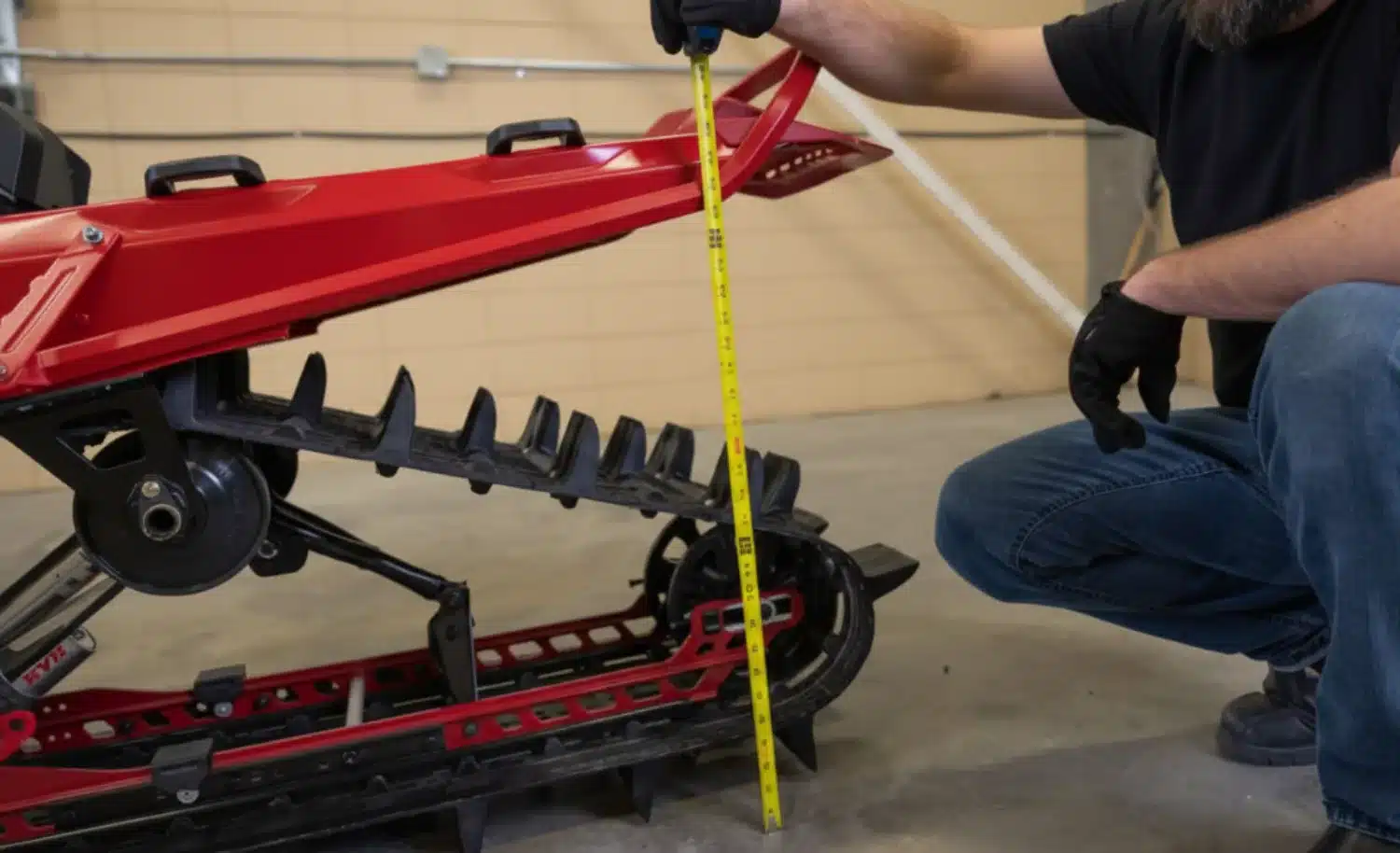
- The procedure is to lift the rear of the snowmobile using a jack. Measure 16 inches (40 cm) from the rear axle toward the front.
- At this distance, apply 10 lb (4.5 kg) of pressure to the track with a tension gauge.
- Measure the space between the track and the skid: the usual distance is generally between 3/8 and 1/2 inch(approximately 1 cm).
- Adjust both sides to ensure equal tension.
- Always consult the vehicle manual, as pressure and distance vary depending on the model and track length.
3. Sliders and carbide runners
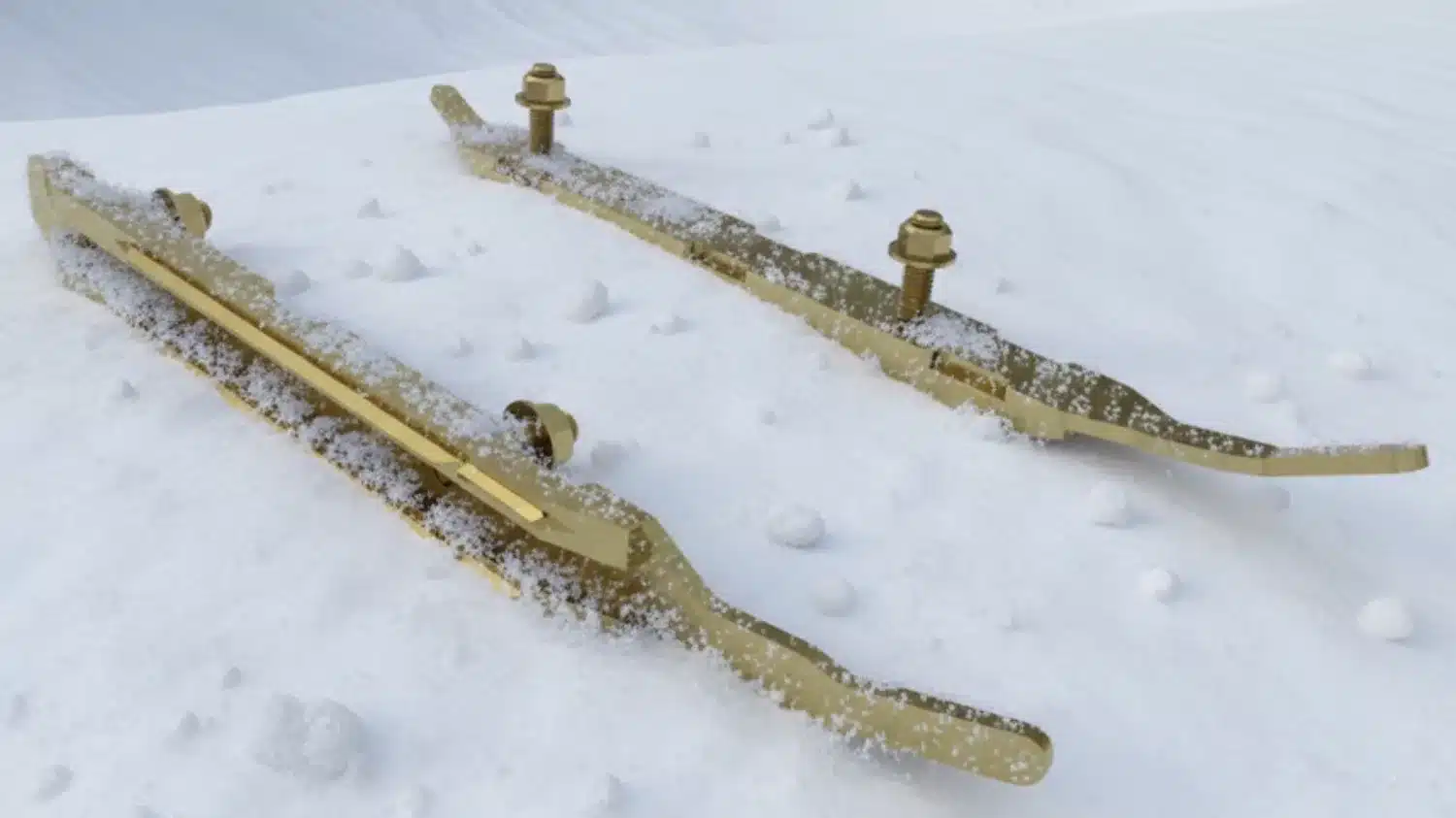
These two components are used to steer and maintain contact between the snowmobile and the snow or ice. They wear out silently.
Sliders prevent metal rails from rubbing directly against the track. Worn sliders create enormous friction, causing the suspension and plastic parts to overheat. A feeling that the snowmobile is slowing down is a good indicator that there is a problem that needs to be addressed.
The carbide runners under the skis provide steering. Dull runners or worn carbide elements greatly reduce road holding and control.
- Replace the sliders as soon as their thickness reaches the wear line.
- After lifting the track and releasing its tension by loosening the rear screws, turn the track until a window aligns with the front mounting screw. Remove the screw and push the old runner out from the rear.
- Cut the new runner to the same length as the old one. Insert the new track (lubricated with silicone) through the window, slide it along the rail, and align the holes.
- Re-tighten both sides and tension the track to the manufacturer’s specifications before placing it back on the ground.
To slow wear in light snow or ice conditions, installing scrapers is recommended.
4. The replacement drive belt
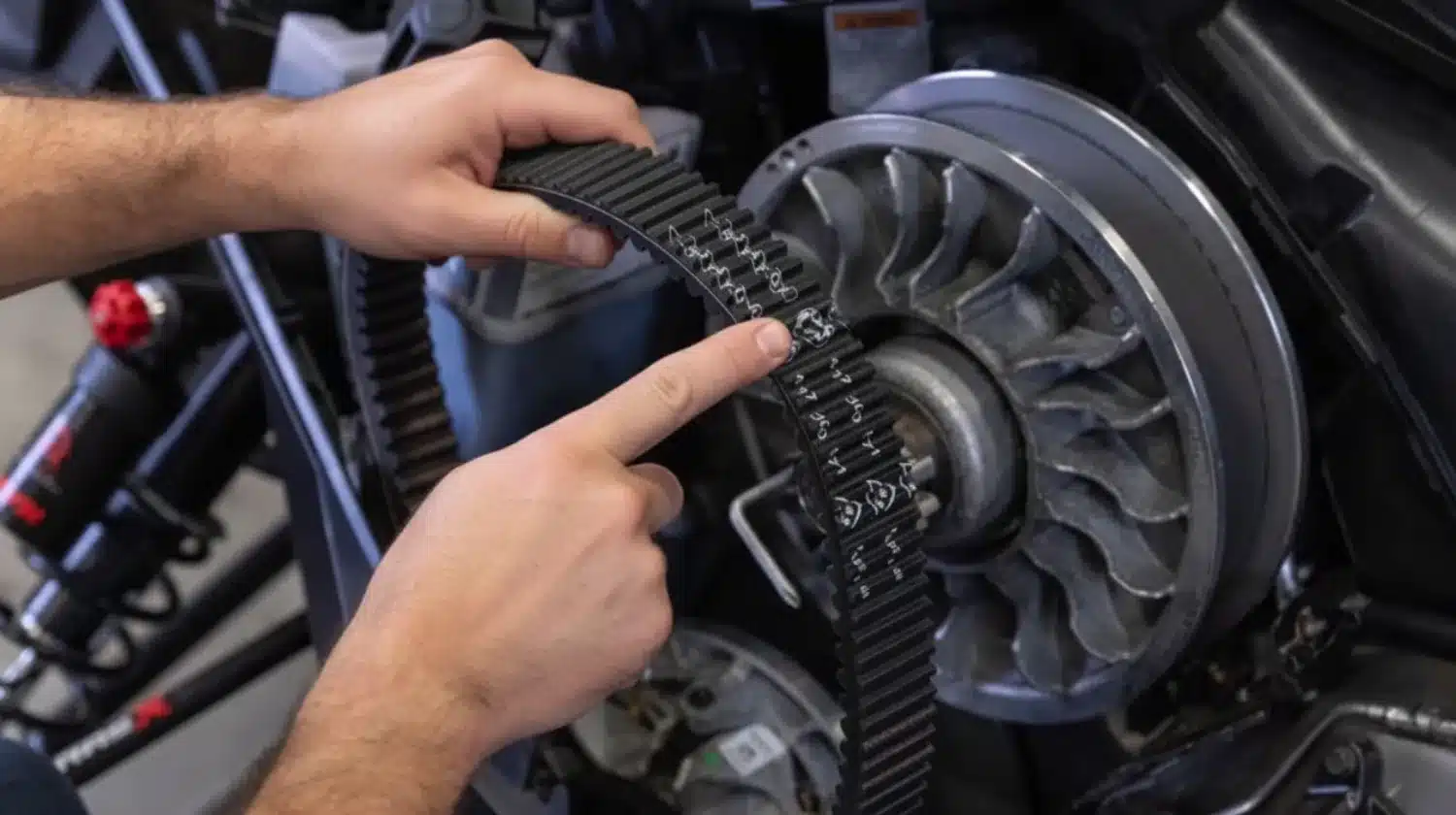
Many snowmobilers forget to bring a replacement belt. Start by checking the snowmobile belt that is already in place. Make sure the engine is cold, then remove the belt cover.
Examine the drive belt for cracks, fraying, or glazing. White markings are a sign of good condition. Measure the tension between the pulleys with a ruler and compare it to the specifications in the owner’s manual.
Snowmobiles usually have a place to store the spare belt. Check that it is still in good condition. It should be stiffer than a used belt, but it should not be dry, hardened, or cracked.
Changing the snowmobile belt:
- Start by removing the protective guards.
- Spread the sides of the secondary pulley using the appropriate expansion tool to remove the old belt.
- Install the new belt, making sure it is facing the correct direction.
- Engage it first on the primary pulley before positioning it on the expanded secondary pulley. Once the belt is in place, remove the expansion tool and reattach the protective guards.
Ensure that it is properly tensioned and placed at the correct height on the secondary pulley.
5. Adjusting the suspension
- Adjust the preload of the rear suspension springs using the special tool provided in the vehicle’s small tool kit.
- Depending on the model, adjust the compression speed, also known as the shock absorber rebound. This is the speed at which the suspension returns to its initial position after being compressed. Turn the adjustment knob (often red) clockwise to increase compression and counterclockwise to decrease it.
- Do as the racing technicians do. They change only one notch per test. Then they record their results. Start by adjusting the spring, then the compression. The stresses on the suspension are different depending on whether you are alone, with luggage, or with a passenger.
- The front and rear shock absorbers must also be balanced for safety and driving comfort. This adjustment maintains ground contact, stability, and weight transfer, not to mention shock absorption and comfort.
These few inspections can prevent unpleasant stops in the middle of the woods or endless waits for a tow truck. It’s not a waste of time to anticipate breakdowns with a few simple steps. Your safety, your security, your enjoyment, and the longevity of your snowmobile will thank you.
Have a great snowmobiling season!