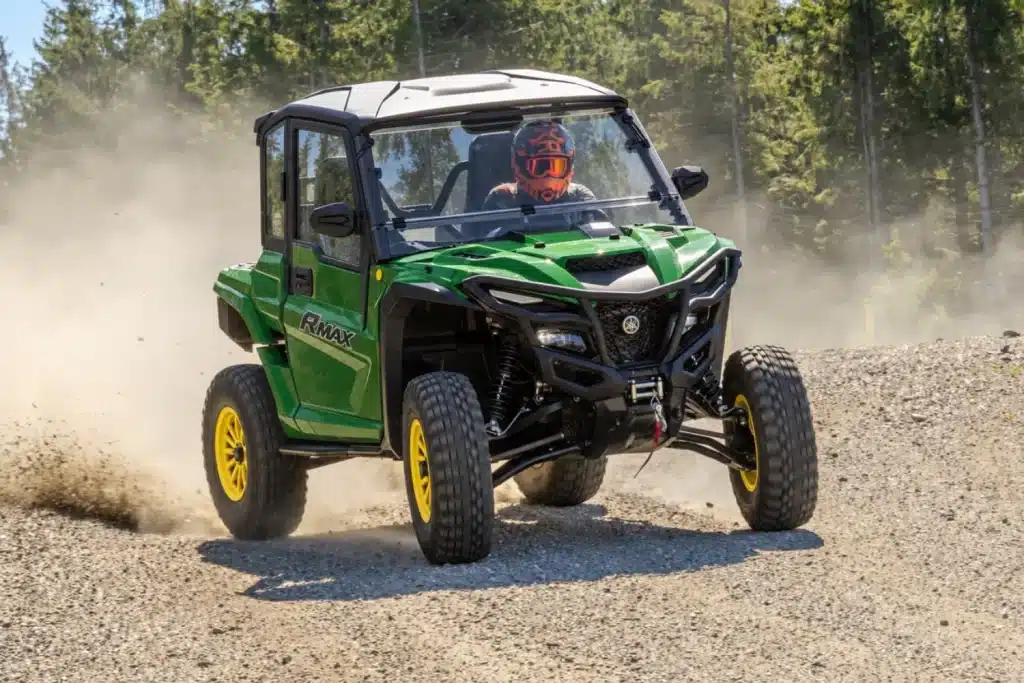
The agreement announced between Yamaha Motor and John Deere points to a major shift in the realities of side-by-side vehicle development. Behind the two brands’ partnerThe Yamaha–John Deere alliance thus appears to address several challenges at once: sharing expenses, speeding up development, making use of manufacturing capacity on American soil and bringing together two complementary areas of expertise. In a market where expectations are growing as quickly as price pressure, this cooperation could become an important driver of competitiveness.ship lies a question that goes beyond launching new models: how can manufacturers keep offering competitive vehicles when developing them costs more and more? The agreement calls for the joint development and mutual supply of certain future SxS models, while maintaining each brand and its dealer network.
Let’s try to understand what this means by looking at parallels in the automotive industry, production constraints and the complementary strengths of these two new partners.
The Realities of the Automotive World
The automotive industry offers an illuminating parallel. Manufacturers have long shared platforms, engines and transmissions to spread their investment costs. The Mazda CX-50 Hybrid, which uses Toyota’s hybrid technology, illustrates this approach. Mazda gains access to a powertrain without having to develop every component on its own, while retaining design and handling choices that reflect Mazda’s DNA. For buyers, a vehicle’s personality therefore does not necessarily depend on every one of its parts being exclusive. It also comes down to how the manufacturer integrates, tunes and adapts those parts to preserve the image and characteristics buyers expect from their brand.
Competitive pressure lends new urgency to this approach today. For example, Mr. Koji Sato, a Toyota executive and president of the association of Japanese automakers, has proposed greater component standardization among manufacturers. Wiring harnesses, connectors and cooling components represent significant expenses without necessarily being selling points. With Chinese manufacturers on the rise, separately producing numerous variations of similar parts becomes difficult to justify. The money saved can be devoted to technologies and features that truly influence customers’ choices.
The Situation in the ATV and Side-by-Side Industry
This thinking also applies to SxS vehicles. We know that users now expect much more than an engine, four-wheel drive and a cargo box. The enthusiasm for the XPEDITIONs and Defender HD11 Limiteds of this world shows that comfort, instrumentation, electronic aids and cabin equipment such as air conditioning and heating are playing a growing role. All of this requires development, testing and careful integration. In a market with lower volumes than the automotive industry, financing all these advances alone can become a heavy burden. Collaboration allows manufacturers to share that effort while giving each brand the opportunity to offer vehicles suited to its customers.
Reducing Costs
The first potential benefit of the Yamaha–John Deere agreement is therefore lower costs. Developing an engine, a transmission or a vehicle architecture requires teams, prototypes and tooling. If certain assemblies serve both partners, those expenses can be spread across more units. Joint purchasing can also improve the terms obtained from suppliers. Users would certainly welcome lower retail prices, but the savings can also finance better equipment, speed up model updates or restore the financial margins needed to keep investing.
Shortening Development Timelines
The second benefit concerns timelines. A company that already has expertise or a mechanical assembly can spare its partner from starting the work from scratch. Yamaha and John Deere have announced precisely this intention: to combine Yamaha’s powertrain and design expertise with Deere’s American development and manufacturing capabilities. This division of responsibilities could shorten certain stages and help bring new products to market. Their integration and durability will still need to be validated, however: sharing a technology does not eliminate the essential testing required before it can be commercialized.
Industrial Restructuring and the Tariff Realities of 2026
For Yamaha, the agreement is also part of a concrete restructuring effort. We know that on August 4, 2026, the manufacturer announced the end of SxS production at its Georgia plant and said production of Yamaha side-by-sides would be relocated, without providing further details. This does not mean closing the entire plant; Yamaha has since announced that operations there will continue to manufacture ATVs, golf cars and WaveRunner personal watercraft.
The agreement with John Deere appears to offer a logical way to maintain Yamaha’s presence in the SxS market while reducing certain industrial constraints and improving the profitability of its land-based operations.
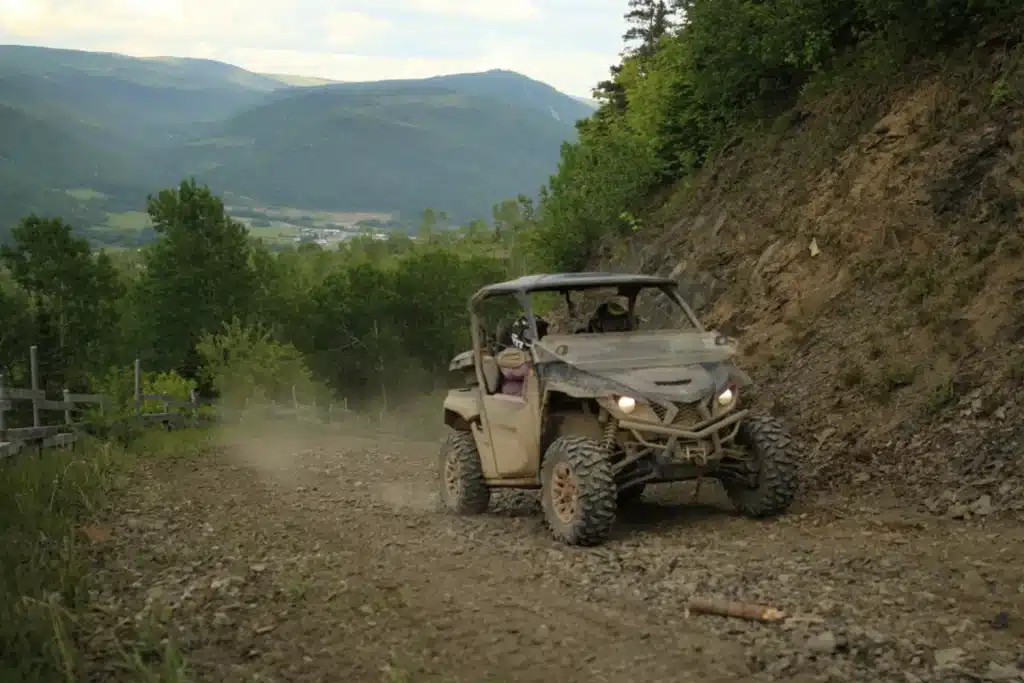
The possibility of maintaining American manufacturing provides another strategic advantage. A side-by-side assembled in the United States for that market avoids importing the finished vehicle, and therefore exposure to tariffs that could apply to that transaction. Possible production in Japan would have exposed Yamaha to this risk. Note that Yamaha never announced a transfer of production to Japan; that was an assumption made by the specialist press.
The tariff difficulties encountered by BRP nevertheless show why this option matters. In April 2026, BRP reported that changes to American duties resulted in a 25% tariff on the full value of imported snowmobiles and most of its off-road vehicle models. That is without counting the ban on importing Spyder and Canyon models into the USA, which took effect on September 26. Local manufacturing can therefore provide greater stability in the face of changing trade policy. It does not shield manufacturers from every cost: imported components and materials may also be subject to duties. But it reduces one significant exposure—that of a complete vehicle crossing the American border.
How Yamaha and John Deere’s Models Complement Each Other
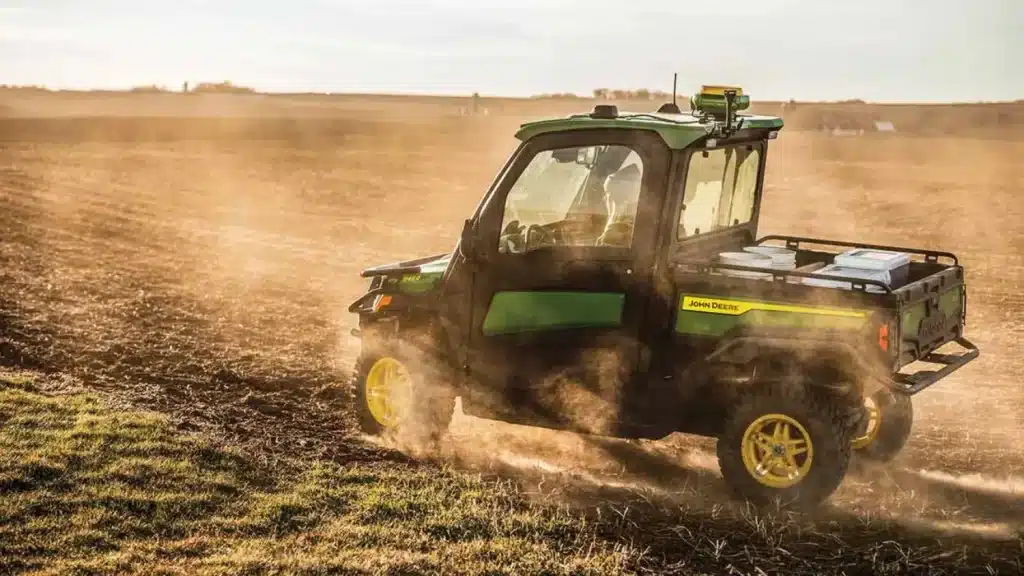
The complementary nature of their lineups adds to the appeal of the partnership. Yamaha’s offering is particularly geared towards trail riding and tackling obstacles with its Wolverine and RMAX models. These vehicles emphasize recreational versatility while retaining work capabilities. John Deere’s Gator lineup is more closely structured around agricultural and professional needs, with various configurations, diesel powertrains and enclosed-cab versions with heating and air conditioning. The two brands overlap in mixed-use applications, but their priorities and customers are not entirely the same.
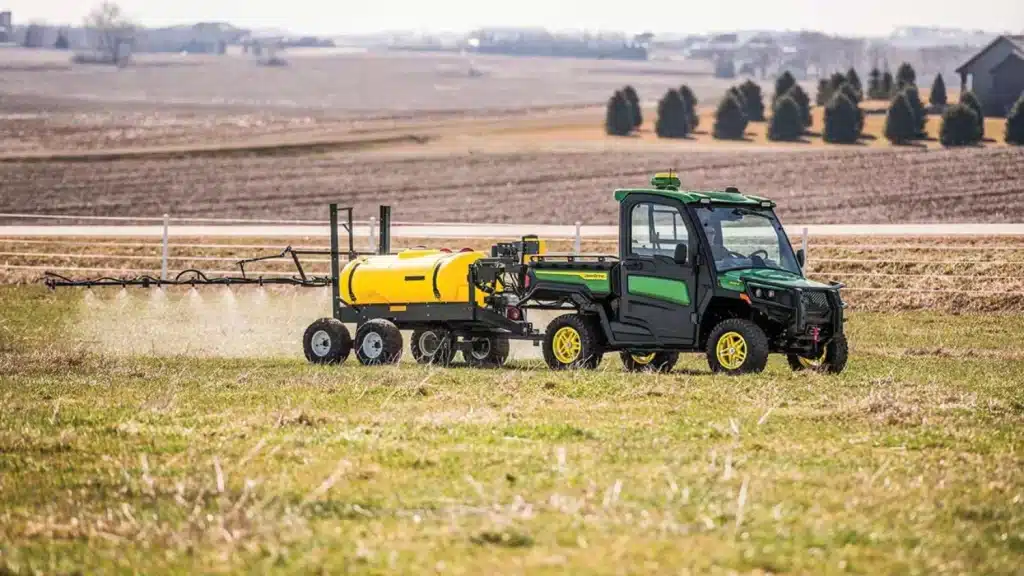
This is where an interesting opportunity for their alliance takes shape between these two worlds. It consists of a comfortable utility side-by-side, capable of working hard during the week and delivering enjoyable comfort on weekend trail rides. Perhaps Yamaha could benefit from John Deere’s experience with cabs and professional work applications, while John Deere could benefit from Yamaha’s expertise in lively powertrains and confidence-inspiring off-road handling.
It is precisely in this utility segment that the combination of the comfort of a plush, air-conditioned cab, suspension that performs effectively in every situation and work capabilities is gaining importance in the market. And this is where Yamaha places the agreement’s ambitions. There is a particularly interesting strategic opportunity here, one worth watching to see what comes of it.
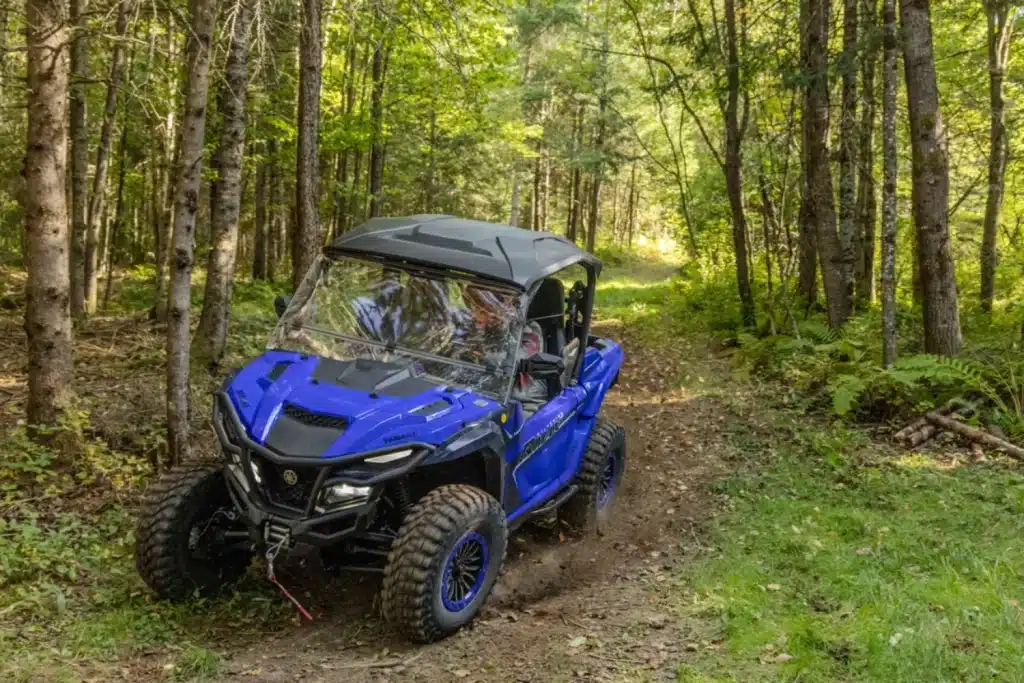
Of course, every alliance has its challenges, and the first we see is the risk of developing a model that would dilute the distinctive character of the two partners’ strong brands. Vehicles that are too similar could indeed blur their brand identities. So, while benefiting from the economies of scale that come with joint development, they will need to preserve the personalities of their respective vehicles. Even with shared components, each brand will have to offer an experience that meets its customers’ expectations: one geared more towards trail riding and tackling obstacles at Yamaha, and towards work and professional applications at John Deere. If the models differ only in colour and logo, the two partners risk competing with each other instead of taking full advantage of their complementary strengths.
In Brief
The Yamaha–John Deere alliance thus appears to address several challenges at once: sharing expenses, speeding up development, making use of manufacturing capacity on American soil and bringing together two complementary areas of expertise. In a market where expectations are growing as quickly as price pressure, this cooperation could become an important driver of competitiveness.