We must not bury our heads in the sand; snowmobiling is polluting, but much less so than it was twenty years ago and possibly less than other activities when comparable data is analyzed. There is still room for improvement, and that is the message that the Fédération des clubs de motoneigistes du Québec (FCMQ) is conveying to its members.
Aware of its role in changing attitudes in favor of sustainable snowmobiling, the FCMQ has adopted its first sustainable development action plan. This three-year plan represents its firm commitment to adopting sustainable development principles.
“We have a civic responsibility to respect the environment. We are trying to spread this message to our clubs and snowmobilers. We also have relationships with manufacturers. We want to ensure that everyone does their part for sustainable development. We want this activity to continue over time. This awareness-raising initiative is very important to us,” says FCMQ Marketing Director Michel Garneau.
Seven major objectives
The FCMQ’s action plan identifies a series of actions to be implemented to achieve seven major objectives: mobilize clubs and their members to become full-fledged players in sustainable development; encourage research into new green technologies and facilitate their deployment; integrate sustainable development into communication strategies; ensure the consistency of sustainable trail development by establishing an environmental protocol when planning federated trails, in a context of overall consultation with the various stakeholders in the community; Manage and reduce the federation’s ecological footprint in its activities. Establish a preventive and concerted approach to managing the snowmobile trail network, aimed at mitigating and managing risk factors that may have an impact on health, and raising awareness among snowmobilers to adopt responsible and respectful behavior.
Less polluting snowmobiles
Since 2006, snowmobile manufacturers have had to comply with stricter standards in terms of carbon monoxide emissions and hydrocarbon use. “All snowmobiles produced must comply with exhaust emission standards adopted by Environment Canada. Snowmobiles sold today are significantly less polluting than older models. In the case of 2-stroke models, they consume much less oil and gasoline. The environmental balance sheet has improved greatly over the past 20 years,“ says Mr. Garneau.
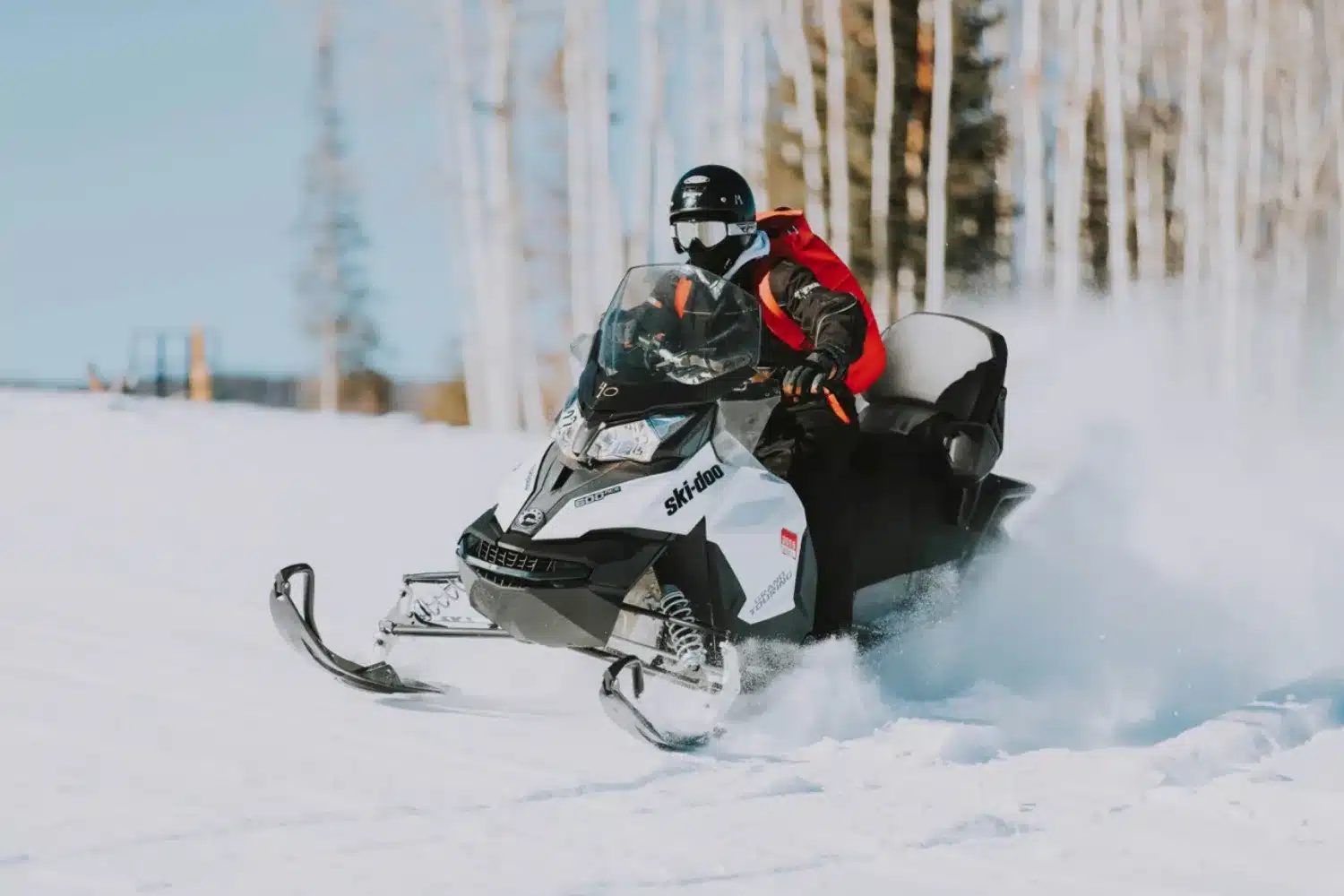
Modern snowmobiles have made tremendous progress in terms of emissions thanks to cleaner 4-stroke engines and electronic fuel injection, becoming much quieter and less polluting than older 2-stroke models.
Modern snowmobile engines produce 98% less hydrocarbons than older snowmobiles.
The ice resurfacing machines used by clubs are also less polluting than in the past. They must comply with new standards. “They emit much less polluting gases than in the past, with more efficient engines that consume less fuel and emit fewer greenhouse gases,” continues Mr. Garneau.
The environment is also a matter of civic responsibility.
The environment is not just about air pollution, it’s also about protecting the soil and picking up our trash, which is what we call civic responsibility. To avoid damaging farmland or plantations, it is recommended to stay on the trails.
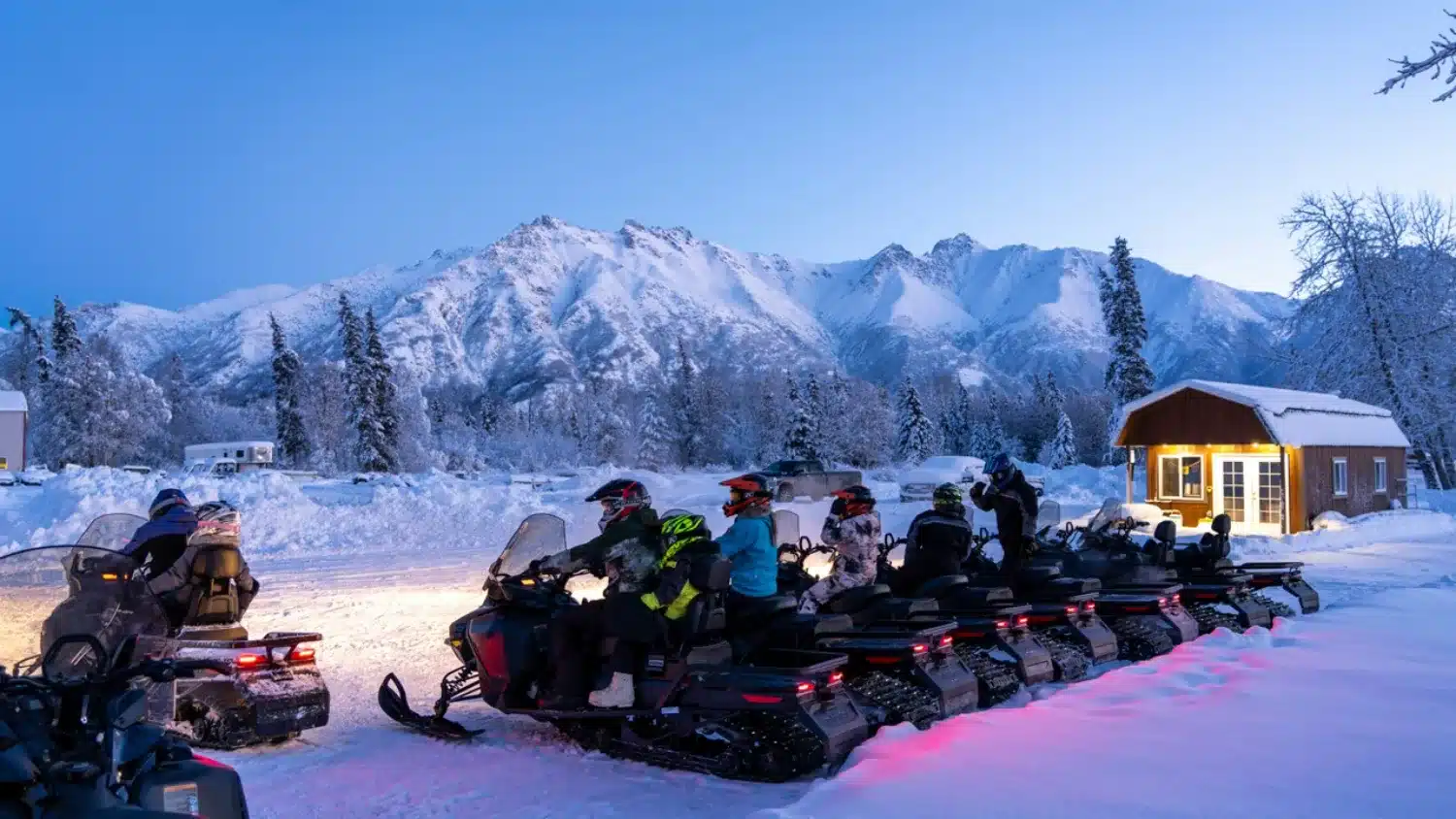
”We ask people to stay on the trails. Quebec’s surface area is immense compared to that used by snowmobile trails. The idea is to concentrate the activity on a small corridor across Quebec. This avoids damage to deer. We ask people to be careful around animals. In the south of the province, we have more and more wild turkeys. We need to remind snowmobilers that we are in their home, not the other way around. The issue of waste is also very important. Farmers have told me that they’ve had problems after shredding cans while making hay. A cow can get sick from this. Snowmobilers need to understand that they are not at home,” says Mr. Garneau.
Although studies suggest that snowmobiling does not have a major negative impact on vegetation or soil with adequate snow cover, it is crucial to follow local rules and adapt your driving to minimize disturbance, especially in the spring or on frozen and thin surfaces, by favoring maintained trails and avoiding off-trail riding in protected areas.
To protect the soil, it is recommended to reduce speed on bumpy or unmaintained trails to avoid hitting obstacles and to avoid skidding the track quickly in deep snow, which digs and removes snow.
Snowmobilers should regularly inspect their skis and runners to ensure good glide and avoid damaging the snow and the machine, especially at the end of the season or when the snow is hard.
Noise pollution
Snowmobiling also generates noise pollution, in addition to disturbing wildlife and causing damage to vegetation by compacting the snow, but here too there have been improvements.
Modern snowmobiles are 94% quieter than the first snowmobiles, and when manufacturer parts are used, they produce minimal noise, as certified by professional engineers.
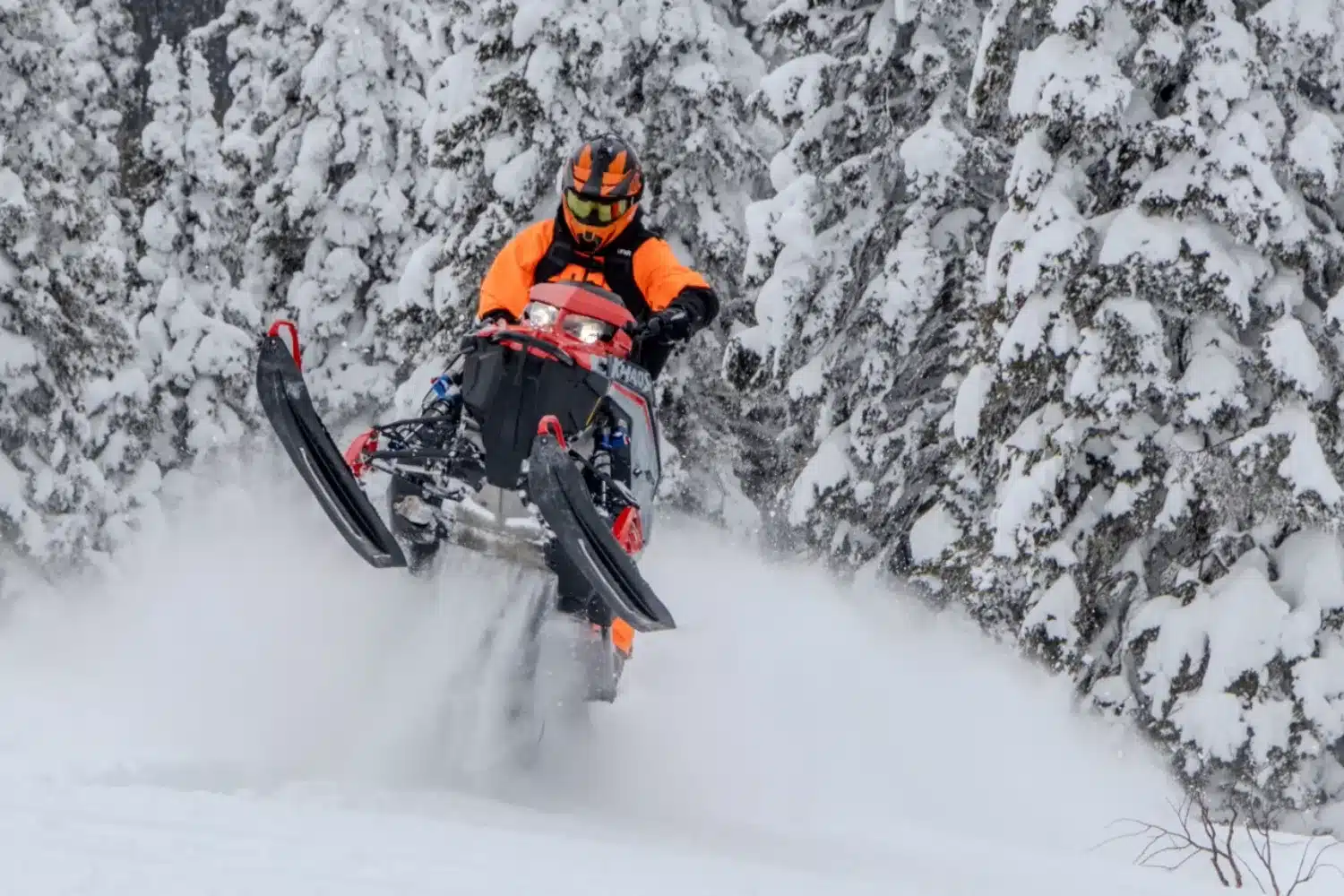
February is National Environmental Snowmobile Month. Recommended best practices include avoiding littering, keeping your snowmobile in good condition to reduce emissions, fuel consumption, and leaks, keeping the original exhaust to avoid scaring animals, and not chasing animals.
According to the FCMQ, these are a series of measures that help improve the overall environmental impact of snowmobiling. “Snowmobilers are environmentally vulnerable, but we must not forget that a round trip from Montreal to Miami by plane is equivalent to 3,500 km of snowmobiling in terms of emissions. People who go to Florida should think twice before calling snowmobilers polluters, because very few of them travel 3,500 km or more in a winter,” says the organization’s spokesperson.
The electric alternative is not yet ready
Although modern snowmobile models are cleaner, they are still polluting, which is prompting more and more snowmobilers traveling short distances to consider electric alternatives. Electric snowmobiles are emerging as an emission-free alternative, but they still face a major obstacle: their limited range.
“The biggest problem remains limited range. It’s important to understand that a snowmobile is not a car.
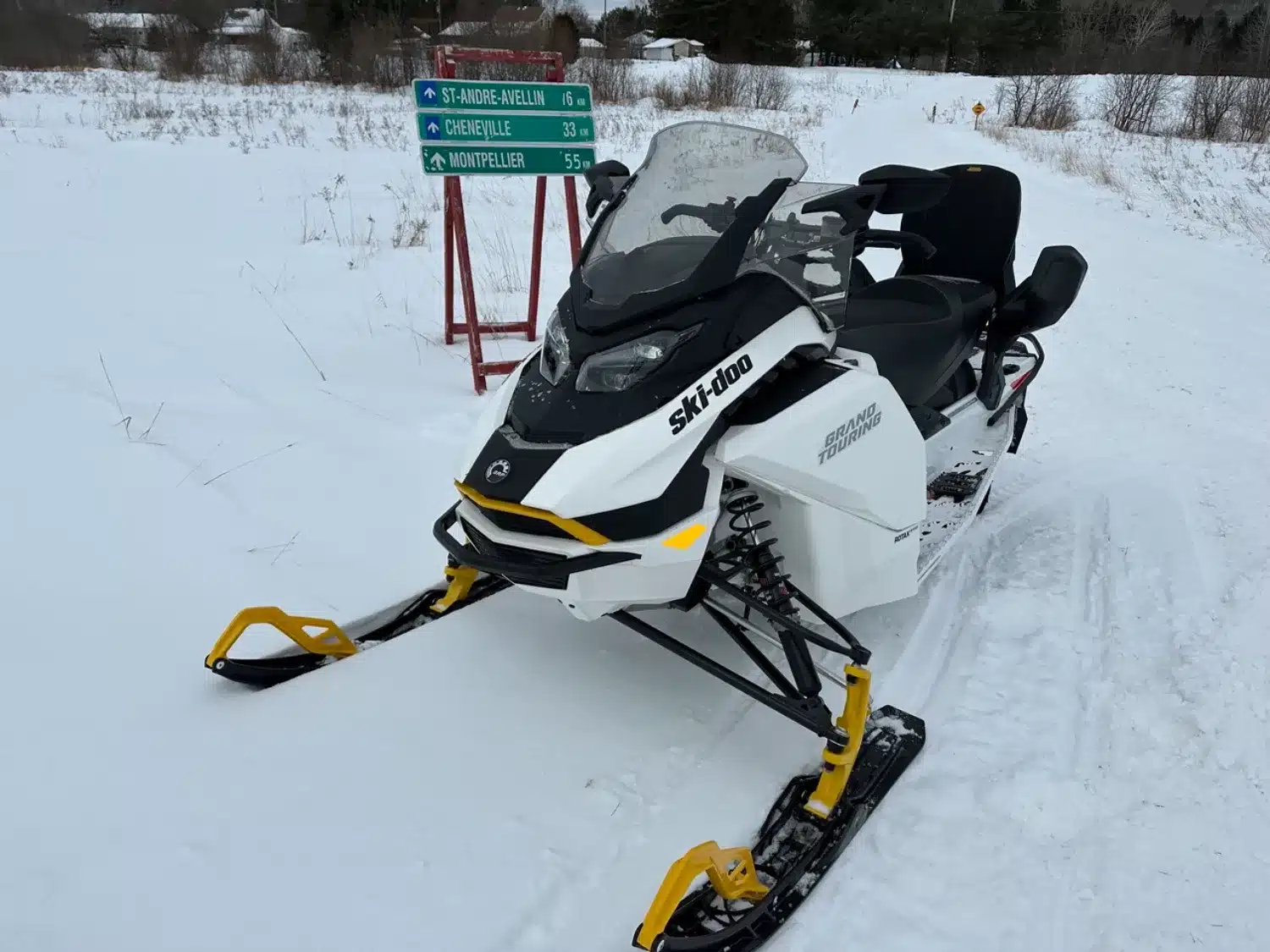
There is a lot of resistance, not to mention that snowmobiles operate in cold environments, which affects battery efficiency. There is also the issue of charging stations, which are rare along snowmobile trails. There is a place for them right now, and that place will grow when technology allows for a range of 200 km. For now, Bombardier’s Electric Grand Touring has a range of 50 km, and the Electric Expedition, also from Bombardier, has a range of 30 km. We have snowmobilers who travel 350 km a day, so it’s still impossible, but we’re moving in the right direction. Efforts are being made. Technology is advancing a lot,” says Mr. Garneau.
Ski-Doo electric snowmobiles offer an eco-friendly solution for riders who travel short distances. Powered by the Rotax E-Power engine and built on the advanced REV Gen5 platform, it’s a new way to have fun in the winter.
Some dealers encourage carbon offsetting for gas-powered snowmobiles, especially during the first year of use.
École de technologie supérieure
Founded in 2003, the QUIETS club, affiliated with the École de technologie supérieure (ETS), specializes in the design of environmentally responsible snowmobiles. In order to push themselves and take on new challenges, the team participates in an annual snowmobile competition.
QUIETS is committed to designing a more environmentally friendly snowmobile using components already available on the market. This allows the team to offer affordable and accessible alternatives. Among other things, these modifications aim to reduce fuel consumption, pollutant emissions, and noise while maintaining maximum performance.
QUIETS snowmobiles are so quiet that people think they are equipped with electric motors. On several occasions, QUIETS has won awards in the categories of quietest snowmobile, best operating emissions, best engine design, and best fuel consumption.
Impact on caribou
Due to their speed and the noise they produce, snowmobiles can be an alarming stimulus for caribou. Cases of snowmobile pursuits or collisions can occur. In addition, the almost unlimited access of snowmobiles to winter confinement areas frequented by caribou is a major problem. Since females are pregnant during the winter, the presence of snowmobiles poses an increased risk of impact on the population.
In Quebec, nearly 115,000 people belong to snowmobile clubs, not counting the approximately 31,000 tourists who come to experience Quebec’s northern adventure by snowmobile each year.