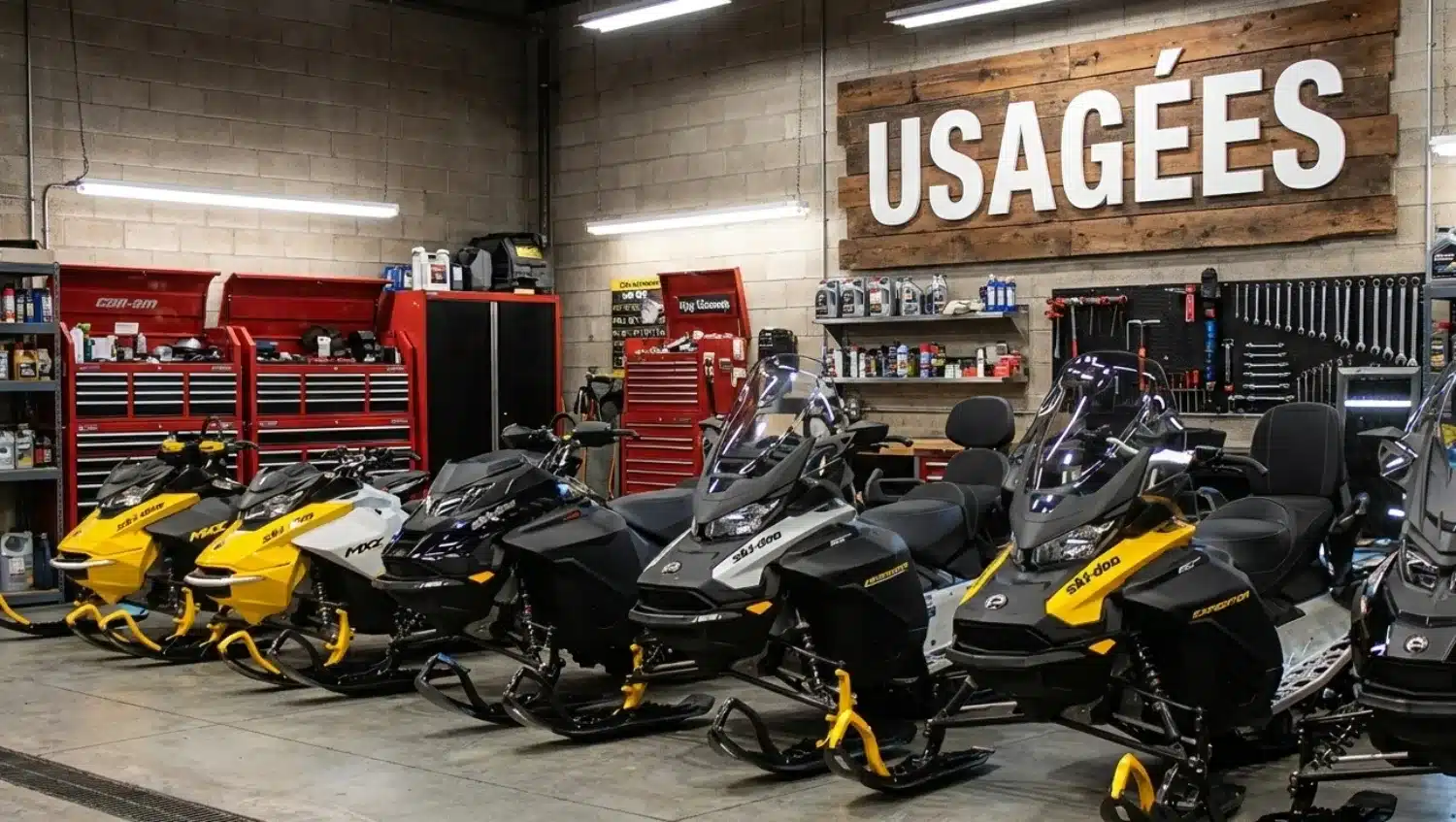
The price of new snowmobiles has risen sharply in recent years. Buying a used snowmobile is a good alternative for accessing federated trails or steep mountains. However, choosing a used snowmobile is not without its challenges. Between a rigorously maintained vehicle and a neglected one, the maintenance budget can be disastrous. The most popular brand is Ski-Doo, with many models over the years. Checks are necessary! Polaris is quite widespread, with a whole range of two-stroke injection engines. Yamaha is renowned for its reliability and wisdom, but the Japanese company has just stopped producing tracked vehicles. Finally, Arctic Cat, manufactured in Minnesota, has just escaped closure and is starting afresh with a new management team and the hope of spare parts in stock. An important step is to define your usage profile. Trail snowmobiles are the most common, backcountry models are attractive but not well suited to trails, and hybrids, also known as “crossovers,” are good for both terrains but not the most efficient because they offer compromises.
This guide is designed to offer you the best advice for buying a used snowmobile so that you won’t be disappointed by this unique and exhilarating winter activity.
What type of snowmobile are you looking for?
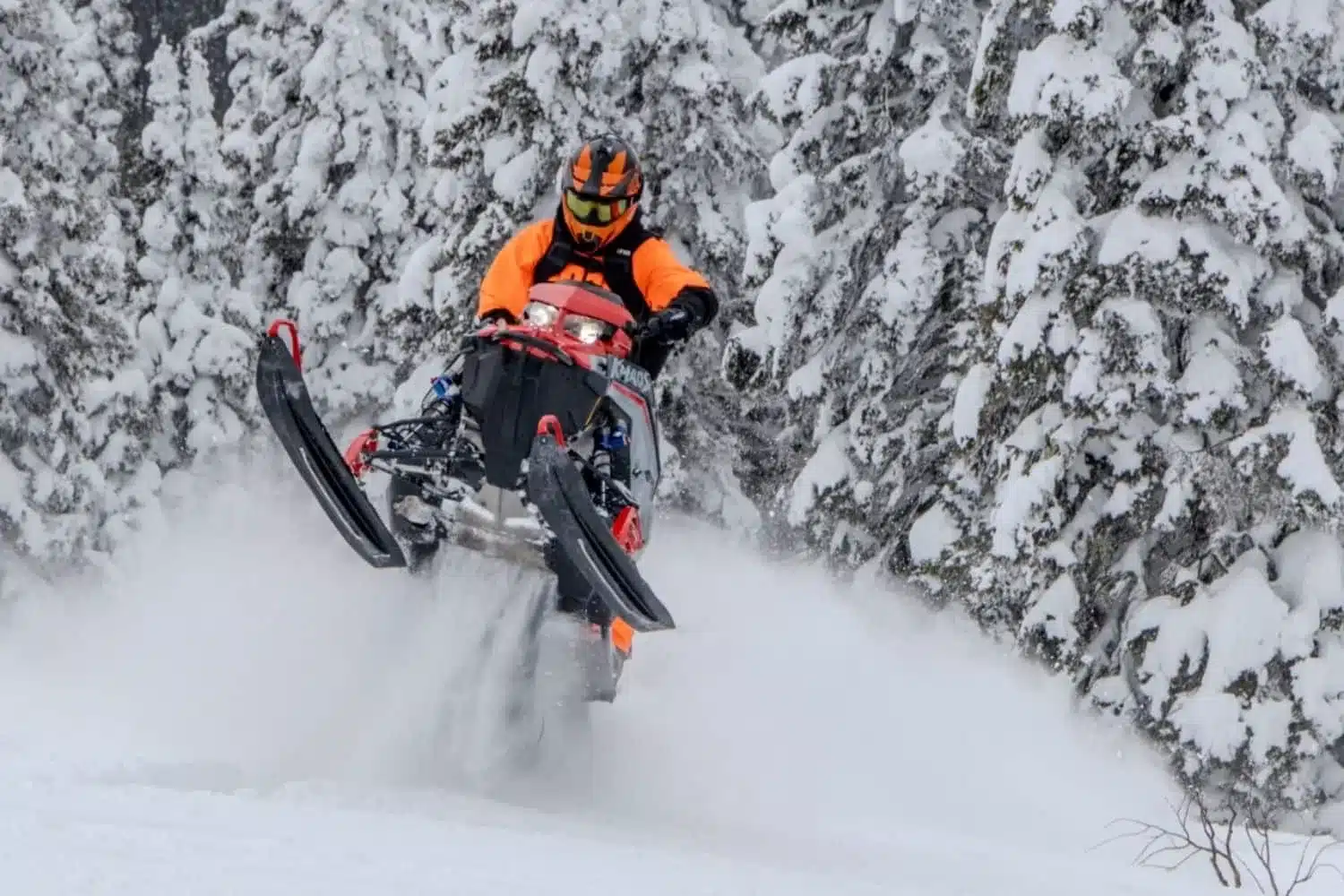
Before scanning the classified ads, determine your rider profile. Are you looking for a trail snowmobile (Touring), a hybrid machine (Crossover), or an off-trail model?
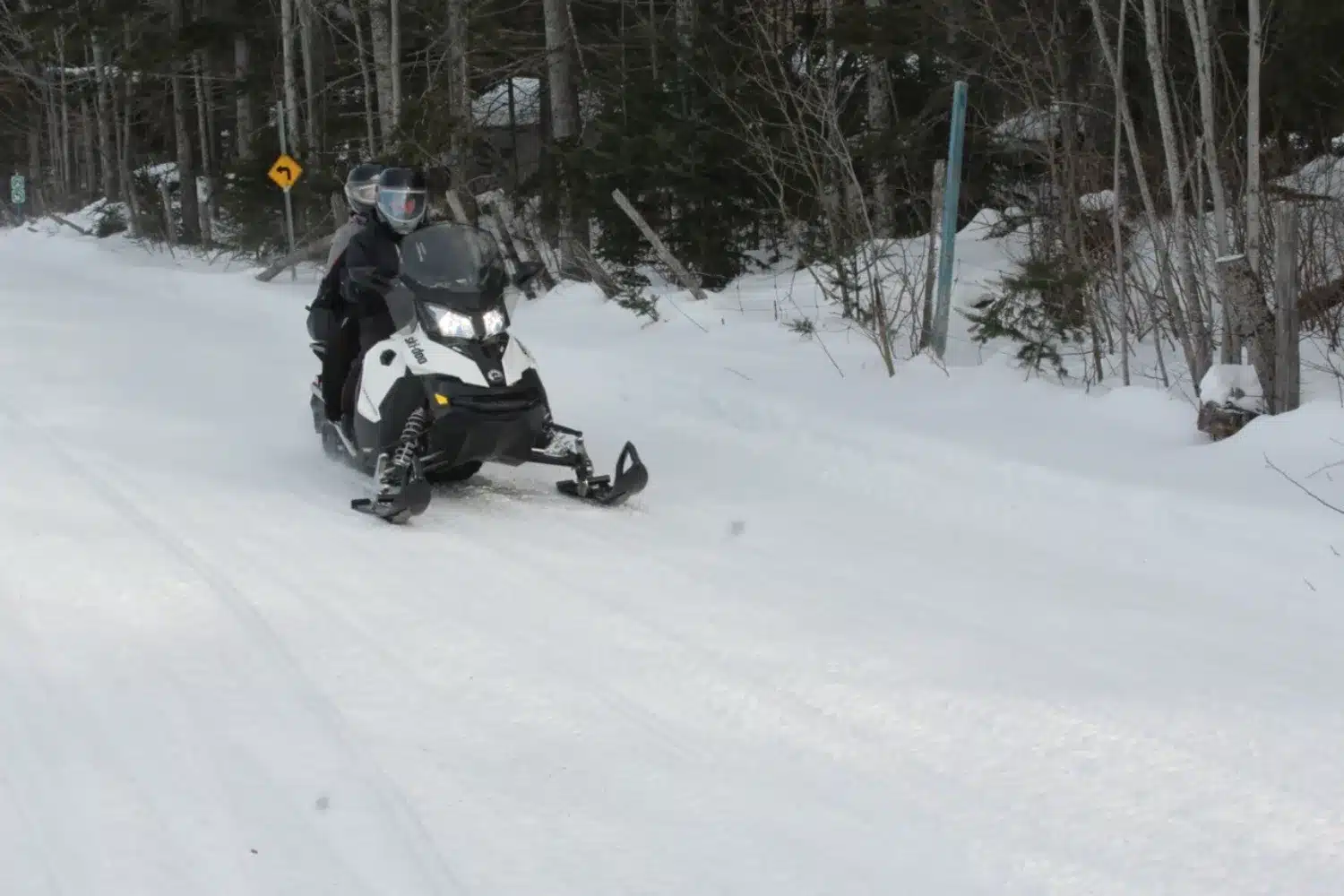
Do you want a model with a four-stroke engine, which is considered more reliable, does not consume oil mixed with gasoline, but is less responsive when accelerating (which is why some are equipped with a turbo)?
Or would you prefer a two-stroke version, preferably with electronic fuel injection, which is more responsive when accelerating? With a technically more fragile engine, but one that costs less to recondition than a four-stroke engine.
Both solutions have their fans, so the choice is yours.
Choosing between a four-stroke or two-stroke engine
The four-stroke engine: reliable and comfortable
Opt for a four-stroke engine if you prefer durability and simplicity. Reputed to be more reliable and cleaner, it does not require any oil to be mixed with the gasoline. Although its power delivery is more linear, the addition of a turbochargeron some models compensates for its initial lack of responsiveness, offering an excellent compromise between power and longevity.
Two-stroke engine: light and responsive
Conversely, the two-stroke engine, ideally with electronic fuel injection, appeals for its liveliness and immediate responsiveness. Lighter, it offers a dynamic ride, although its mechanics are more sensitive. However, its simpler design makes it less expensive to recondition than a four-stroke engine.
Between serenity and adrenaline, each technology has its fans. It’s up to you to choose your camp.
Evaluating the sale price of a used snowmobile
Among professionals, the Canadian Blue Book is the benchmark for used models. It is also used by the SAAQ in Quebec to determine the tax that will be applied to used vehicles.
For its part, BRP offers an evaluation tool to determine the estimated value of a used Ski-Doo (1).
The price depends on three factors: the year, the mileage, and the mechanical condition. Below 8,000 km, the mileage is considered low. A well-maintained four-stroke engine is known to be reliable up to 32,000 km, while a two-stroke engine has a shorter life span, usually up to 16,000 km, but is easy to rebuild. High mileage is not necessarily a problem if maintenance has been done properly and service bulletins have been followed.
For a two-stroke engine, the longevity of the pistons depends on how the vehicle is driven. Plan for preventive replacement between 100 and 200 hours of use. In touring mode, this is equivalent to approximately 15,000 km, which is the recommended safety threshold to avoid unpleasant surprises.
Between individuals, the rule is supply and demand. During Covid, prices rose well above the Blue Book recommendations, under the weight of inflation. Search on sales sites such as Kijiji or Market Place and select the ads that interest you. They will serve as a basis for price evaluation and even negotiation.
Checking the snowmobile: Visual inspection
When you meet with the seller, start with a thorough visual inspection. The overall condition of the plastic parts often reveals how well the machine has been cared for.
Then focus on the tunnel. It must be perfectly straight, as creases or cracks in the aluminum indicate violent impacts or excessive jumping.
Also examine the suspension arms (A-Arms) for any asymmetry that could compromise handling. Finally, scrutinize the track. Look for tears, missing cleats, or frayed threads. Since replacement is expensive, a dry or cracked track should be a major bargaining chip.
Mechanical inspection
The engine is the most important component. A laborious cold start is often a sign of injection or carburetion problems. If possible, measure the compression: a difference of more than 10% between cylinders usually indicates a costly rebuild. Also examine the clutch pulleys. Dirty surfaces or deep grooves are signs of poor maintenance, which will ruin performance or break the belt. Finally, check that the exhaust system has no suspicious leaks or excessive oil deposits.
Fluids and maintenance
Ask for the maintenance log. Dealer invoices are reassuring. If the owner is a mechanic himself, he should show you the invoices for oil and consumables.
Inspect the fluids. Gray chain oil (chaincase) or oil strewn with metal filings indicates significant gear wear. Similarly, cloudy coolant may indicate engine contamination. Finally, test every electronic accessory, from heated grips to headlights, as these items are expensive to replace.
Winter test drive
If you’re buying in winter, test drive the snowmobile before you buy. Even a short test drive will allow you to detect abnormal vibrations, bearing noises, steering problems, or faulty suspension. The snowmobile should remain upright when you slightly release the handlebars.
Administrative and history check
In Quebec, you can consult the RDPRM registry to ensure that the snowmobile is free of any financial liens. The RDPRM costs a few dollars, but will inform you of any title issues.
Also estimate the accuracy of the mileage by comparing the wear on the seat, footrests, and handles with the odometer. The chronology of invoices can provide you with information. If no proof is provided, don’t hesitate to express your doubts and negotiate a lower price.
Conclusion
Buying a used snowmobile requires careful consideration and observation. By following this buying guide, you will minimize the risk of breaking down in the middle of a remote trail in -30°C weather. Don’t rush into a purchase; take the time to think it over. There are many models currently available.