With the trend toward adventure motorcycling, which requires adapting your riding style, some advanced training schools offer courses to help with the transition or simply to increase your knowledge. But you don’t need to go on an adventure to treat yourself to some training. No matter what type of motorcycle you have, what kind of rides you do, or even with all the experience you have, do you still think that refresher training isn’t for you?
We’ve been riding for years, racking up the miles… and we end up believing that experience is enough. How many times have I heard someone say to me, “I’ve been riding motorcycles for over 20 years… I don’t see what you could teach me…,” all with a slightly arrogant smile… To this I would reply, often to myself because the person had already left: “Here’s the proof that we know what we know, but we don’t know what we don’t know…” Because experience does not always go hand in hand with knowledge. And vice versa.
We know that motorcycling is a world where pride, often misplaced, interferes with common sense. With logic and also with humility.
But I sincerely believe that if we asked ourselves the question differently, the answer would surely give us pause for thought. If, instead of asking myself, “Do I need refresher training?”, I asked myself, “Am I really riding better than I was five years ago, or am I just repeating the same movements out of habit?”
These actions are what we might call reflexes. Actions that we perform without really knowing how or exactly why, but which always end up coming out, ensuring that we get home safely despite everything.
What do my reflexes say about me?
We rely on our automatic responses to avoid obstacles, deal with loss of traction, or negotiate a difficult section. But where do these reflexes really come from?
From training?
From a friend?
From a 30-second YouTube video?
Or from an improvised action one day that, through repetition, has become a false reflex?
If our reflexes get us out of trouble, it’s easy to believe that we’re doing the right thing. But could we be doing better? How do I know if I’m relying solely on my experience? On the other hand, I’ve always been successful this way, so why change?
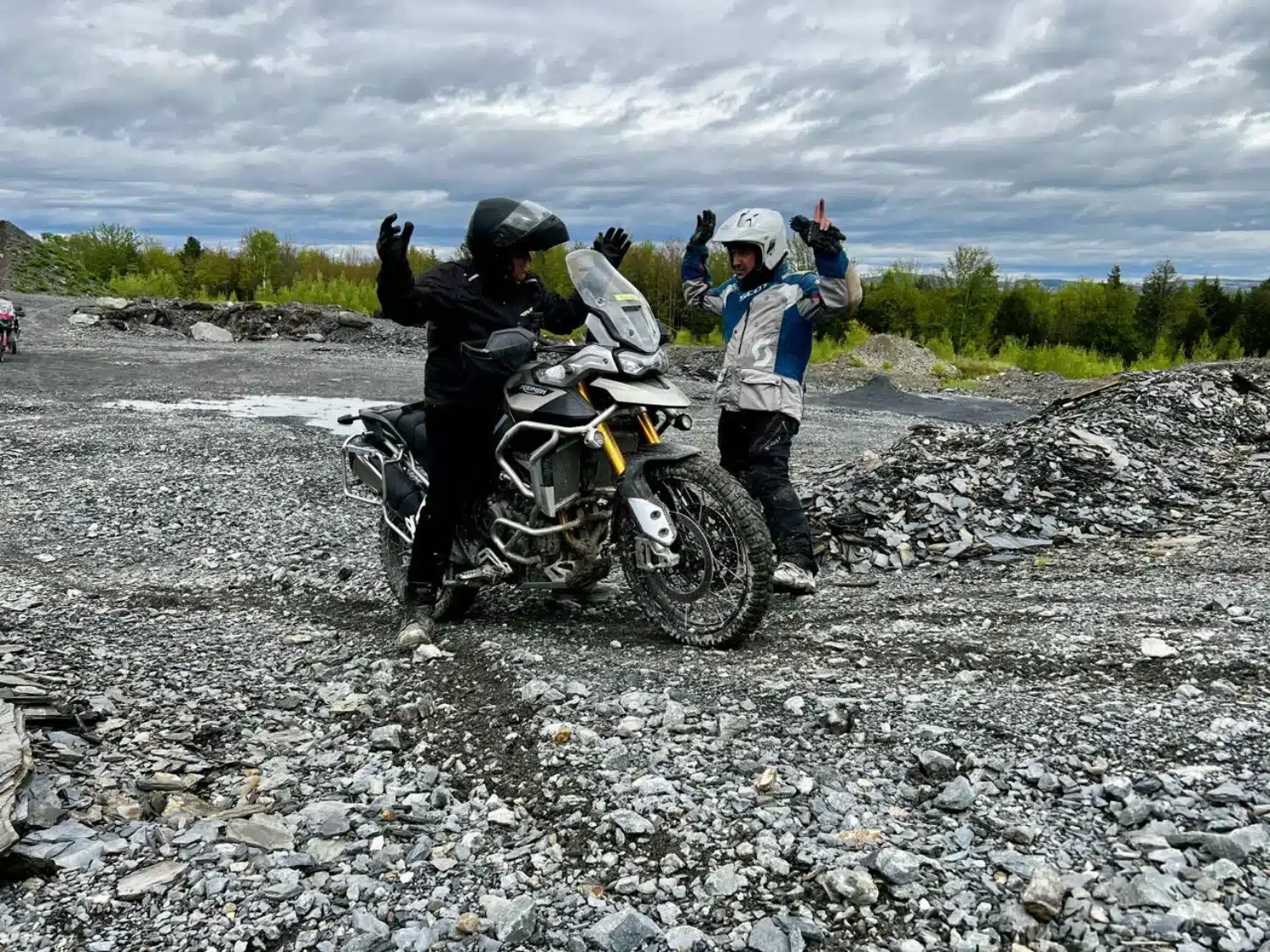
A small parallel with work
In any workplace, we accept the idea that we need to keep up to date: new procedures, new tools, new technologies. We understand that this is not a challenge to our skills, but a way to evolve, remain effective, and reduce errors. However, on a motorcycle, this logic often disappears. We ride as if nothing has changed… when in fact everything has changed: motorcycles, tires, electronics, even the surfaces we ride on. Ultimately, motorcycling requires exactly the same thing as our work: a motorcyclist should never be satisfied with what they know, but should choose to remain relevant, up to date, and better prepared for situations where they have no room for error.
My knowledge, my limits
Even with basic knowledge, whether acquired during motorcycle license training or by riding around the barn on a small dual-purpose bike in your youth, you can ride a motorcycle. But with limits that are only matched by your knowledge, regardless of the bike.
As mentioned above, things are changing at work, and the same is true for motorcycles. Today’s motorcycles are literally light years away from what we rode 10 years ago:
- Ultra-fast and precise ABS depending on the angle of the motorcycle.
- On-the-fly adjustable suspension.
- Advanced, adjustable traction modes.
- Smart gear selectors.
- More sophisticated motorcycle geometry than ever before.
So the question becomes simple: Do I have the knowledge to take advantage of the technology… or do my reflexes unconsciously push me to fight against it?
So rather than saying, “I’ve been riding for 20 years,” we should ask ourselves, “How long has it been since I improved my technique?”
Motorcycling, whether we like it or not, is a risky activity. With motorcycles that are increasingly powerful. In an environment that is increasingly hostile to motorcyclists.
Whether it’s an adventure bike capable of taking us far away or a beautiful, fully equipped touring bike, motorcycles have evolved to the point where, for the motorcyclist, it’s no longer the number of years of experience that matters, but the evolution.
And this evolution, without guidance… stagnates. We can’t correct what we don’t see or don’t know.
Signs that don’t lie
If you’ve always ridden the same way and always gotten the same results, you may end up being satisfied with that. Which is normal when you don’t know how to do otherwise.
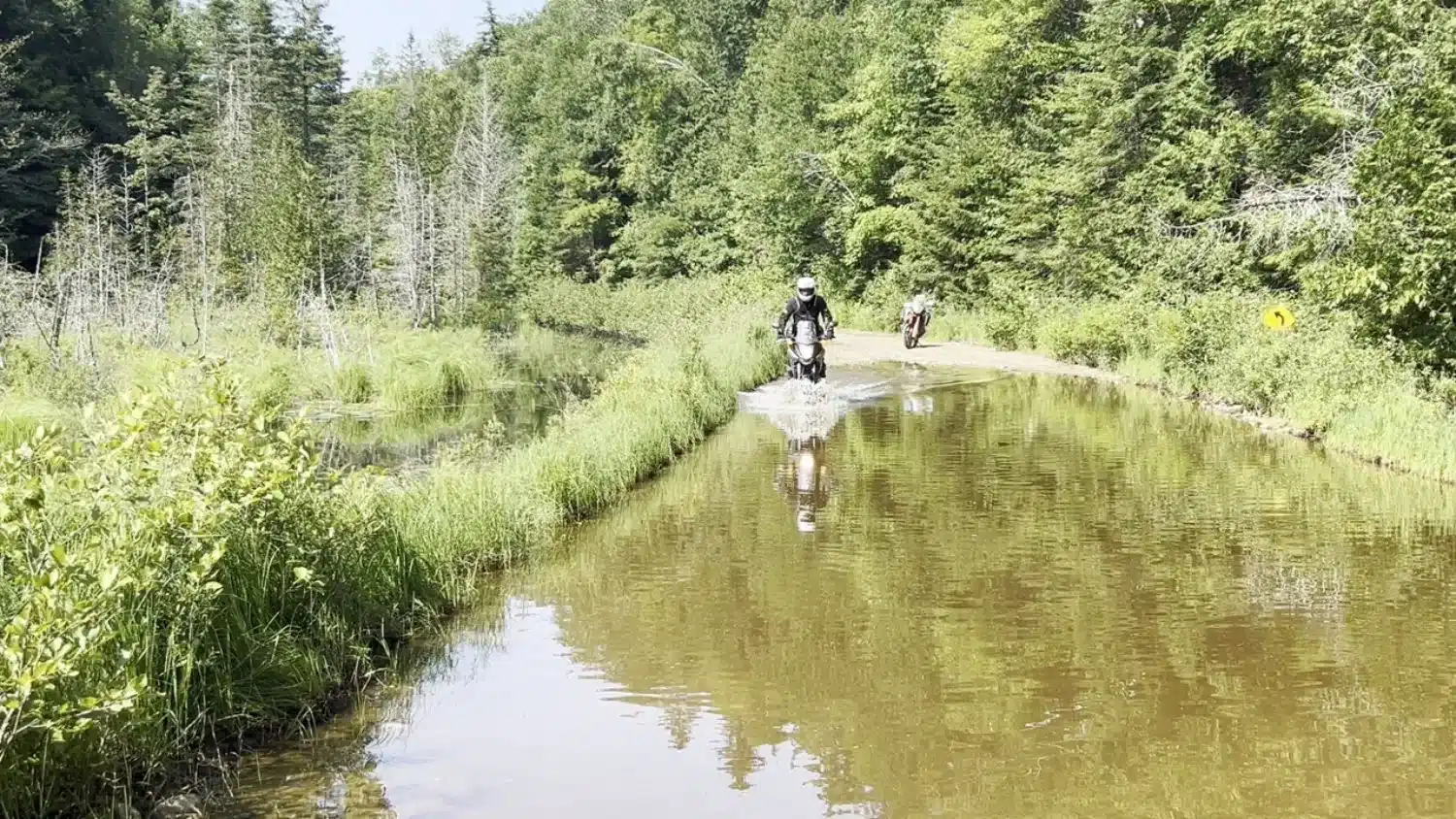
Do I end my days in control… or exhausted?
A good rider doesn’t force things: they manage them.
They shift their weight at the right moment, conserve their energy, breathe, and anticipate.
When you finish a day completely physically exhausted, it’s not necessarily because the terrain was “difficult”… sometimes it’s because your technique is lacking.
And you don’t realize that until you’ve tried a more fluid approach.
Back pain or numb hands
If your motorcycle is equipped with 1,000 accessories to improve comfort but it’s still not quite right, have you ever thought that the problem might be due to poor posture or technique? Or perhaps poor ergonomics that only a trainer could see and help you correct without spending a penny on another accessory?
What if training wasn’t a correction… but an acceleration?
Motorcycle training is often perceived as “catching up.” However, the real question is rather:
What if a day of training allowed me to gain what would have taken me five years to discover on my own? But above all, training that is well chosen according to your needs will give you a single point of view. YouTube and all digital platforms are virtually bottomless sources of information, but too often they are generalized. The guy on YouTube gives you his version from his perspective. But not always according to your needs. On the other hand, an instructor during training will be by your side, able to see what needs to be worked on, but above all able to make you understand the whys and wherefores. With concrete and virtually instantaneous results.
An instructor sees details that you don’t even notice:
- body position
- late weight transfer
- unnecessary tension in the arms
- looking too close
- braking too long or too short
- misuse of the front or rear brake
- misunderstanding of the clutch
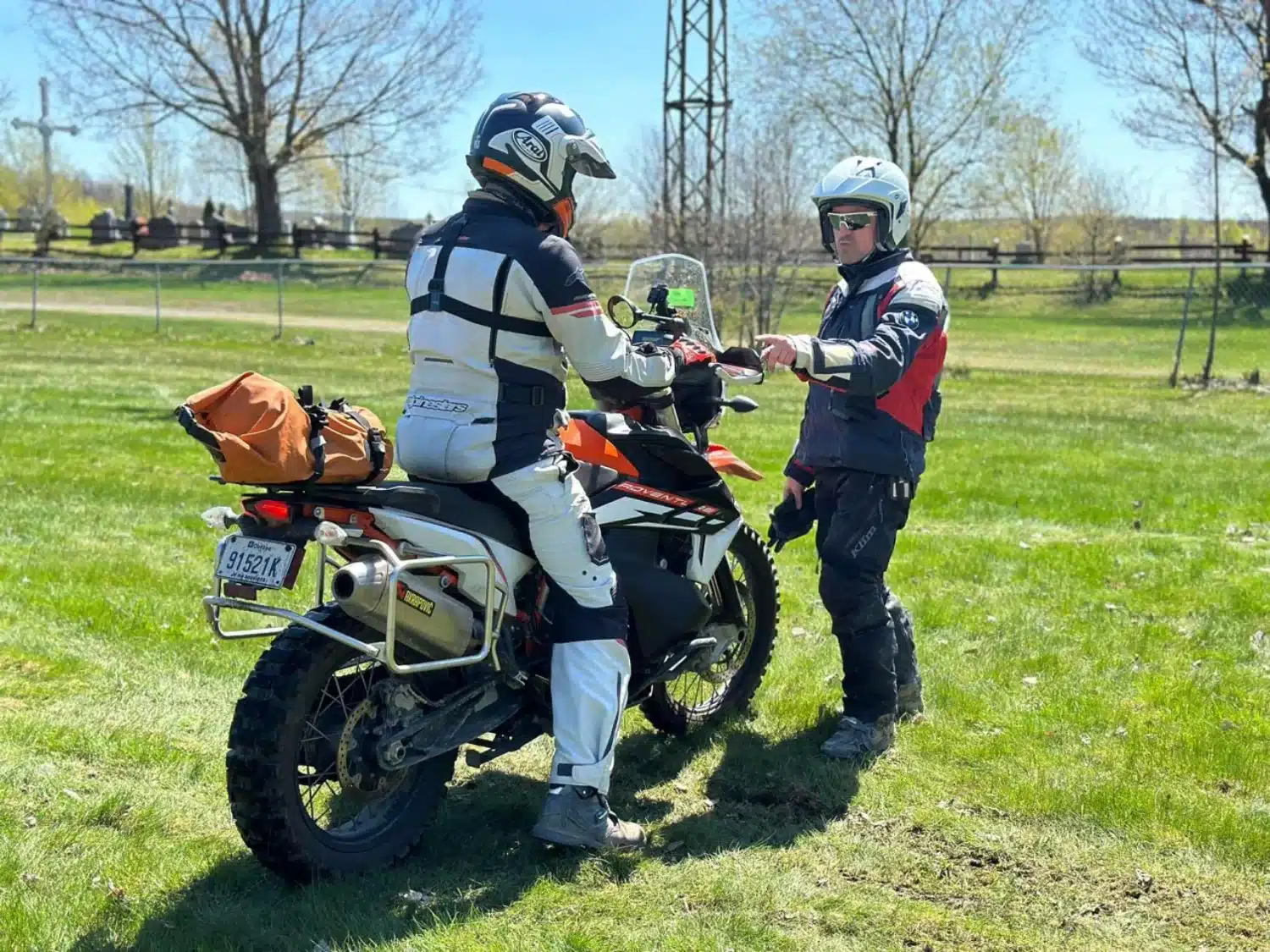
These are small adjustments that make all the difference, and that you can’t discover on your own.
Several options
In Quebec, whether you’re looking for road training only, the FMQ’s Motopro program, Moto Précision, or Moto TopGun are excellent ways to increase your knowledge and skills.
For adventure or dual-purpose riding, Académie Ridaventure, Touareg Aventure, and Moto Vision Aventure each offer diverse programs with different approaches to suit a variety of needs and, above all, a variety of skill levels.
Real-life experiences
Last year, I had the opportunity to train a guy who had several years of motorcycle experience under his belt. Since it was a gift he had received, he was a little skeptical and didn’t necessarily have very high expectations. At the end of the day, I will always remember the smile on his face when he took off his helmet and said to me, ” You have no idea how much you’ve rekindled my desire to ride my motorcycle, because now I understand it and I know how to work with it…”
In one day, he and I had updated his knowledge. He was now on the same level as his motorcycle. He had gained control, but he had also learned to be proactive in his maneuvers rather than reactive.
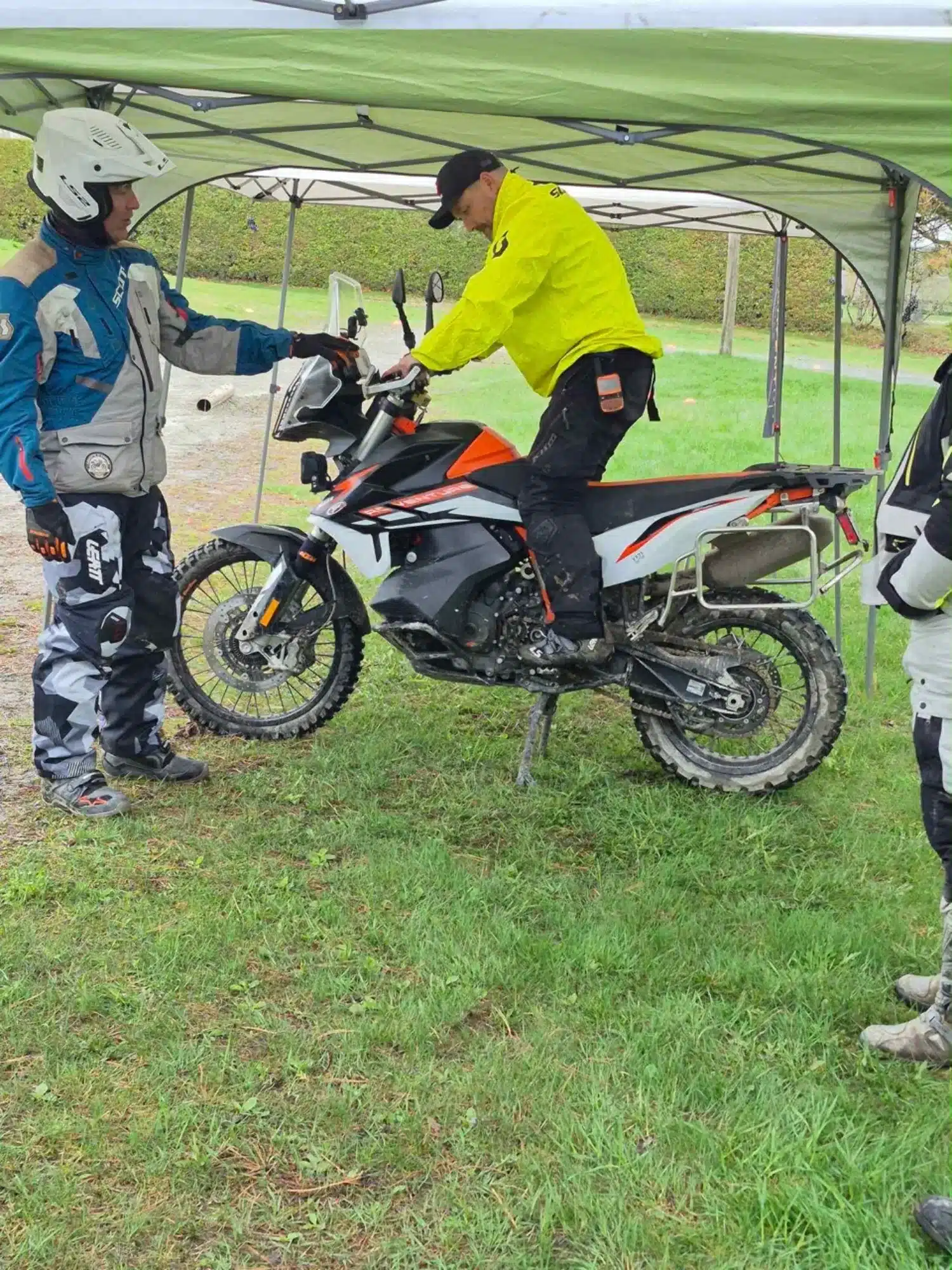
Training, your best ally
In my opinion, ongoing training is the most important thing. There’s nothing like skill to ensure that mastery always trumps luck. Because mastery is what gets you home and allows you to go back out and ride again and again.