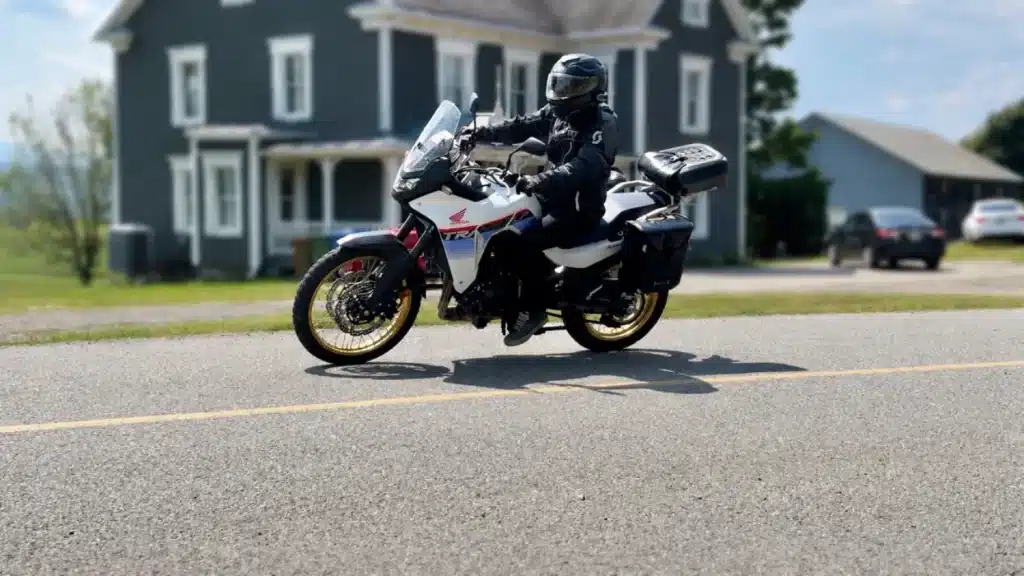
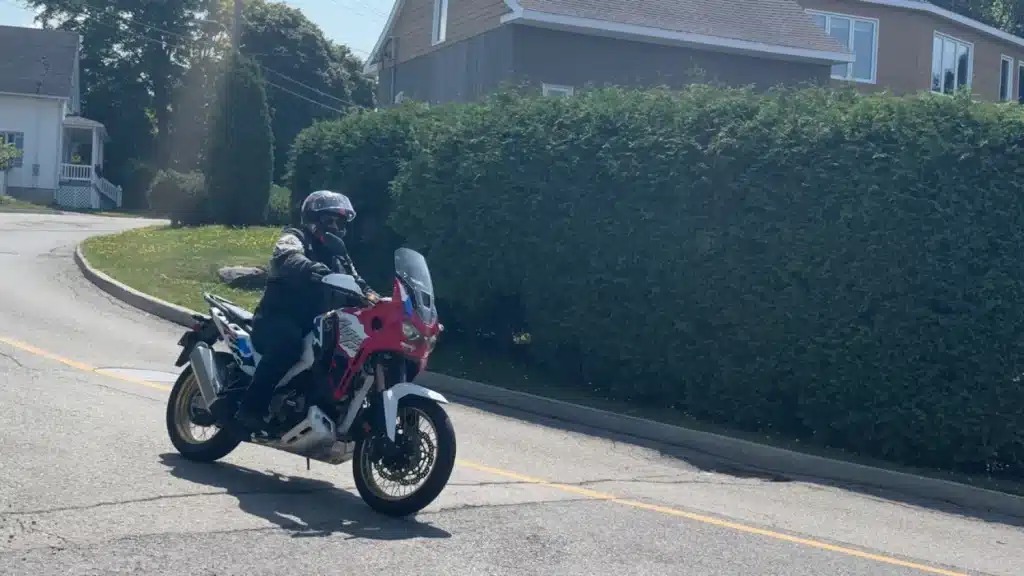
There was a time when simply saying the words “automatic transmission” in front of a group of motorcyclists was enough to spark a lively debate. For some, a real motorcycle had to have a clutch lever, a gear shifter and a rider who could shift like a musician playing an instrument. Then Honda came along with its DCT. And today, after several years of evolution, we have to admit it: the Africa Twin DCT has some solid arguments for silencing the purists.
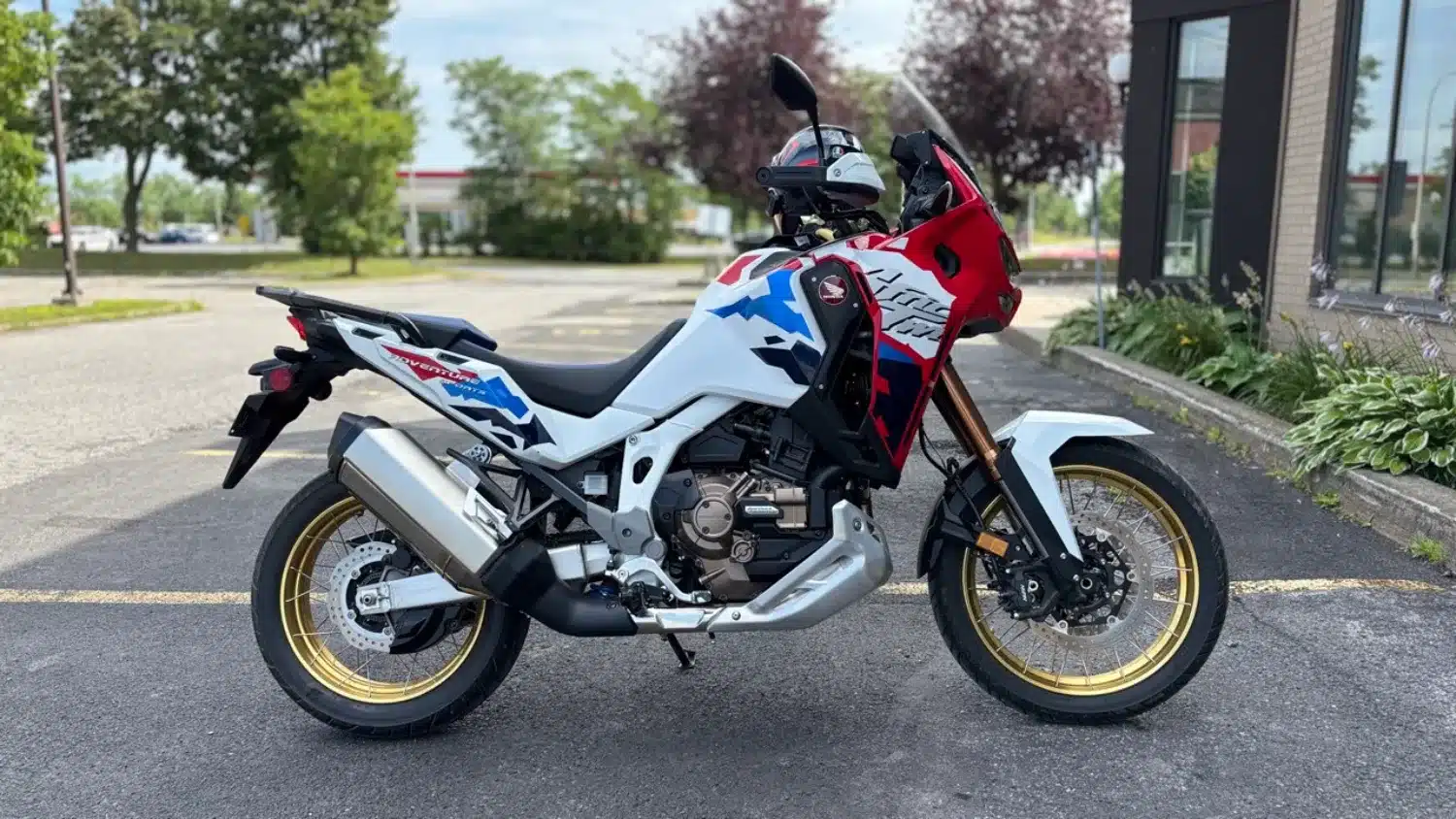
For 2026, the Africa Twin retains its 1,084 cc parallel twin, its adventure-ready chassis and its 19-inch front and 18-inch rear wheels. The defining feature of this version is, of course, the six-speed DCT. It can operate fully automatically or be controlled manually using the handlebar controls.
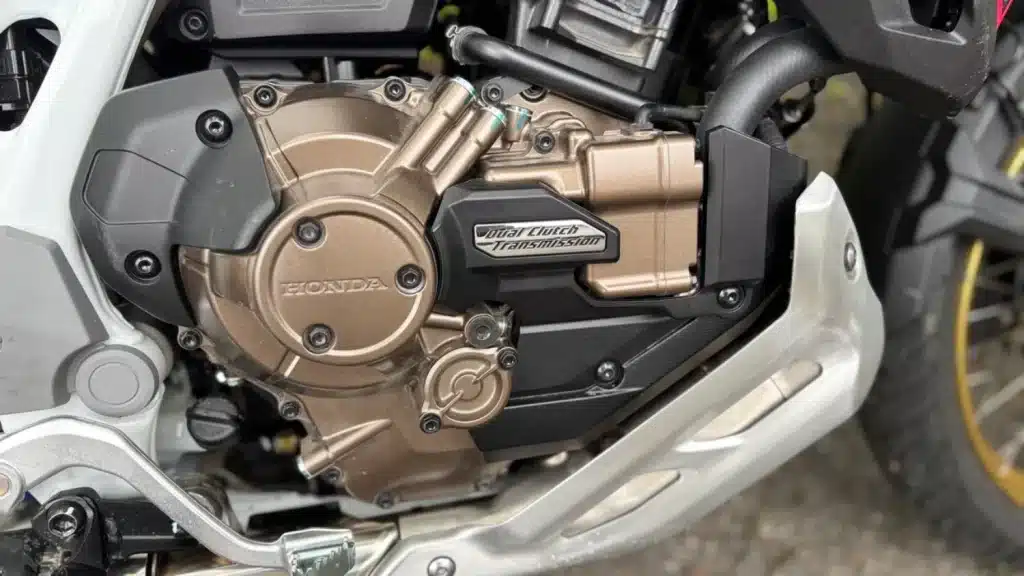
A Big Adventure Bike That Knows How to Disappear Beneath You
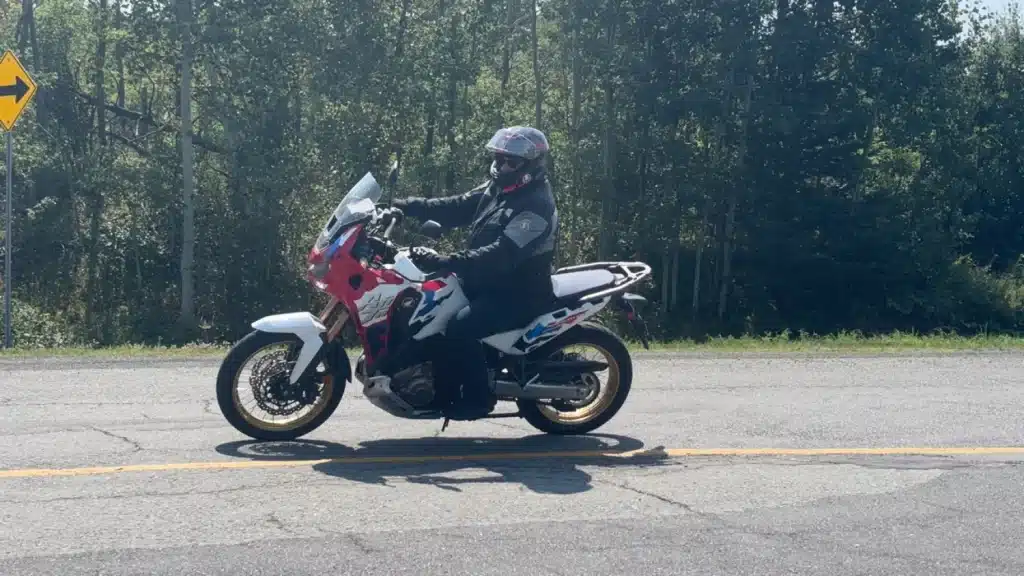
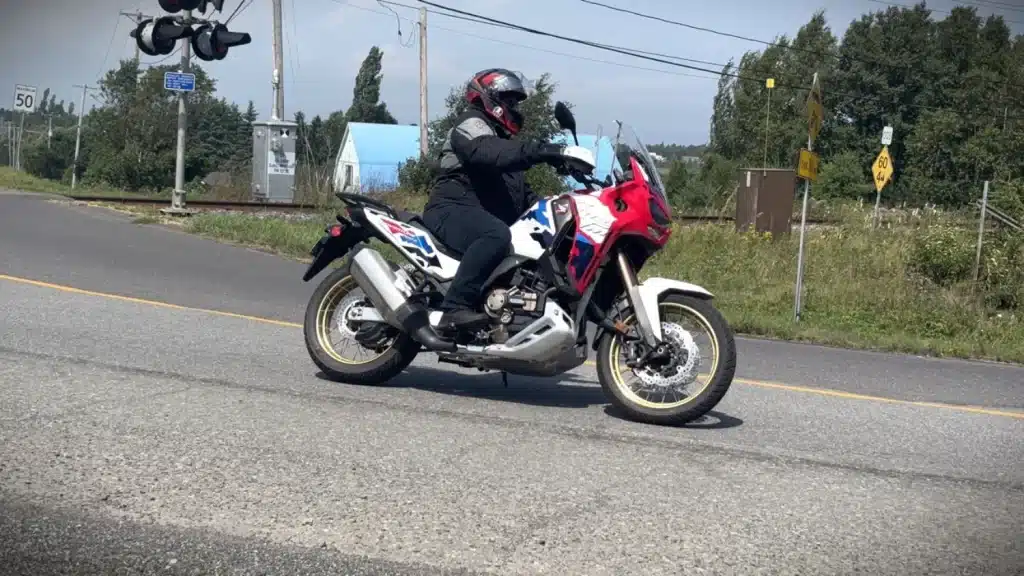
At first glance, the Africa Twin is imposing. At 535 lb, it is not exactly an electric bicycle. Yet as soon as you get moving, it quickly feels much lighter than it really is. Honda has managed to centralize the mass while keeping the chassis relatively agile.
On the road, the riding position is natural and comfortable. The handlebar falls nicely to hand and the bike immediately inspires confidence. After a few kilometres, you find yourself forgetting its size. That is exactly what I like about a good adventure bike: it should look capable of crossing the Sahara, yet be docile enough to go grab a coffee in Rimouski without making me feel like I am driving a school bus.
The 1,084 cc parallel twin delivers very usable power. The engine responds with authority without becoming intimidating. The sound and feel of the 270-degree crankshaft also add an interesting personality to the package. This is not merely an efficient machine: it has character.
And What About That Famous DCT?
This is where things get interesting.
The DCT takes a little getting used to. Your brain naturally looks for the clutch, and your left foot goes searching for the shifter… which is no longer there. For the first few kilometres, you almost feel as though you forgot something back in the garage.
Then comes the moment when it clicks.
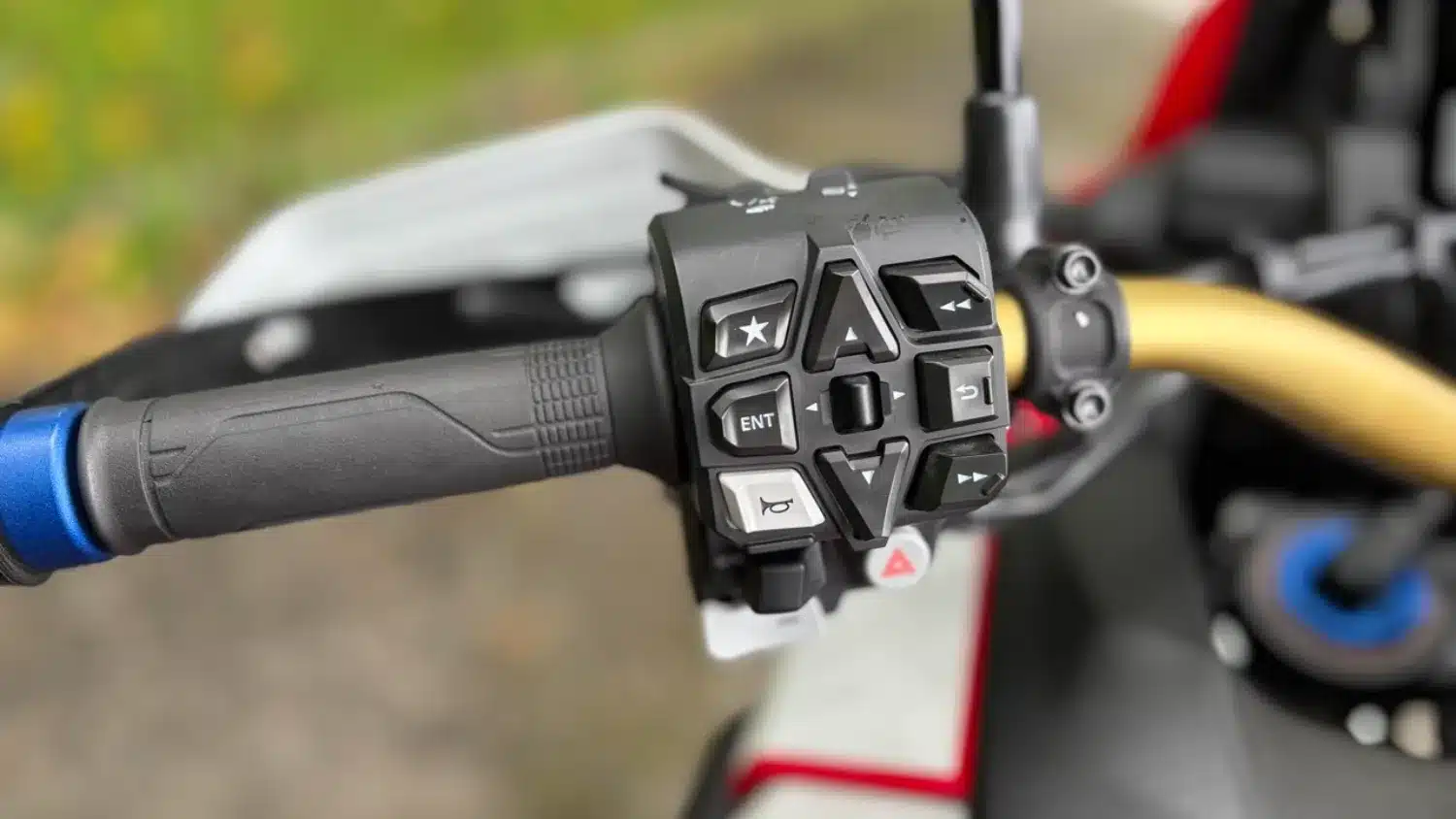
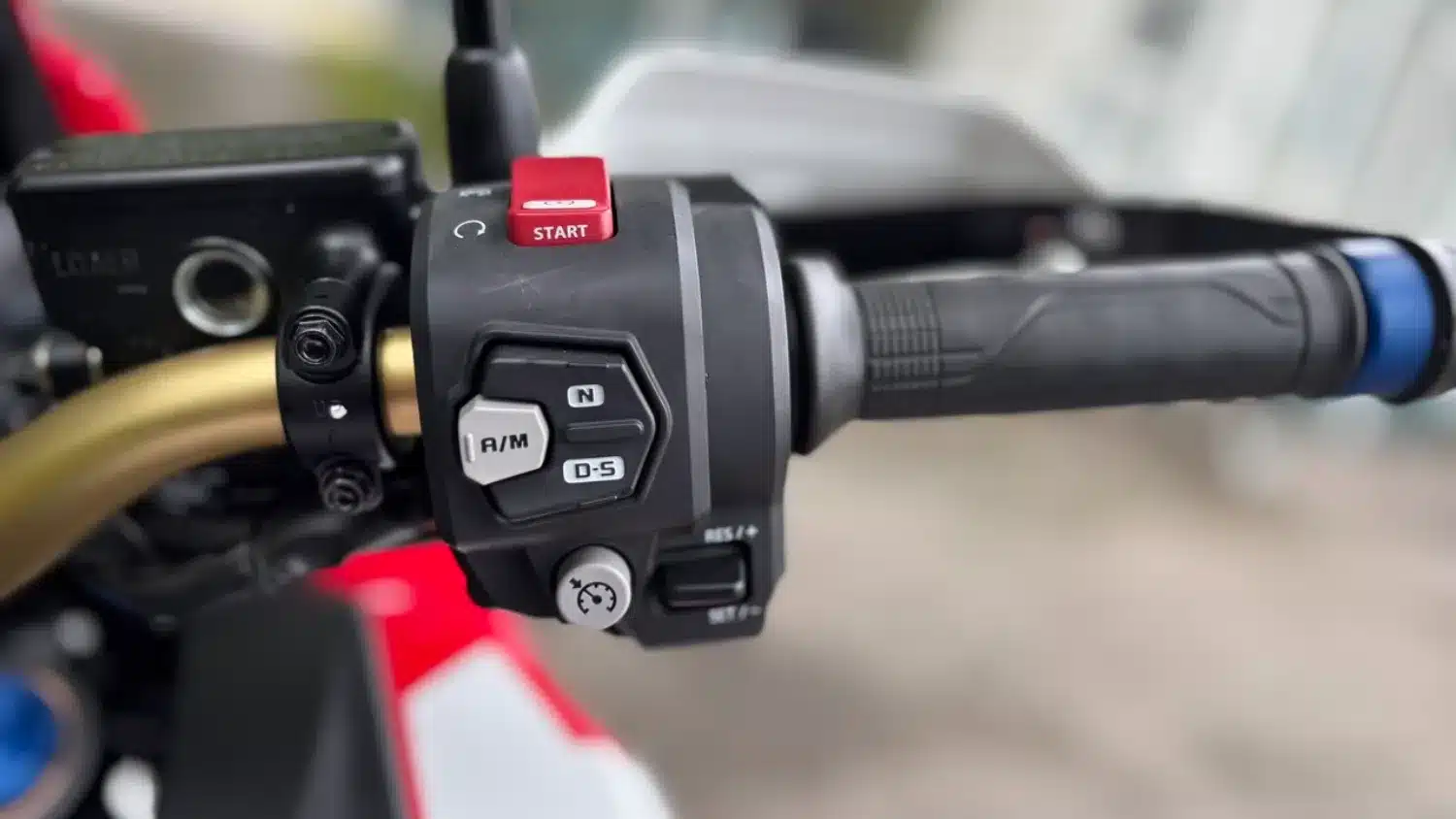
The transmission changes gears with impressive smoothness and lets you focus more on the road, the curves and the scenery. In city traffic, in congestion or during long days in the saddle, it is a genuine gift. And when the urge to play returns, the handlebar paddles let you take control of the gear changes again.
Honda also says it has refined the DCT operating logic to provide more natural behaviour and better low-speed control.
Personally, this is probably the aspect of the Africa Twin that surprised me most. After riding for several hours, I found myself wondering why I had been so stubborn about absolutely needing a clutch.
Well… I am not ready to sell all my manual motorcycles just yet. Let’s not get carried away!
A Genuine Adventure Bike
The Africa Twin is not simply a road bike dressed up as an adventure motorcycle. Its 19-inch front wheel, long-travel Showa suspension and various riding modes give it genuine ability away from the pavement. The front suspension offers 9.1 inches of travel, while the rear provides 8.7 inches.
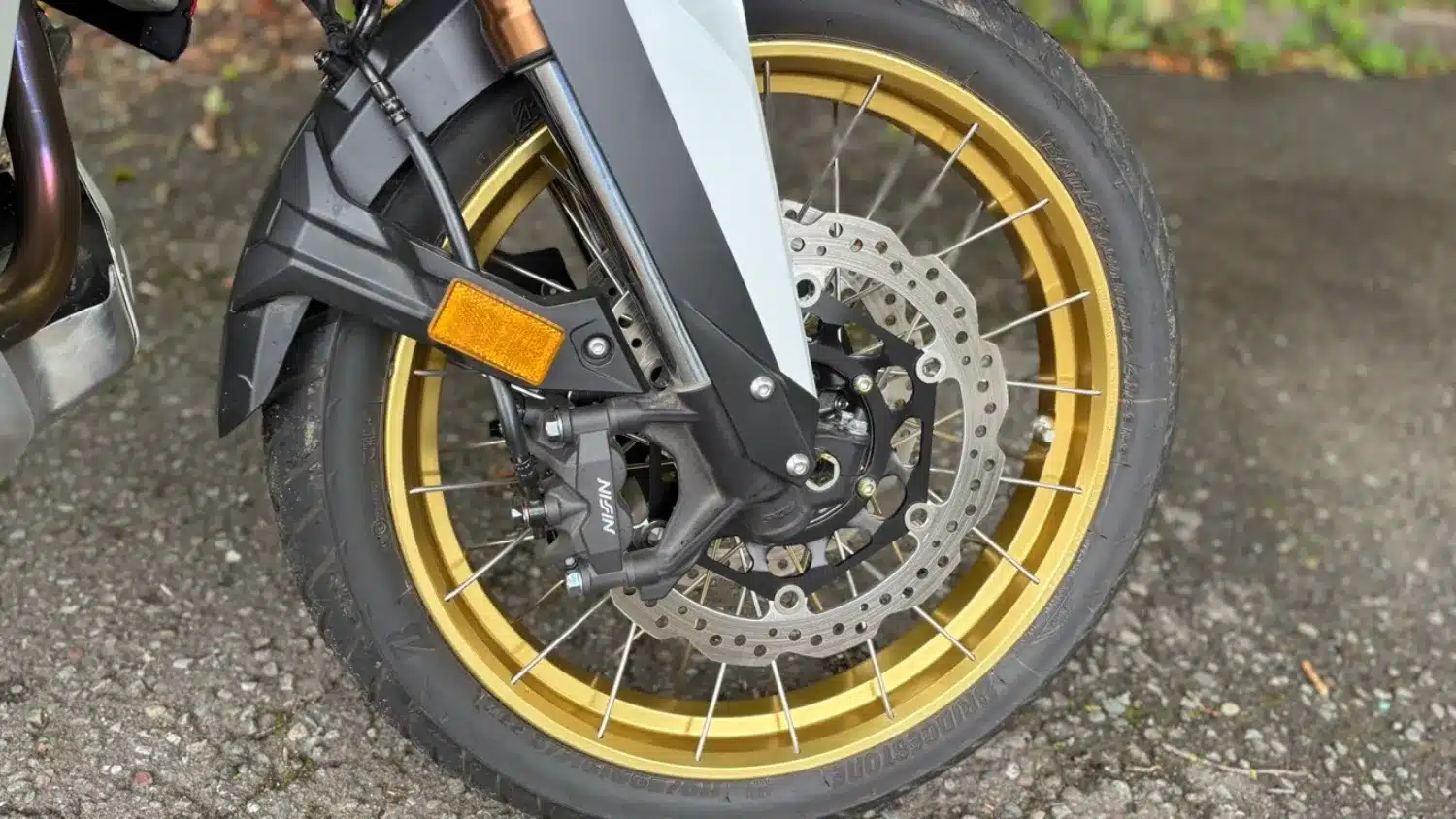
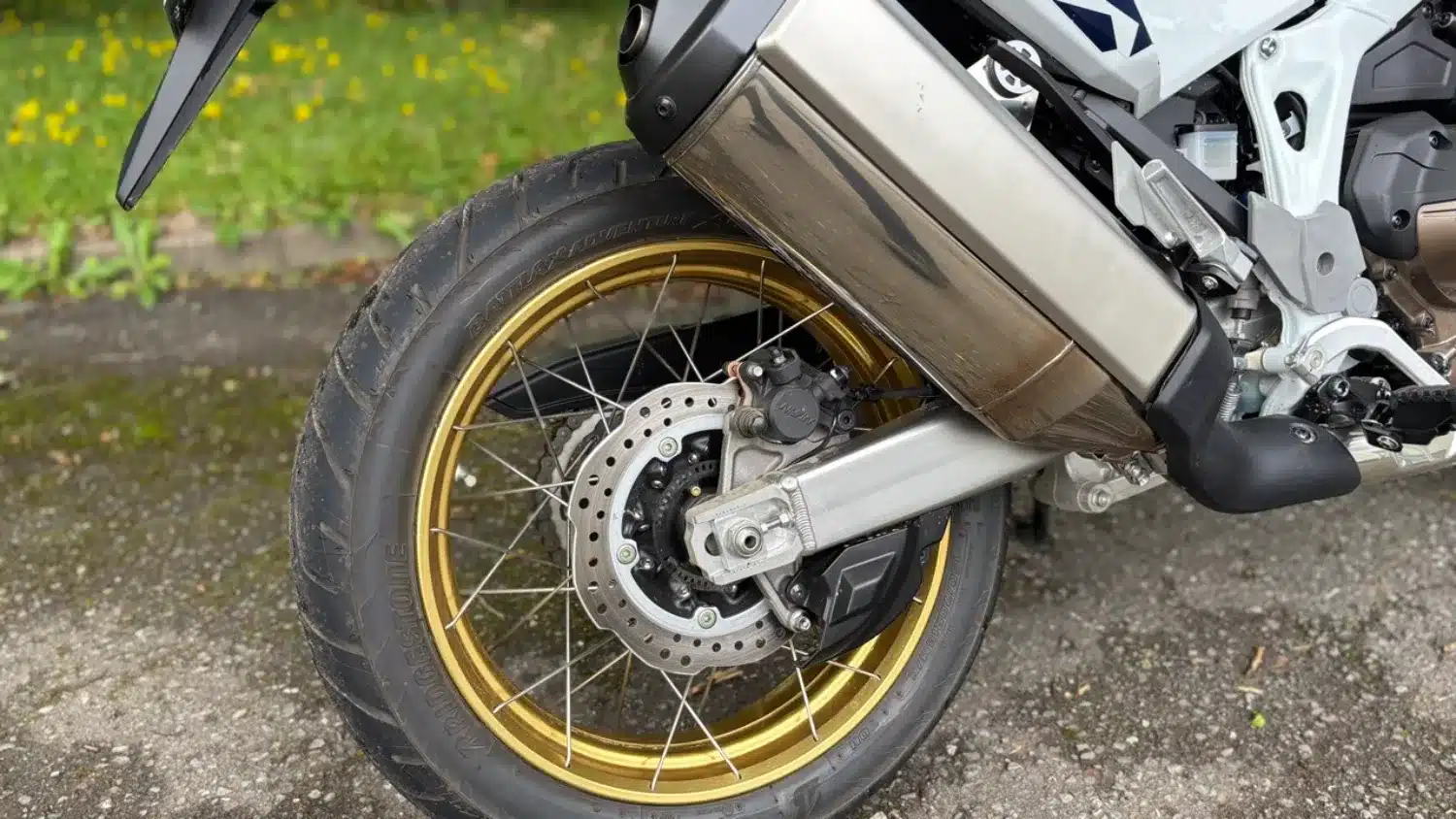
On battered secondary roads, gravel roads and less welcoming stretches, the bike remains stable and predictable. The different riding modes also allow the rider to adapt engine response, traction control and electronic aids to the conditions.
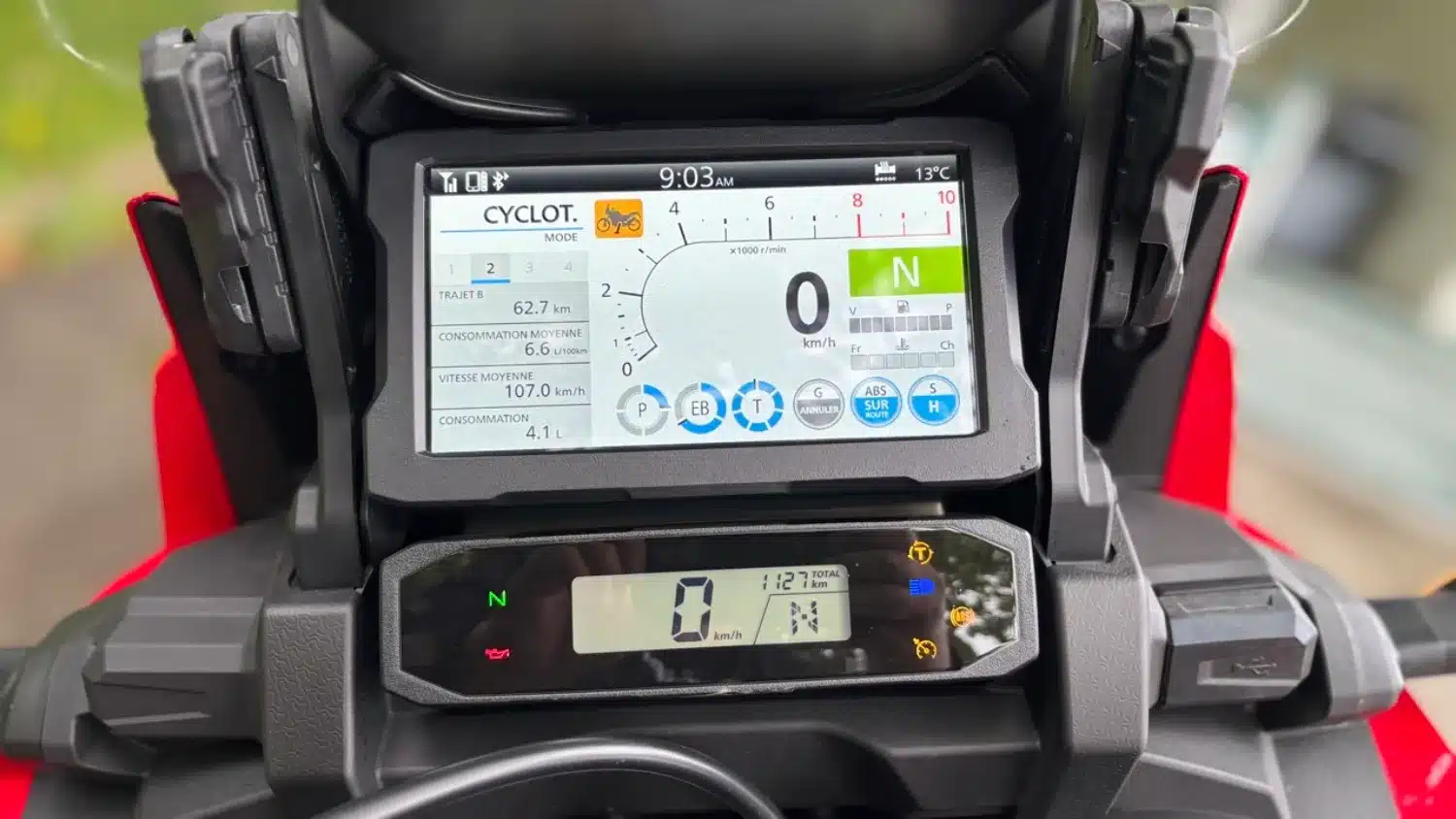
With six riding modes, a six-axis IMU, adjustable traction control and configurable ABS, the electronics are far from decorative.
What I Liked
- The DCT: once you adapt to it, its efficiency and comfort are hard to deny.
- The 1,084 cc engine: smooth, torquey and enjoyable to use, both on the road and when riding more aggressively.
- Handling: despite its weight, the Africa Twin feels surprisingly agile.
- Off-road capability: with its 19/18-inch wheels and long-travel suspension, it has genuine adventure credentials.
- Electronics: comprehensive without being needlessly complicated once you understand the settings.
- Long-distance comfort: especially appreciated when a little 250 km ride mysteriously turns into a 500 km day.
What I Liked Less
- Weight: 535 lb always comes back to have a word with you when it is time to back the bike up a sloped driveway.
- Seat height: 34.3 inches in the standard position. Shorter riders will want to evaluate this carefully. A lower 33.5-inch position is available, however.
- The DCT learning curve: the first few kilometres can feel unsettling for someone accustomed to a manual gearbox.
- Electronic complexity: all those possibilities are useful, but you need to allow a little time to get comfortable with the menus and settings.
Conclusion
The 2026 Honda Africa Twin DCT remains an exceptionally versatile machine. It can devour long distances on the highway, have fun on small winding roads and venture onto routes where many touring motorcycles would rather call a taxi.
Above all, though, the DCT genuinely changes the riding experience. It does not turn the Africa Twin into a giant scooter; it simply lets the rider choose how to manage the motorcycle.
After spending time at its controls, I understand much better why DCT continues to win over more riders. Would I be ready to give up a manual transmission completely? Not yet.
But if Honda told me, “Michel, you’re leaving tomorrow to cross the Alps. Here are the keys,” I probably would not spend the evening complaining about the missing clutch lever.
I would start packing instead.
And knowing my habits, I would probably still have too much stuff to get the cases closed!
Thanks to Honda Canada for making this 2026 Africa Twin DCT test possible.