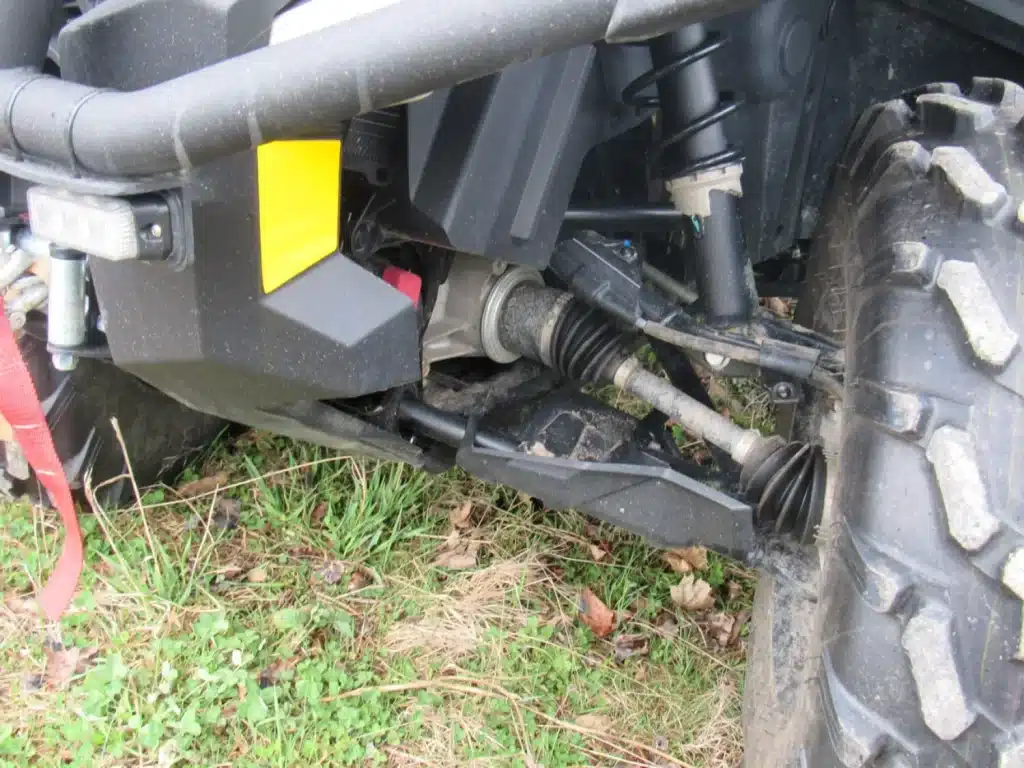
When it comes time to replace the cable on our winch, we’re always faced with the dilemma of choosing which type of cable to install on our ATV’s winch. Both types of winch cables—steel and synthetic—have very good reasons for existing. The right choice depends mainly on the vehicle’s actual use: off-roading, forestry work, heavy recovery, mud, winter, rock, safety, etc.
Steel Cable
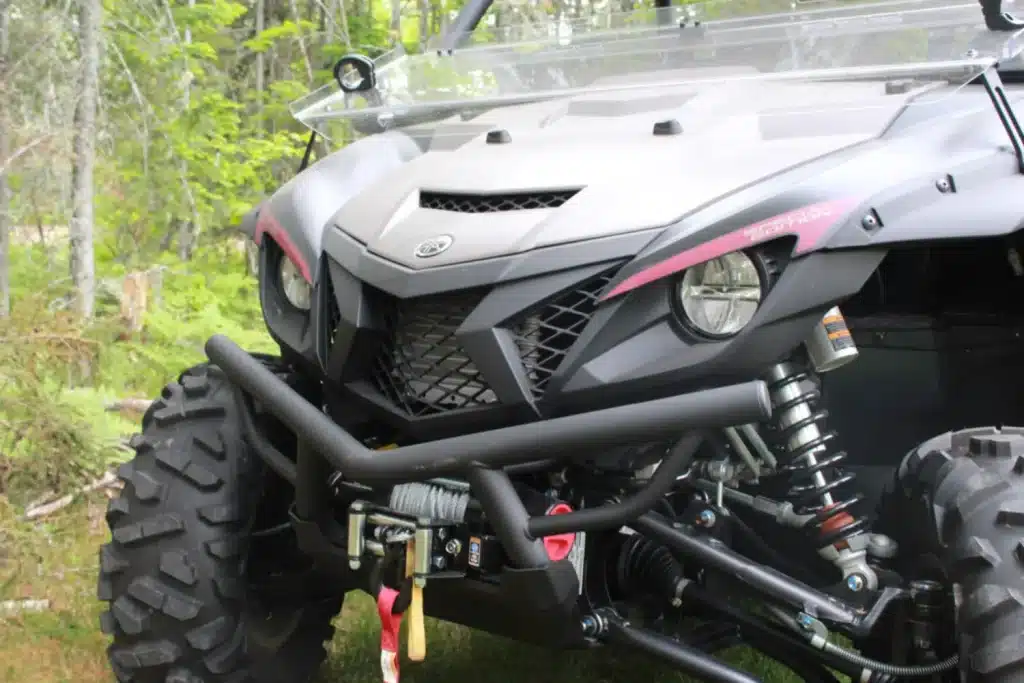
Here are the advantages and disadvantages of steel cables:
Advantages
- Highly abrasion-resistant. They withstand friction against rocks, stumps, and sharp metal edges better.
- Better heat tolerance. This is important during intensive use or long hauls.
- Cheaper to buy than a synthetic cable of equivalent capacity.
- Better resistance to occasional cuts. A damaged synthetic fiber can weaken quickly; steel sometimes withstands certain types of abuse better.
- Good for heavy and repetitive work such as skidding, utility hauling, etc.
Disadvantages
- Dangerous if it breaks. The infamous “whiplash” can be extremely violent and requires stricter safety procedures during use.
- Very heavy. It is more difficult to handle in mud or during winter.
- Formation of metal burrs. Broken strands pierce gloves and hands and can cause injuries.
- Rust and corrosion: especially with salt, moisture, and poor maintenance.
- Stiffer: it winds less smoothly onto the drum and requires more care when rewinding.
Synthetic Cable
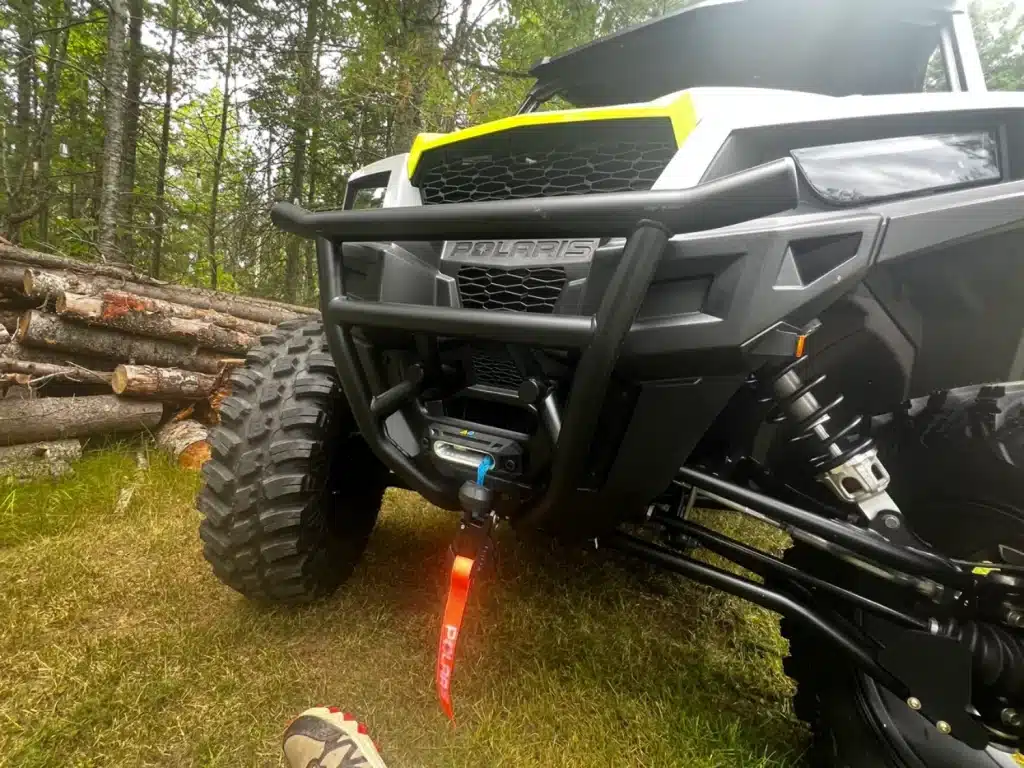
Here are the advantages and disadvantages of synthetic cables.
Advantages
- Much safer in case of breakage. The rope generally falls to the ground instead of whipping violently.
- Very lightweight. This makes a big difference when handling 50 or 100 feet of cable.
- Easy to handle. It is flexible and comfortable to use with gloves.
- Does not rust. Excellent for snow, water, and mud.
- Floats on water, which is useful in certain recovery situations.
Disadvantages
- More susceptible to abrasion. A sharp rock can damage it quickly.
- Sensitive to UV rays and contaminants such as sand and mud, which can act as internal abrasives.
- Requires more maintenance. The rope sometimes needs to be washed and inspected.
- More expensive, especially the top brands.
- Sensitive to heat. A hot internal winch brake can accelerate wear.
The trend in cable selection among ATV riders.
For ATV riders who use their vehicles recreationally, synthetic cables have become extremely popular. In addition, more and more manufacturers are equipping winches with synthetic cables as standard. Generally, people prefer them because they are safer and much easier to handle, being more flexible and lightweight. Those who continue to choose steel cables are forestry workers who use their winches intensively. There are also users who want to minimize costs.
How to select and maintain a synthetic cable.
A high-quality synthetic rope must be made of high-density polyethylene (such as Dyneema SK75 or SK78), preferably with a 12-strand braid. It should also have a protective sheath, often made of nylon, covering the first few meters of the rope to protect it from friction against the ground and rocks.
Its capacity should be 1.5 to 2 times the maximum capacity of your winch. For example, for a winch with a 4,500-lb capacity, you should select a cable with a minimum capacity of 6,750 lbs.
Regarding the cable guide, synthetic cable cannot be used with conventional rollers. These pinch the cable and cause snags in the fibers. You need a hawse fairlead made of polished aluminum or with a very smooth coating, free of sharp edges.
An example of a replacement synthetic cable
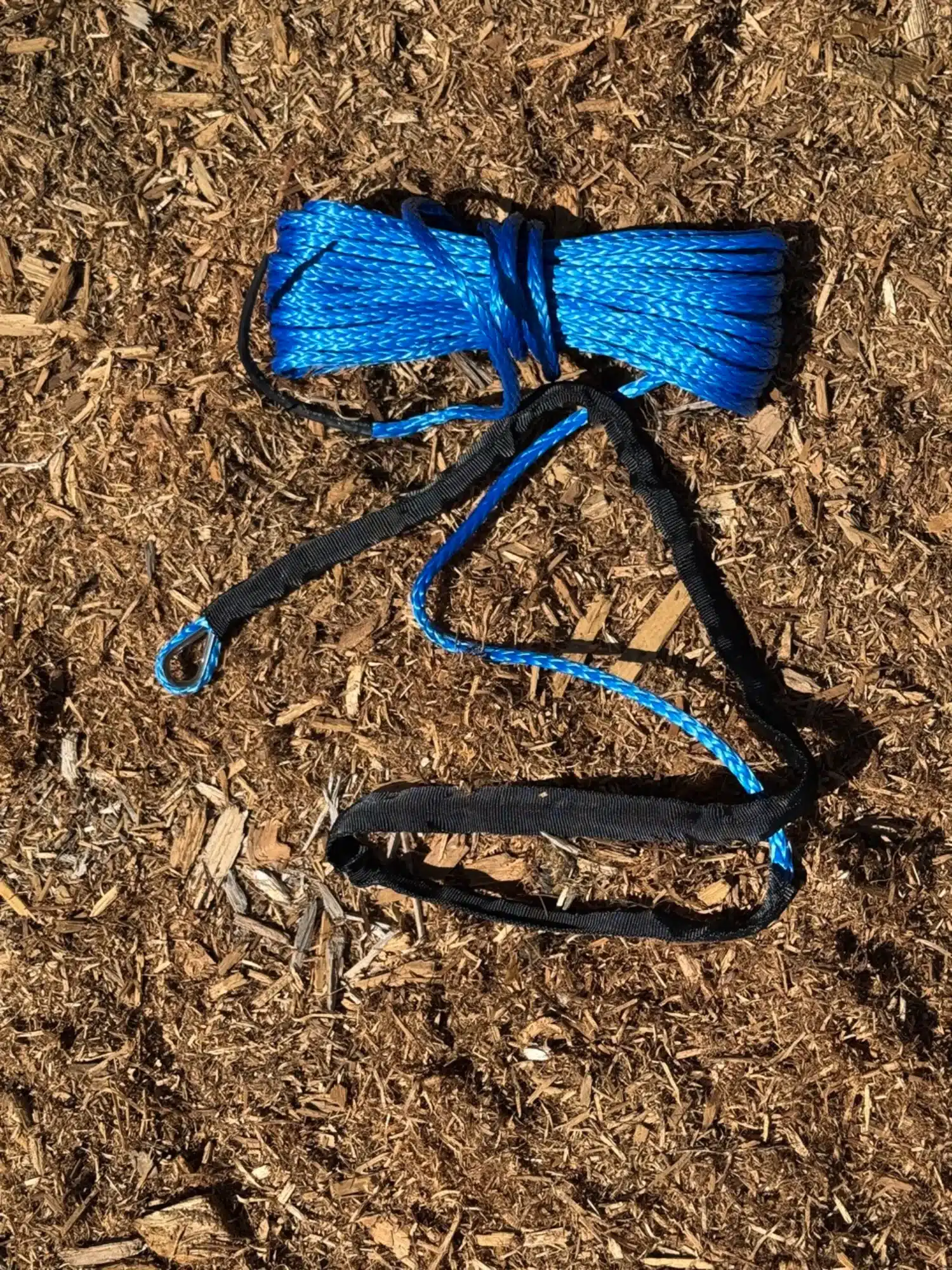
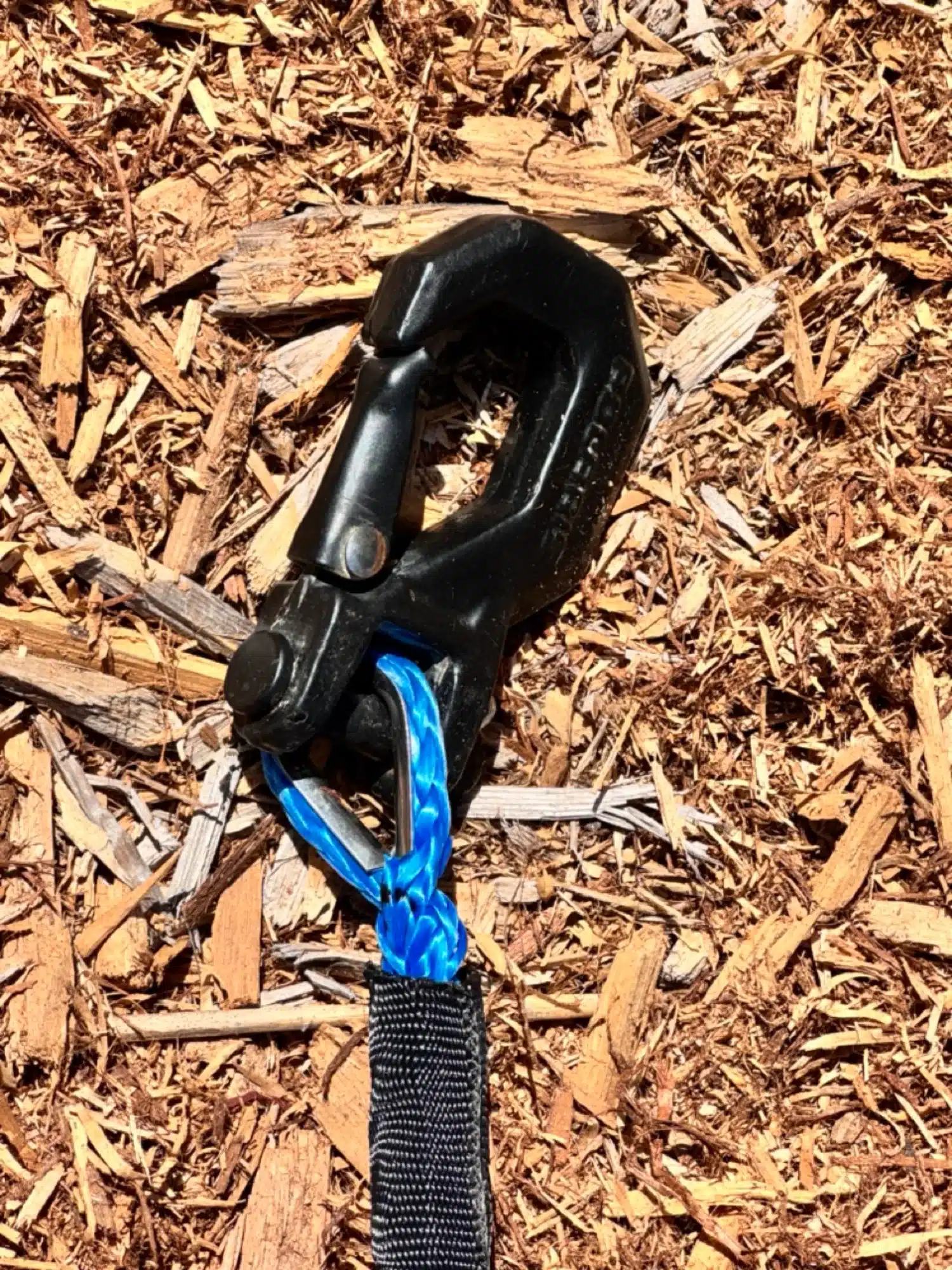
The Kimpex synthetic cable (SKU 158551) is an affordable 15 m (49 ft) replacement cable with a 6 mm diameter and a breaking strength of up to 7,500 lbs. It is available in black, gray, blue, and red. Upon closer inspection, it is made of high-strength synthetic fiber with a 12-strand braid. It features a 36-inch protective sheath at the start of the cable to reduce wear at friction points. Additionally, there is a thimble in the cable’s eye to accommodate the hook. The overall quality perceived when handling it inspires confidence.
Criteria for replacing winch cables
The replacement criteria differ significantly between steel and synthetic cables. Many users wait far too long before taking them out of service, either out of ignorance or negligence.
Steel Cable — Replacement Criteria
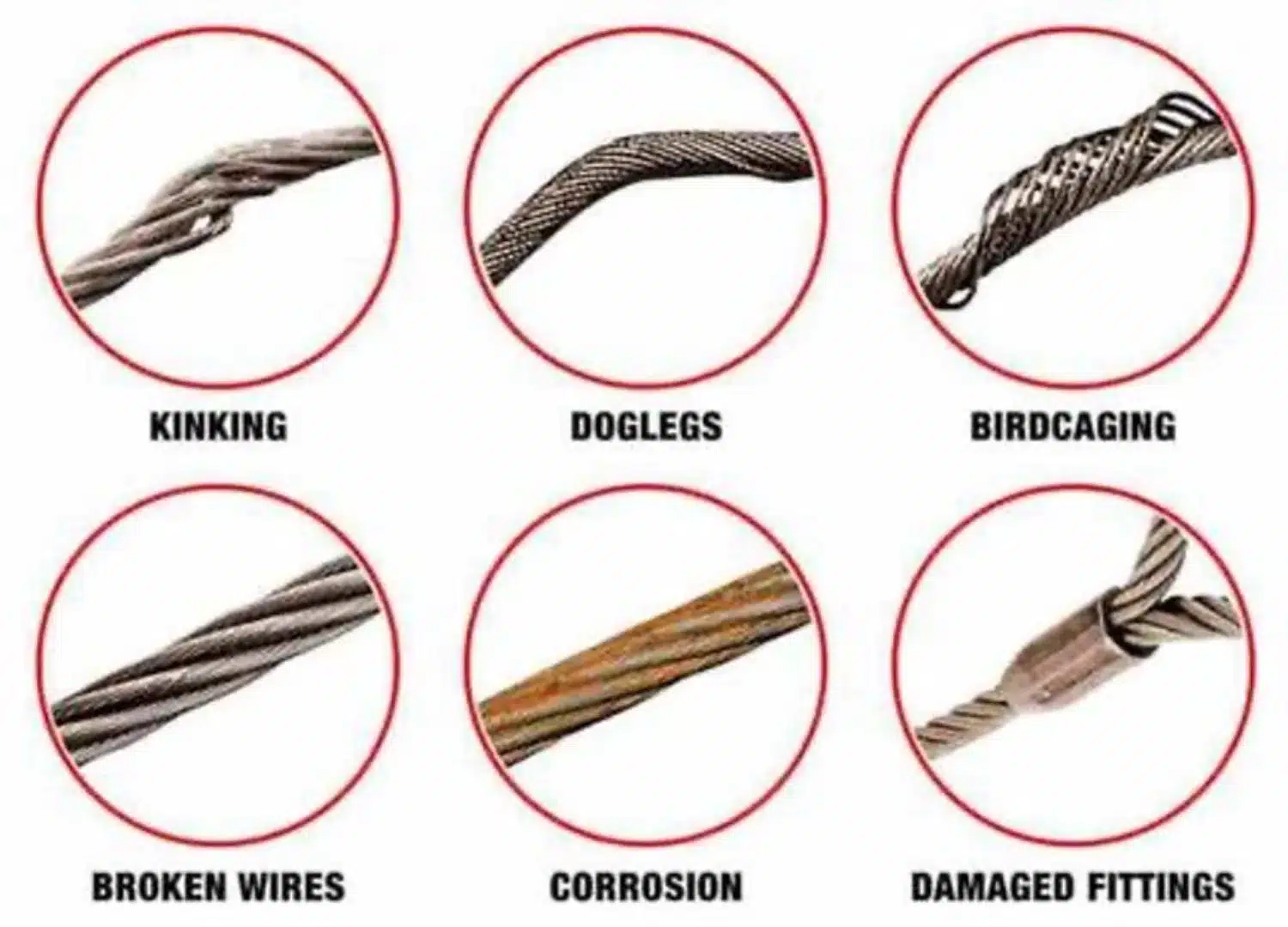
Steel cables must be replaced if there is:
- Significant “barb” formation and several visible broken wires.
- A broken strand or open section. If a major strand is broken, strength drops rapidly.
- A “birdcage” effect caused by the cable swelling and the strands separating.
- A permanent kink. This is a critical condition because a kinked cable loses a great deal of strength.
- Localized crushing caused by a strand getting pinched between layers on the drum.
- Deep corrosion attacking the inner strands. If a rusted and dry cable snaps under tension, it means its internal structure is weakened.
- A locally reduced diameter indicating internal wear.
- Thermal deformation caused by overheating.
Synthetic rope — replacement criteria
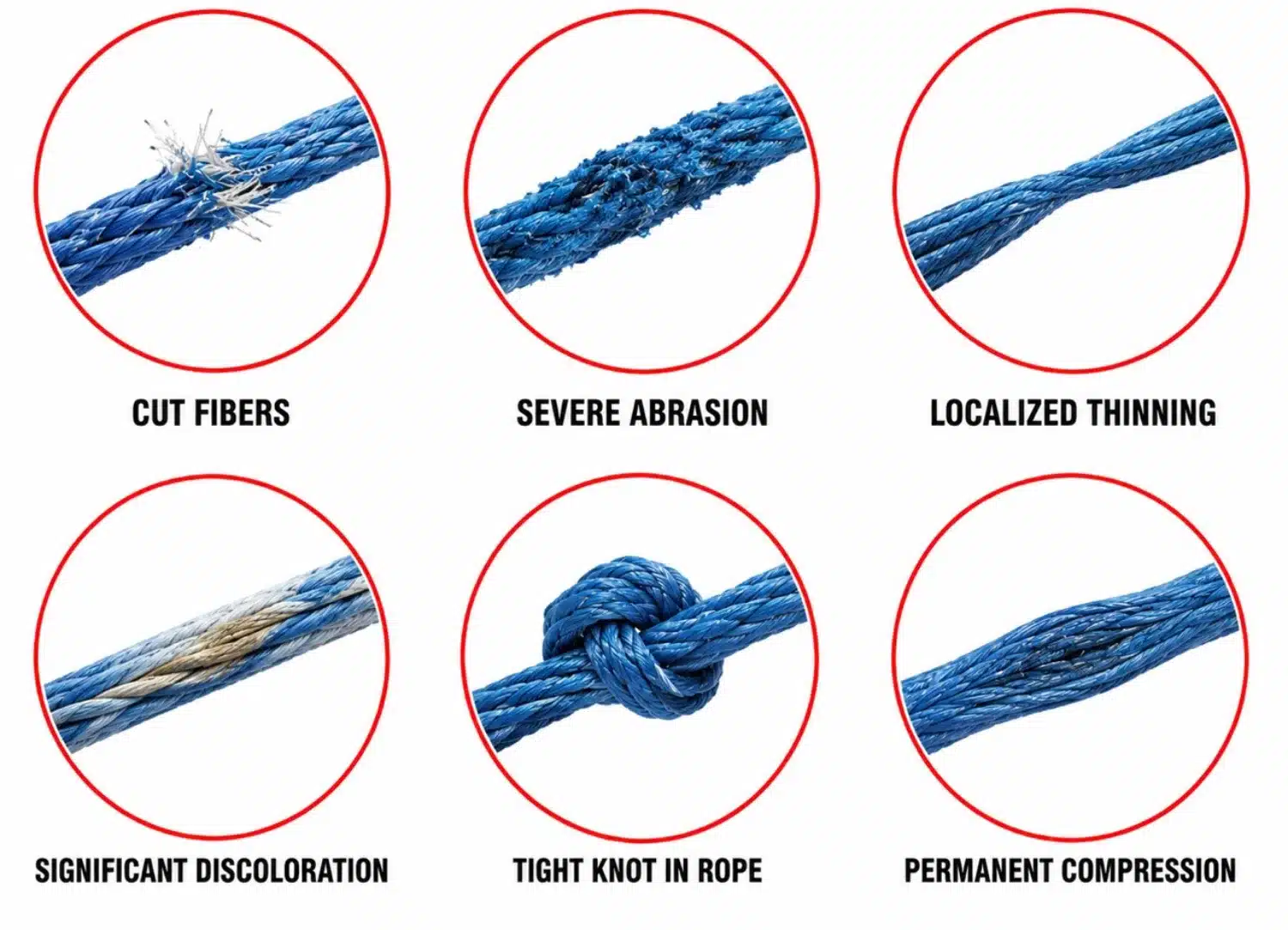
Synthetic ropes should be replaced if you notice any of the following:
- Cut or severed fibers
- Melted or hardened sheath, which is often caused by excessive heat or friction.
- Localized thinning, indicating that the rope has been stretched and its strength is reduced.
- Severe abrasion with an advanced “fuzzy” appearance.
- Significant discoloration and dry/brittle fibers caused by aging due to UV exposure.
- Chemical contamination with a product such as gasoline, solvents, or acid.
- A tight knot that has been subjected to tensile load. A knot greatly reduces strength.
- Permanent crushing, especially after overloading.
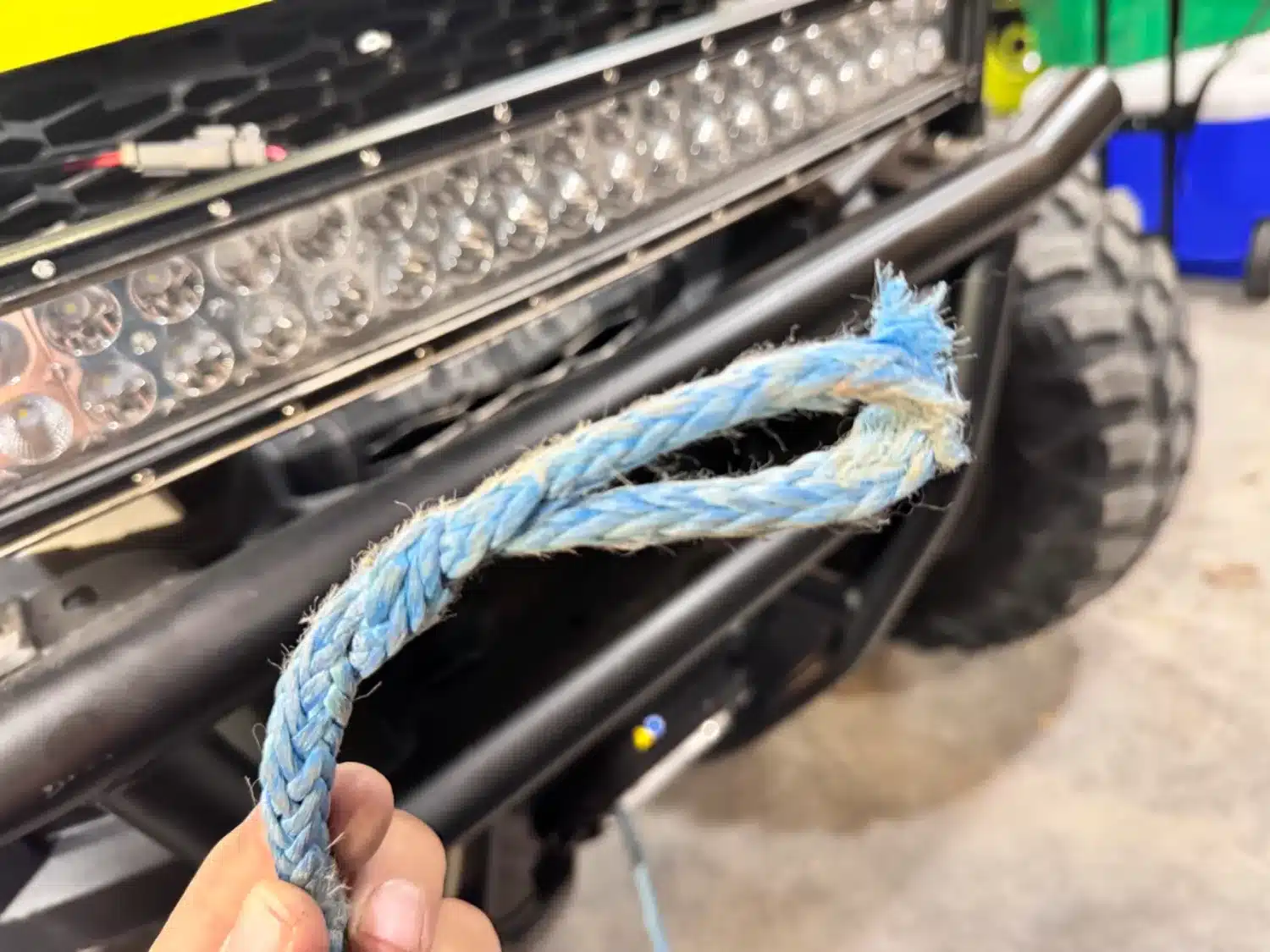
Watch out for sand
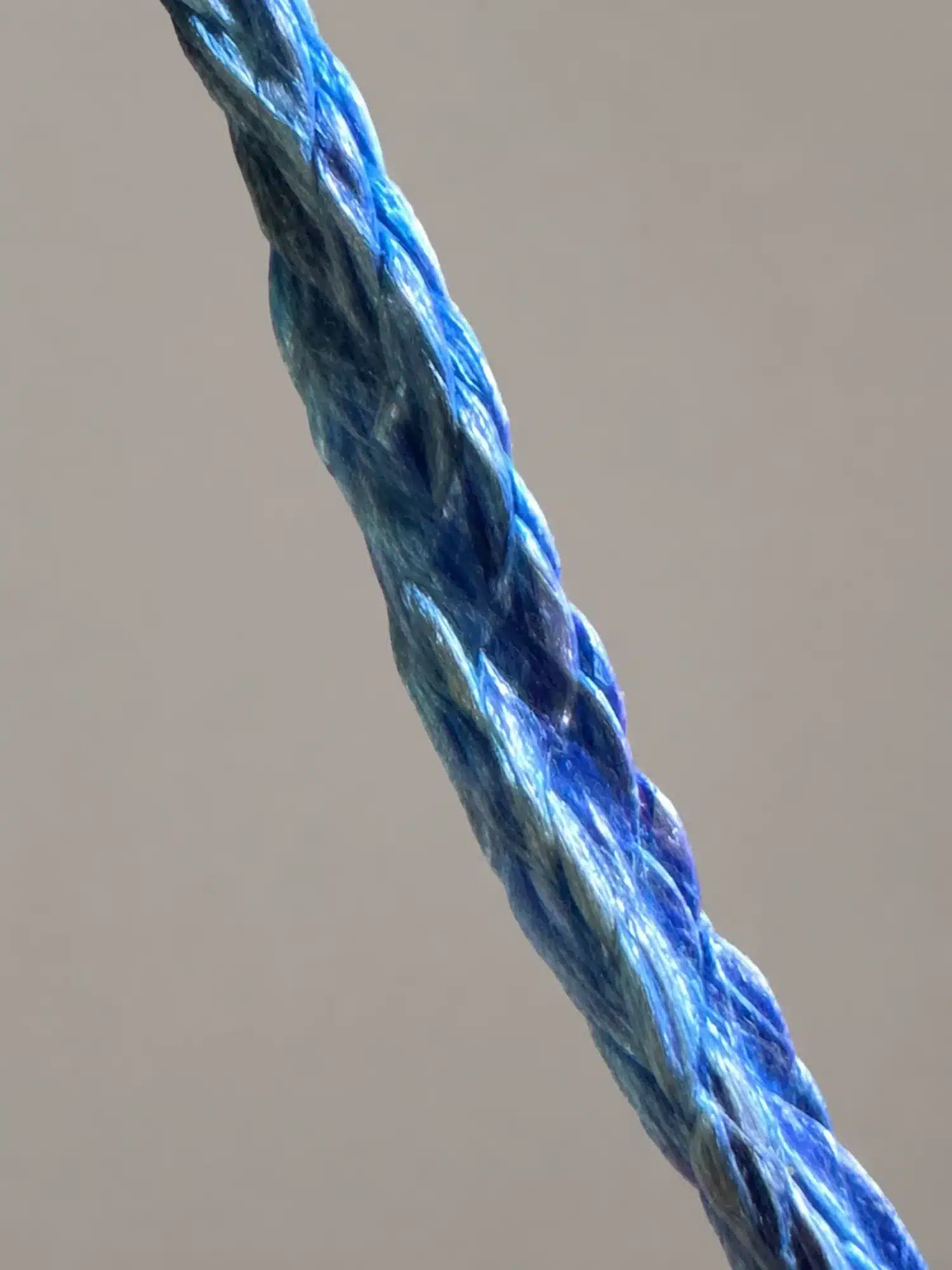
Sand is a silent killer of synthetic ropes because it seeps between the fibers, acts as an internal abrasive, and greatly accelerates wear under load.
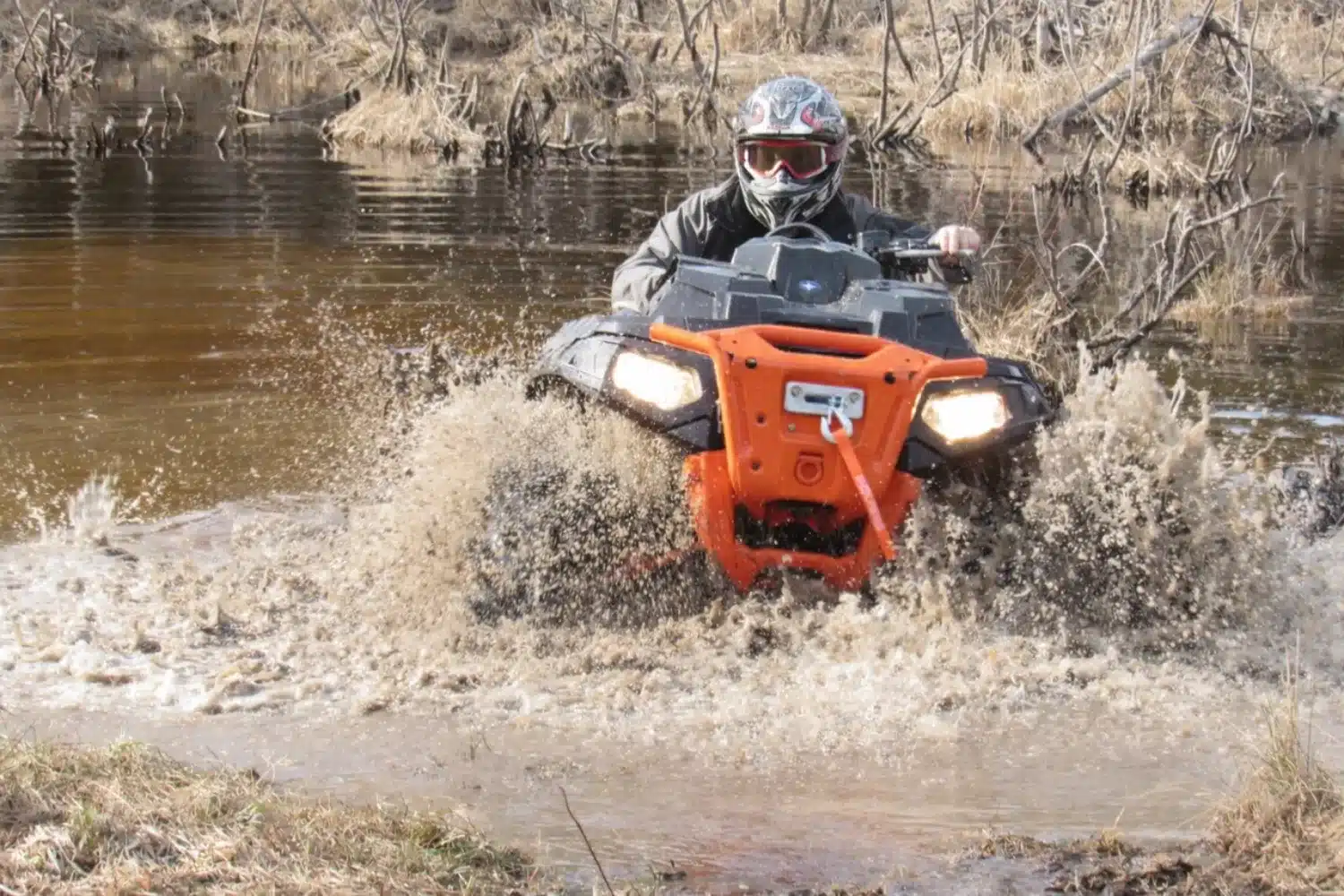
To maximize its lifespan, a muddy synthetic rope should ideally be rinsed and dried periodically.
Don’t overlook
Many people limit their visual inspection to just the cable, but they forget about the rest of the hardware. Think about hooks, thimbles, shackles, cable guides and pulleys, drum mounts, end fittings, etc. They say a chain is only as strong as its weakest link, and that’s especially true here.
Conclusion:
The choice between a steel or synthetic winch cable will largely depend on how you use it. The steel cable, which is more robust but less flexible to handle, will better withstand the rigors of intensive use. The synthetic cable, on the other hand, is lighter and more flexible and offers safety in the event of a break due to the absence of a whiplash effect. However, to maximize its lifespan, it will require a minimum of maintenance.