Motorcycling offers a sense of freedom that’s hard to match. Every season, thousands of motorcyclists travel the roads of Canada in search of scenery, new discoveries, and moments of enjoyment. Despite all the experience and caution riders may exercise, no one is completely immune to an incident during a ride.
When it comes to motorcycle accidents, the collective imagination immediately thinks of a collision or a serious fall. Yet the reality is often much more nuanced. A simple cut while stopping, a burn from contact with a hot muffler, an allergic reaction to an insect bite, a medical emergency, or even a low-speed fall during a maneuver can quickly turn a pleasant ride into a problematic situation.
Even though no one wants to experience this kind of event, proper preparation allows you to handle it with greater peace of mind. When equipment is available and procedures are known in advance, stress levels decrease significantly and responses become more effective. A few simple measures can be implemented today to improve your level of preparedness.
Ensure a Reliable Means of Communication
When a serious incident occurs, the ability to communicate quickly with emergency services becomes crucial. In many situations, it is not advisable to leave an injured person alone to go get help. The means of communication available on-site can make all the difference.
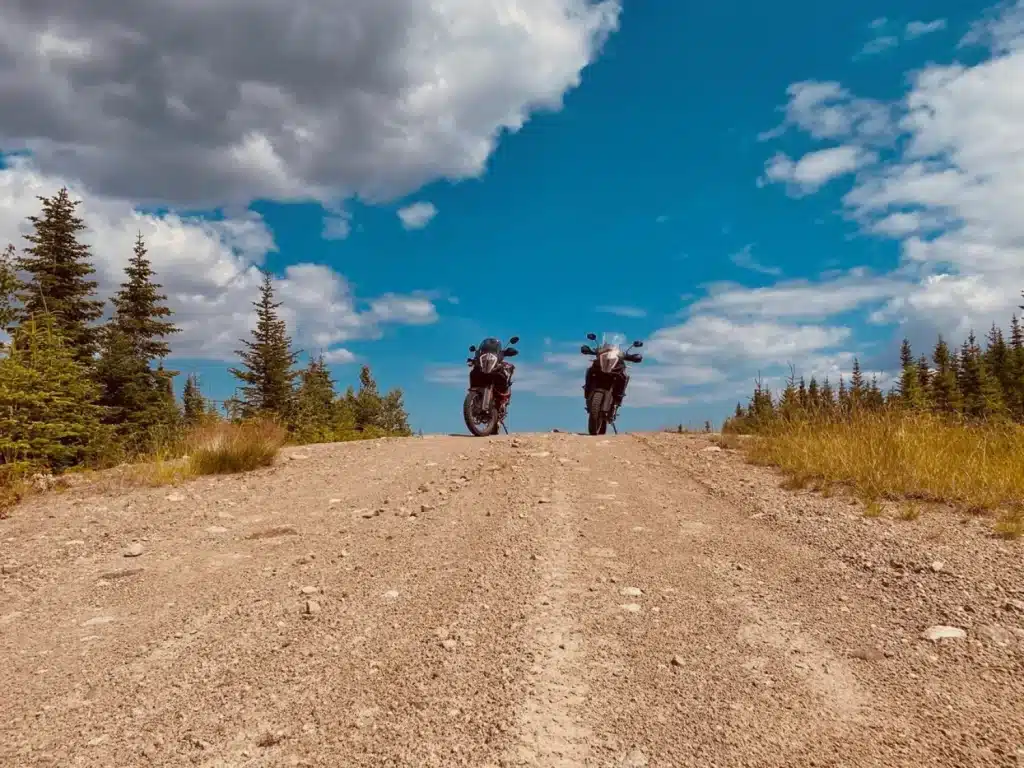
The cell phone remains, of course, the most widely used tool. However, motorcyclists traveling in remote areas are well aware of the limitations of cell phone coverage, as certain scenic routes in mountainous regions pose challenges. For adventure motorcycle enthusiasts riding in forested areas, they are more likely to encounter zones where communications are non-existent or intermittent.
To address this reality, several solutions using satellite networks are now available to the general public. Devices such as ZOLEO, SPOT X, or Garmin inReach allow users to transmit a distress signal along with their GPS location. Depending on the model chosen, it is also possible to exchange two-way messages with emergency coordination centers or with loved ones. These devices are particularly useful for motorcyclists undertaking long trips, expeditions to remote regions, or journeys through sparsely populated areas. They provide an extra layer of safety that can prove invaluable when every minute counts.
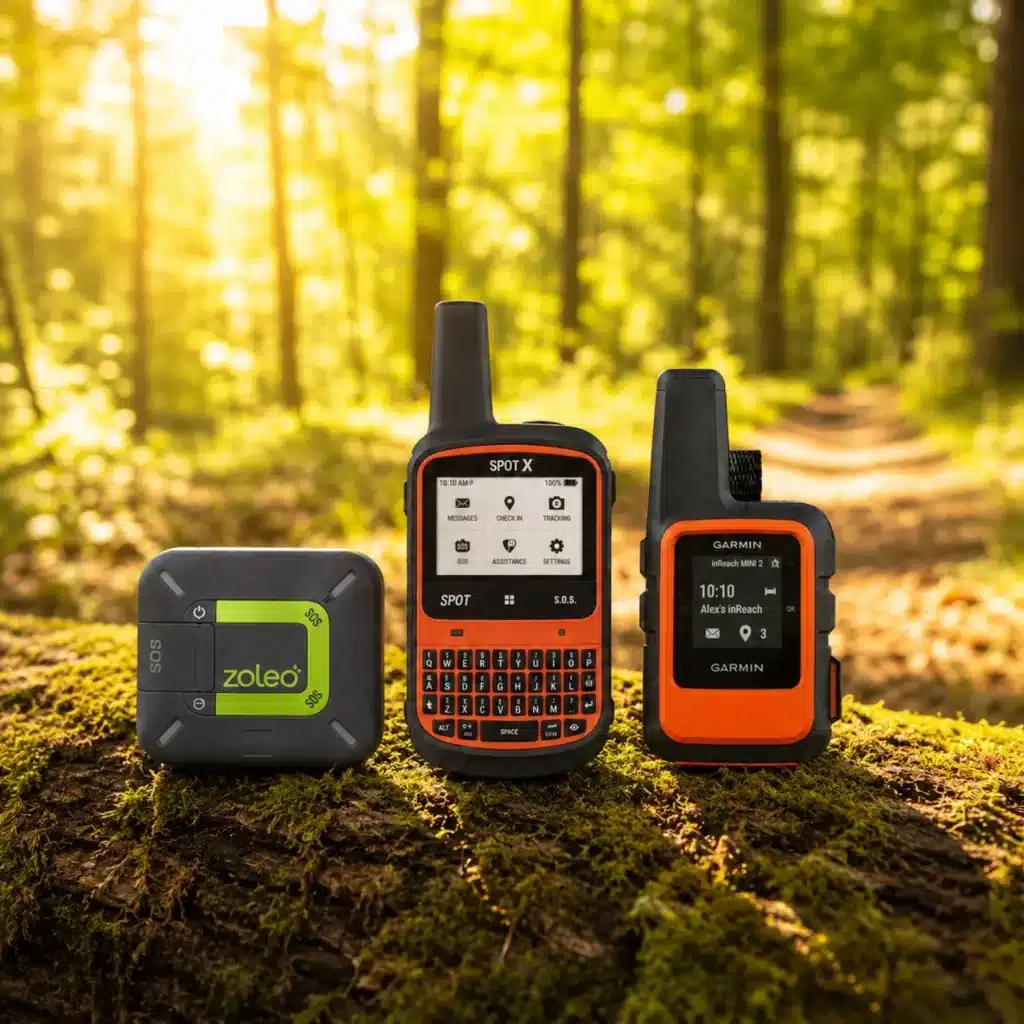
Technological advancements are also bringing new possibilities for standard smartphones. Some recent smartphones now include satellite emergency communication features. These features vary by manufacturer, model, and service provider. It is therefore recommended that you verify your device’s exact capabilities with your cell phone provider before departure.
However, it is important to understand that satellite communications do not work the same way as a traditional phone call. Transmissions are generally slower and often require a clear view of the sky to optimize reception. In an emergency, the system primarily allows you to transmit a request for assistance, your location, and essential information regarding the victim’s condition.
Finally, since all technology relies on a power source, it is strongly recommended that you carry a portable battery to recharge electronic devices. A dead phone battery at the wrong moment can quickly become a major problem.
A motorcycle-specific first aid kit
A first-aid kit is probably the simplest safety item to carry, yet one of the most useful.
Even when no major emergency occurs, it allows you to quickly treat several minor injuries that might otherwise compromise your comfort or the continuation of your trip. Prompt treatment can also reduce the risk of infection or the worsening of certain injuries.
In a motorcycling context, the kit should be chosen with care. It must withstand the elements, vibrations, and temperature fluctuations. A waterproof or highly water-resistant container is generally the best choice.
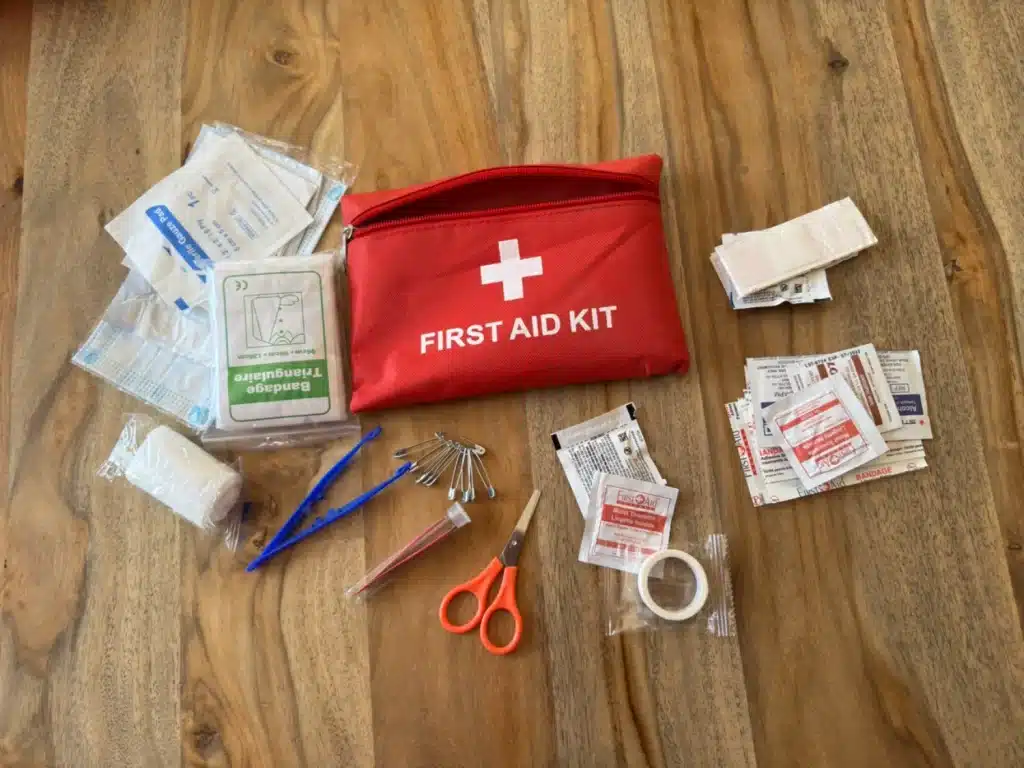
Visibility is also an important factor. A brightly colored kit, particularly red or orange, will be much easier to spot quickly in a side case, top case, or travel bag.
The organization of the contents also deserves special attention. A well-designed kit allows you to quickly identify the supplies you need without having to empty its entire contents onto the side of the road. In an emergency, this feature can save precious time.
Without necessarily aiming for a professional medical kit, basic equipment should include:
- disposable nitrile gloves (latex can cause an allergic reaction)
- Sterile adhesive bandages in various sizes
- Sterile gauze pads and swabs
- Rolls of bandage
- Elastic bands
- Medical adhesive tape
- Antiseptic wipes
- A splinter remover
- A pair of scissors
- Safety pins
- An antibiotic ointment
- Insect bite treatment
- An aluminum emergency blanket
The latter deserves special mention. When a person is injured or in shock, maintaining body temperature becomes critical. An emergency blanket can help limit heat loss, provide protection from wind or rain, and improve the injured person’s comfort while waiting for help to arrive.
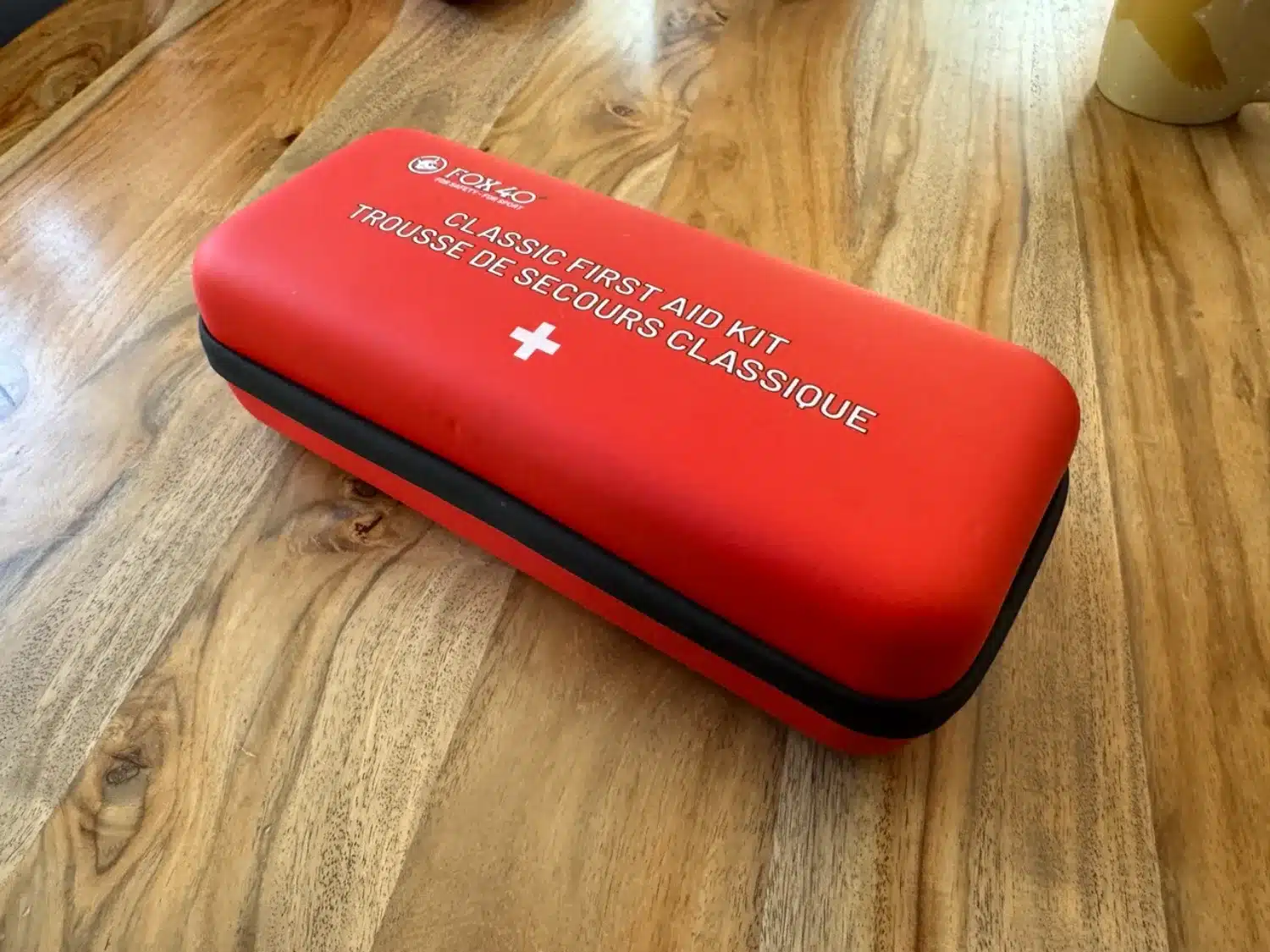
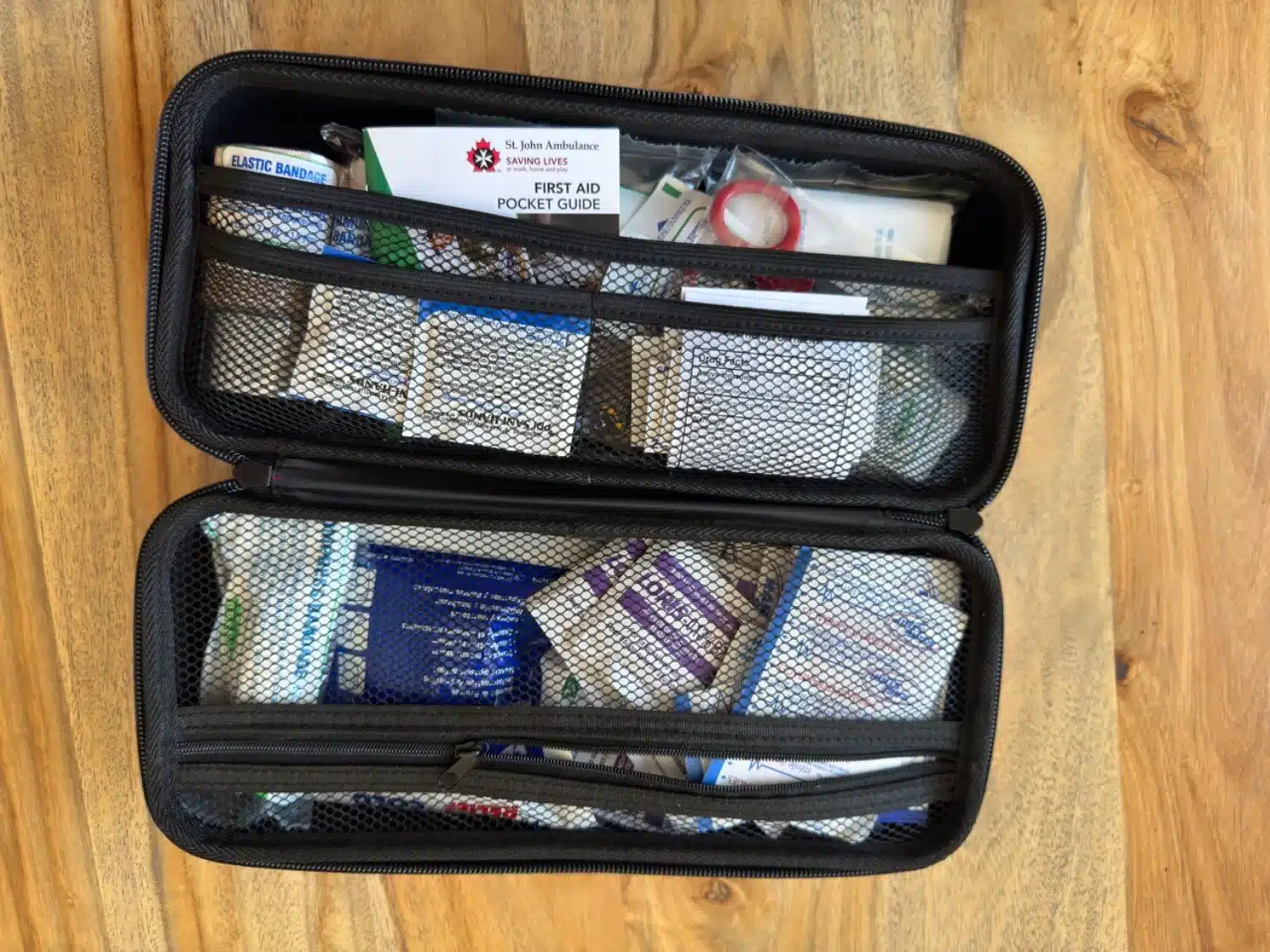
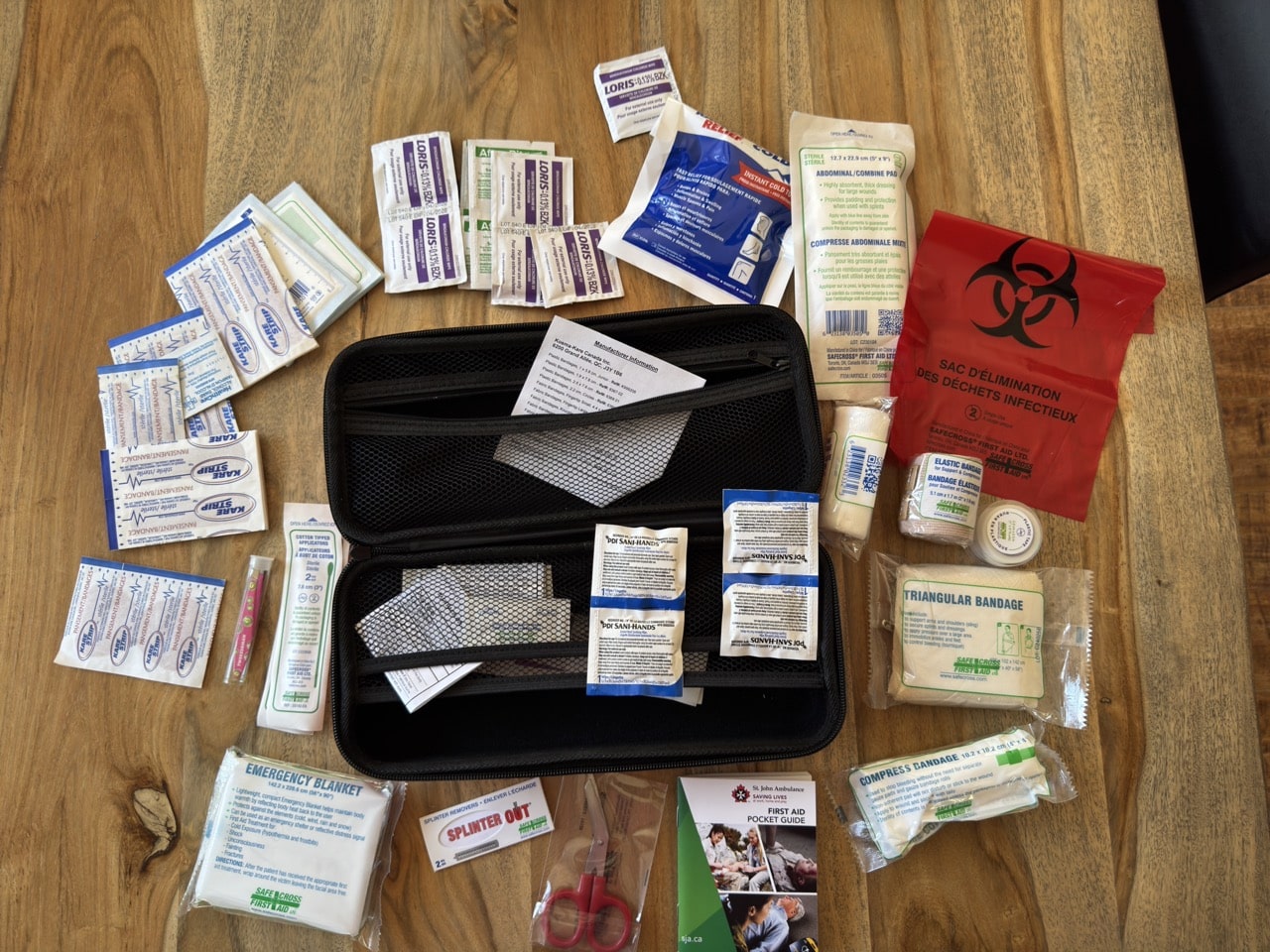
Like all safety equipment, a first-aid kit requires periodic maintenance. Items should be inspected regularly to replace used items, check expiration dates, and ensure the equipment remains in good condition.
Planning Your Trips
Preparation isn’t limited to equipment.
Before a trip, it is recommended to inform a loved one of your general itinerary, particularly during long hikes or when planning to travel in remote areas. This simple habit greatly facilitates the process if an unusual situation arises.
When traveling in a group, it is also wise to discuss in advance the procedures to follow in the event of an incident. Identifying individuals with first aid training, sharing emergency contact information, and knowing the location of medical kits often allows for a more effective response when every second counts.
Prevention is always the best strategy. A well-maintained motorcycle, tires in good condition, proper protective gear, and driving adapted to the conditions significantly reduce the risk of accidents.
CPR training: an investment that can save a life
Among all possible preparedness measures, cardiopulmonary resuscitation (CPR) training is likely one of the most important.
This training goes far beyond learning resuscitation techniques. It helps you develop essential reflexes, assess an emergency situation, and respond with greater confidence when a life is at stake. The first few minutes following a cardiac arrest, stroke, or medical emergency are often critical.
A trained person is generally calmer, more organized, and better able to make the right decisions under pressure. They also help reassure others present at the scene. The presence of someone capable of performing the right actions at the right time will always remain a fundamental part of the chain of survival.
Spending a few hours taking a CPR course is a modest investment with potentially significant benefits. Whether to help a fellow traveler, a family member, or even a stranger met while traveling, this skill could one day make all the difference.