There are two kinds of motorcyclists in Canada: those who have already cursed a dead battery… and those to whom it will happen at the worst possible moment. Usually at a gas station lost somewhere between Parent and La Tuque, with the vision of that little booster pack back home.
Because let’s be real: the battery is your motorcycle’s diva. It doesn’t make a sound, it doesn’t add 15 horsepower, it doesn’t turn heads at Tim Hortons… But if it decides it’s having an emotional burnout, your ride ends before it’s even begun.
You can have a brand-new adventure bike with more electronics than an Airbus, but if the battery says no, it’s a no-go. Your TFT screen can say “Welcome Rider” all it wants, but the only thing you’ll be riding is your mood.
And yet, despite its importance, most people know about as much about their battery as they do about the inner workings of a wind-up alarm clock. We know it’s there, and we hope it does its job without asking questions.
Today, we’re demystifying this together.
The Different Types of Batteries
There are several types of batteries on the market, each with their own strengths and weaknesses.
The Lead-Acid Battery
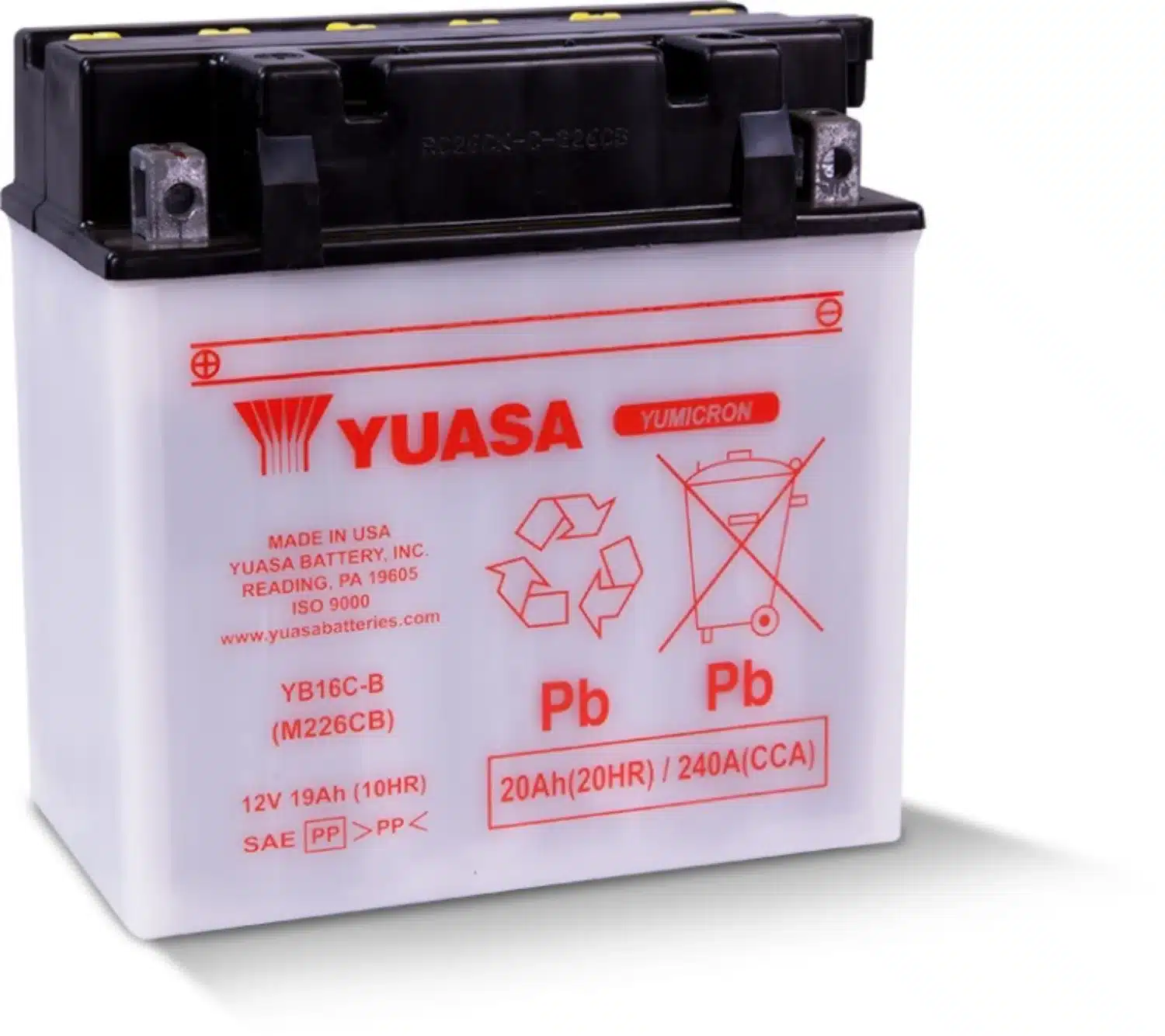
Cheap, simple, heavy as a block of concrete, yet capable—and it’ll leak acid if you tip the bike on its side. It sometimes requires maintenance, a bit like an old snowplow truck.
But hey… it still works.
For an old gas-powered motorcycle or a tight budget, it can get the job done. You just have to accept that, technologically speaking, we’re pretty much in the motorcycle equivalent of VHS.
The AGM battery
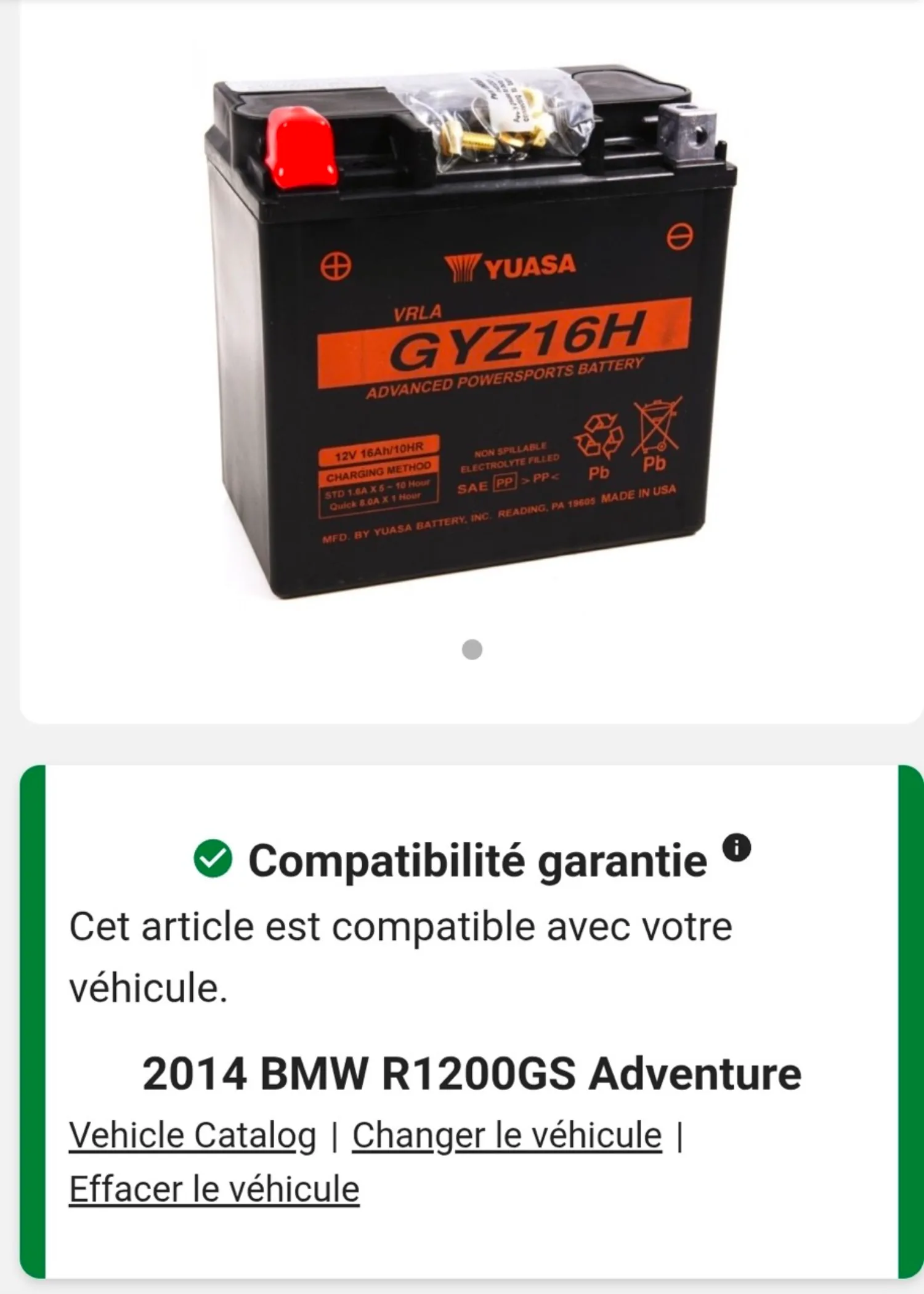
The people’s favorite. AGM sounds scientific, but it stands for Absorbed Glass Mat.
It requires no maintenance, has good vibration resistance, excellent cold-weather performance, and is reliable… In short, the battery that shows up on time and pays its share at the restaurant.
It’s the safe bet for most modern motorcycles. In fact, it comes standard on many bikes.
The Gel Battery
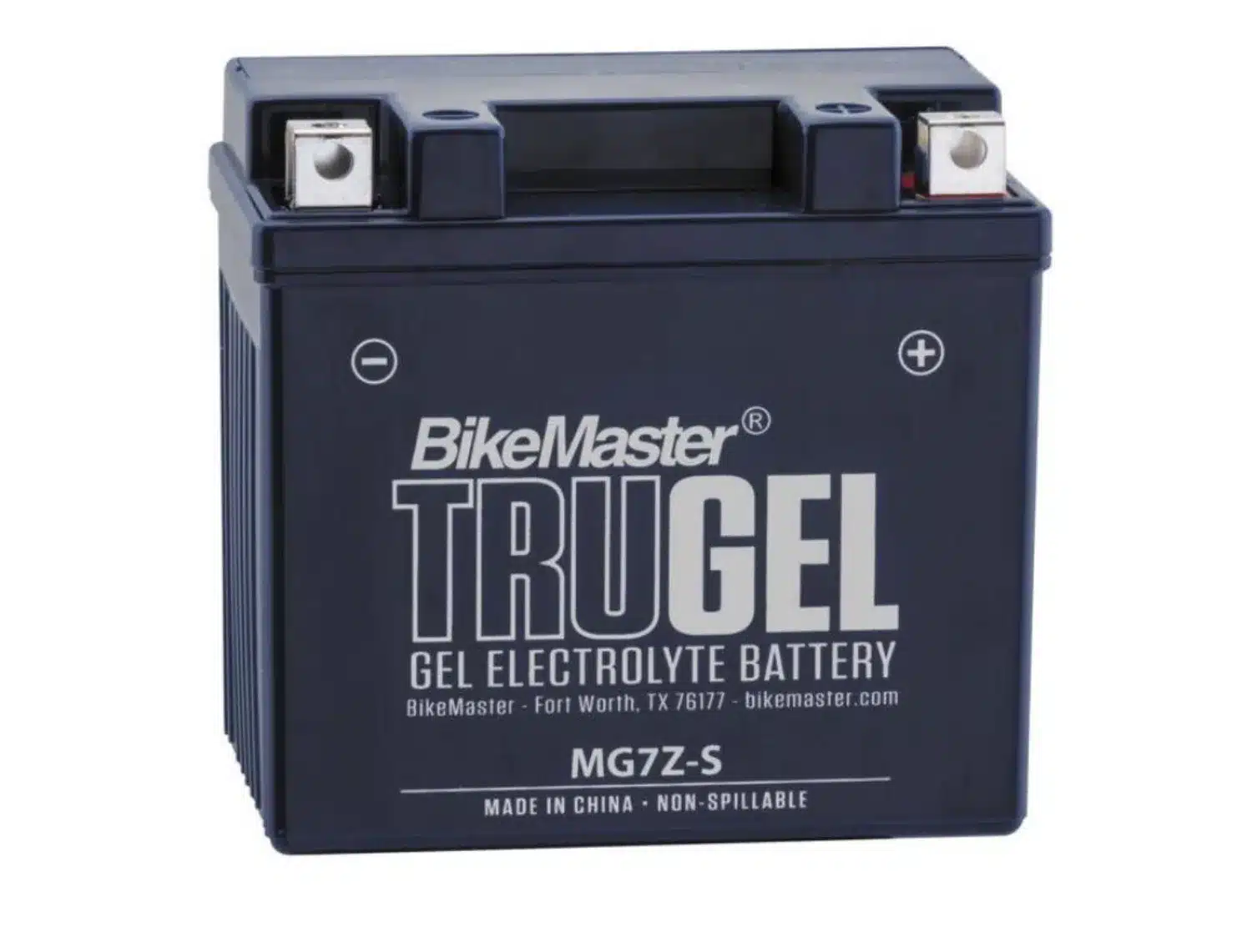
It’s stable and durable, sealed, and maintenance-free. The sulfuric acid is set in gel form thanks to the addition of silica. However, it isn’t the most powerful. It thrives on controlled charging and calm environments.
It has a long lifespan, but performs less well on motorcycles with high power demands.
The lithium battery (LiFePO4)
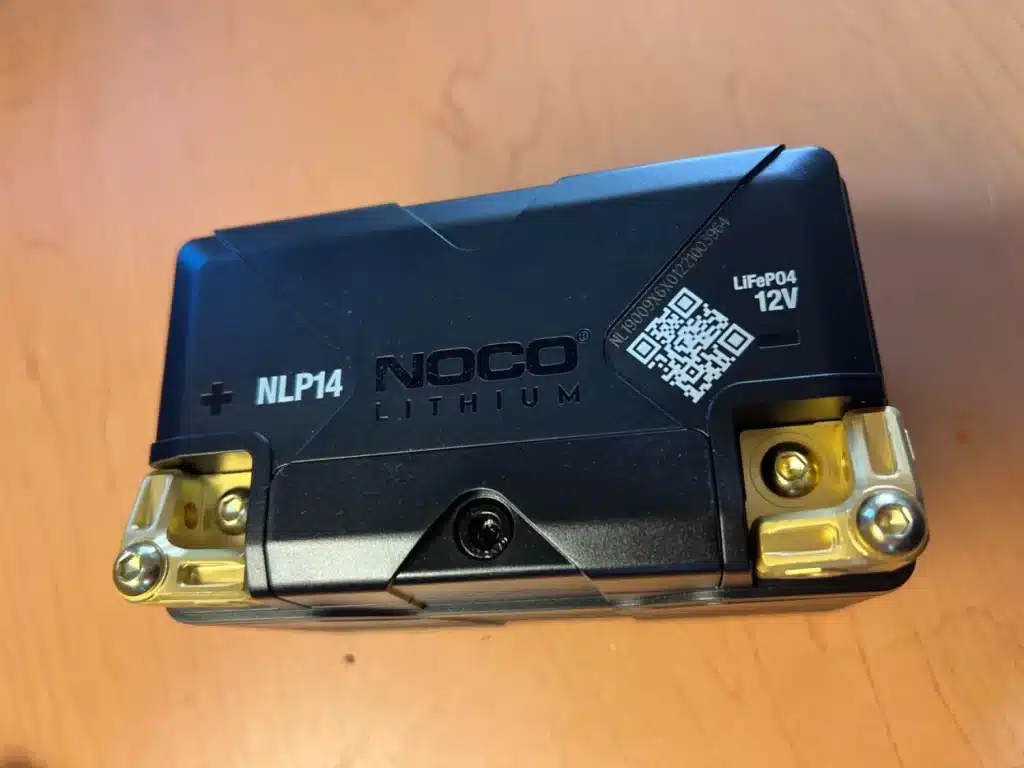
This is the battery everyone is watching. It’s ultra-lightweight, powerful, and modern.
So light that you wonder if the seller forgot to put the battery inside when you open the box for the first time.
For adventure bikes, sport bikes, or weight-reduction fanatics, it’s wonderful. But be careful: it hates the cold more than a Quebecer in flip-flops in January. In cold weather, you often have to “wake it up.” You turn the ignition on, let the lights draw a little power, and then it slowly warms up inside… a bit like many people before their first cup of coffee.
And most importantly: you need to check compatibility with the bike’s charging system. Fortunately, reputable motorcycle parts websites do almost all the work for you. You enter the year, make, and model… and they suggest the right options.
It also requires a compatible charger. It has refined tastes. You can’t charge this battery with old chargers that have been sitting in the garage for 20 years.
Weight
A lead-acid battery is heavy.
You take it off the bike and suddenly realize that BMW is probably hiding a small anvil somewhere in the frame.
With a lithium battery, it’s the opposite. You sometimes save several pounds. On a big bike, that makes a difference. Not enough to turn your GS into a motocross bike, though.
Canada’s Cold
Quebec is a brutal testing ground for batteries.
One July morning, everything starts up. Even a lawnmower that’s been abandoned since 2018. But one October morning at 3 degrees with humidity? Then…
The AGM performs very well here. Lithium can be excellent… once it’s warmed up. Lead-acid? It depends on its mood, its age, and the phase of the moon.
The Dangers of Batteries
A battery stores energy. Much more than you might think.
- A lead-acid battery can leak.
- An AGM battery can swell if overcharged.
- A poor-quality lithium battery can become problematic if misused. It might even catch fire! It’s rare, but as mechanics say: “Rare doesn’t mean never.”
And no, securing a battery with zip ties and good intentions is not a professional installation.
Chargers
The charger is often the most overlooked component.
There are still people using Uncle Claude’s old manual charger from 1987—the one that gets hotter than a toaster and cooks the batteries with “LOADS OF JUICE.”
Bad idea.
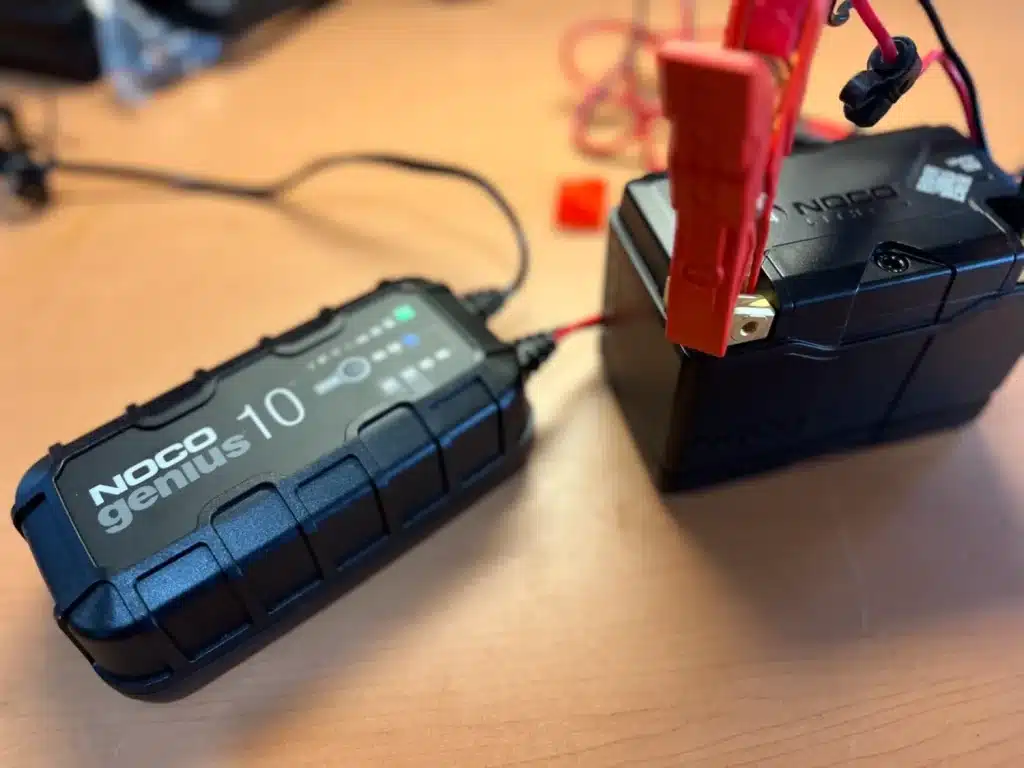
Today, modern batteries prefer smart chargers. The ones that analyze the charge, adjust the current, and switch to maintenance mode automatically.
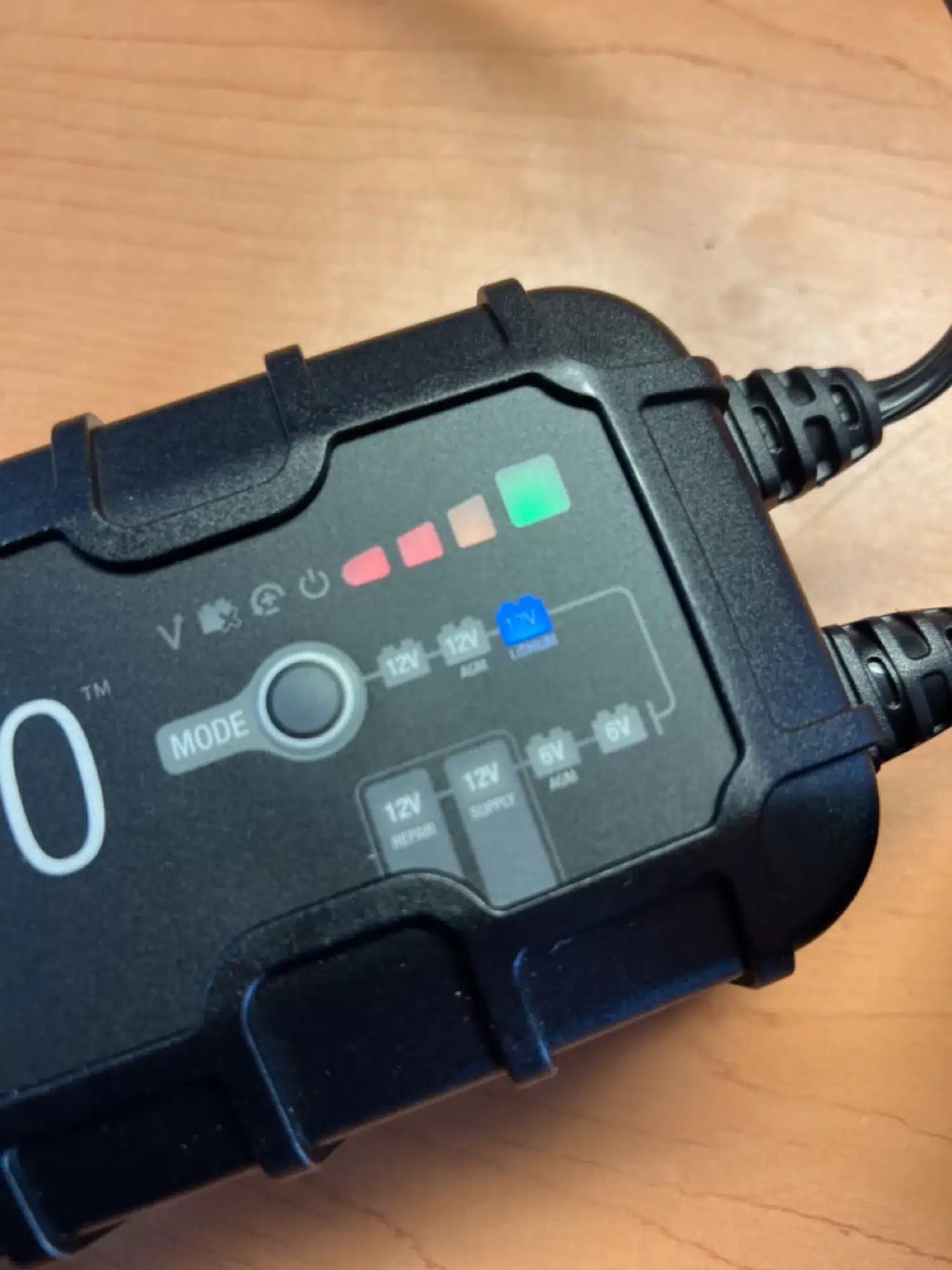
If you have a battery or are switching to a lithium one: get a lithium-compatible charger. Not “sort-of compatible.” Truly compatible.
Otherwise:
- the battery may refuse to charge;
- the protection system may kick in;
- or you could damage the cells.
And then, your wallet is going to take a hit.
Can you switch battery types?
Yes… but not just any old way. You have to ensure compatibility, specifically:
- The voltage must be identical.
- The starting current must be sufficient.
- The capacity must make sense.
- And most importantly, the motorcycle’s charging system must be compatible.
This is where the famous: “I found a cheaper battery on Marketplace.”
is often followed by: “Why is my motorcycle just clicking now?”
How do you know if your battery is dying?
How can you tell that your battery is about to fail? Here are some subtle signs:
- the starter turns slowly;
- the motorcycle’s display flickers when starting;
- the lights dim;
- you hear just a sad “click”;
- or worse… everything shuts down completely.
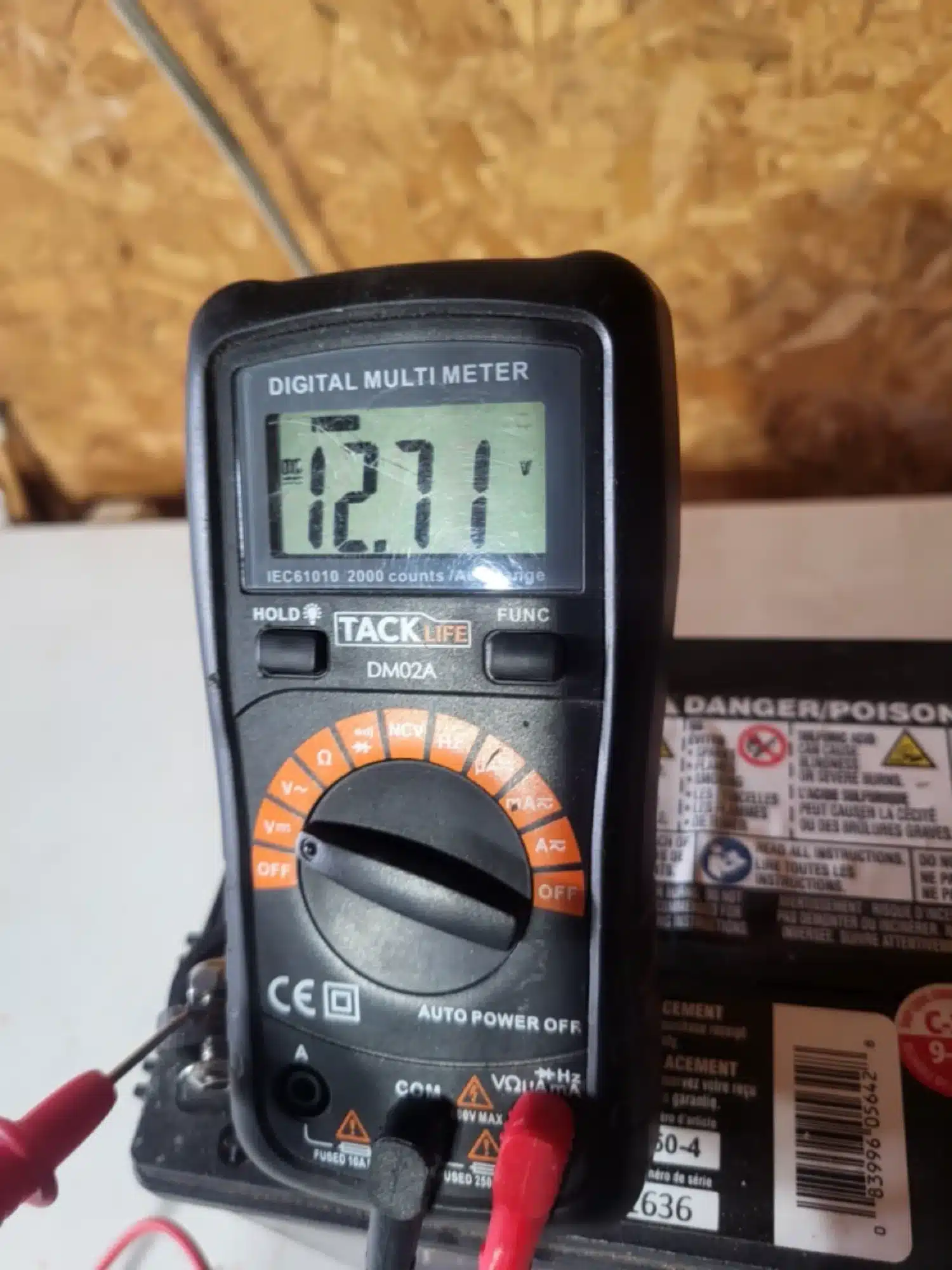
You can also try this simple test: with a multimeter and the motorcycle turned off, take a voltage reading. If you get:
- 12.7 V to 13.2 V: everything’s fine;
- 12.4 V: it’s starting to get old;
- 12 V: get your wallet ready;
- 11.8 V: it’s closer to the recycling center than the road.
Can you boost a battery?
Yes, without any problems, but take the following precautions:
- Be careful not to turn the ignition “ON” on the donor motorcycle or car to avoid power surges on your motorcycle once it’s started.
- Clearly identify the positive (+) and negative (-) battery terminals.
- Connect the negative clamps first and finish the connection with the positive (RED) clamp on the donor vehicle.
- CAUTION! Do not touch any metal parts with the positive clamp.
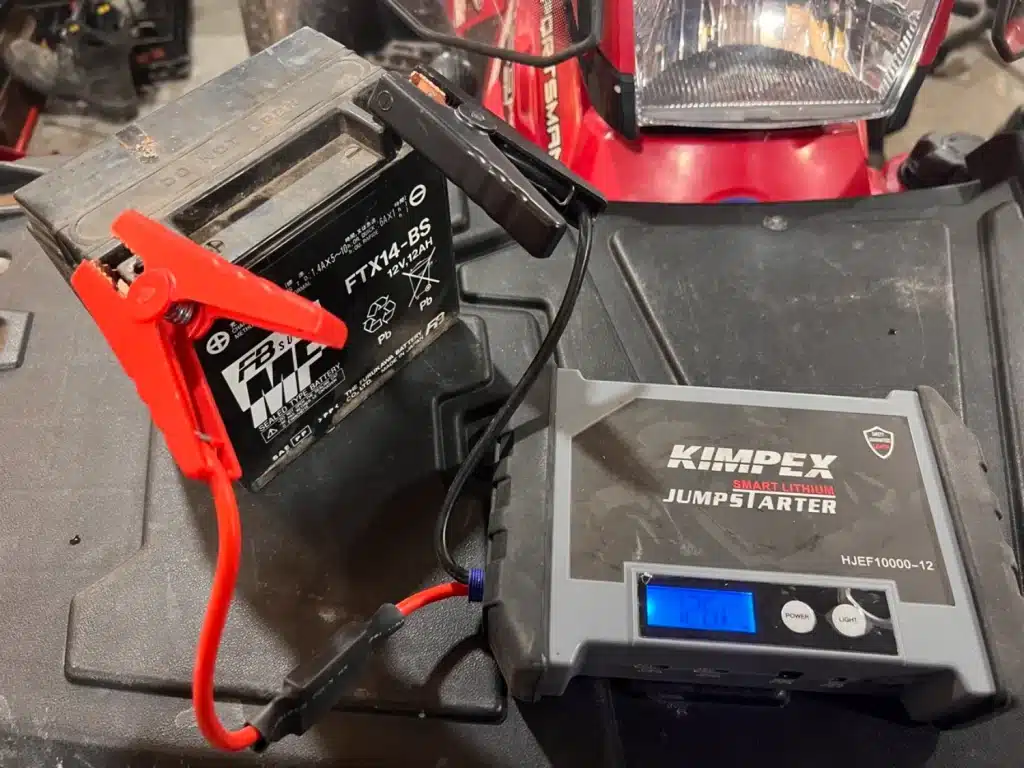
With today’s technology, small booster packs are almost as essential as a 10 mm wrench in a toolbox: small, practical… And when you need one, you’re really glad to have it on hand to jump-start your battery or your neighbor’s, who’s starting to curse in three languages.
Conclusion
The battery is the electrical heart of your motorcycle. It’s not glamorous, and no one walks around at bike night saying, “Check out my big AGM, it’s sick.”
But without it, your adventure ends quickly.
Understanding the different types of batteries, chargers, cold-weather limits, and signs of wear can save you from a frustrating breakdown… or a cut-short ride with your buddies who will absolutely immortalize your humiliation in photos.
The next time a guy asks you, “What’s the difference between an AGM and a lithium battery?” you’ll finally be able to answer with something other than, “Um… lithium is more expensive.”