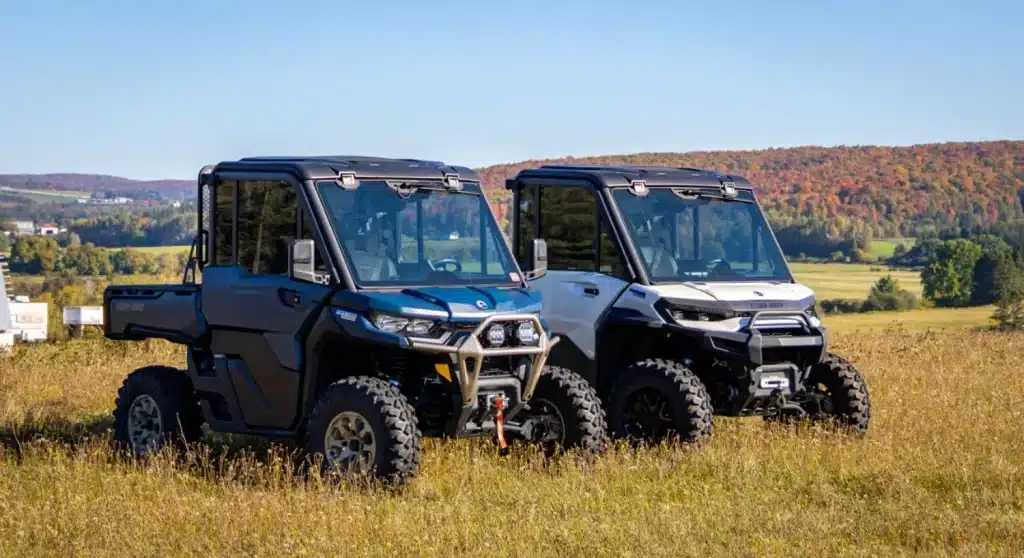
For Can-Am, introducing a second generation of the highly capable Defender was a delicate undertaking. Unlike launching an entirely new model, replacing a vehicle that is already extremely popular always carries a risk.
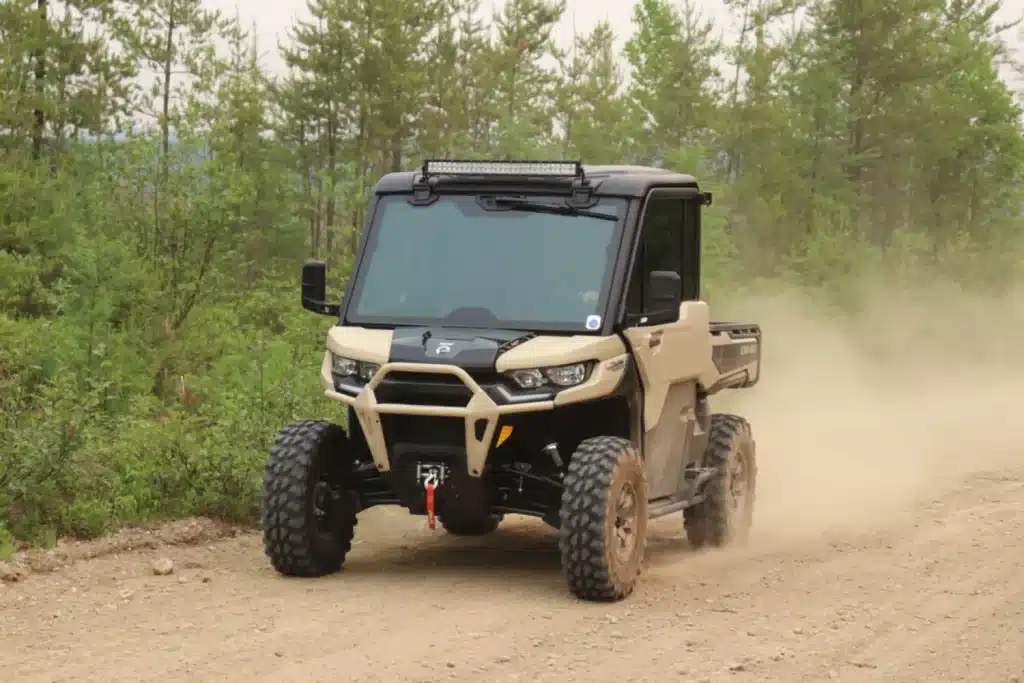
Since its arrival for the 2016 model year, the Defender has established itself as a benchmark among utility side-by-sides. It has evolved to meet the demands of farmers and forestry workers, while also carving out a place in the emerging luxury side-by-side market with enclosed, air-conditioned cabs.
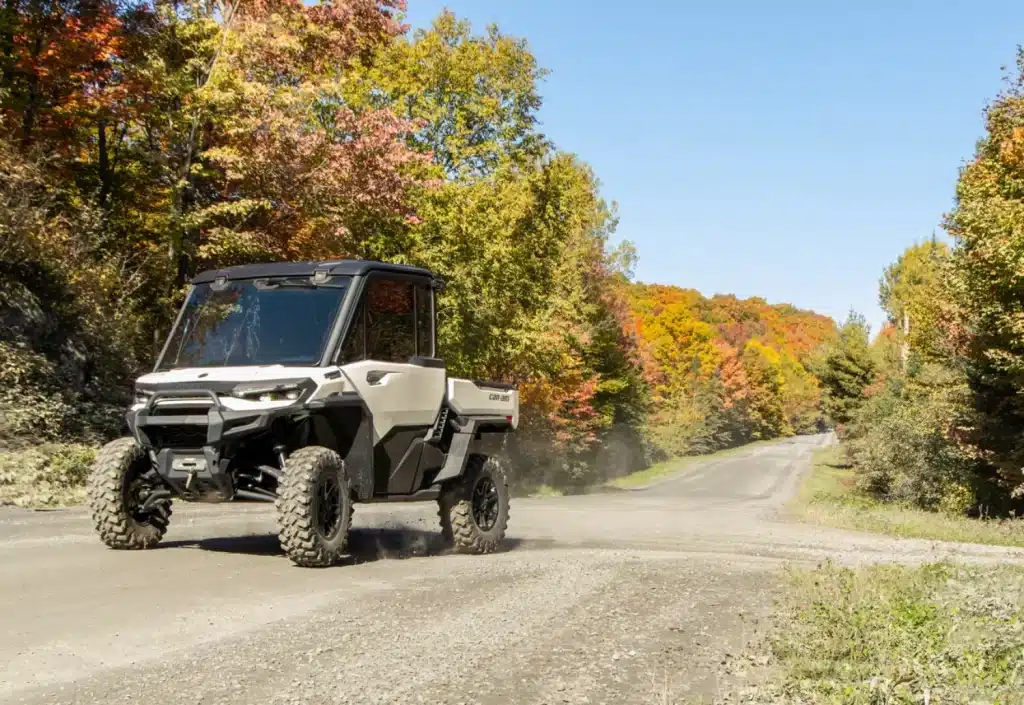
The introduction of the second generation in 2026 therefore marks a significant evolution. Although the body styling may look like a straightforward update, Can-Am has made changes to the engines, transmissions, suspensions and driving environment.
To understand how the second generation has evolved, we compare a first-generation 2025 Defender HD10 Limited with a second-generation 2027 Defender HD11 Limited.
Engine Evolution
This is one of the most significant changes. The first-generation HD10 retains its V-twin architecture, while the second-generation HD10 and HD11 use a 999 cc inline three-cylinder engine.
Defender Engine Specifications
| Specification | HD10 Gen 1 (2026) | HD10 Gen 2 (2027) | HD11 Gen 2 (2026) |
| Configuration | V-twin | Inline three-cylinder | Inline three-cylinder |
| Displacement | 976 cc | 999 cc | 999 cc |
| Power | 82 hp | 80 hp | 95 hp |
| Torque | 69 lb-ft | 65 lb-ft | 70 lb-ft |
| Cooling | Liquid | Liquid | Liquid |
| Fuel system | EFI injection | EFI injection | EFI injection |
A closer look at the table reveals some interesting details. With 95 horsepower, the HD11 represents a genuine step up, offering about 16% more power than the first-generation HD10. Yet peak torque increases by just 1 lb-ft. The new HD11 does not feel dramatically stronger than the old HD10 in initial acceleration. Where it truly stands out is in overall smoothness. Noise and vibration levels inside the cab have dropped noticeably.
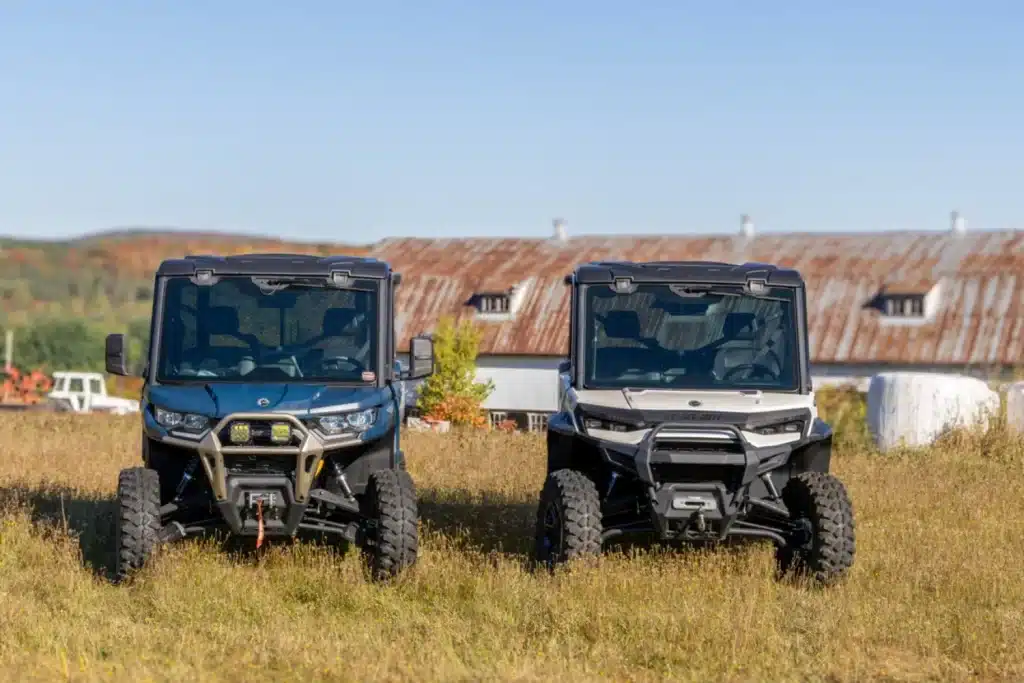
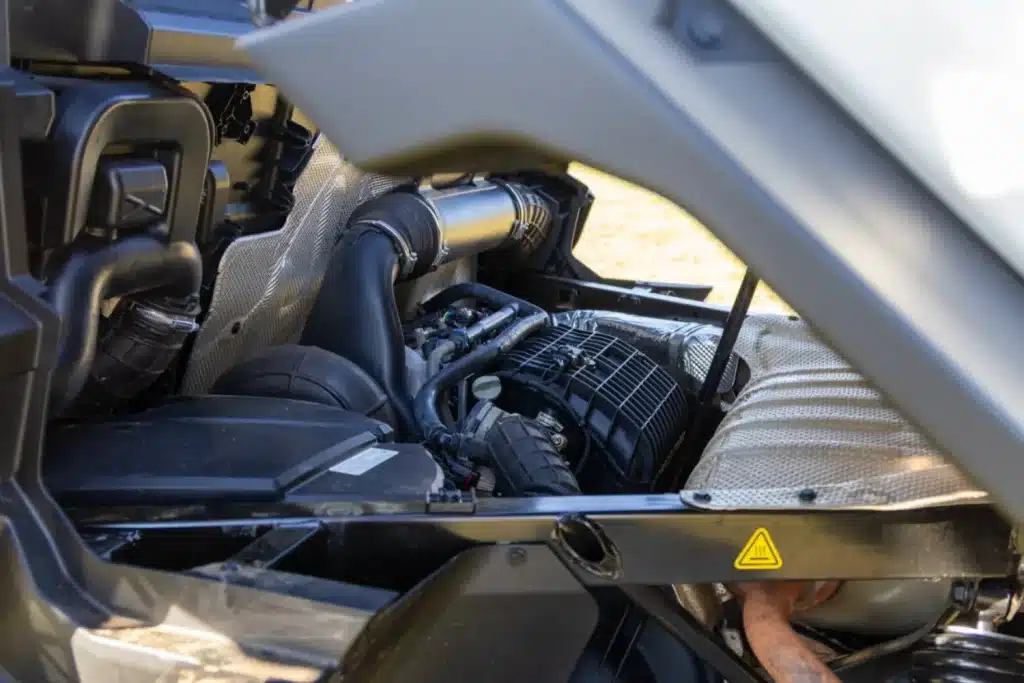
New for 2027, the second-generation three-cylinder HD10 produces slightly less power and torque than the previous V-twin HD10. Its appeal lies more in mechanical refinement, reduced vibration and integration into the new Gen 2 platform.
Transmissions and Differentials
With the second generation, Can-Am introduces the new pDrive transmission, an important mechanical evolution. Its design aims to improve engagement consistency, transmission response and clutch operation.
Transmission and Differential Overview
| Specification | Gen 1 HD10 | Gen 2 HD10 / HD11 |
| Transmission | CVT PRO-TORQ avec QRS | CVT pDrive avec QRS |
| Primary clutch | PRO-TORQ | pDrive |
| Gear ranges | Extra-low, high, N, R, P | Low, high, N, R, P |
| Turf mode | Yes | Yes |
| Drive | 2×4 / 4×4 | 2×4 / 4×4 |
| Front differential | Visco-Lok QE with automatic locking | Quick-4Lok sur Limited 2027 |
| Engine braking | CVT | CVT with calibrations matched to driving modes |
The pDrive was designed to deliver smoother operation and make gear selection easier at the shift lever. On that score, it succeeds. Engagement is pleasantly smooth, and the CVT stays firmly engaged even when towing a loaded trailer. Still, we expected a sharper initial launch; there remains a certain sluggishness in the first response to the throttle.
The move to the Quick-4Lok front differential on the 2027 Limited is another interesting change. This system provides rapid automatic front differential locking, whereas the first-generation Visco-Lok QE relies on a viscous coupling mechanism. Be aware, however, that some Gen 2 Defenders use Smart-Lok instead of Quick-4Lok.
Chassis and Suspension
The Gen 1 Defender chassis evolved over the years to accommodate new versions, including the long-bed PRO and the 6×6, which remains exclusive to that generation. The most significant change on the Gen 2 is at the rear: the TTA suspension gives way to an independent double A-arm design.
This change revises suspension geometry and control of wheel movement. Together with a wider track and longer wheelbase, it should improve stability and comfort over rough terrain. The gains are modest, however: both platforms already offer 12 inches of travel. The real improvement is in suspension architecture and tuning.
Gen 1 and Gen 2 Suspensions
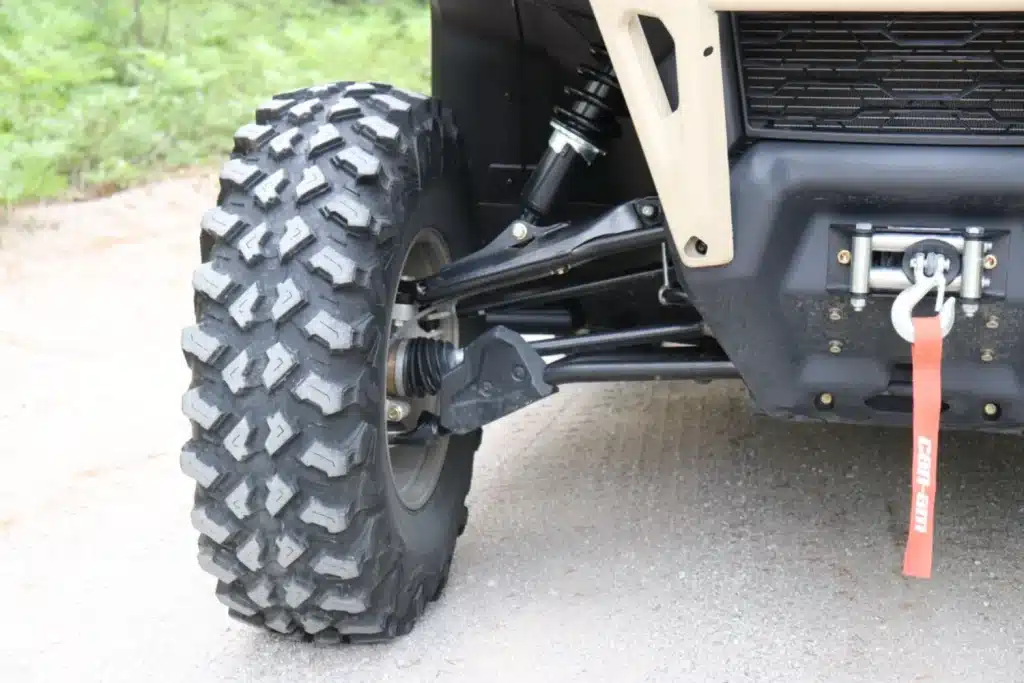
Up front, the Gen 1 Defender HD10 Limited and Gen 2 HD11 both use independent arched double A-arms, a sway bar and 12 inches of travel. The newer generation mainly benefits from revised geometry and a wider stance.
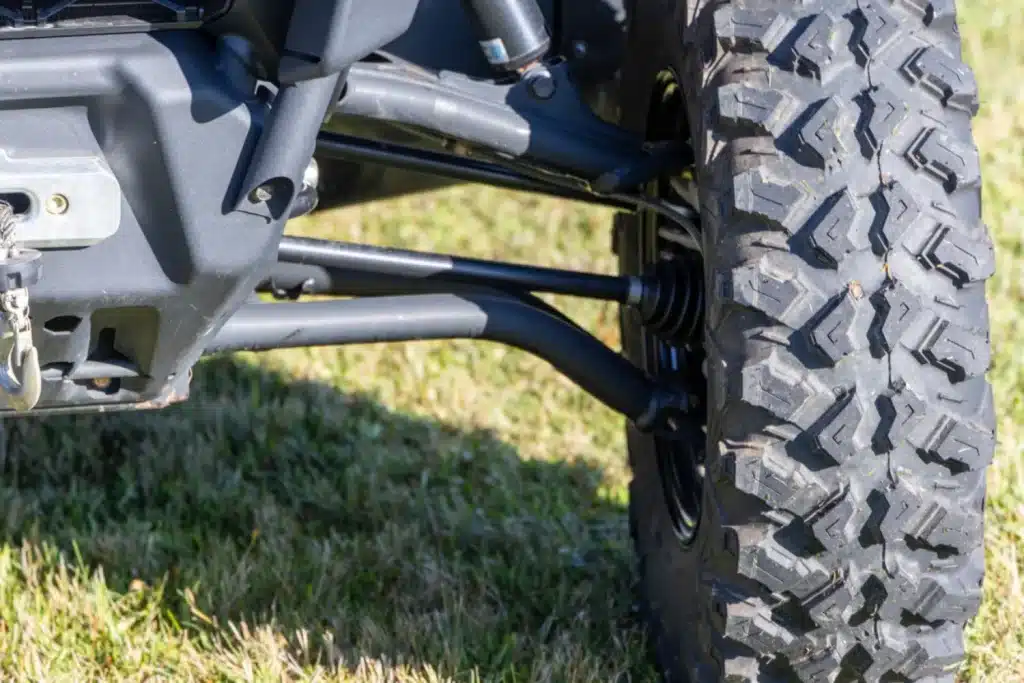
At the rear, the HD11 replaces the HD10’s TTA suspension with independent double A-arms. Despite identical 12-inch travel, the new geometry could improve wheel articulation, stability and comfort over rough ground.
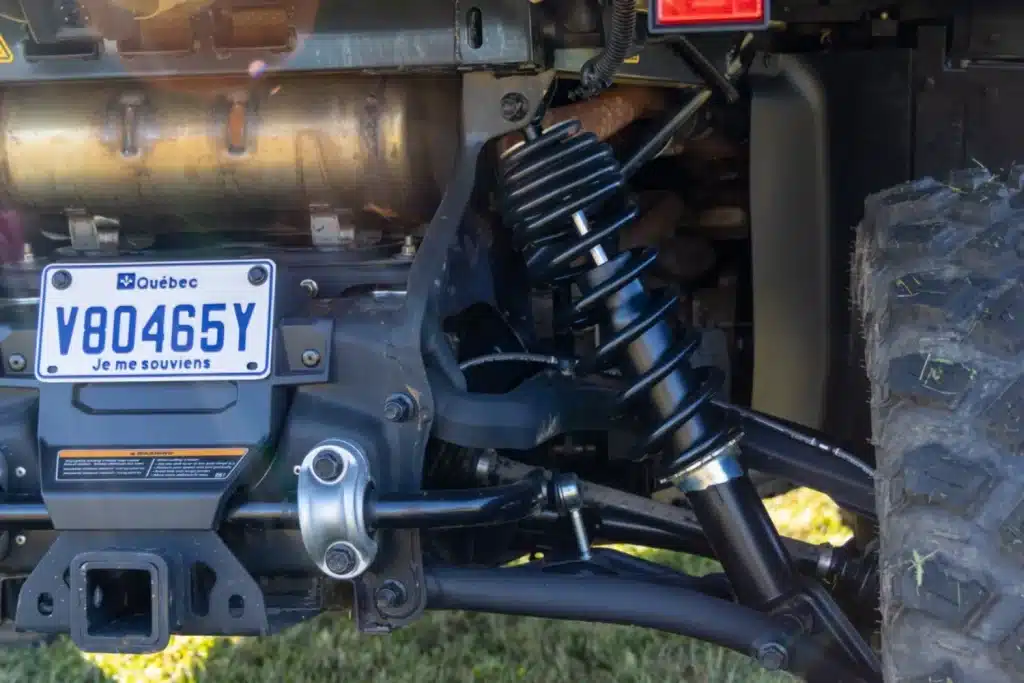
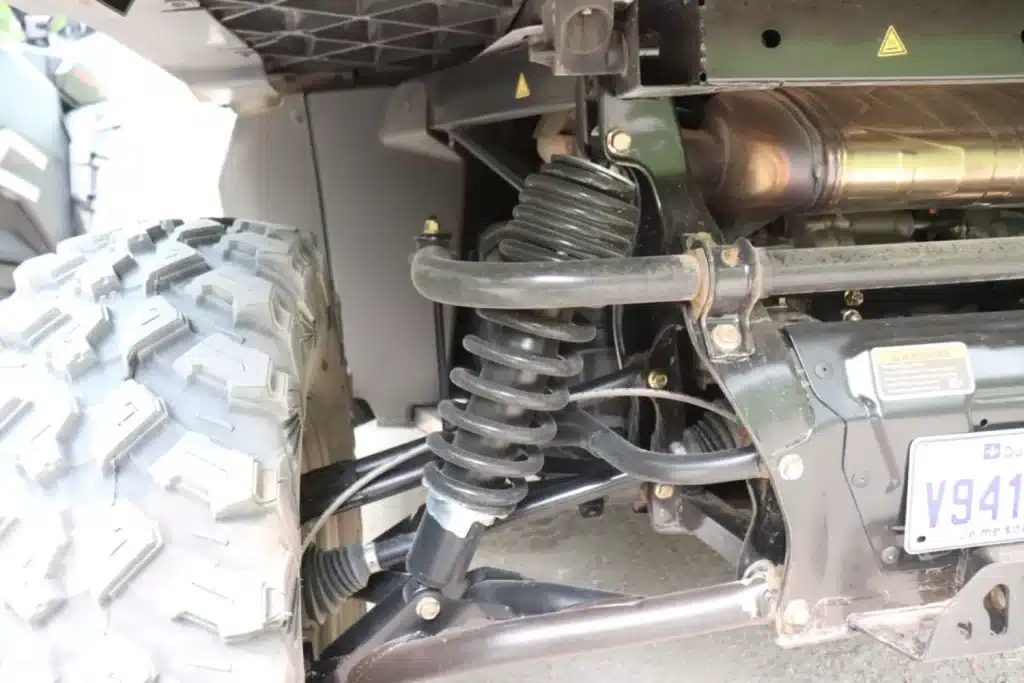
With the HD11 suspension, Can-Am focused on stability and comfort over rough terrain rather than making the vehicle sportier. It remains tuned for work, in keeping with the Defender’s DNA.
Suspension Comparison
| Specification | Gen 1 HD10 (2027) | Gen 2 HD11 (2027) |
| Front suspension | Arched double A-arms | Arched double A-arms |
| Rear suspension | TTA | Arched double A-arms |
| Front travel | 12 in | 12 in |
| Rear travel | 12 in | 12 in |
| Shocks | Twin-tube gas | Twin-tube gas |
Both generations are described here with 30-inch tires, but the Gen 1 HD10 uses 14-inch wheels while the HD11 uses 15-inch wheels. Along with gains in stability and steering precision, the 15-inch wheels make room for larger brake discs. Front rotor diameter increases from 220 to 262 mm, and rear rotor diameter from 220 to 236 mm.
Key Dimensional Differences
A new generation usually brings bigger overall dimensions. Here are the main changes for a three-seat model:
- Width increases by three inches (7.6 cm). This can improve lateral stability, particularly on side slopes and through corners, but it also provides more room for passengers. The trade-off is that the HD11 will be less comfortable in very narrow passages, such as bridges.
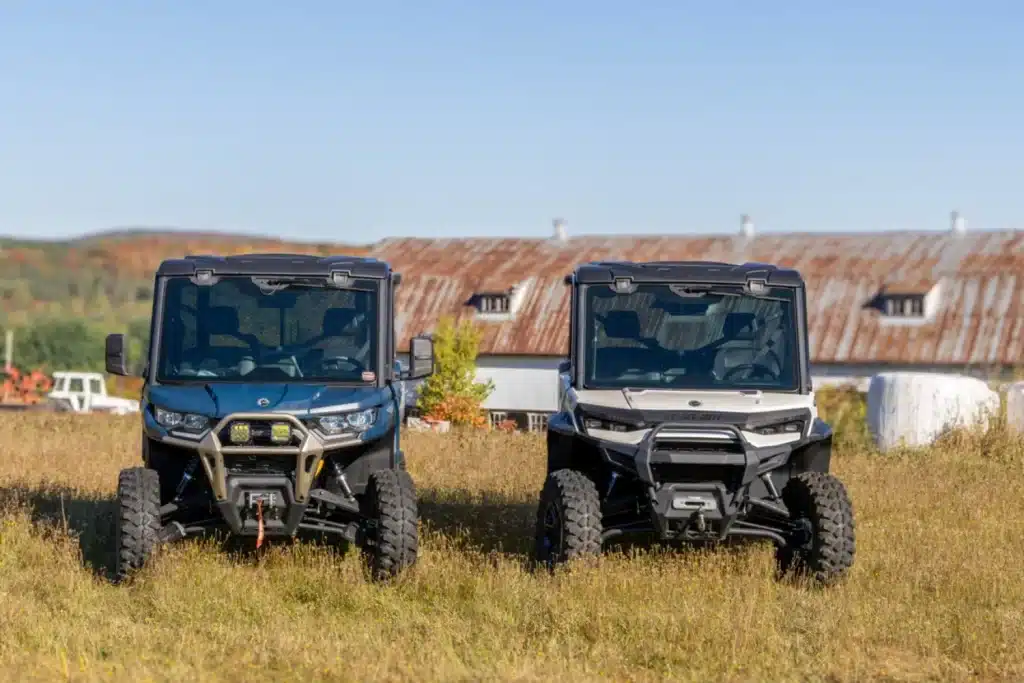
- Wheelbase grows by two inches (5.1 cm). This generally promotes directional stability and comfort over successive bumps.
- Ground clearance increases by about one inch. This can help the HD11 clear certain obstacles, although part of the gain comes from its larger-diameter tires.
| Specification | HD10 Gen 1 | HD11 Gen 2 |
| Overall length | 121 in | 129,8 in |
| Overall width | 62 in | 65 in |
| Wheelbase | 83 in | 85 in |
| Height | 76 in (depending on version) | 81 in |
| Ground clearance | 13 in (depending on version) | 14 in |
| Front travel | 12 in | 12 in |
| Rear travel | 12 in | 12 in |
Cabin Layout and Comfort
Cabin design is one of the most visible changes in the second-generation Defender. With the HD11, Can-Am wanted to turn a fundamentally utilitarian cab into a more refined workplace, taking inspiration from the automotive world. The Gen 1 was hardly lacking in comfort and still keeps its owners happy, but the Gen 2 goes further. The 10.25-inch central display, steering-wheel controls, storage spaces and control layout all contribute to the transformation.
Cabin Equipment and Accessories
The difference goes well beyond adding a central touchscreen. It also involves dashboard ergonomics, air conditioning, sound insulation, seating, storage and access to the controls.
For a fair comparison, we are looking at equivalent three-seat models: the 2025 Gen 1 Defender HD10 Limited and the 2027 Gen 2 Defender HD11 Limited.
Cabin Equipment Comparison
| Equipment | Gen 1 Limited HD10 2025 | Gen 2 Limited HD11 2027 |
| Fully enclosed cab | Yes | Yes |
| Automatic heating and air conditioning | Yes | Yes |
| Tinted power windows | Yes | Yes |
| Tilting glass windshield | Yes, 3 positions | Yes, tilting |
| Windshield wiper and washer | Yes | Yes |
| Glass rear window | Yes | Yes, tinted |
| Adjustable driver seat | Yes | Yes |
| Bench seat | VERSA-PRO | 40/20/40 |
| Instrumentation | Digital 7,6 in | Color 5 in |
| Central touchscreen | Not available | 10,25 in |
| Backup camera | Not available | Yes |
| Audio system | Depending on equipment | Rockford Fosgate, 4 speakers and subwoofer |
| Steering wheel | Adjustable | Adjustable with integrated controls |
| Interior lighting | Dome light | Dome light |
According to the manufacturer’s specifications, the Gen 1 Limited already had most traditional comfort features. The Gen 2’s main advances are its 10.25-inch touchscreen, backup camera, ergonomics and overall refinement.
Dashboard: The Most Visible Transformation
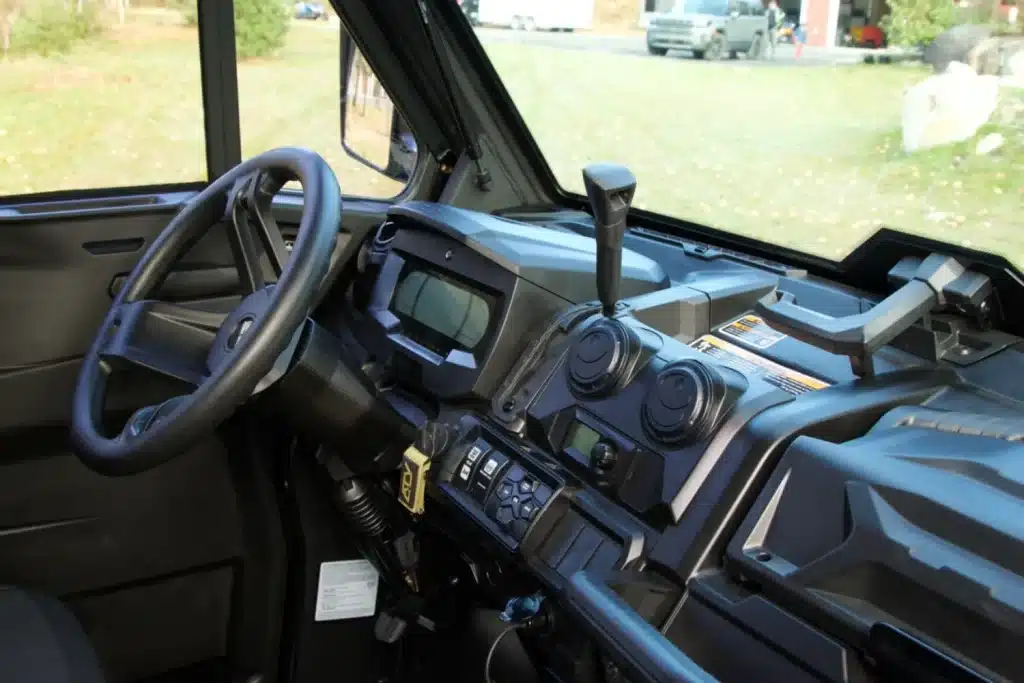
The HD10 Limited has a more traditional layout. Its 7.6-inch digital instrument panel, with a yellow background, groups together driving and operating information. The main controls are spread across the dashboard.
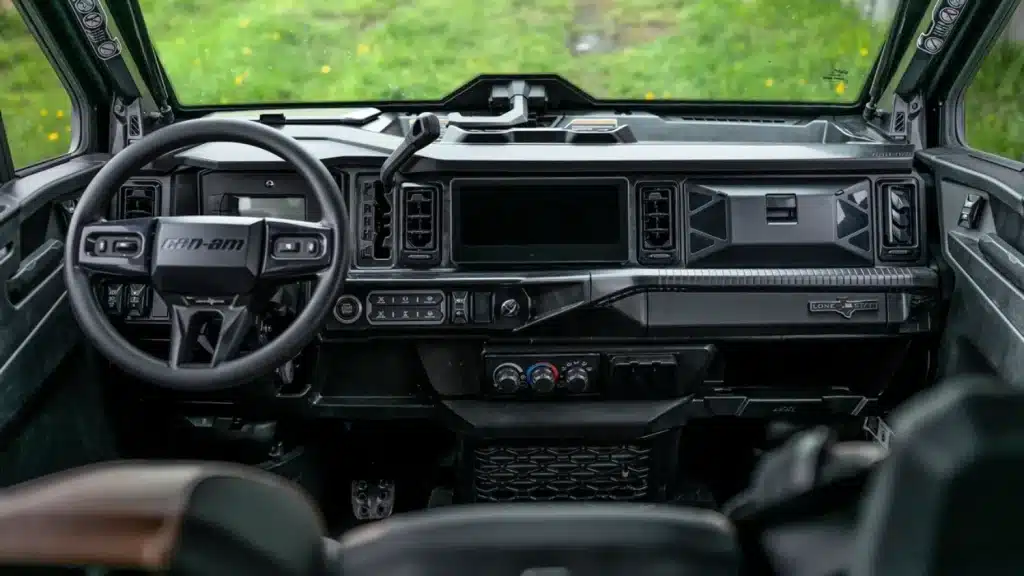
The HD11 takes a distinctly more modern approach with two screens: a 5-inch color instrument display in front of the driver and a 10.25-inch central touchscreen.
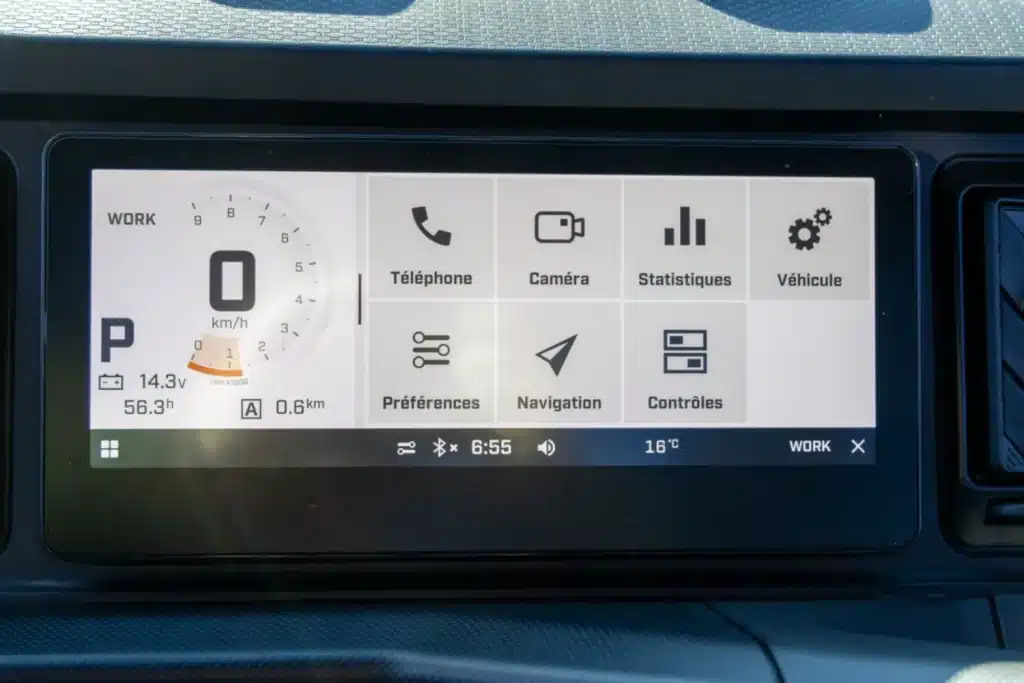
This layout brings more functions into a central interface, including vehicle information, compatible navigation and the rear camera display.
The central screen is also an appealing difference for owners who take their Defender trail riding, as BRP GO! integration can reduce the need for an additional GPS.
While the Gen 2 is much more modern, the Gen 1 retains the advantage of traditional controls, which may be easier to use with gloves or in a dusty work environment.
Air Conditioning, Heating and Defrosting
Both Limited models already have heating, ventilation and air conditioning. That is not new to the HD11.
Can-Am instead focused on cooling capacity, airflow and how the system performs under demanding conditions.
The HD11 specifications mention a high-capacity radiator, fan and condenser adapted to the new platform.
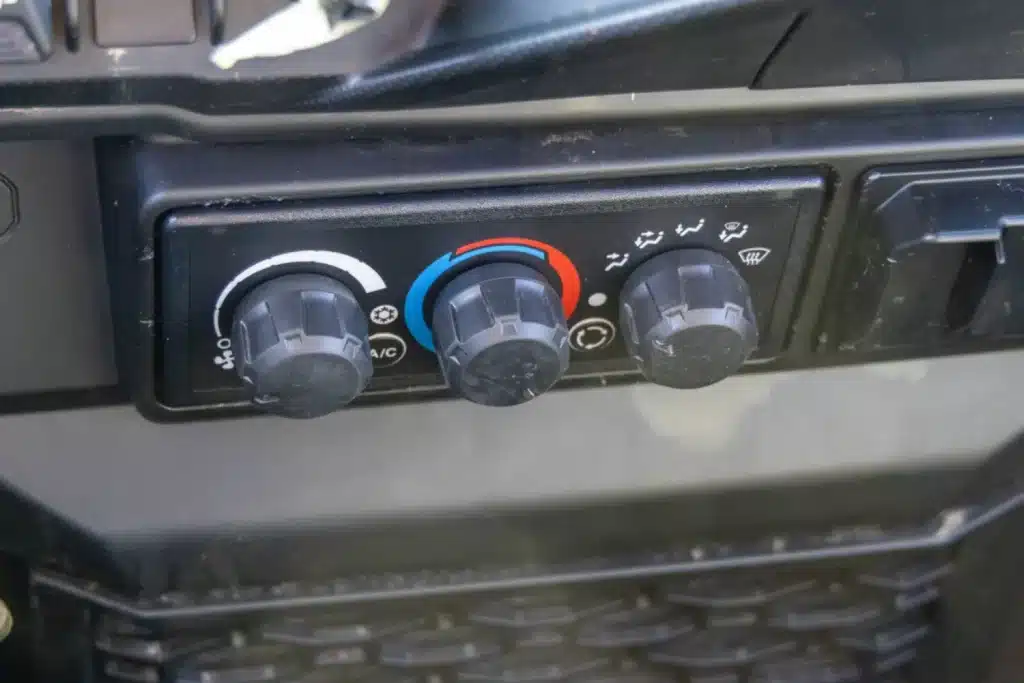
In practice, these improvements should provide a more even cabin temperature and maintain comfort better when the engine is operating at low speed.
Ergonomics: More Room for Occupants
The HD11 brings more substantial changes than a first glance might suggest:
- 8% more front legroom.
- Slightly more reclined backrests, with revised foam and shoulder support.
- Larger door openings make getting in and out easier.
- A tilting steering wheel moves out of the way for entry, then returns to its original setting.
- A sliding driver’s seat improves the space available to the driver.
The HD11 cabin also has a dashboard organized more closely around everyday driving needs.
- There are storage compartments, cup holders, a weather-protected glovebox, USB-A and USB-C ports, a 12 V outlet and a removable compartment of approximately 14 liters beneath the passenger seat.
- The HD11 does lose the removable storage box built into the previous generation’s dashboard. For owners who appreciated it, that is a small functional step backward.
Work Capability
The new generation does not necessarily offer greater towing capacity. Its improvements are more about ease of use, traction, stability, ground clearance depending on the version, and driving enjoyment. Note that first-generation Defender PRO models, including the long-bed and 6×6 versions, offer higher towing and payload capabilities.
Work Capability Comparison
| Specification | Gen 1 HD10 (2027) | Gen 2 Limited HD11 (2027) |
| Towing | 2 500 lb | 2 500 lb |
| Bed capacity | 1 000 lb | 1 000 lb |
| Payload | Selon configuration, jusqu’à 1 200 lb on certain versions | 1 200 lb (Limited) |
| Tailgate capacity | 250 lb | 250 lb |
| Fuel tank | 40 L | 45 L |
| Width | 62 in | 65 in |
| Wheelbase | 83 in | 85 in |
| Tires | Generally 27 in | 30 in (Limited) |
A Note on the 2027 Gen 1 Defender
An important clarification: the Gen 1 Defender was introduced in September 2015 for the 2016 model year, but the air-conditioned Limited package arrived later, around 2020. A 2025 Limited served as the basis for this comparison. For 2027, the Can-Am lineup does not offer a Gen 1 HD10 Limited directly equivalent to the Gen 2 HD11 Limited. Buyers should do their homework and make sure any comparison with a 2027 Gen 1 cab truly matches their needs.
So, How Does the Gen 1 HD10 Stack Up Against the Gen 2 HD11?
For buyers who mainly need a work machine, the first-generation HD10 remains highly capable. Its V-twin produces nearly the same peak torque as the HD11, and its towing and hauling capacities remain impressive.
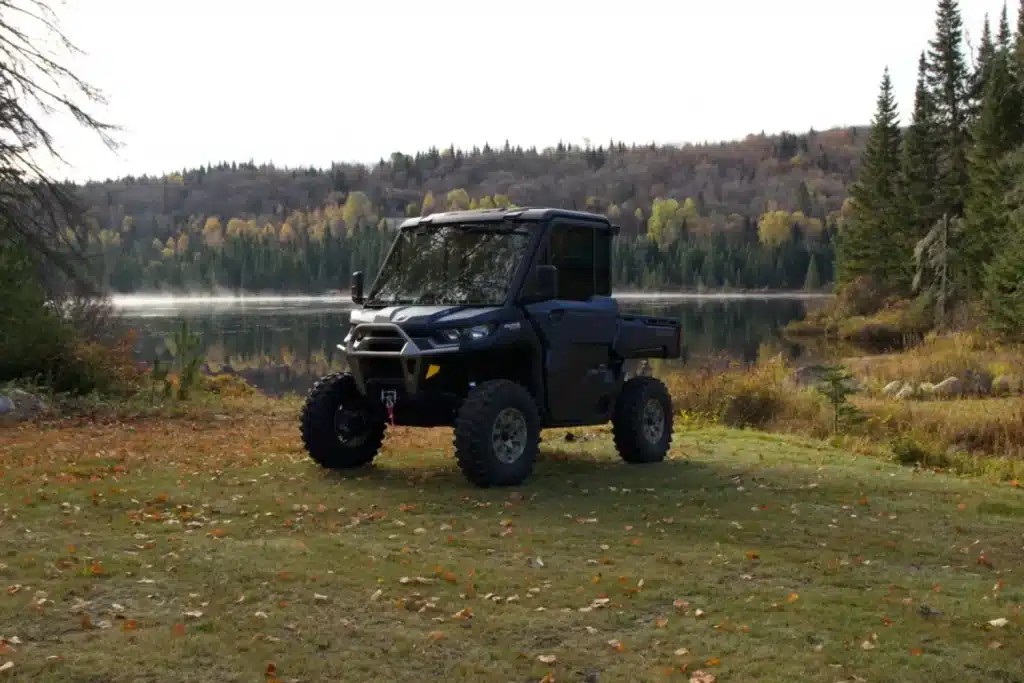
For those who cover long distances and want the comfort of a well-appointed cabin, the second generation makes a stronger case. Its three-cylinder engine, redesigned rear suspension, modernized interior and improved air conditioning are more compelling arguments than the power increase alone.
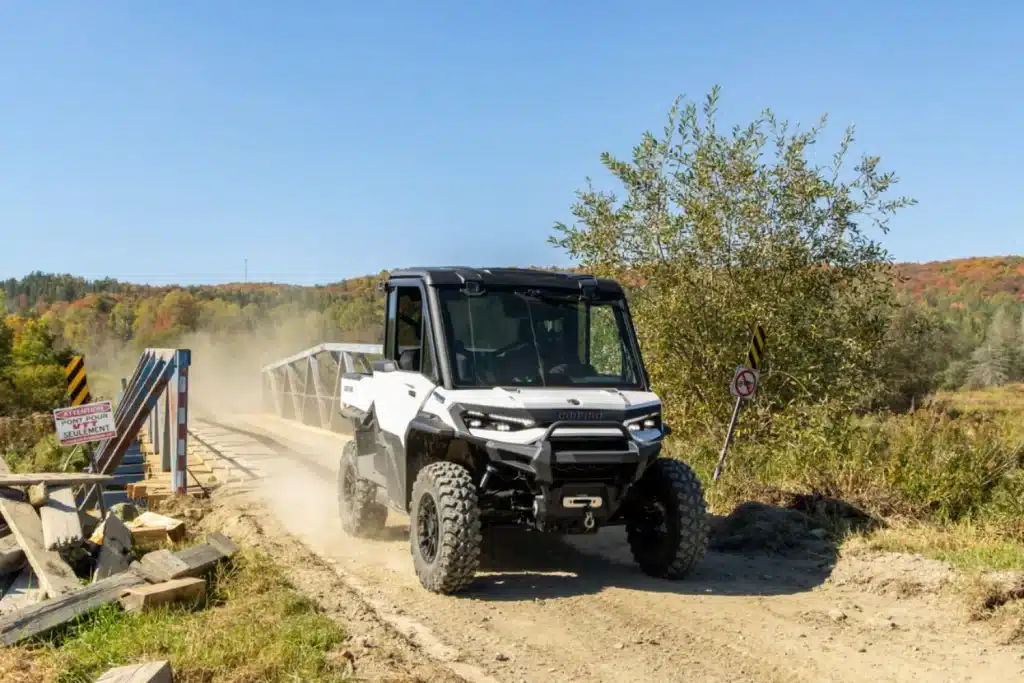
For users who want an upscale cab, the HD11 Limited represents a notable advance. Its onboard electronics and refined driving environment bring it closer to a small automotive-style work vehicle.
The Gen 2 Defender is not revolutionary because it can work dramatically harder than its predecessor. Rather, it is an evolution that performs much the same tasks with greater refinement, comfort and technology. Can-Am has not reinvented the Defender’s purpose; it has changed the way the driver experiences a day’s work.