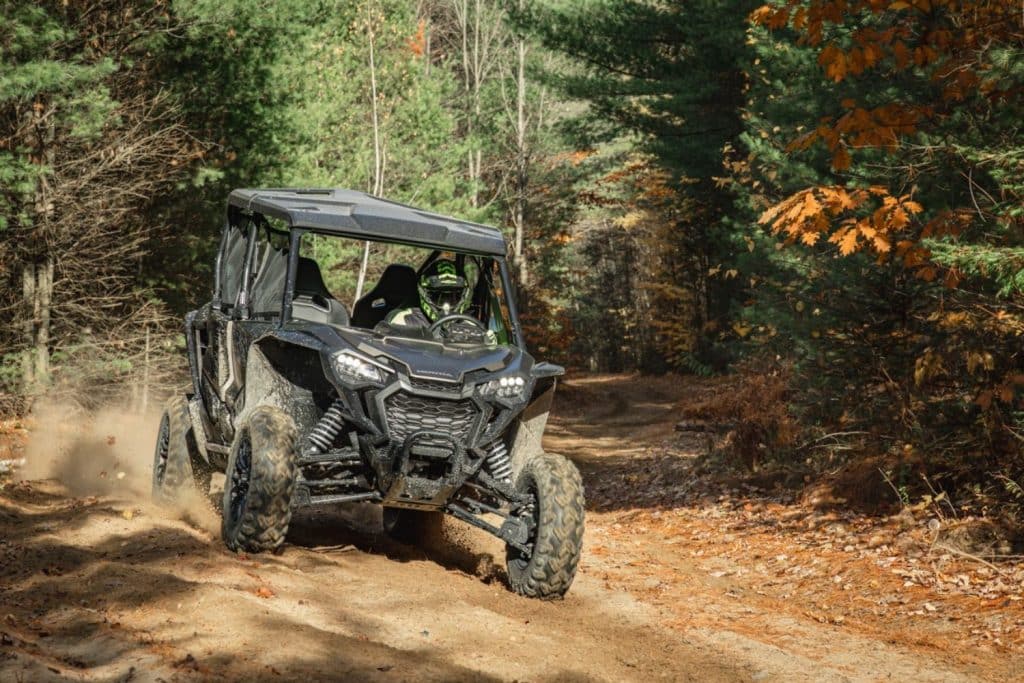
The 2026 Honda Talon 1000X-4P is a four-seat sport side-by-side that arrives in Canada with semi-active FOX Live Valve suspension and a six-speed automatic dual-clutch transmission. Both stood out during my test. The shifts were quick, the chassis stayed composed through corners, and the suspension took the edge off rough ground more effectively than I expected.
What FOX Live Valve changes on the trail
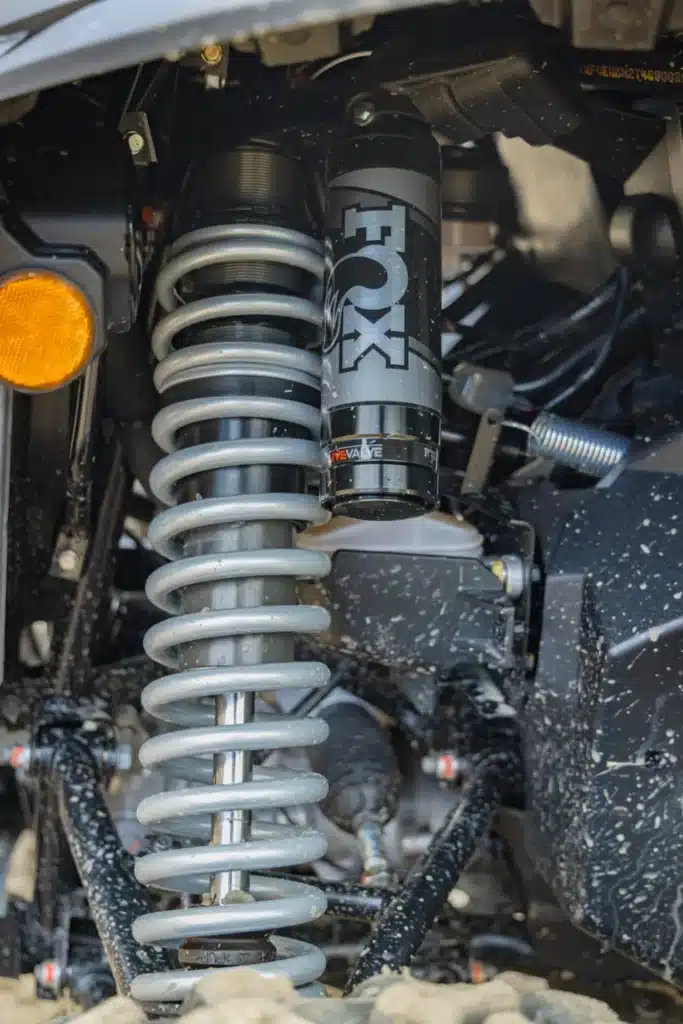
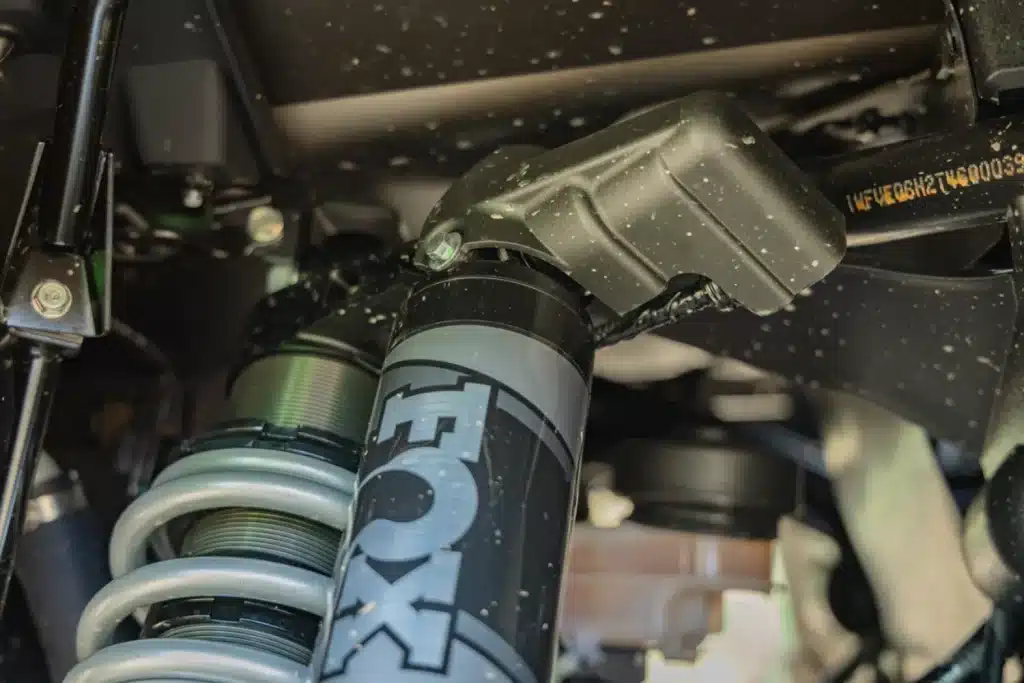
The system primarily manages compression damping. A solenoid valve in each shock quickly changes how freely oil flows inside it. By varying that restriction, the system adapts the damping to driving conditions and the movement of the vehicle.
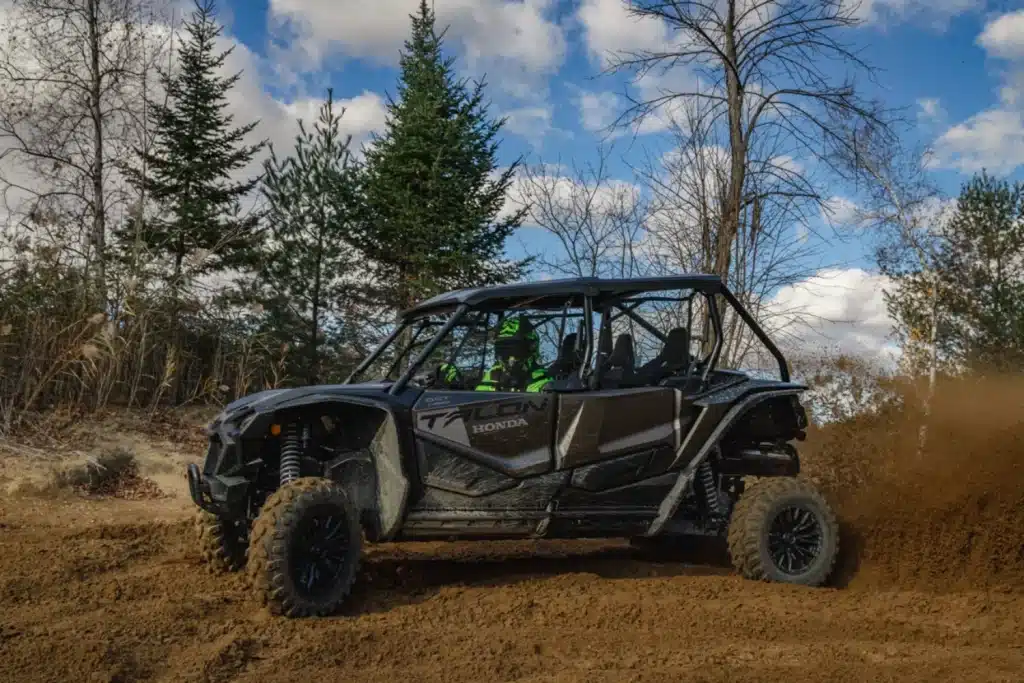
One of the most interesting things about the system is that it adjusts each wheel independently, in real time. On a hard hit, it can change the damping to help control suspension movement. In fast corners, it helps limit body roll and manage weight transfer to the outside. It also helps control pitch under acceleration and braking, keeping the machine more stable and predictable.
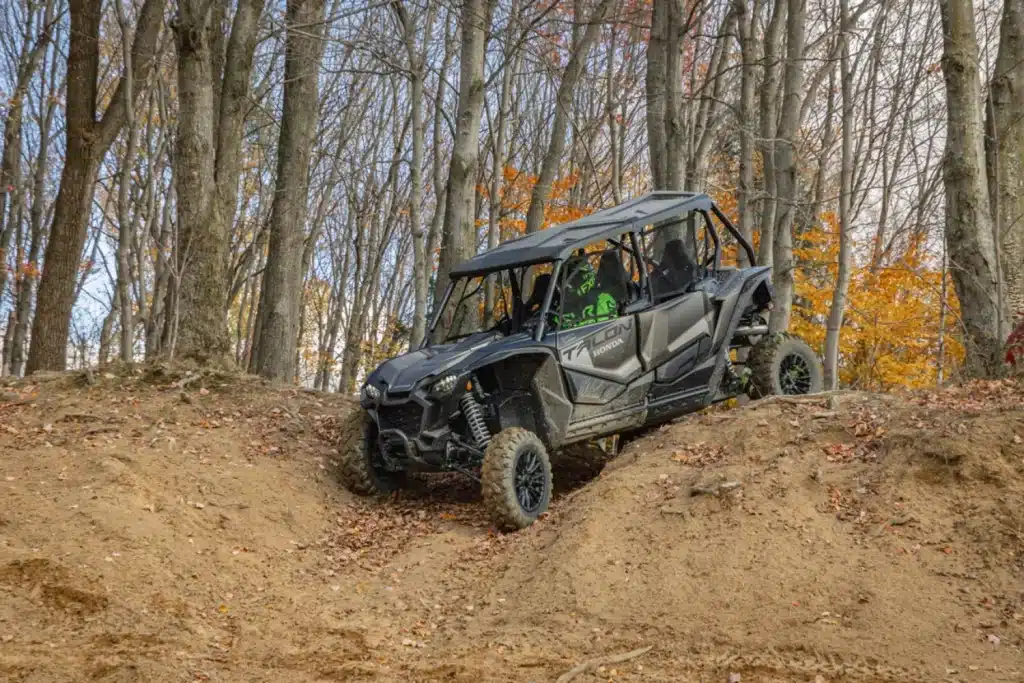
The technology makes particular sense on a four-seater. Four people on board can mean a considerable jump in load compared with riding alone or with one passenger. That difference affects how the machine behaves over rough ground and through quick changes of direction.
Electronic damping helps the suspension cope with those changes in load without constant manual adjustments. That’s handy for a family machine that might see different terrain and carry a different number of people on each outing.
The electronic suspension was the other big surprise. Look closely at the ground and you’ll see just how much the system changes what you feel through the seat. Where I expected the Talon to work hard over rough terrain, it almost felt as if I were driving on pavement. I’ve tested several electronic suspension systems over the years, and this one ranks with the best I’ve driven.

Working with FOX, which has been making shocks since 1974, pays off here. In fast corners, the chassis stays remarkably flat. You can feel the outside shocks firm up to help limit roll. Under hard braking, the system helps settle the chassis and keep the nose from diving. The result is a suspension that performs well and still rides comfortably, a balance that can be hard to strike.
Six-speed DCT with steering-wheel paddles
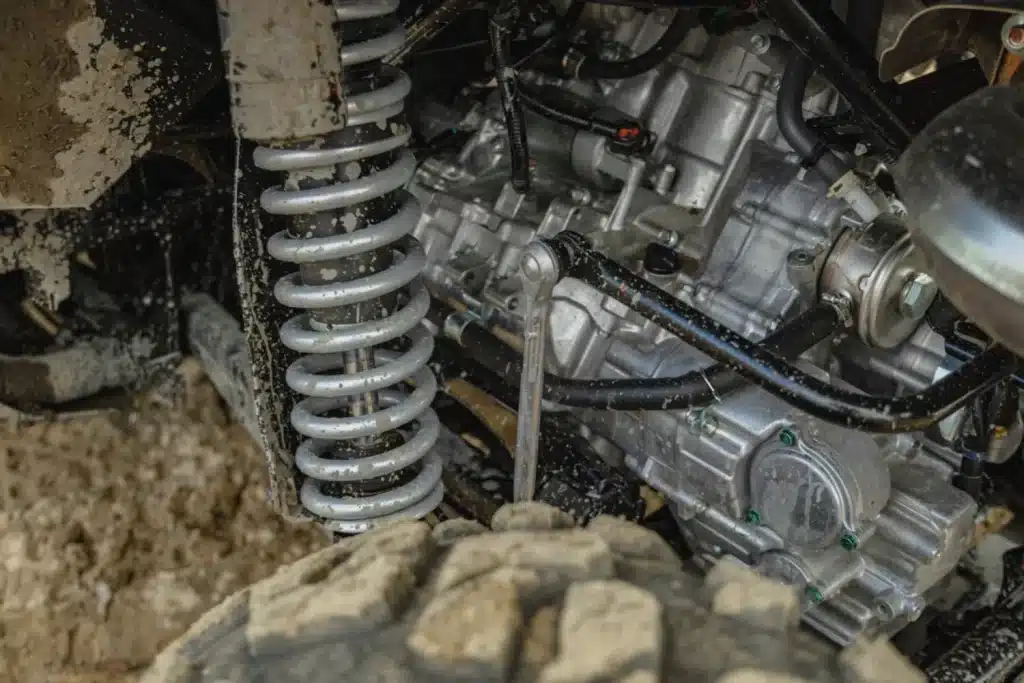
The Talon runs a 999 cc parallel twin. The transmission is a big part of what gives this engine its character on the trail.
While most manufacturers use a belt-driven continuously variable transmission, or CVT, Honda went with a fully automatic six-speed dual-clutch transmission, known as a DCT.
One clutch handles the odd-numbered gears (first, third and fifth), and the other handles the even-numbered gears (second, fourth and sixth). While one gear is engaged, the transmission can prepare the next for a quick, precise shift.
The transmission also delivers effective engine braking, a welcome feature on descents and technical trails.
Drivers who want more control can use the steering-wheel paddles in manual mode. Choosing your own gears adds to the sporting feel.
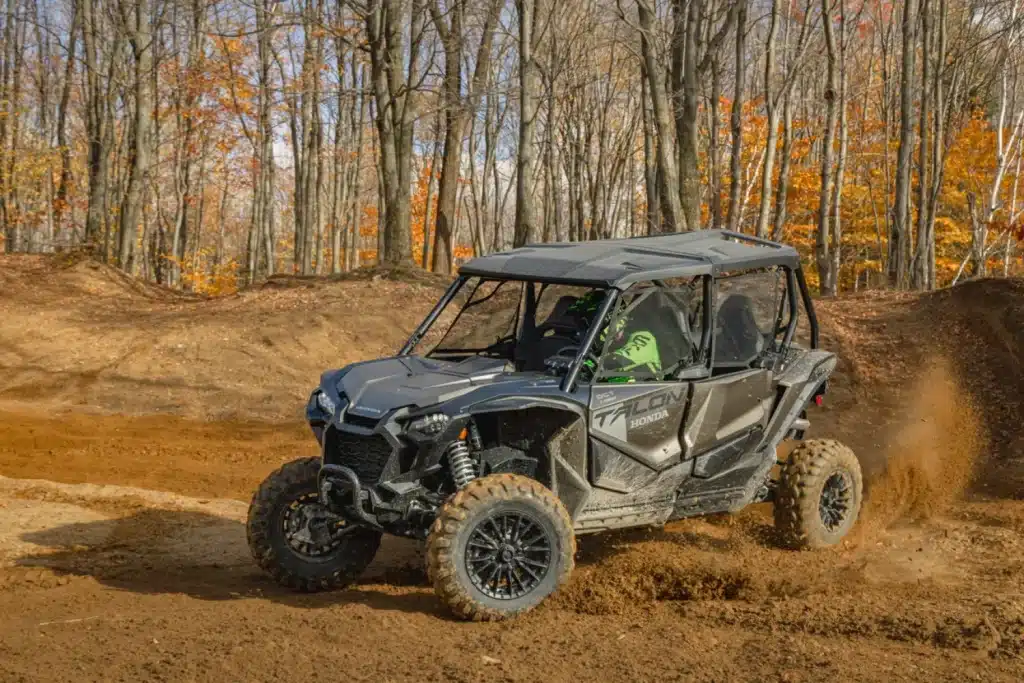
The automatic dual-clutch transmission is one of the Talon’s biggest strengths. It almost feels like driving a race car. Shifts are extremely quick, keeping the engine in its sweet spot, and the result is smooth, engaging and genuinely sporty. The belt-free design is also appealing if you plan to keep the machine for years and have long-term durability in mind.
If you feel like channelling your inner Kimi Antonelli, switch to manual mode and work the paddles. It’ll put a grin on your face. You can choose when to shift, manage the revs yourself and enjoy the sound of the engine. On a closed course, I saw speeds above 120 km/h. The DCT certainly makes good use of the power on tap.
A four-seat cabin for long rides
The cabin is fairly basic, but it does its job well. The seats provide good lumbar support and stay comfortable on long rides. Side nets help keep occupants’ arms inside the vehicle. One detail is worth mentioning. To open the door, you first have to undo the plastic clip at the top of the net. It’s a small extra step that can get irritating.
The driver gets a basic monochrome LCD. It shows the essentials, and a set of indicator lights lets you keep track of the various vehicle functions. Even so, the display is due for an update.
My main gripe is with the doors. Undoing the upper net clip every time you get out gets old quickly. Honda does offer options to make cold-weather rides more comfortable, including doors and accessories such as a heater and windshield wipers.
2026 Honda Talon 1000X-4P specs
- Seats — 4
- Engine — 999 cc parallel twin
- Transmission — Six-speed automatic DCT with manual paddle shifting
- Suspension — FOX Live Valve, 14.4 in. front travel
- Tires — 28 × 9-15 front / 28 × 11-15 rear
Honda Canada model specifications
Honda fits 28-inch Kenda tires on 15-inch wheels. They’re nine inches wide up front and 11 inches wide at the rear.
Test verdict

The DCT and FOX Live Valve suspension are the reasons I’d put the Talon on a four-seat sport side-by-side shortlist. It stays composed through quick changes of direction and remains comfortable when the trail gets rough. My first changes inside would be to simplify the door-net clip and update the display.
Thanks to Honda Canada, and especially to communications director Maxime Caron, for the chance to try a machine that genuinely impressed me.
Frequently asked questions
How many seats does the 2026 Honda Talon 1000X-4P have?
It seats four. Honda Canada describes the rear seats as raised to give passengers a better view forward.
Does the Honda Talon 1000X-4P use a drive belt?
Its six-speed automatic DCT uses two clutches and fixed gears. It operates without a CVT belt.
How does FOX Live Valve suspension work?
It electronically adjusts compression damping at each wheel to respond to the terrain and vehicle movement. In this test, it helped control body roll in corners and pitch under braking.