Fall is here. No denying it.
The leaves are dropping, the temperature is falling, and sooner or later your buddy starts talking about selling his bike because he’s just realized he’ll have to wait six months before riding it again.
For a Quebec motorcyclist, winterizing a motorcycle isn’t just a mechanical chore. It’s a temporary separation. A painful breakup. A small period of mourning.
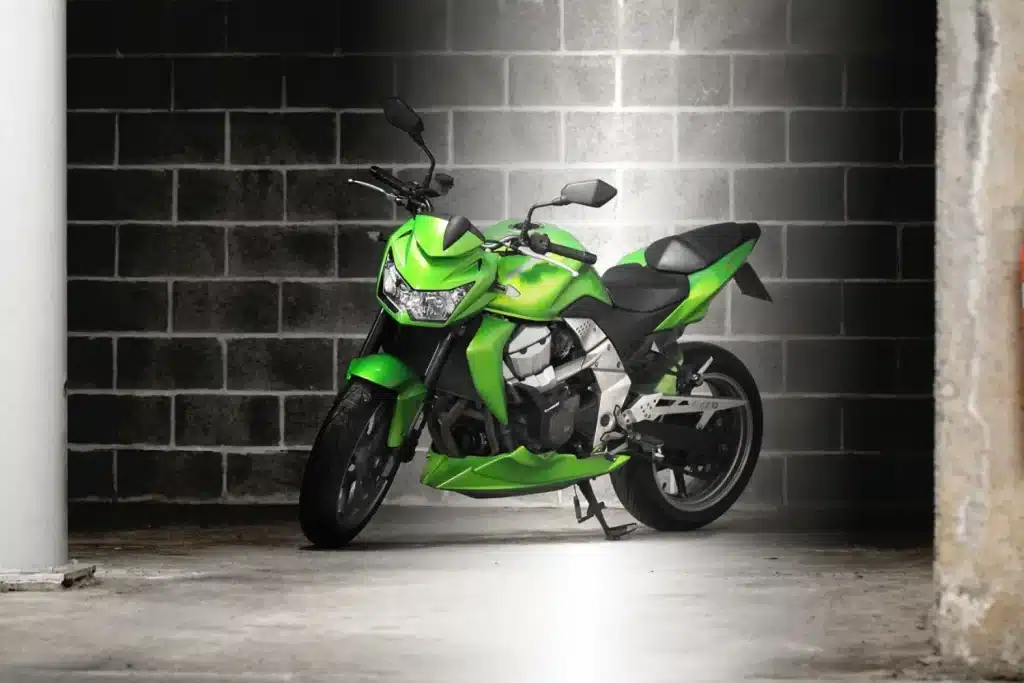
You look at your bike in the garage and tell yourself, “See you in the spring, beautiful…”
Naturally, it doesn’t answer. But it is judging you.
Because it knows perfectly well that you’re about to spend the next few months watching motorcycle videos online, shopping for accessories you absolutely do not need, and telling your better half, “Look at this! I need one of these for the bike!”
And the answer will be: “Do you really need that?”
You: “No… but it’s important.”
Of course it is.
Prepare the Fuel System for Winter
Start with the fuel. Add fuel stabilizer, then take the bike out for a short ride of about 20 minutes so the treated fuel circulates through the system.
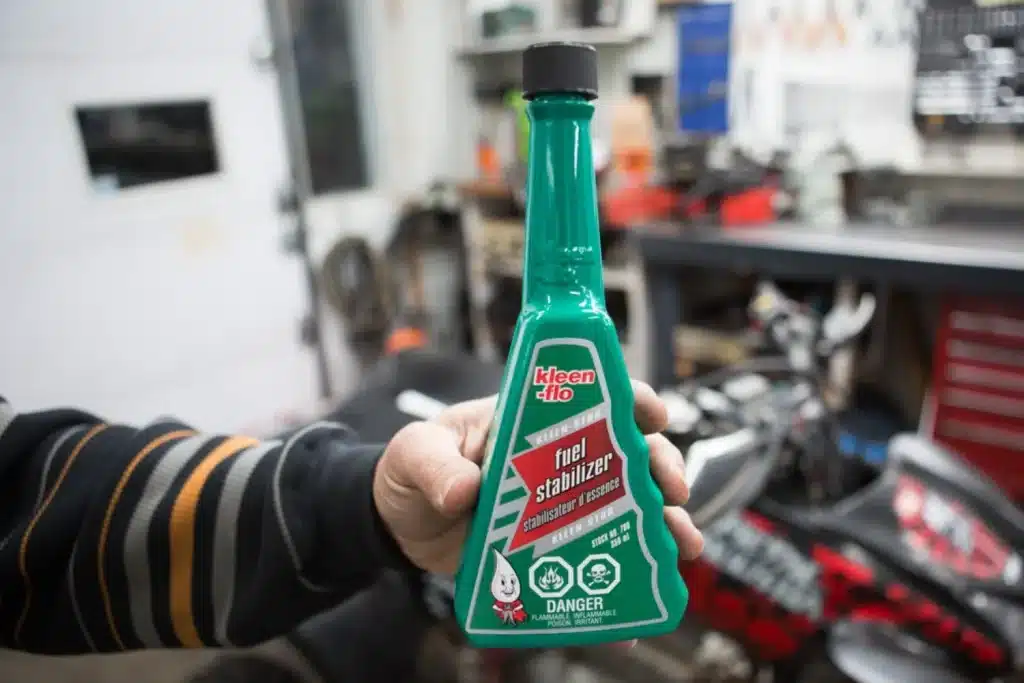
And pay attention here… This may be the only time a motorcyclist is genuinely happy to hear, “Go for a ride. You need to prep the bike.”
Normally, when your better half sends you out on an errand, it’s to pick up milk.
This time it’s: “Honey, I have to ride for twenty minutes. It’s for the mechanicals.”
That goes over much better.
Then fill the tank with premium unleaded. A full tank helps limit condensation during storage.
Also, no self-respecting rider can leave a motorcycle sitting there with only fourteen bucks’ worth of gas in it.
Check the Fluids and Change the Oil
Next, check for leaks and verify all fluid levels.
Think of it as the bike’s annual physical before its long winter sleep.
Look everywhere: under the engine, around hoses and near fittings. And if you spot a tiny drop: “Huh… that wasn’t there before.”
Exactly. That’s why you’re checking.
This is also a good time to change the engine oil.
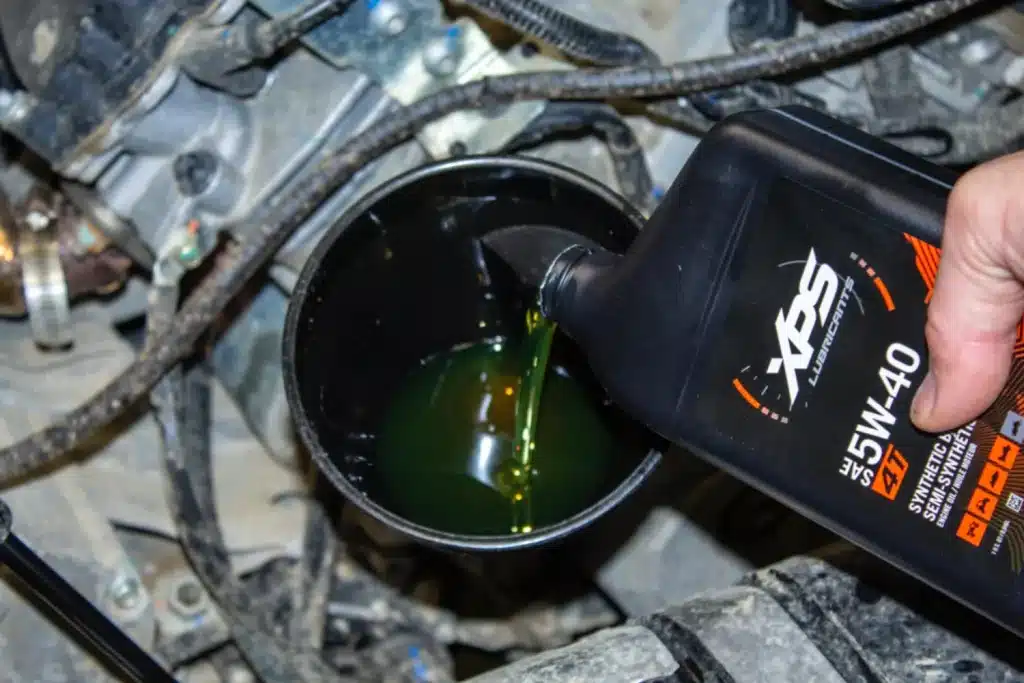
Because used oil isn’t going to improve by spending the winter inside your engine. It’s not wine.
Inspect the Final Drive
If your motorcycle uses a chain, inspect the chain, front sprocket and rear sprocket.
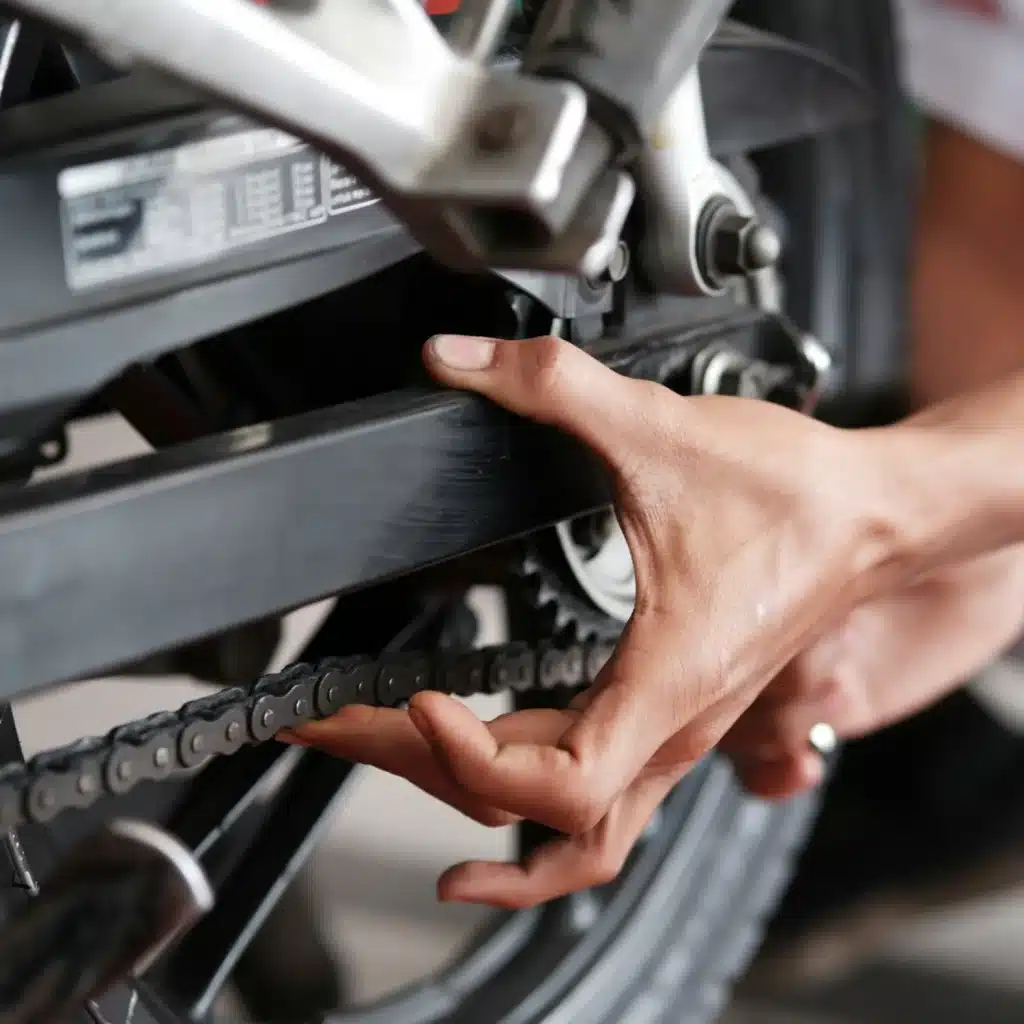
This is usually the moment when you realize you probably should have lubricated it a little more often.
You stare at the chain and wonder, “Is this still good?”
Your buddy answers, “If it moves, it’s good.”
No. That is not a diagnostic method. To get a quick indication of chain wear, pull a link away from the rear sprocket. If it lifts away by more than about half a tooth, the chain is excessively worn and should be replaced. Also check for stiff links and for sprocket teeth that have worn into a hooked shape.
Give the Motorcycle a Thorough Wash
Next, wash the bike. And not just a quick blast with the garden hose.
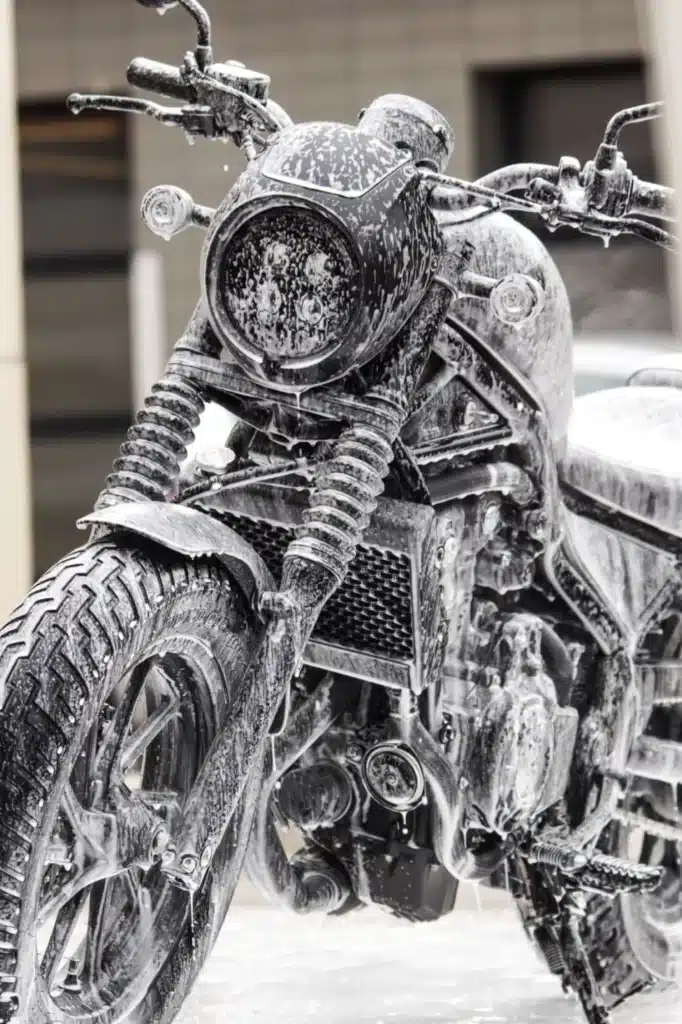
Clean off everything the riding season left behind: smashed bugs, mud, road salt, traces of road salt and traces of the traces of road salt.
In other words, everything that reminds you of Quebec’s magnificent roads.
A thorough cleaning is also a good opportunity to spot damage you may not have noticed during the season.
Keep Small Critters Out
One often-forgotten step is blocking the air intake and exhaust outlets.
Why?
Because mice like motorcycles too — especially when they’re looking for somewhere to build a nest. A mouse doesn’t look at a bike in a garage and think, “Ah, a motor vehicle.”
It thinks, “Wow! A heated condo!” So block the openings and take the opportunity to inspect the air filter. You never know what you’ll find: leaves? Dust? A spider?
Or, in some cases, enough organic material to start a small farm.
Store and Maintain the Battery
Next comes the battery.
Remove it and inspect its condition, casing, terminals and any signs of corrosion. Store it somewhere dry and temperate — not outside or in an unheated shed at -25 °C, and not on a damp garage floor beside the snowblower.
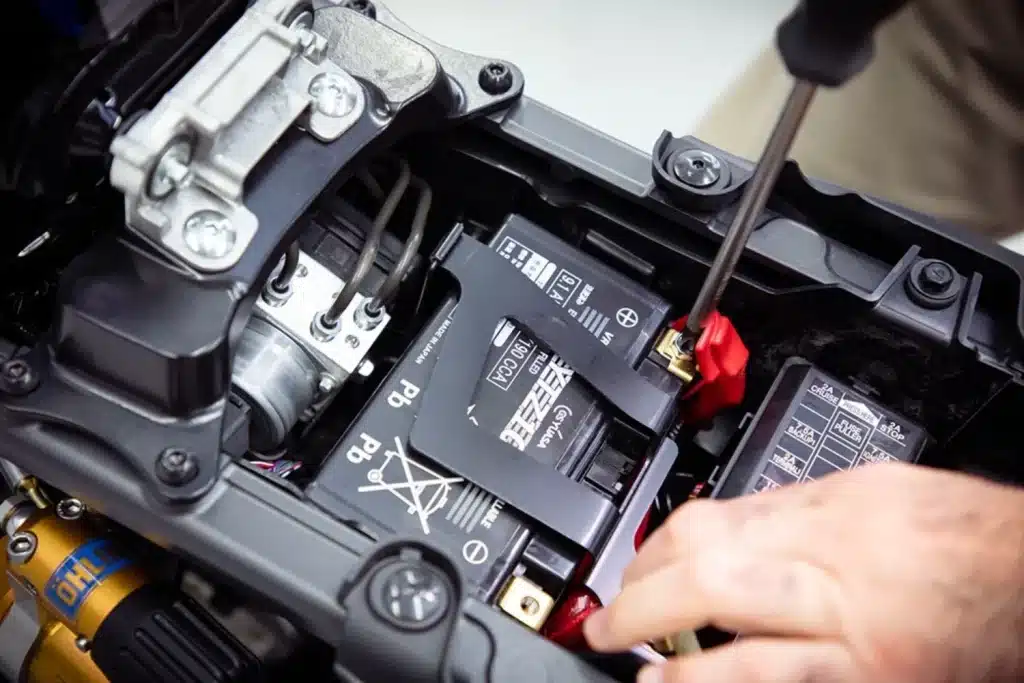
Ideally, keep it at around 10 °C (50 °F) or warmer.
A low-amperage battery maintainer can then be connected, with a timer if necessary, to keep the battery properly charged.
A motorcycle battery is a bit like an old buddy: abandon it for six months and you shouldn’t be surprised if it lets you down in the spring.
Leave Yourself Notes for Spring
Before covering the bike, make notes: repairs to plan, parts to replace, modifications you want to make and maintenance still to be done.
Because six months from now, you’ll be sitting on the bike with your helmet on, ready to leave, wondering:
“What was it I was supposed to fix again?”
Write it down. Make a list. Take a photo. Email yourself. Engrave it on the gas tank if you have to — just put it somewhere you’ll remember.
Choose the Right Storage Location
Finally, choose a secure place protected from snow, corrosive products and, most importantly… theft.

A motorcycle disappearing over the winter has a way of making spring considerably less enjoyable.
You can also put the bike on its centre stand or use an appropriate stand to reduce the load on the tires and suspension.
Then cover it. With a real motorcycle cover.
Not an old Christmas blanket covered in snowmen.
And That’s It… Your Motorcycle Is Ready to Hibernate
The bike is ready and the garage is quiet. The battery is sleeping, the fuel tank is full, the oil is fresh, the chain is lubricated and the mice are disappointed.
And you? You’re sitting in the kitchen, staring out the window while it snows.
Your motorcycle is under its cover. You take one last sip of coffee and mutter, “Only five more months…”
Then you open your phone. “Just going to look at used bikes.”
Two hours later, you’ve found another motorcycle to buy, three tires, an exhaust, a set of luggage and a suspension kit. In the end, maybe the motorcycle isn’t the one hibernating. Maybe it’s just your wallet spending the winter in an induced coma.