Jag 400: the return of a legendary name
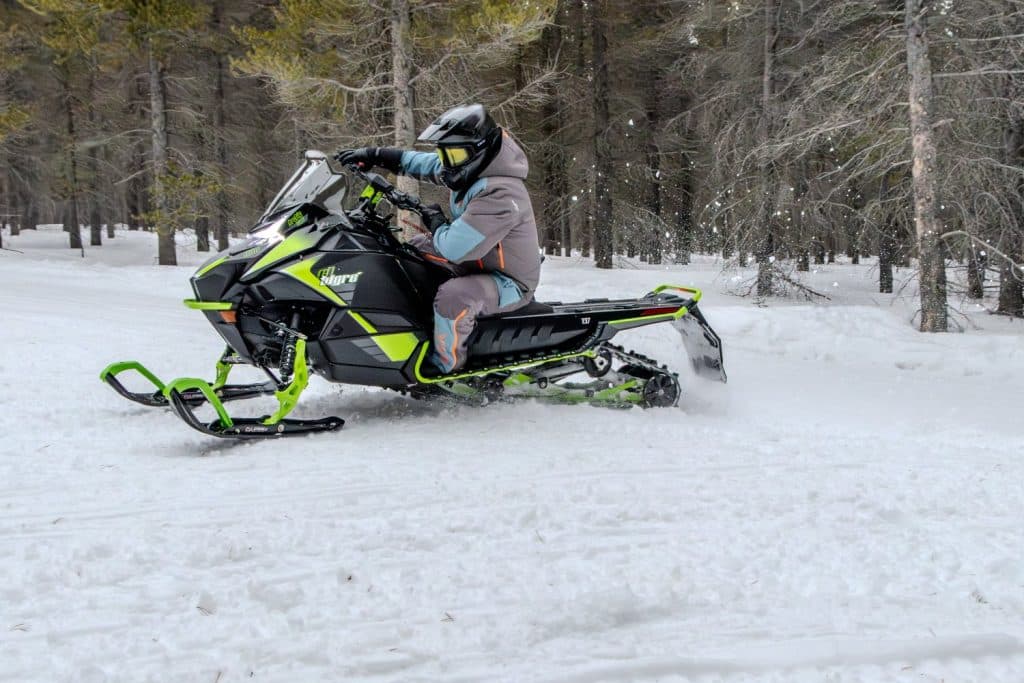
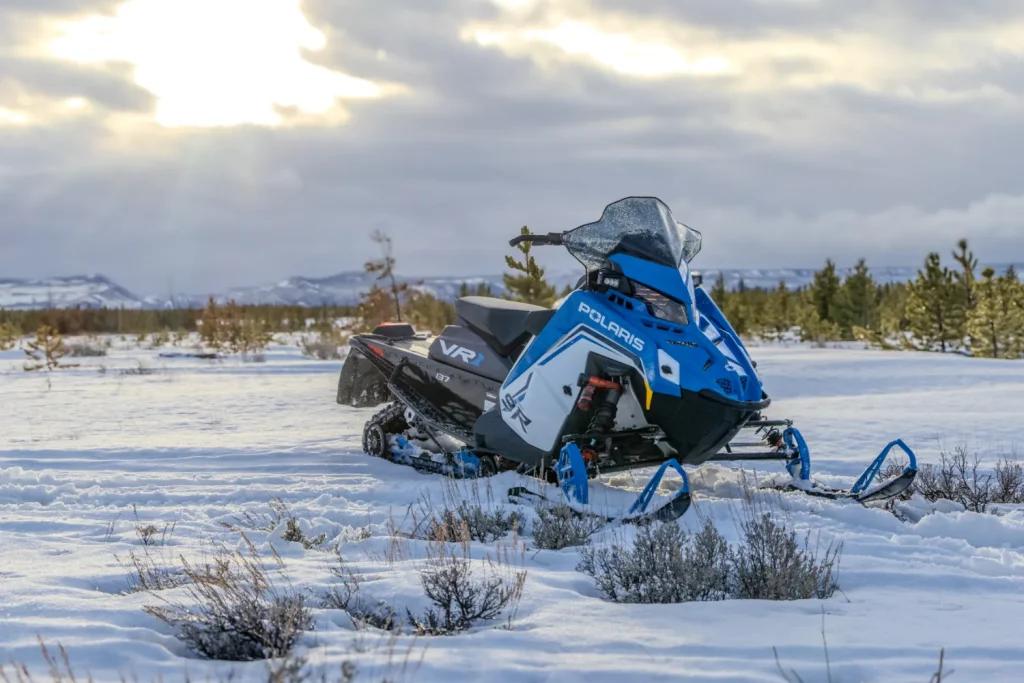
The Jag name is also returning to Arctic Cat for 2027. The new 400 cc Jag will be available in two versions: the Jag 400 and the Jag 400 Sno Pro. The latter stands out in particular for its AC5S shocks, which deliver greater performance and are better suited to sporty riding.
The return of the El Tigre
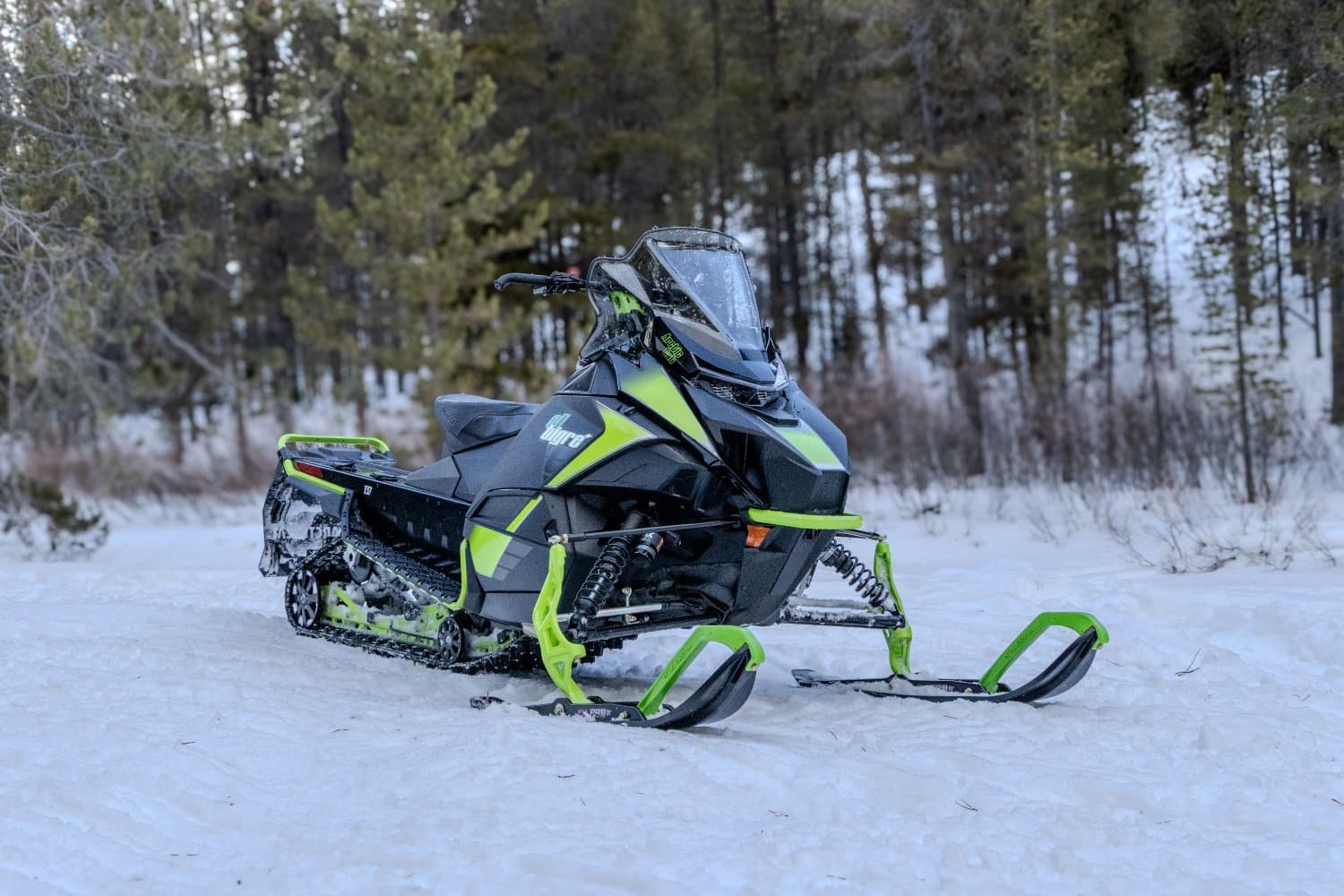
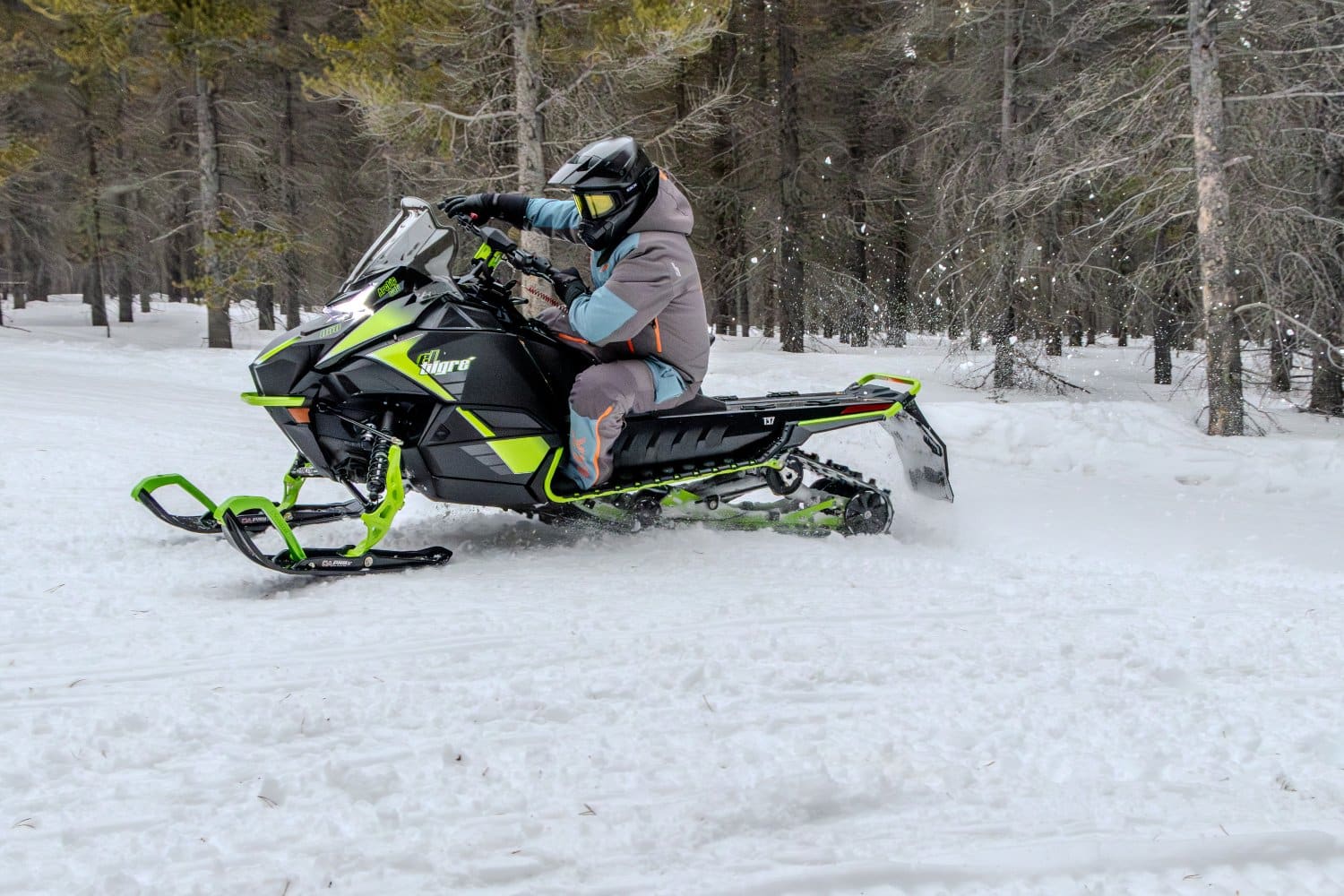
Another legendary name is resurfacing at Arctic Cat for 2027: El Tigre. This time, the manufacturer is offering two engine options, the C-TEC2 600 and the C-TEC2 858.
The 600 cc version will be offered with one track choice, the new 137-inch Arrowhead.
The El Tigre 858 will be available in two configurations. Owners will be able to choose a 137-inch Arrowhead track paired with the Slide-Action suspension or a 146-inch configuration equipped with the Cross-Action II suspension and raised rear wheels.
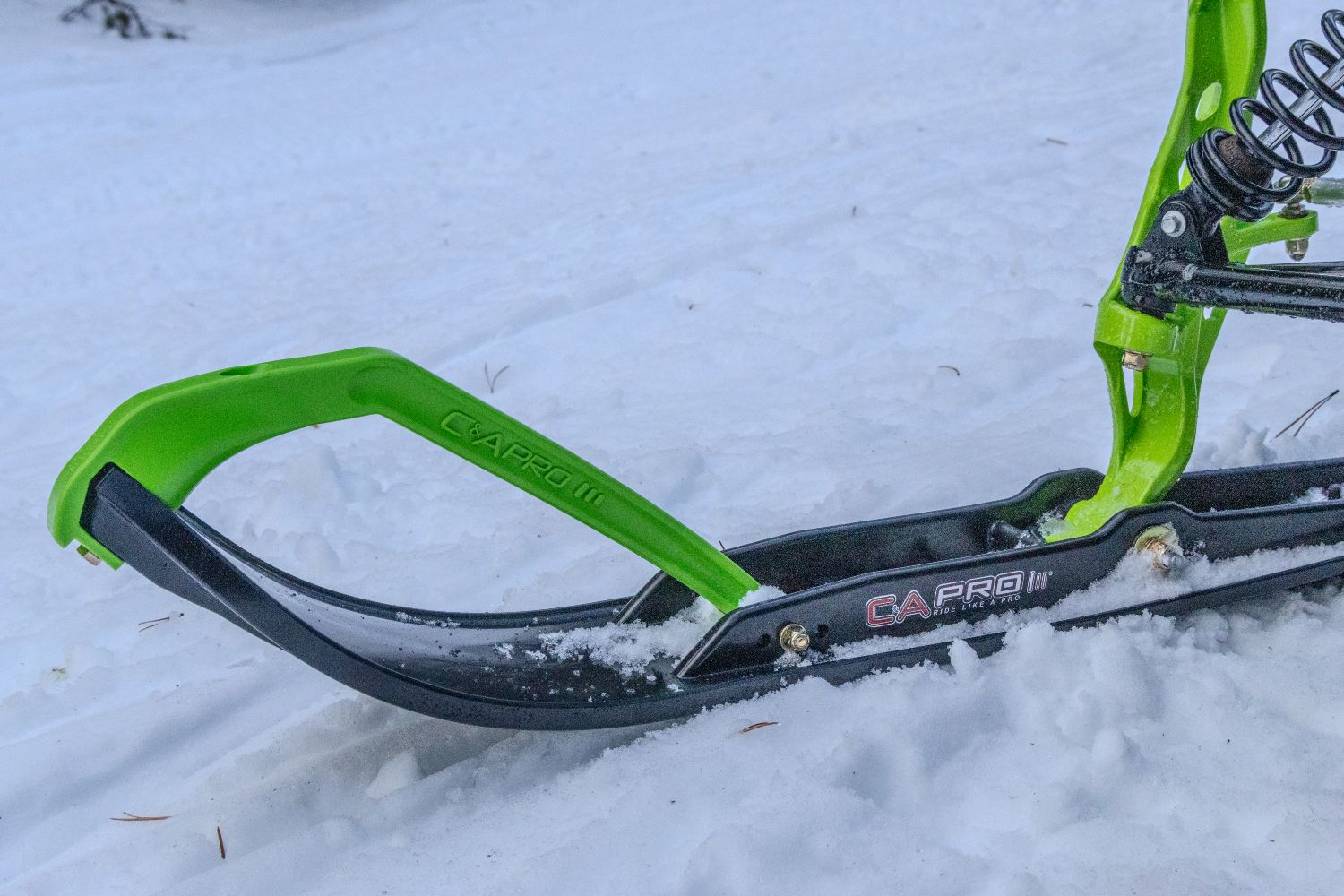
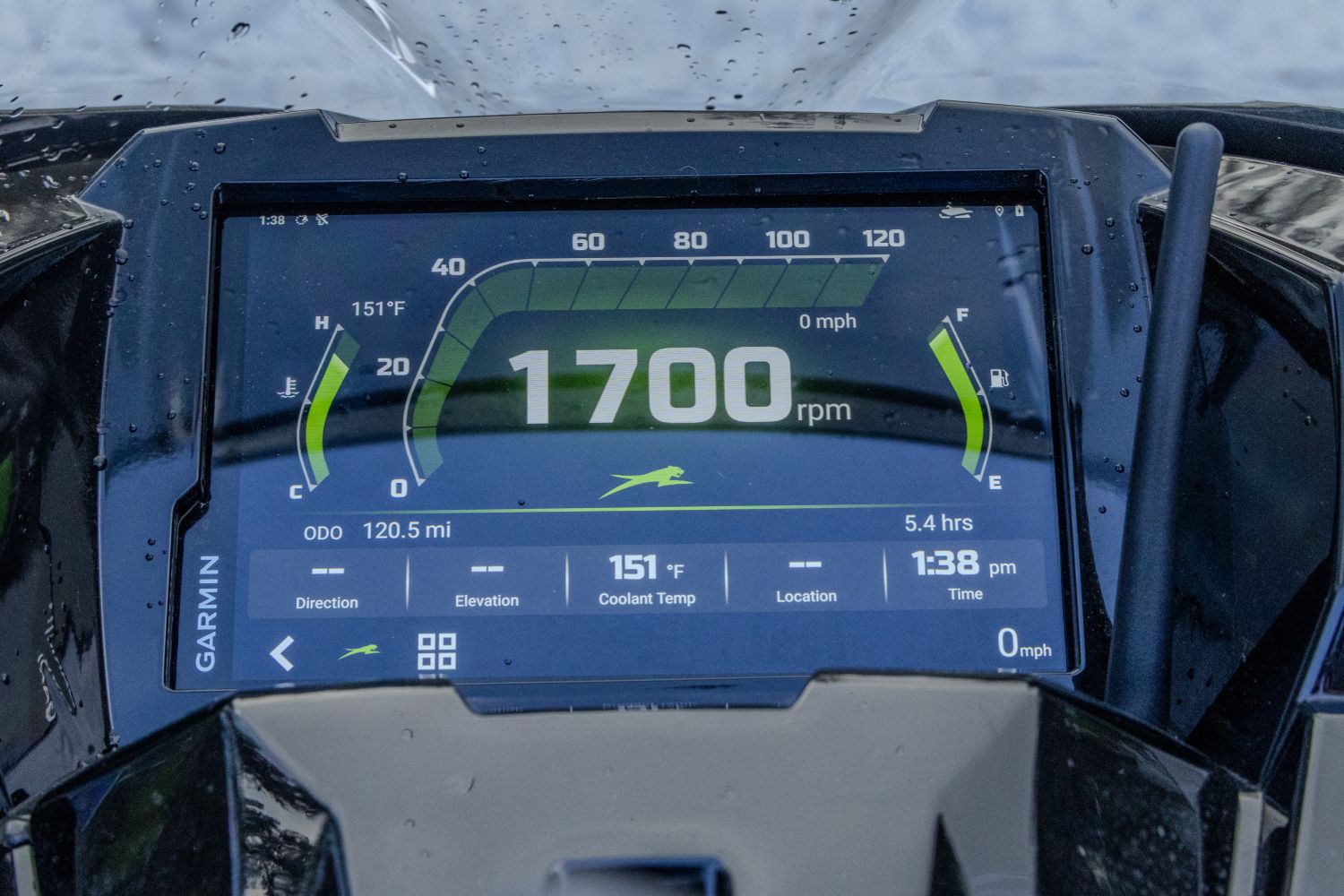
Arctic Cat is also equipping the El Tigre with its Garmin G8 display, intended primarily for navigation. Up front are C&A Pro XPT skis, which are commonly associated with snocross snowmobiles.
The Arrowhead track
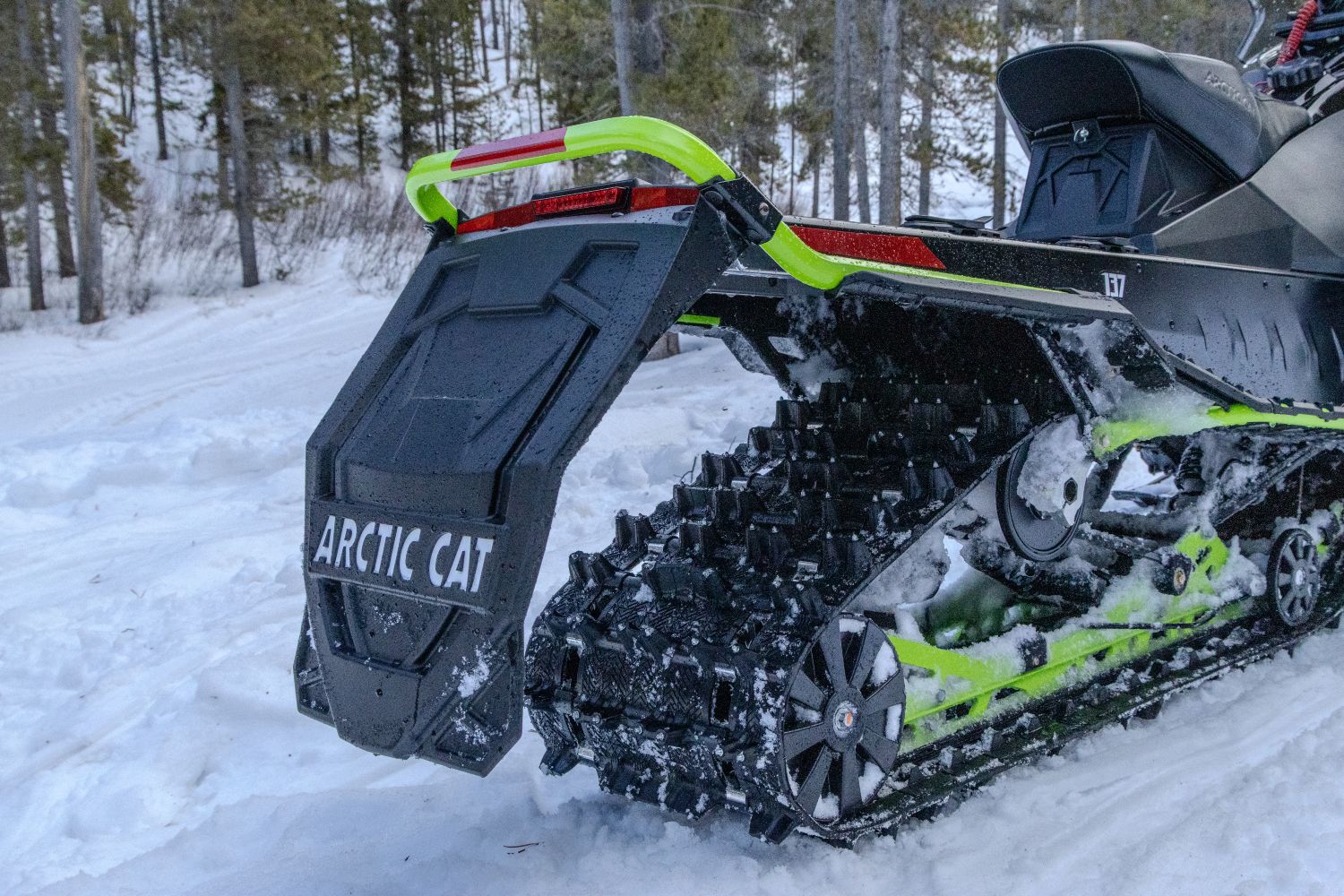
Among the most interesting technical innovations introduced by Arctic Cat is the all-new Arrowhead track.
Developed by Arctic Cat engineers, this factory-studded track features a distinctive design. It has three rows of lugs angled at 15 degrees and oriented to promote penetration into the snow under acceleration. Another row, angled 15 degrees in the opposite direction, is designed to improve braking performance.
The objective is to maximize traction in the two situations where it matters most: accelerating and slowing down quickly.
The Arrowhead will be offered in a 136-inch length on certain 600 and 858 models, as well as in a 146-inch length, notably as an option on the El Tigre 146.
Power steering comes to two-stroke models!
Arctic Cat was an early adopter of electric power steering on four-stroke snowmobiles. For 2027, the manufacturer is taking the technology a step further by adding it to its two-stroke models.
For these models, engineers also recalibrated the power steering to achieve a steering angle comparable to that of the four-stroke models. However, the required handlebar angle is considerably smaller.
The figure is approximately 37 degrees on the two-stroke models, compared with 62 degrees on four-stroke models such as the Thundercat. This represents an approximately 40% reduction in handlebar movement.
On the trail, this feature should reduce the handlebar movement required to perform the same manoeuvres. The benefit should be particularly noticeable during technical riding, although riders will need some time to adjust.
Cross-Action II 146: raised rear wheels
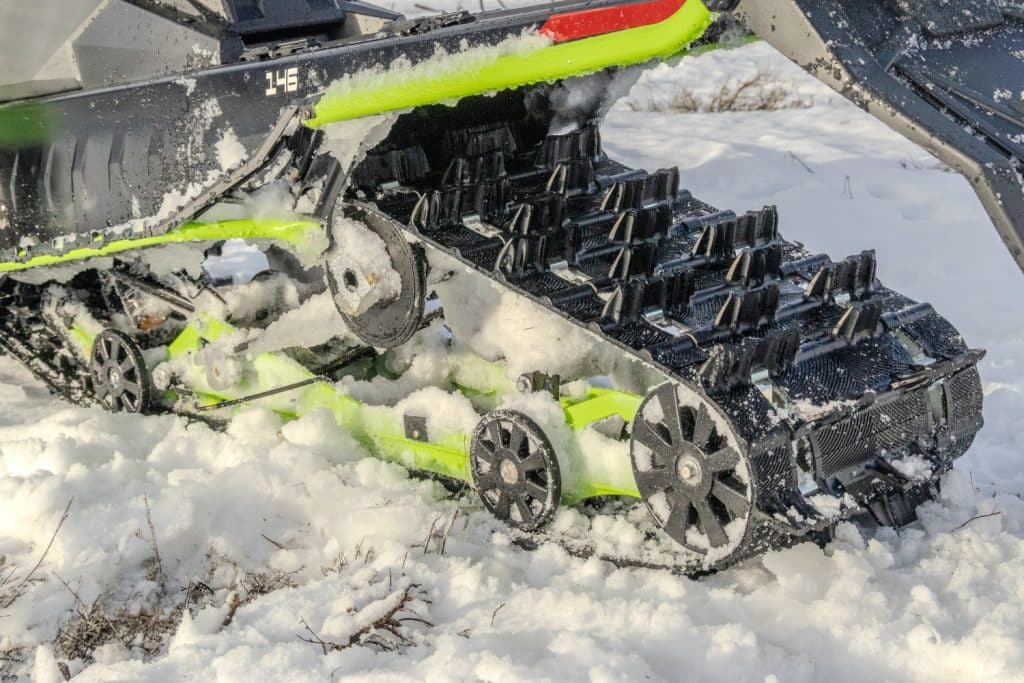
Arctic Cat is also introducing a new evolution of its Cross-Action II rear suspension, with the rear wheels positioned approximately one inch higher.
This configuration will be available on selected XF models as well as on the Thundercat.
According to Arctic Cat engineers, this change should allow the snowmobile to adapt its behaviour to the conditions. On hard-packed snow, the suspension should behave more like that of a 129-inch snowmobile, while in deep snow, it should retain the flotation of a 146-inch machine.
The aim is to offer the best of both worlds: the agility of a shorter track in firm conditions and the flotation of a 146-inch track when the snow gets deep.
Thundercat 146: a first
Yes, 2027 marks the arrival of a Thundercat with a 146-inch track.
For this new version, Arctic Cat uses the Cross-Action II suspension with raised rear wheels. This is a first for the Thundercat, which now receives an uncoupled rear suspension.
The rest follows the familiar Thundercat formula: a powerful turbocharged 1000 cc three-cylinder engine producing more than 200 horsepower, power steering and, new for 2027, the Garmin G8 display.
This new 146-inch configuration should make the Thundercat more versatile, particularly for riders who want to retain the model’s performance while gaining better flotation in deeper snow.
Widescape 250: more than 20 years of history
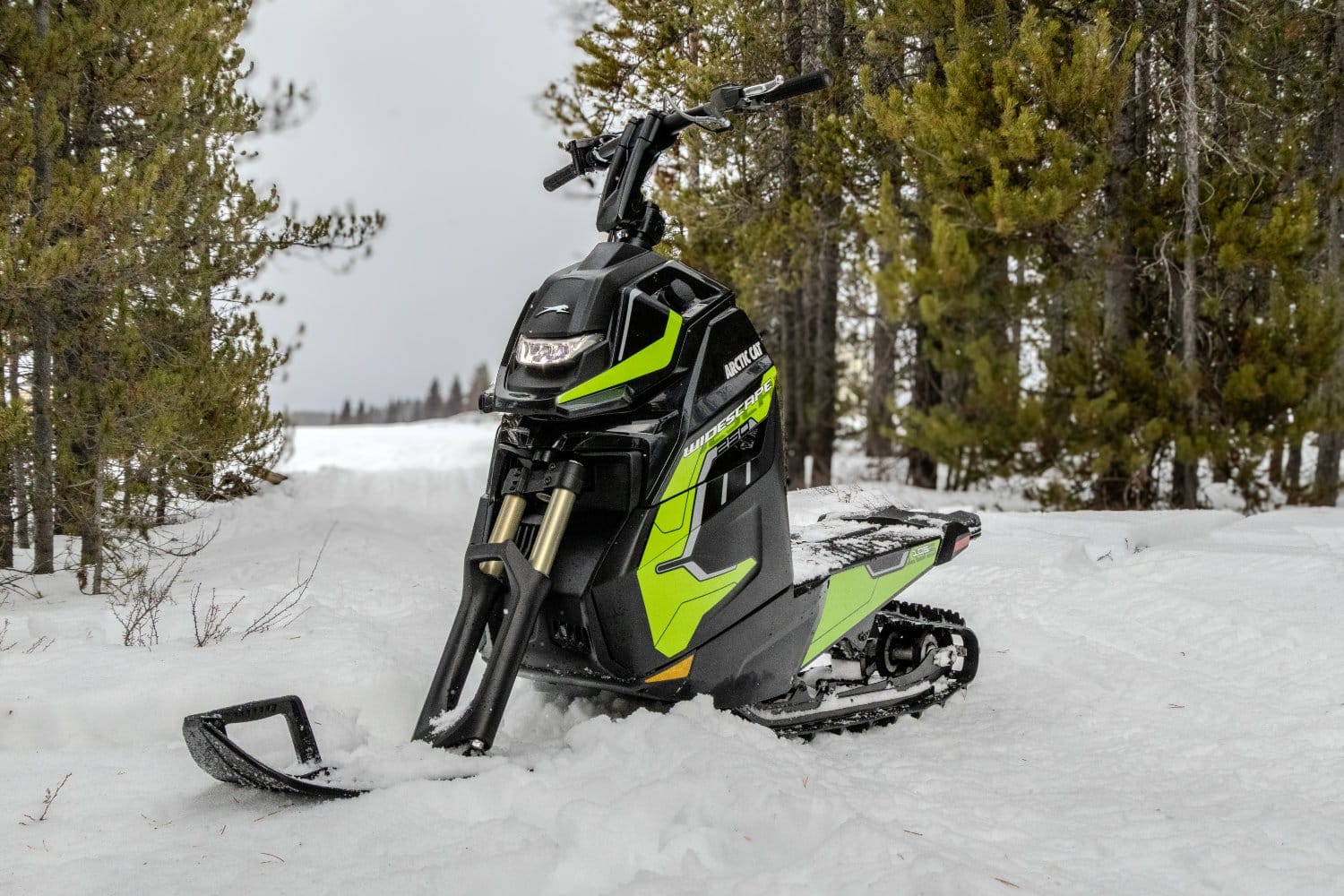
The story behind the Widescape 250 is worth knowing because this machine has virtually nothing in common with a traditional snowmobile.
History
The story begins in 1998 in the Saguenay-Lac-Saint-Jean region, when an inventor and mechanic named Alain Aubut decided to build something special for his son.
In 2002, a partnership was established with Cycle De Vinci while the project was still at the prototype stage. Mechanical development continued over the following years, ultimately leading to the creation of Widescape in 2018.
After more than two decades of development, commercialization finally began in 2022-2023, giving rise to the Widescape 250.
Then, in early 2026, Arctic Cat officially announced the acquisition of Widescape’s assets.
Once you see this compact vehicle, it quickly becomes clear that it is not simply a scaled-down traditional snowmobile.
The machine
The Widescape 250 has a dry weight of approximately 90 kg, or nearly 200 lb. It is powered by a liquid-cooled, fuel-injected 242 cc four-stroke single-cylinder engine producing approximately 20 horsepower.
Power is delivered through a CVT system manufactured here in Quebec by CVTech-IBC. At the rear is a Soucy track measuring 105 inches long by 12 inches wide, with 1.5-inch lugs. Soucy is another well-known Quebec company specializing in tracks.
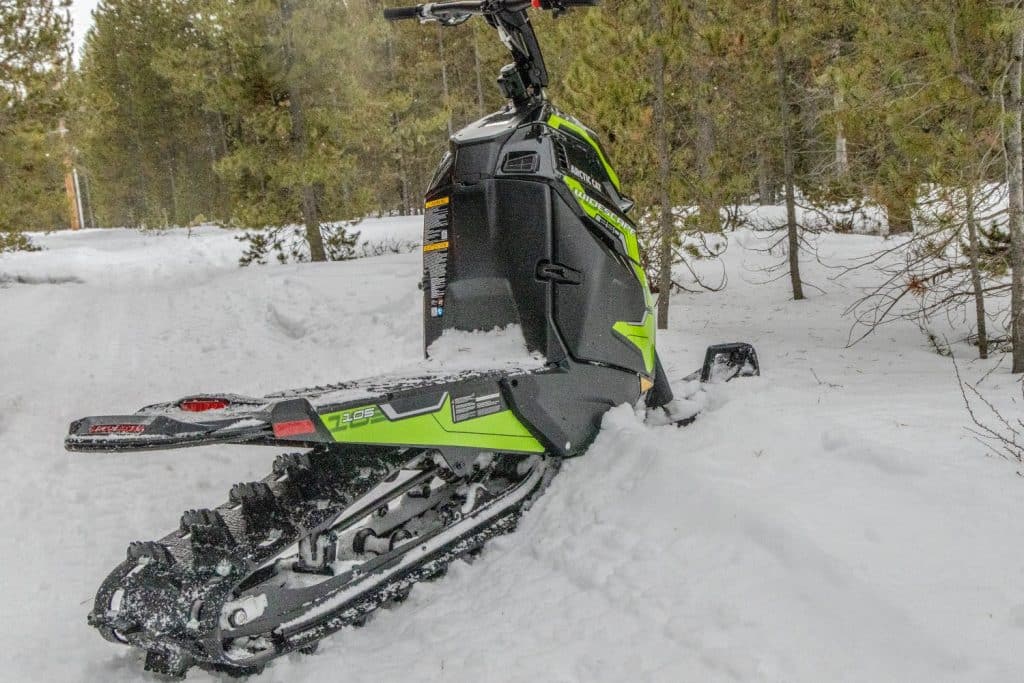
Up front, a 12-inch-wide ski helps provide flotation.
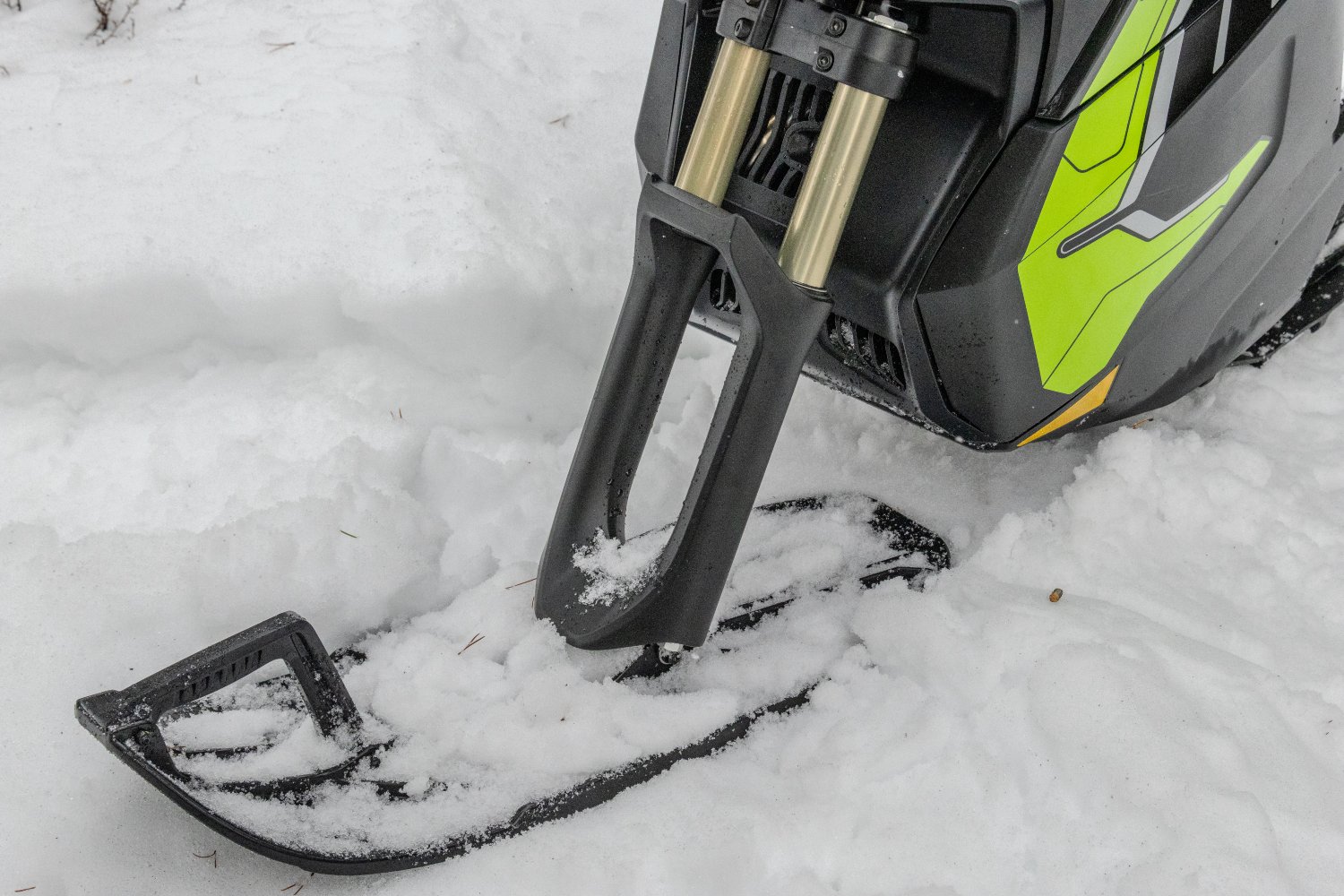
Although its top speed can reach approximately 65 km/h, speed is clearly not the Widescape’s main purpose. Its natural playground is wooded terrain, narrow trails and places where riders want to climb, weave between trees and explore at low or moderate speeds.
A completely different riding experience…
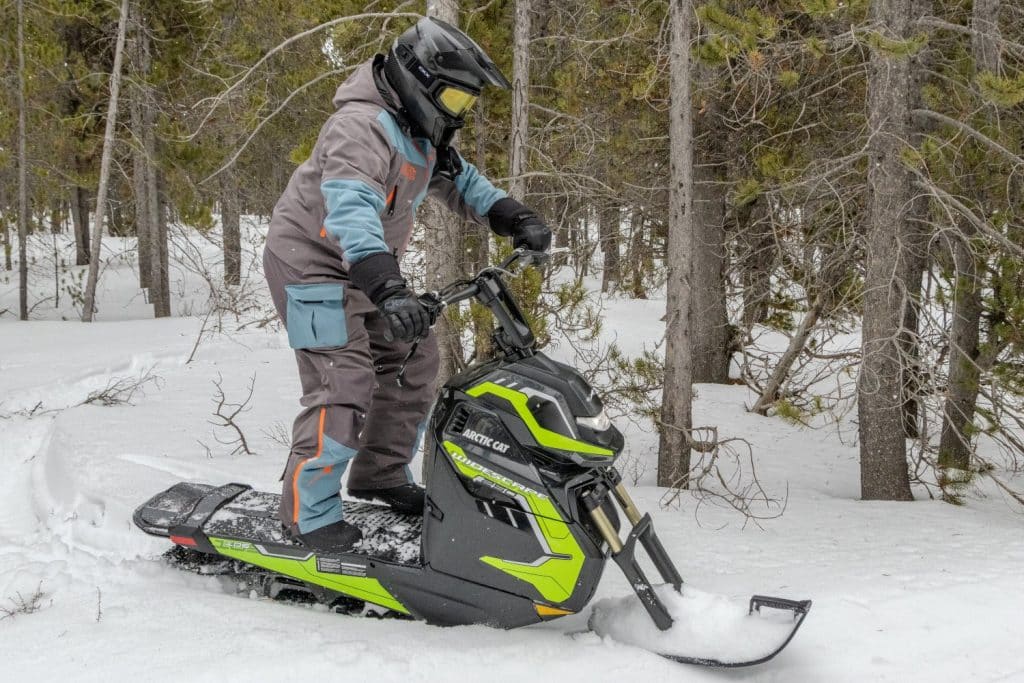
The Widescape has virtually nothing in common with a traditional snowmobile. It is better described as a motorized recreational vehicle designed for enduro-style riding, off-trail use and forest exploration.
Its narrow width and distinctive design allow it to slip into places that a conventional snowmobile simply could not reach.
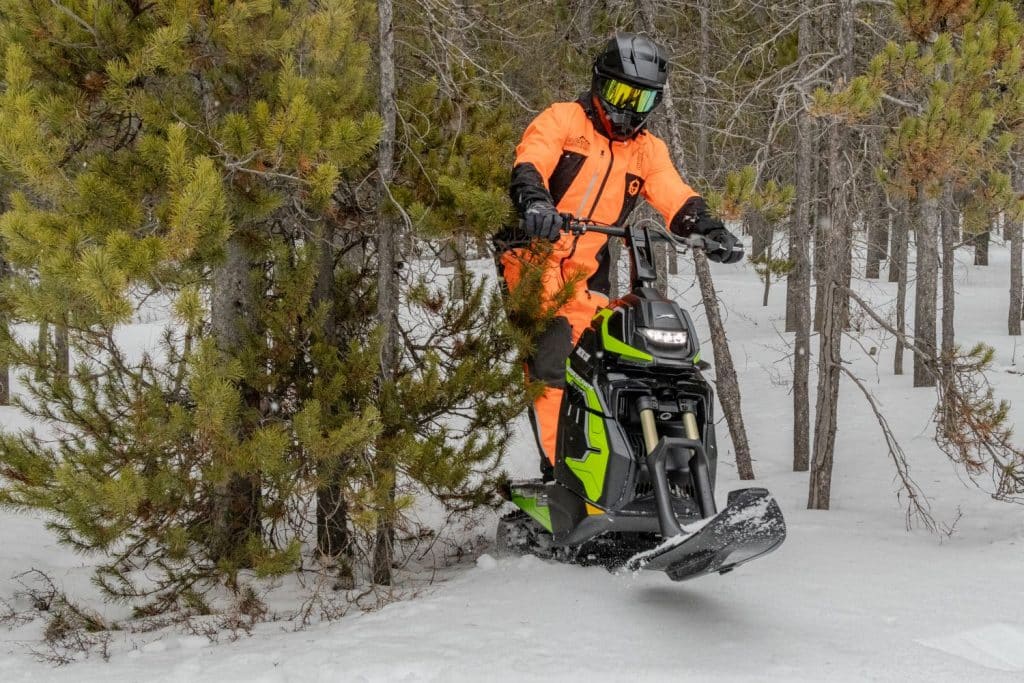
This riding style does require some learning. After trying it ourselves, we can confirm that the Widescape is physically demanding to ride. It takes time to become accustomed to its handling, particularly in corners.
Once the technique is mastered, however, the vehicle delivers an experience entirely different from that of a traditional snowmobile. The Widescape is not intended to replace a snowmobile; it simply offers a new way to explore winter.