Many questions, controversies, and above all, uncertainty come to mind for consumers when the topic of electric vehicles comes up. There are the die-hard purists who swear by internal combustion engines and won’t be swayed, the undecided, and those convinced that this is how we’ll save the planet… As with any type of vehicle, there are pros and cons, and here’s what we think.
A First Step
With the arrival of the 2026 Can-Am Outlander Electric, BRP is taking a major step forward in the evolution of off-road vehicles. The Quebec-based manufacturer is introducing the first mass-produced electric ATV designed for both recreational users and workers in agriculture, forestry, and industry. This new machine marks a technological turning point by combining the Outlander’s proven capabilities with the advantages and disadvantages of an all-electric powertrain.
The Rotax E-Power powertrain
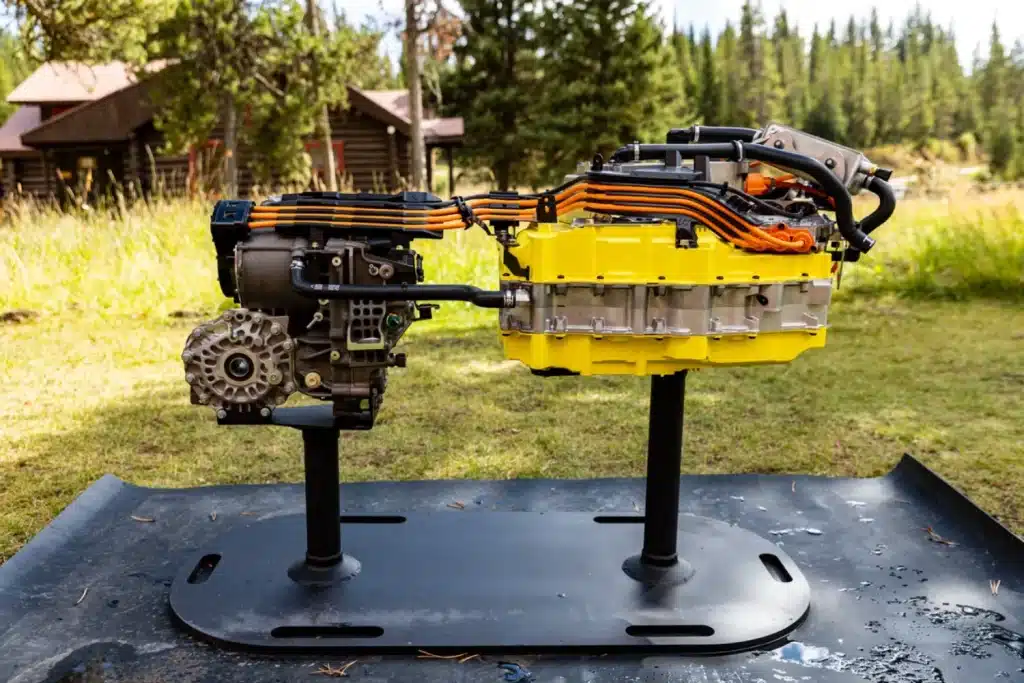
At the heart of the vehicle is the Rotax E-Power powertrain, developed by BRP. This electric motor produces 47 hp and 53 lb-ft of torque—a particularly impressive figure, as maximum torque is available instantly the moment the throttle is pressed. Unlike a gasoline engine, which must rev up to deliver its full power, the electric motor offers immediate response, making it easier to start off in difficult terrain, tow loads, and navigate obstacles.
Energy is stored in an 8.9 kWh lithium-ion battery, which is liquid-cooled to ensure consistent performance even during intensive use. BRP reports a range of up to approximately 80 kilometers under favorable conditions. Of course, actual range varies depending on terrain, outside temperature, cargo load, and driving style. For use on a farm, hunting grounds, or a construction site, this range is generally sufficient to complete a full day’s work.
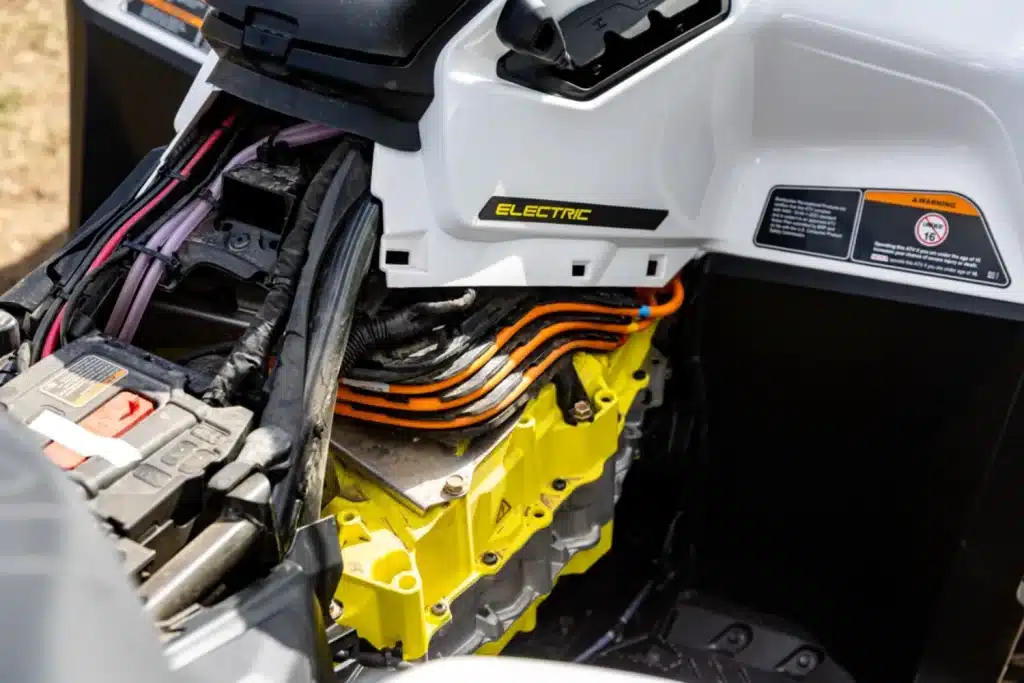
One of the most impressive aspects of the Outlander Electric remains its charging system. Thanks to its onboard charger compatible with Level 2 charging stations, the battery can go from 20% to 80% charge in just 50 minutes. Using a standard 120-volt residential outlet, a full charge takes longer but is still easy to do overnight.
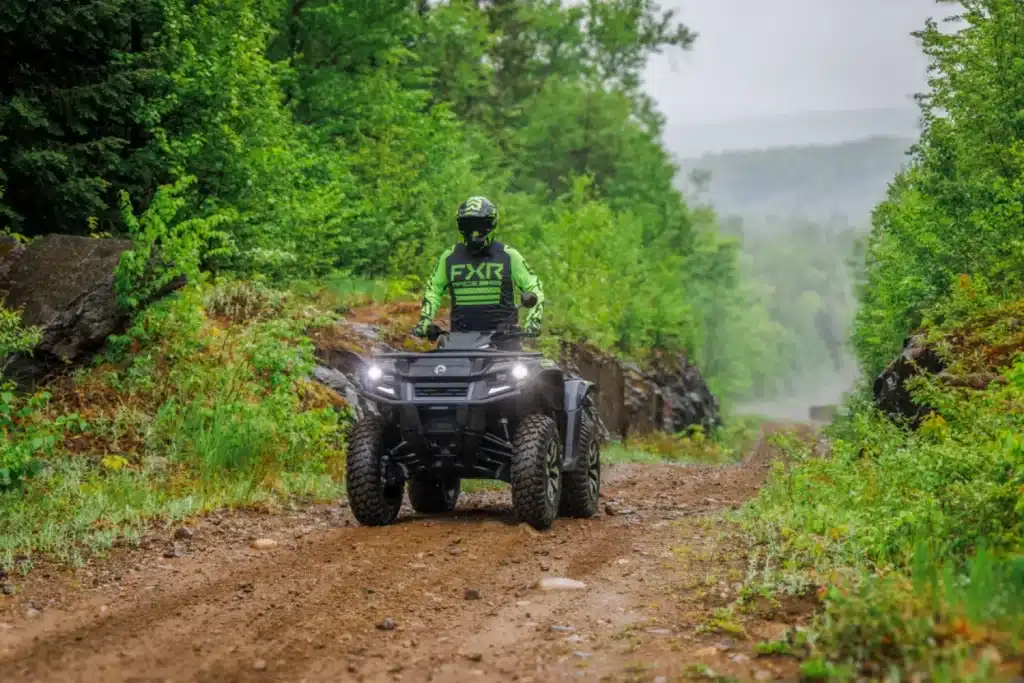
BRP has not sacrificed the vehicle’s utility capabilities in favor of electrification. The Outlander Electric retains a true transmission with high and low ranges, as well as a selectable 2-wheel drive/4 wheel drive system equipped with the Visco-Lok QE automatic front differential. This configuration preserves the off-road capabilities that Outlander owners have come to expect. Drivers also have access to several driving modes, including Work, Standard, and Sport, allowing them to tailor the motor’s response to their current needs.
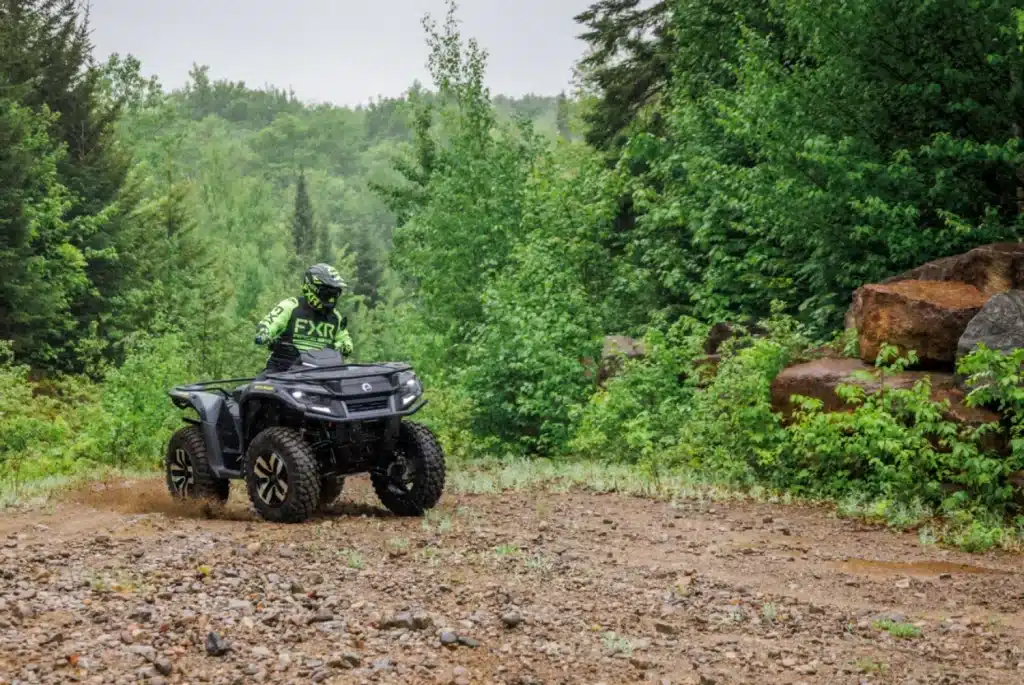
Silence! Let’s go!
Another major advantage of this new ATV is its extremely quiet operation. The electric motor produces very little noise and almost no vibration. This feature is a significant advantage for hunters, farm owners, or users working near animals. You can travel discreetly without disturbing the environment. BRP has even developed specialized tires and optimized suspension components to further reduce road noise and vibrations.
Maintenance Requirements
Reduced maintenance is also a major selling point. Since there is no internal combustion engine, no engine oil, no spark plugs, and no filters to replace, regular maintenance costs are significantly reduced. The main maintenance tasks primarily involve the brakes, differentials, suspension, and transmission fluid. For many users, this means less time spent at the shop and more time on the trails or at work.
Outlander Electric Features
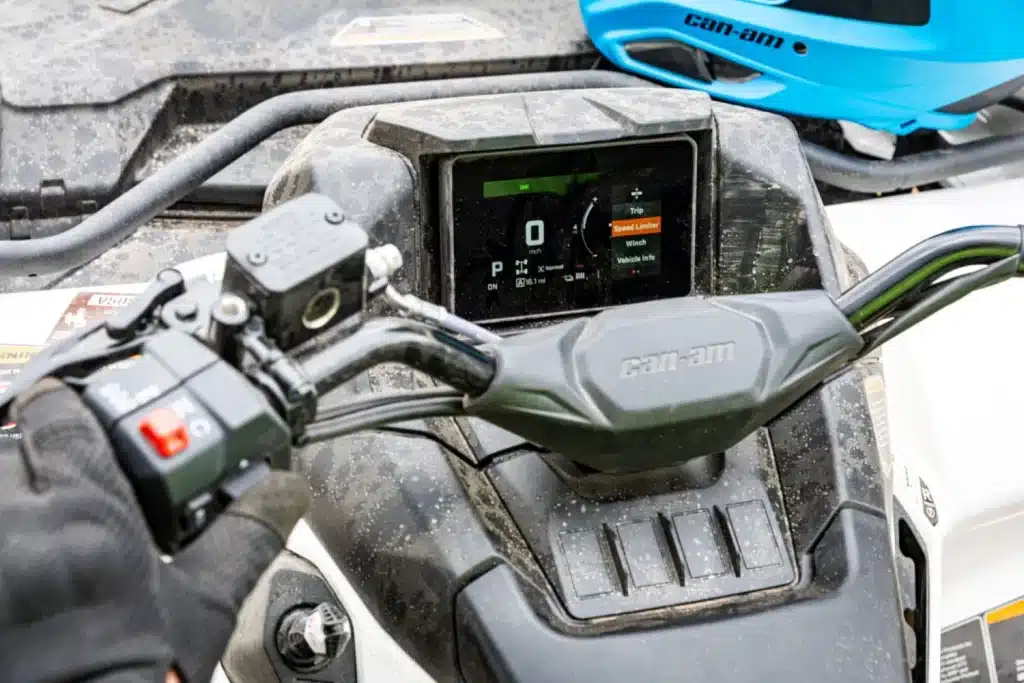
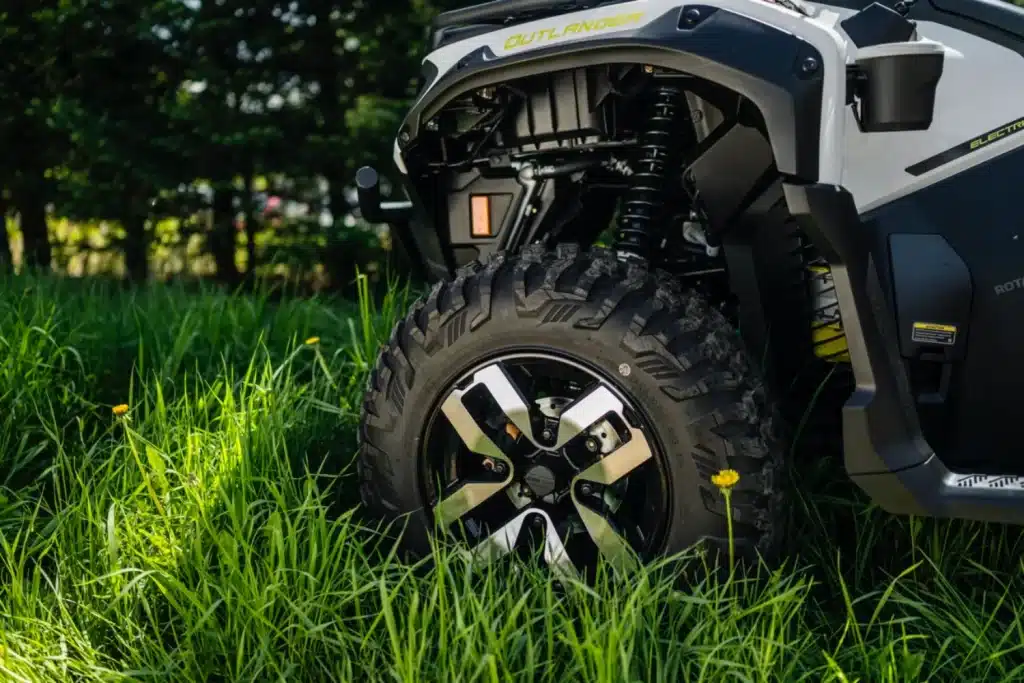
On the technology front, the Outlander Electric features a new 5-inch color display showing charge status, remaining range, driving modes, and various vehicle information. The system also allows users to manage charging and certain operating settings. The equipment also includes modern LED lighting, USB-A and USB-C ports, and three-level dynamic power steering. The 2026 Outlander Electric comes standard with 26 × 8 × 14-inch XPS Recon Force tires in the front and 26 × 10 × 14-inch tires in the rear. These tires are mounted on 14-inch cast aluminum rims.
Performance
Like any new technology, the vehicle has certain limitations. Its range remains shorter than that of a gas-powered ATV used on long trips covering several hundred kilometers. This isn’t a vehicle for users who travel very long distances daily, as the range remains limited. Very cold winter temperatures can also affect battery performance, a phenomenon common to all electric vehicles. However, it’s worth noting that its towing capacity is up to 1,830 pounds—or 830 kilograms!
Our Test Drive
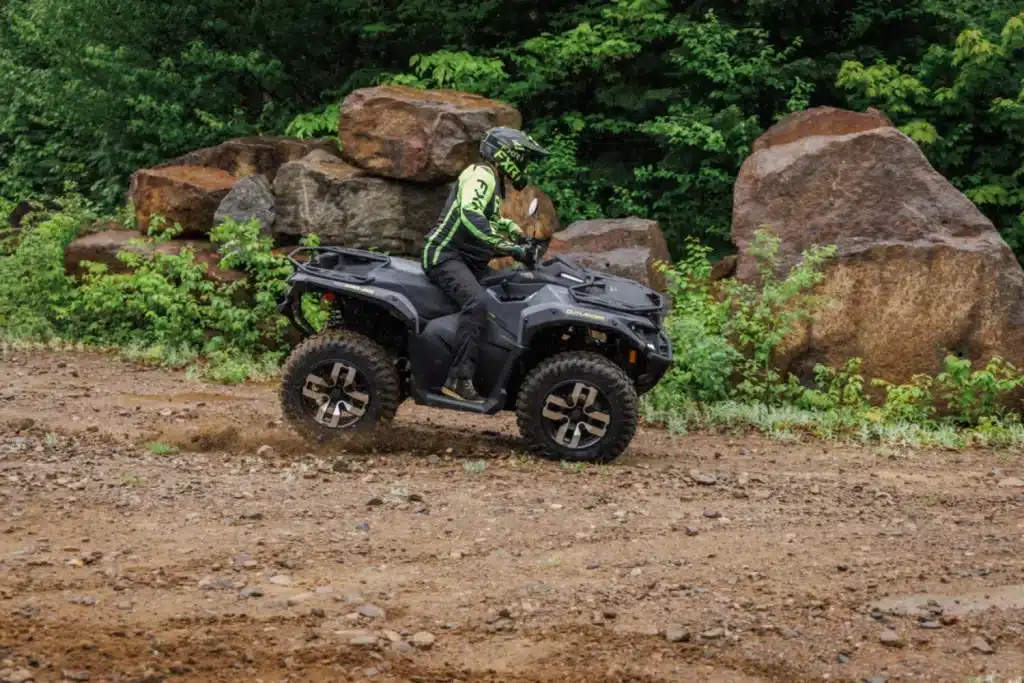
I have to admit right off the bat: I’m not one of the biggest fans of electric vehicles. Yet, after spending several hours behind the wheel of the Can-Am Outlander Electric, I have to admit that this technology has very real merits, and in certain situations, they’re even hard to ignore.
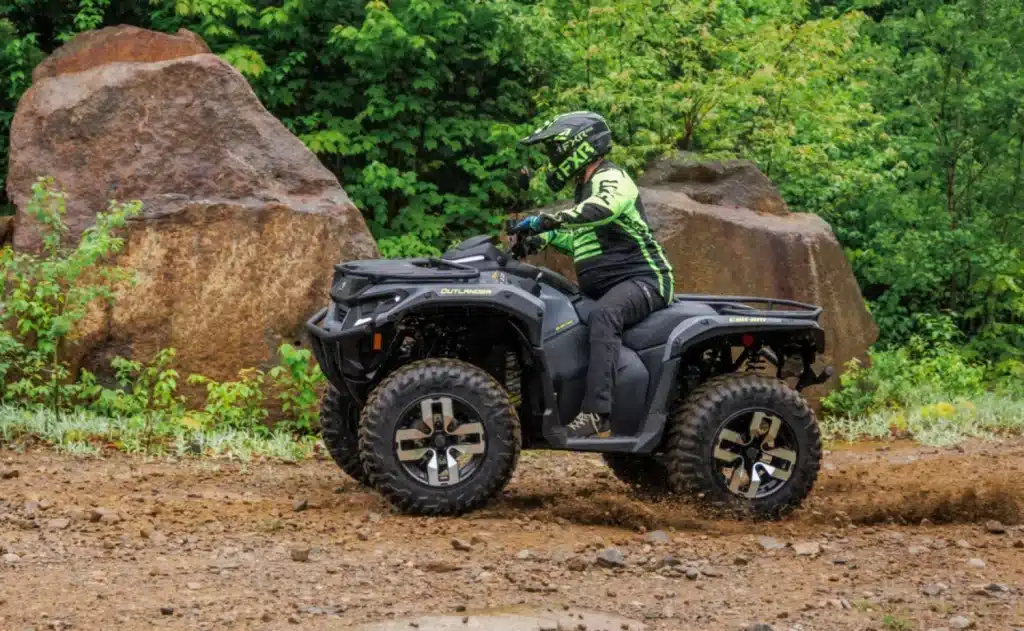
The first thing that really impressed me was, without a doubt, the acceleration.
As a performance enthusiast, I look above all for a quick response to the throttle, and in this regard, the Outlander Electric delivers exactly what you’d expect from an electric motor. At the slightest touch of the throttle, power is instantly available. There’s no delay, no hesitation—just immediate torque that propels the vehicle with remarkable efficiency. The first 40 to 50 feet are covered in the blink of an eye, providing a sense of responsiveness that few gas-powered vehicles can match.
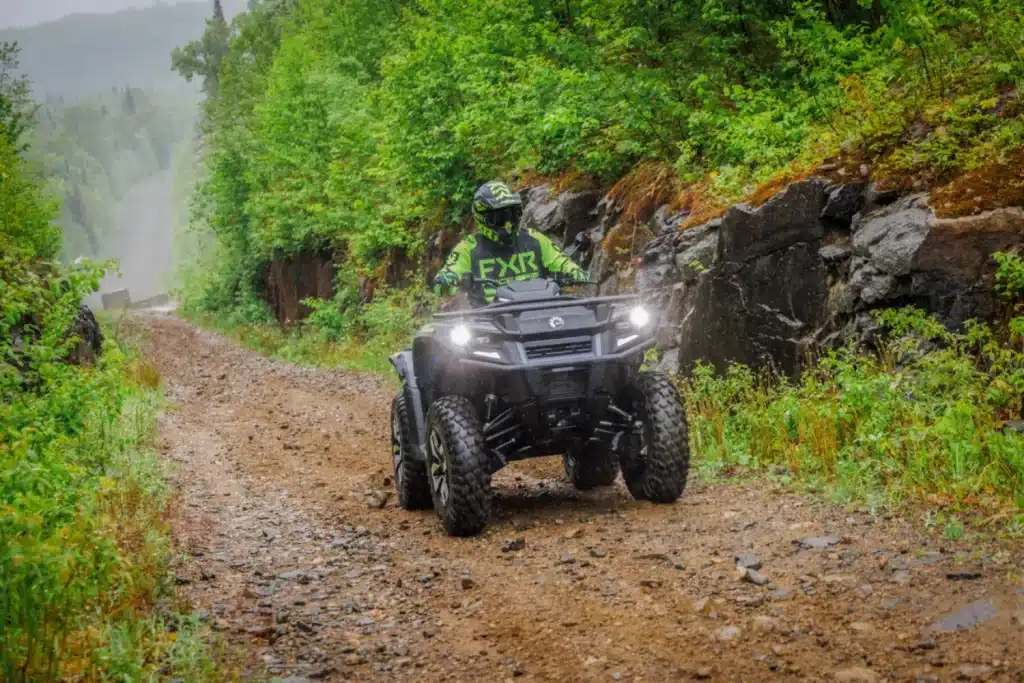
But what makes this acceleration even more astonishing is that it happens in an almost surreal silence.
Unlike some electric vehicles that produce a slight whirring sound during acceleration, our vehicle stands out for its exceptional quietness. The result is a driving experience completely different from what we’re used to in the world of ATVs. You can fully enjoy the surroundings without being constantly accompanied by the roar of an internal combustion engine.
It was actually through this aspect that I discovered what I believe to be one of the greatest advantages of this powertrain. It becomes possible to drive very early in the morning or late at night without disturbing the neighborhood. For owners of large properties, farmers, or enthusiasts who need to travel around their property at times when quiet is appreciated, this advantage immediately becomes clear.
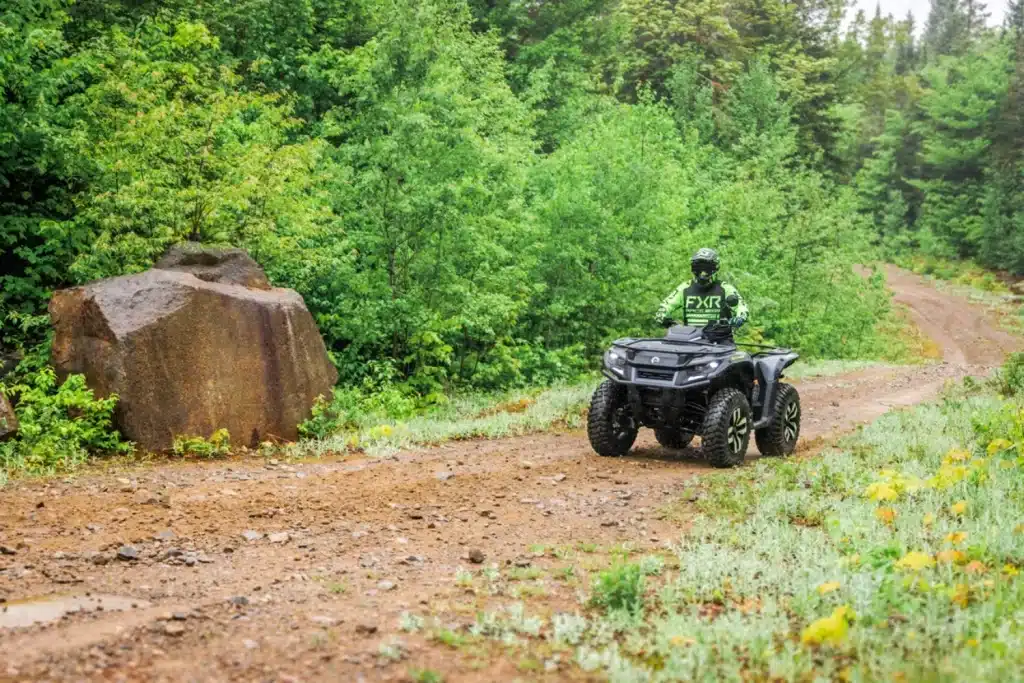
This quiet operation becomes even more important when working on a farm, in a stable, at a campground, or in any other environment where animals and occupants appreciate a minimum of peace and quiet. The near-total absence of noise completely transforms the user experience and opens the door to uses where a gas engine might sometimes be less appropriate.
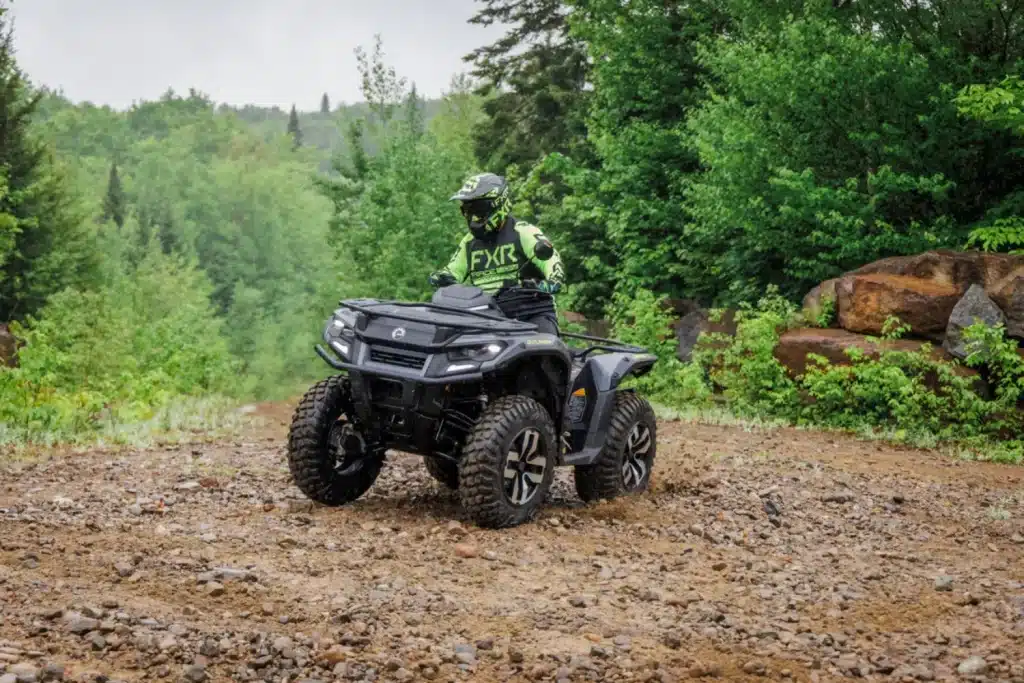
Ultimately, even though I remain a fan of internal combustion engines, I have to admit that the Can-Am Outlander Electric has shown me electric vehicles in a whole new light. It’s not just a new way to get around; it’s a new way to enjoy your surroundings, in a quietness that quickly becomes one of its greatest qualities.
A big thank you to Can-Am for providing the vehicle!