Probably the biggest new development for 2027, Polaris is expanding its trail snowmobile segment with the company’s ultimate Big Bore: the 9R. It is a 900 cc 2-strokes twin-cylinder engine. It joins its 850 and 850 turbo counterparts in the large displacement category.
The VR1s have definitively established themselves as the ultimate trail machines, combining pure performance and comfort for long rides. They are designed for those who like to rack up the miles in a day. Our version now features a brand new engine for the trail segment: the 9R. This engine has already proven itself in the mountains and in hybrid platforms, and is sure to be a hit in a VR1. With its abundant low-end torque and responsive power delivery, the 9R transforms the trail experience. Acceleration is more powerful, corner exits are more vigorous, while maintaining appreciable flexibility on long rolling sections.
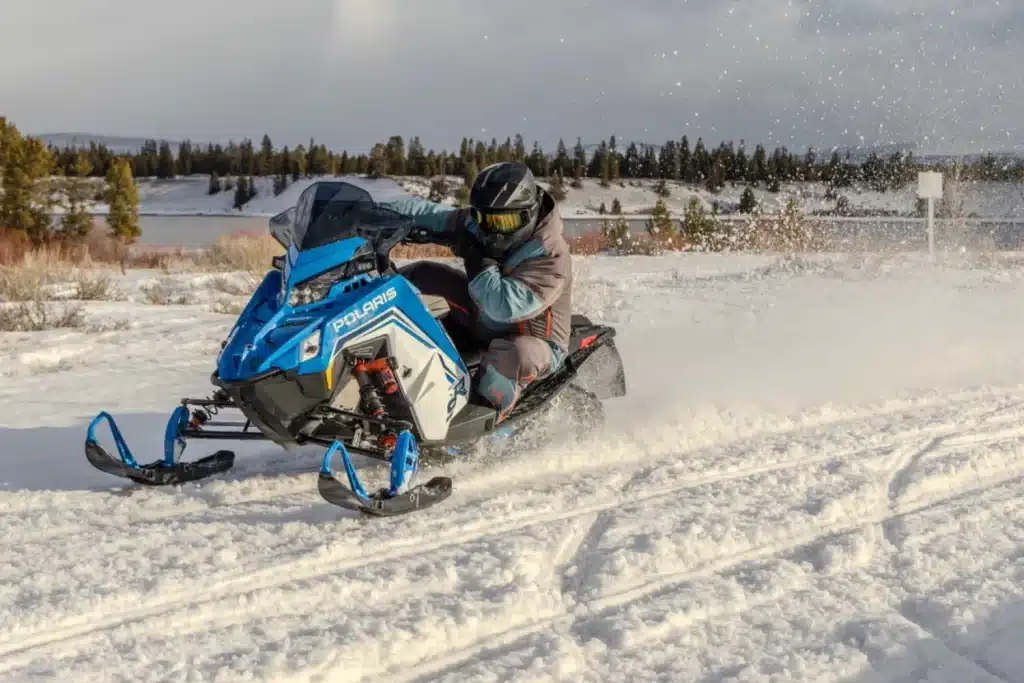
Some will say it was written in the stars, others will be delighted, but one thing is certain: the expansion of the 9R engine into the trail segment is an extremely positive step for Polaris. In Canada, enthusiasts love big engines and abundant torque. An engine capable of delivering plenty of torque at low revs, offering sharp and powerful acceleration, and exiting corners without the slightest hesitation, perfectly meets local expectations. The 9R ticks all these boxes.
The 9R
The 9R is an engine that has been factory modified to increase performance. Based on the DNA of the 850 Patriot, it has undergone several targeted modifications aimed at increasing both maximum power and, above all, low-end torque. Polaris claims a 7% increase in power, but it’s the 13% gain in torque compared to the 850 version that’s most impressive. This improvement is not only due to the 50 cc increase in displacement, but also to a series of well-targeted internal enhancements.
The bore has been increased from 85 mm to 88 mm, while the stroke remains the same as on the 850. This is a true “big bore” optimized to generate more torque, especially at low and mid-range speeds.
The crankshaft, which is 10% lighter, reduces rotational inertia by approximately 3%. This figure may seem modest, but it is very significant in real-world driving, especially when accelerating and picking up speed.
Another important element is that the transfer ports and exhaust ports on the cylinders are now machined rather than cast. This method ensures greater manufacturing precision, promoting better gas flow and allowing for a few extra horsepower.
Single-ring pistons with ceramic coating improve heat resistance and reduce internal friction, contributing to reliability while optimizing efficiency.
Dynamix suspension…
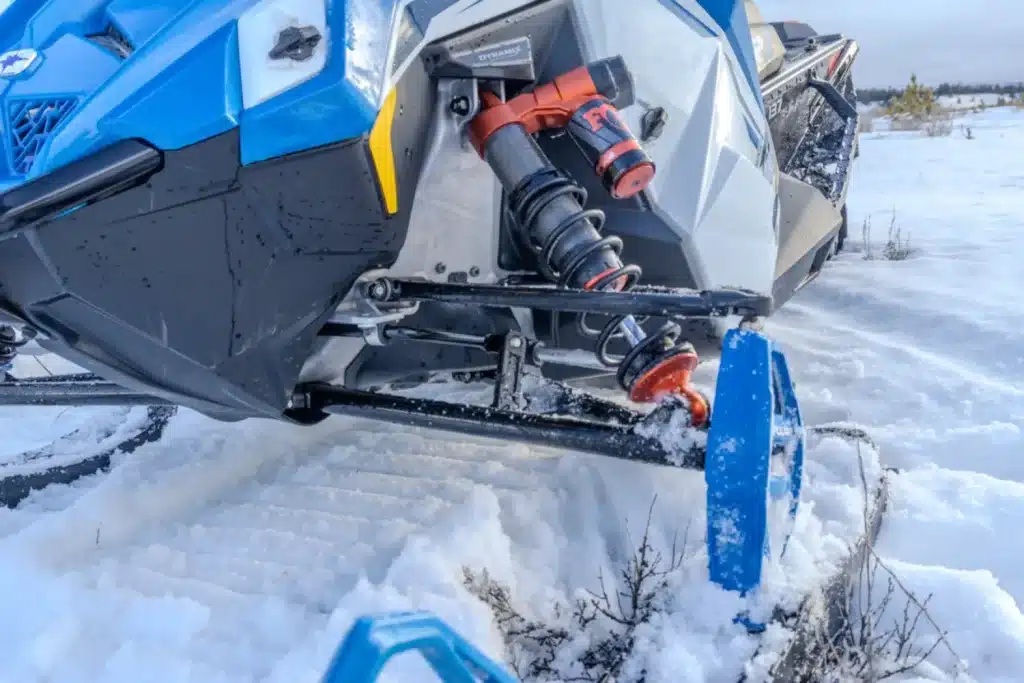
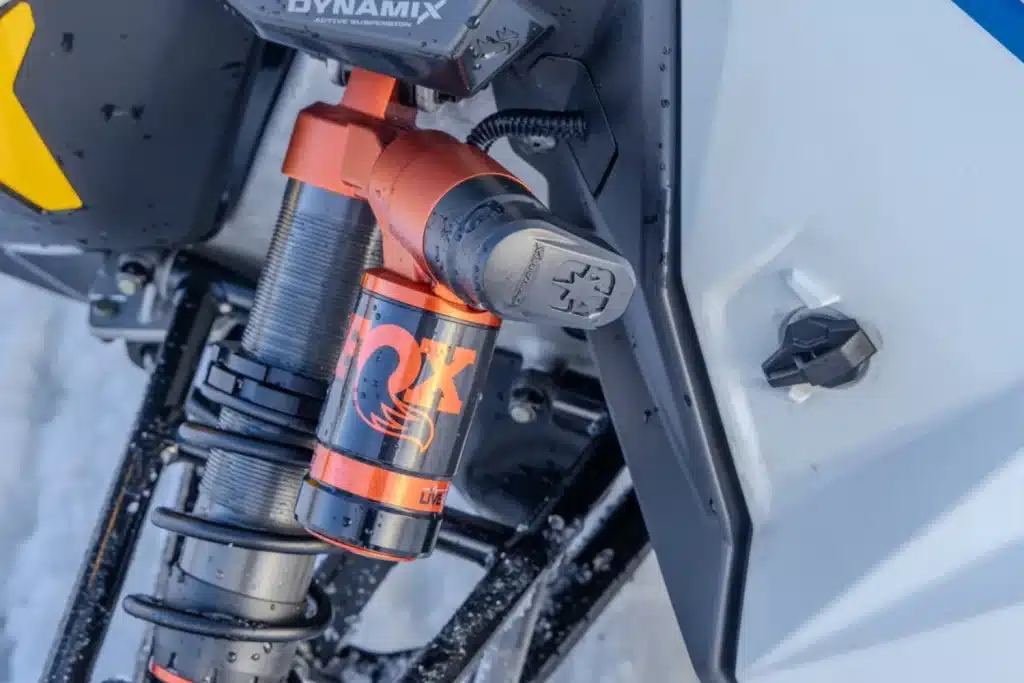
For 2027, the Dynamix suspension retains essentially the same philosophy as in previous years. Polaris presents it as a suspension focused primarily on comfort and long trail rides, and this is evident in the field. If you’re a fan of aggressive bumps and late Saturday afternoon rides when the trail is completely bumpy, you’ll probably be better served by the XCR version, which is specifically designed for this type of more extreme riding.
One of the great advantages of the Dynamix suspension remains its centralized control of the four shock absorbers. This system allows for real-time electronic management of the snowmobile’s behavior, optimizing stability and precision on the trail.
In sharp turns, there is an automatic increase in preload and support on the outside. This helps keep the front end on track, limits roll, and provides more precise steering.
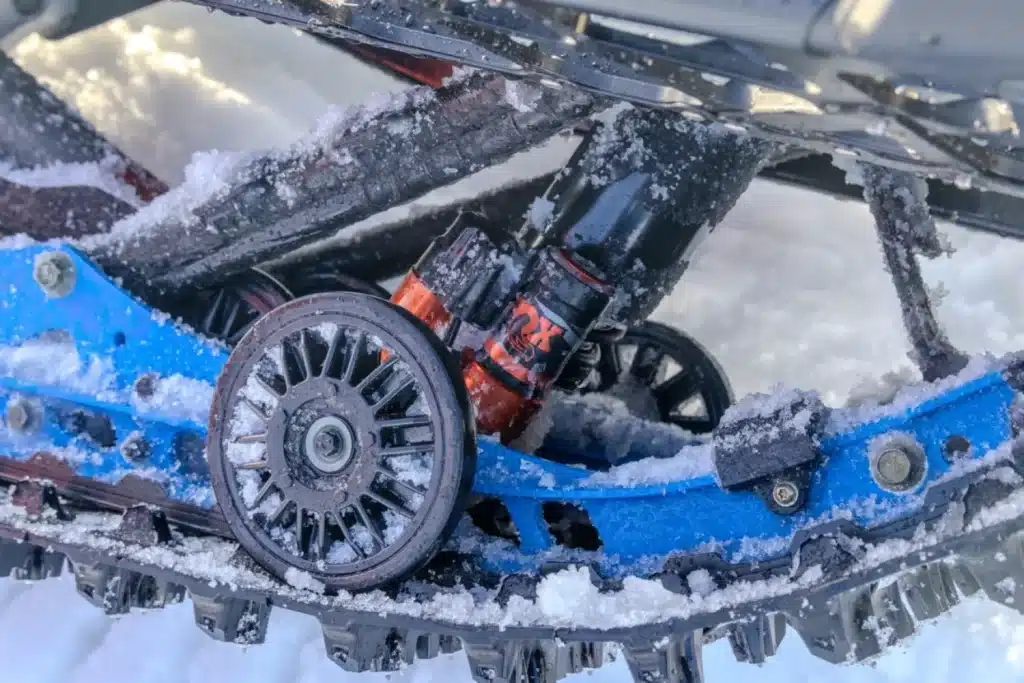
During acceleration, electronic management also ensures efficient load distribution to the rear. As a result, the skis remain firmly planted on the ground, whether coming out of a turn or when fully accelerating. The snowmobile thus maintains excellent longitudinal stability.
That said, when tackling larger bumps or very rough sections, you may reach the end of the travel a few times. It is therefore essential to adjust the spring preload correctly, especially if you are larger or are riding with extra equipment. Proper adjustment will limit this effect and optimize overall performance.
Our test of the VR1 9R…
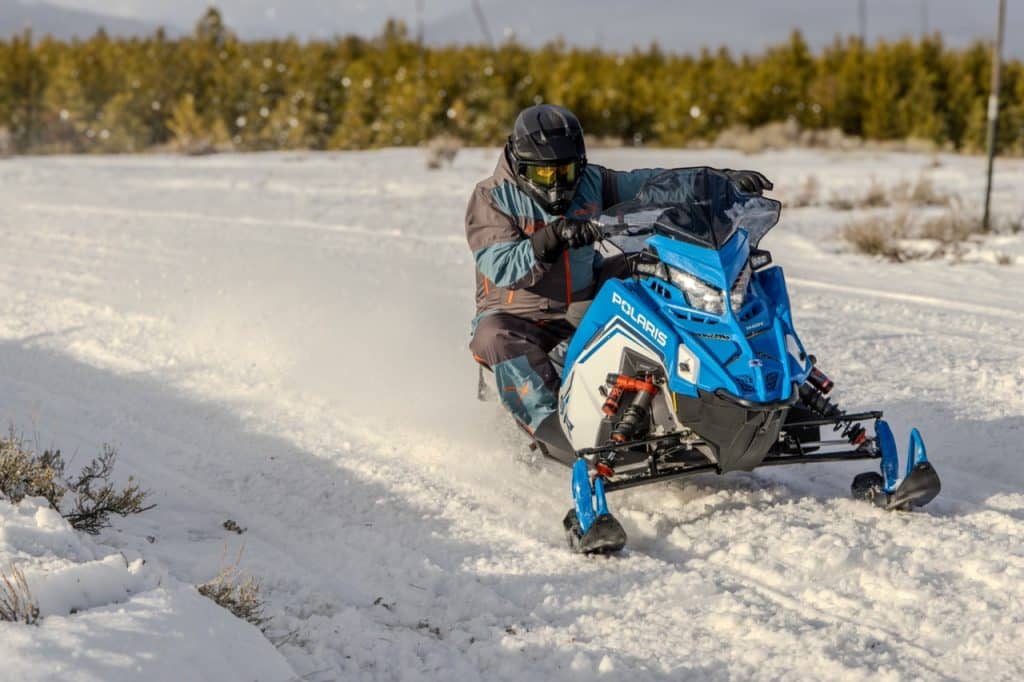
We can assure you that the VR1 version equipped with the 9R will certainly delight many enthusiasts in Quebec. It will also be very interesting to test this engine at its full capacity at sea level on our trails. The 9R’s power is rated at approximately 180 horsepower, which puts it directly in competition with the industry’s turbocharged 850s. This makes it a particularly attractive option for performance enthusiasts.
The difference between it and a turbocharged 850 is especially noticeable when starting from a standstill or accelerating from very low revs. And that’s exactly what we found during our test drive, even at altitude. The throttle response is almost instantaneous, followed by a strong and sustained thrust, without the slightest hesitation. This is definitely the most powerful naturally aspirated engine currently available on the market.
Another very interesting point we observed is the almost total absence of vibration. There is no noticeable vibration in the handlebars, either at idle or under full acceleration, which is particularly noteworthy for a large 900cc twin-cylinder engine.
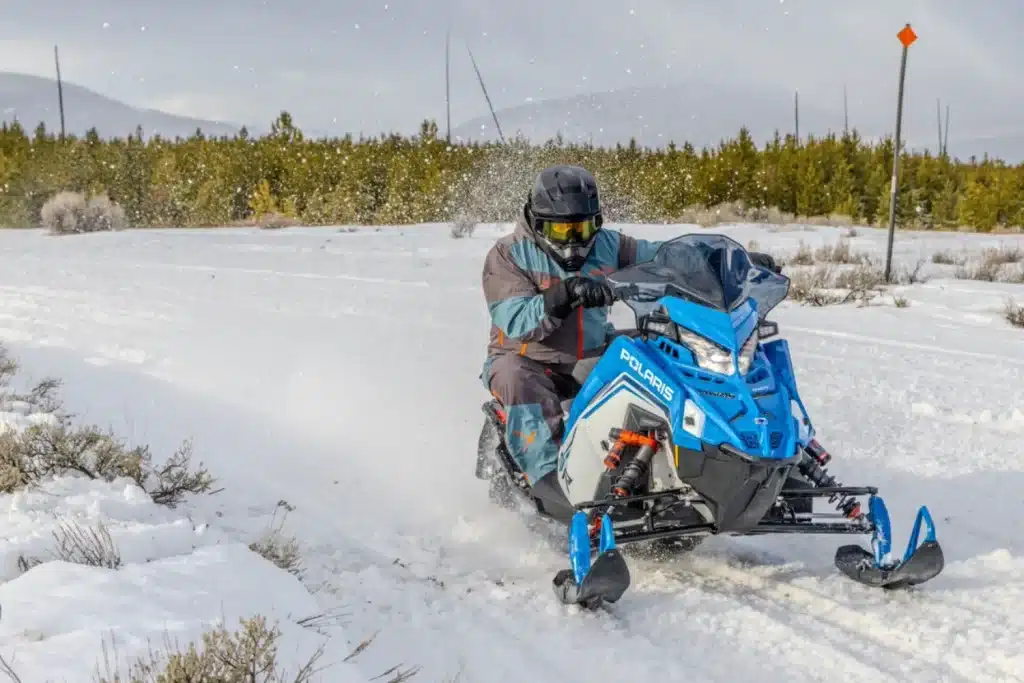
Now, as for the suspension, as we’ve mentioned many times, the dynamic suspension does an excellent job when riding at trail speeds under normal conditions. It’s clearly designed to offer comfort and versatility on long rides.
That said, if you choose this suspension with the intention of riding very aggressively over bumps, your choice may not be optimal. You’ll be better served with the XCR version, which is more geared toward sportier, more aggressive riding.
During our tests in West Yellowstone, on trails that were significantly bumpier than those typically found in Quebec, we quickly reached the limits of the dynamic suspension, occasionally bottoming out. Of course, it all depends on the mode selected. In the stiffer mode, the suspension bottoms out much less frequently, but you lose a certain level of comfort. So you have to accept a compromise: more firmness for a more aggressive ride or more flexibility for a more comfortable ride.
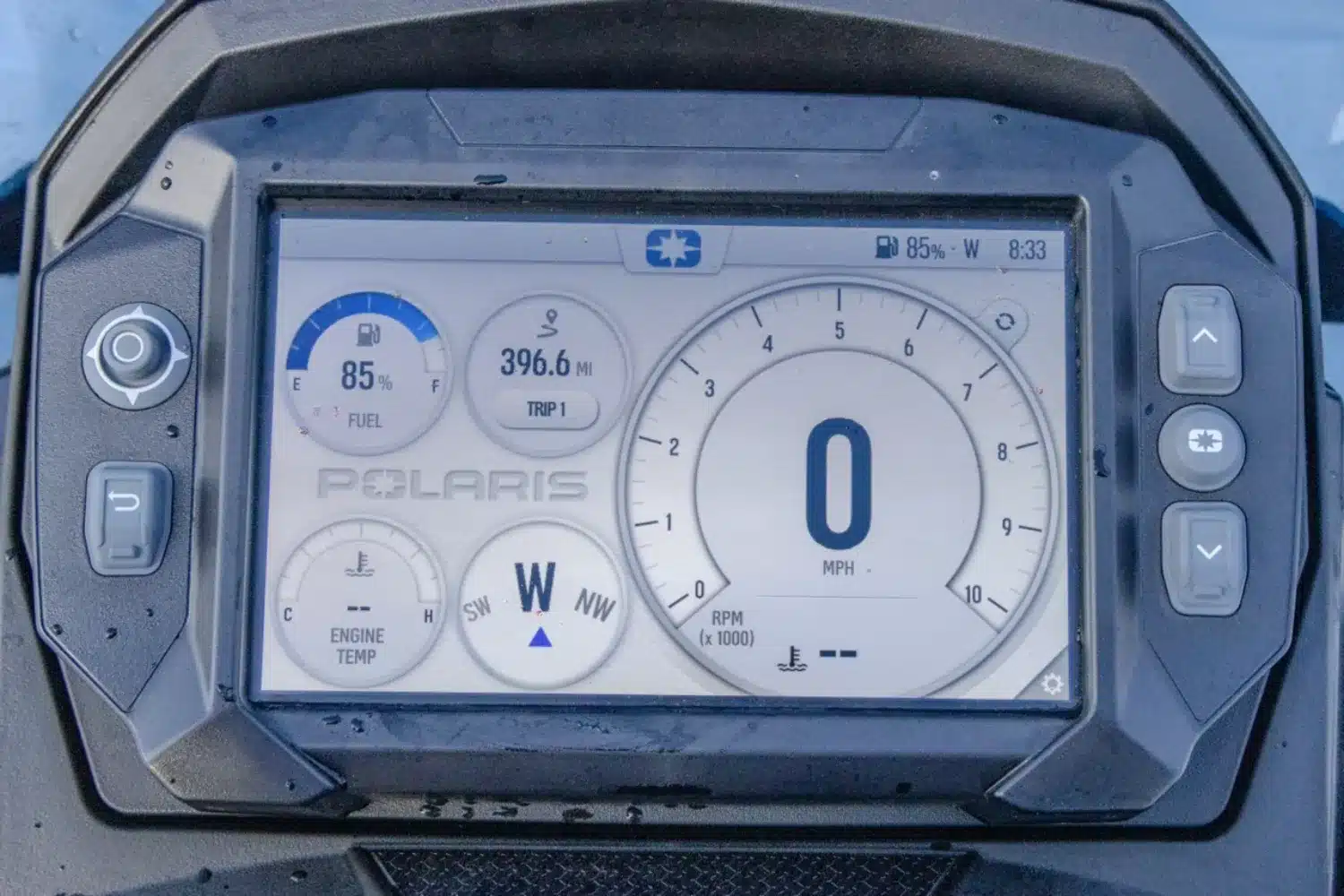
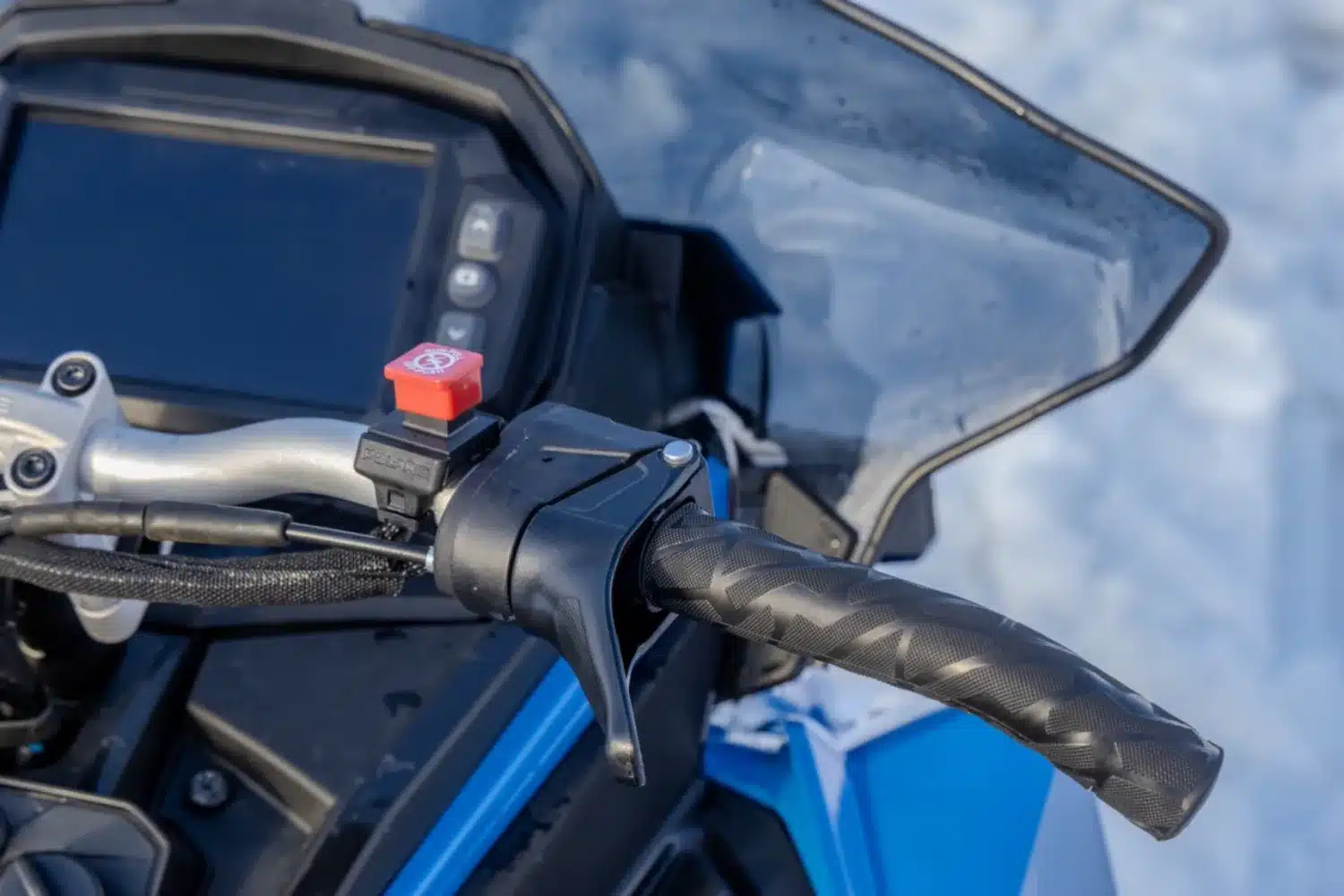
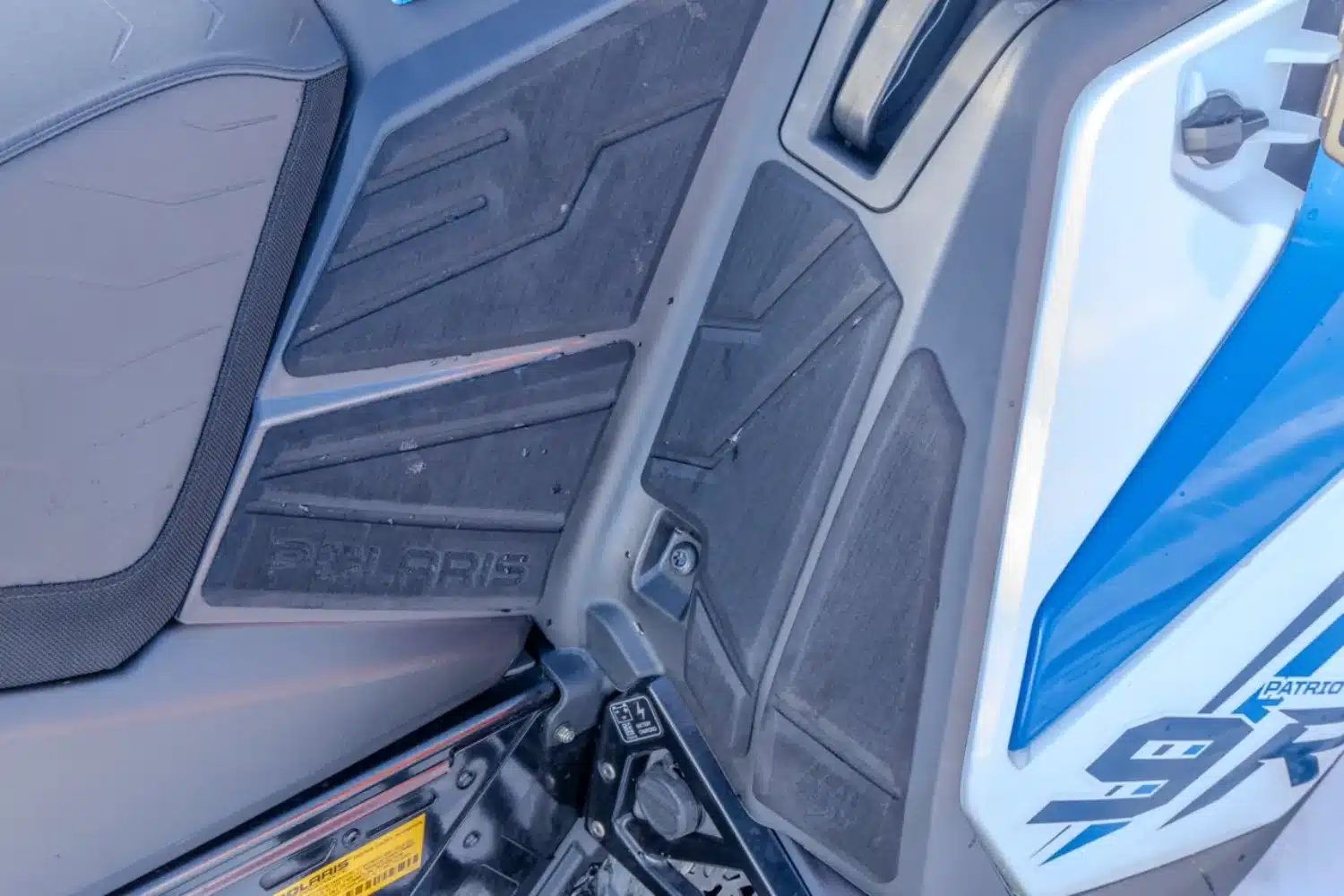
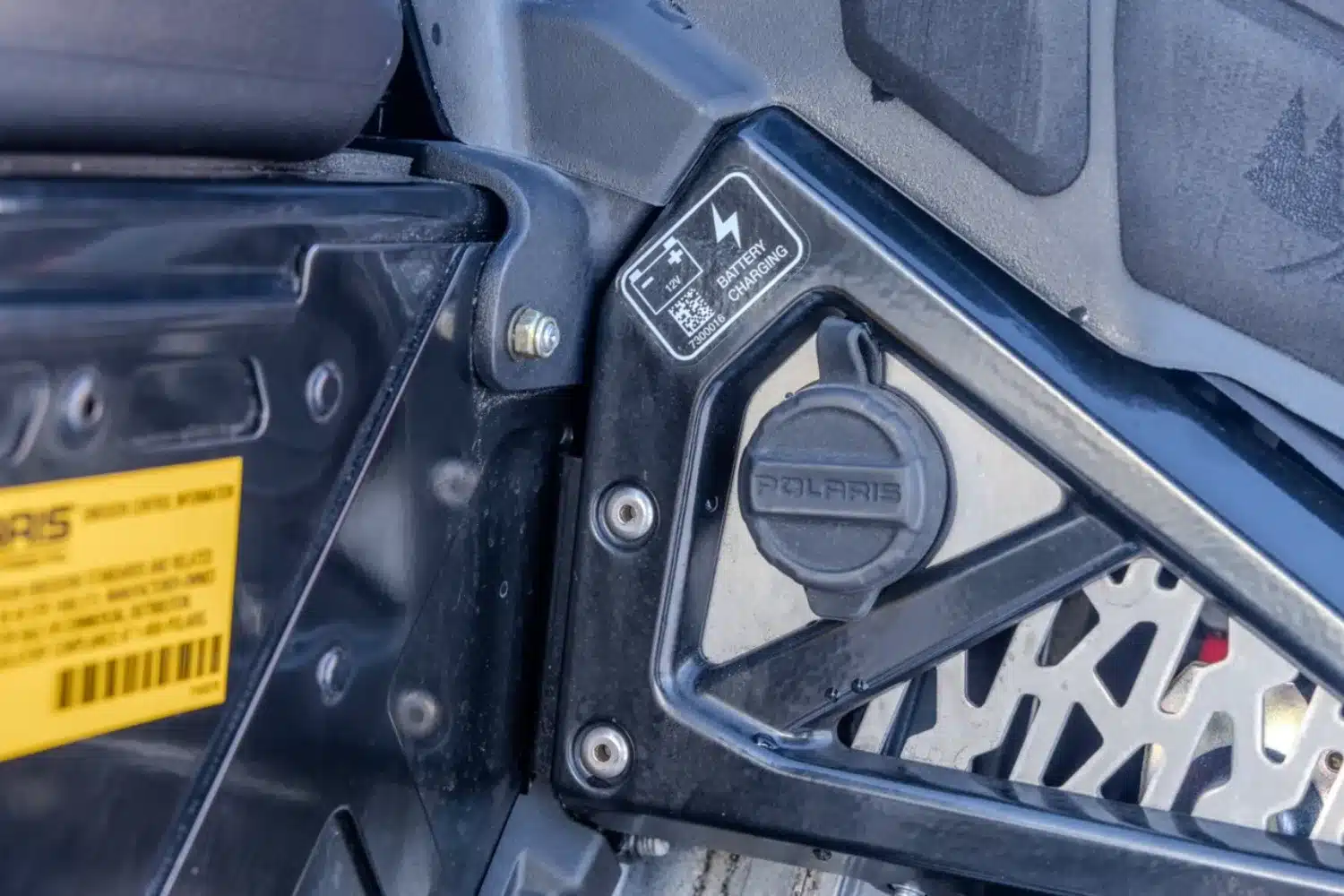
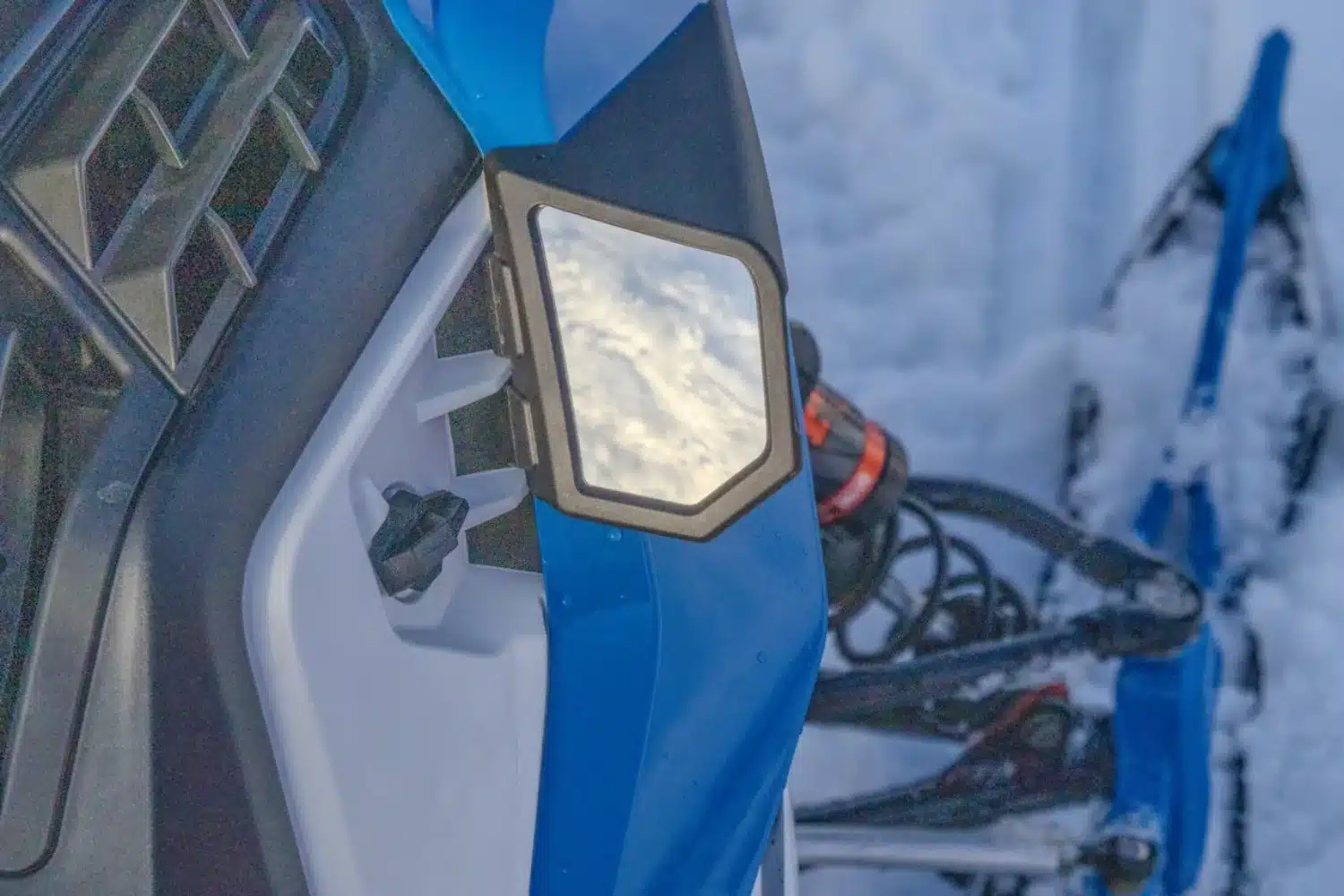
The version you get is very well equipped, with an excellent, easy-to-use 7S interactive screen and a windshield that offers good protection. However, although it covers most of your hands, your little fingers remain exposed to ice chips from the snowmobile in front of you. Knee protectors, external battery charging socket, and finally the rearview mirrors, which are very attractive but whose effectiveness is questionable.
Evaluation summary
In summary, the VR1 version is clearly aimed at those looking for a snowmobile tailored for everyday trails. If you’re the type who travels 300 to 400 km in a day, the dynamic VR1 will offer you an excellent balance between comfort and performance, regardless of the conditions you encounter.